
Turning a lifelong passion for woodworking, knitting, quilting, or jewelry design into a supplementary retirement income stream has never been more accessible. Selling your creations online provides financial flexibility and keeps your creative mind sharp, but selecting the right marketplace dictates your profit margins and workload. Different digital platforms cater to distinct craft categories, fee expectations, and technical comfort levels. Whether you want a hands-off marketplace with built-in buyer traffic or a custom storefront that protects your brand, matching your craft with the appropriate venue ensures your creative venture remains fulfilling rather than stressful.
At a Glance: Key Takeaways for Senior Artisans
If you want a quick breakdown of where to sell handmade goods online, keep these essential insights in mind before creating an account:
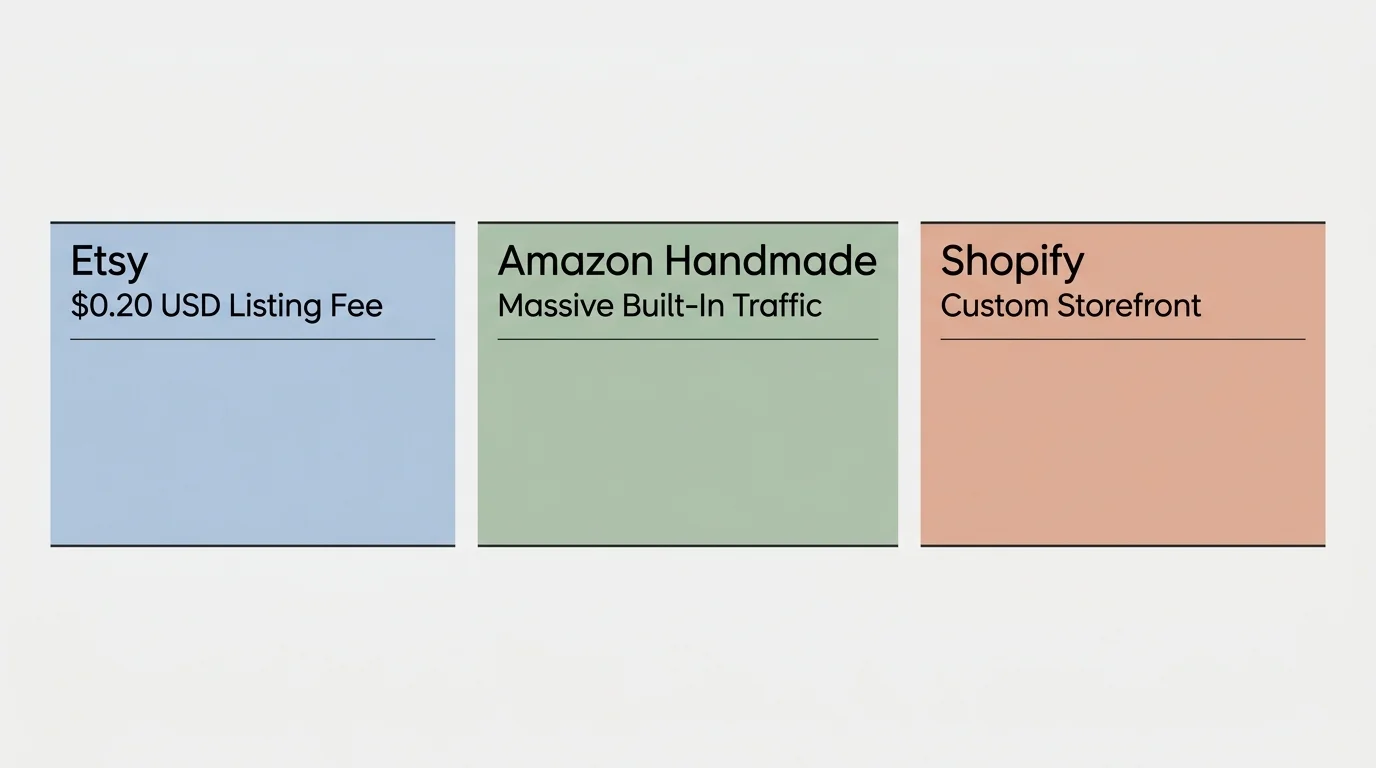
- Etsy and Amazon Handmade provide massive built-in buyer audiences, making them ideal for high-volume makers who want immediate sales exposure.
- MakerPlace by Michaels and Goimagine offer lower fee overhead and community-oriented structures, appealing to crafters who value ethical selling models or direct craft store integration.
- Shopify gives you complete ownership over your customer relationships and brand, eliminating marketplace competition at the cost of requiring self-driven marketing.
- Ruby Lane focuses on high-end artisan goods, fine woodwork, and collectibles where buyers expect and willingly pay premium prices.
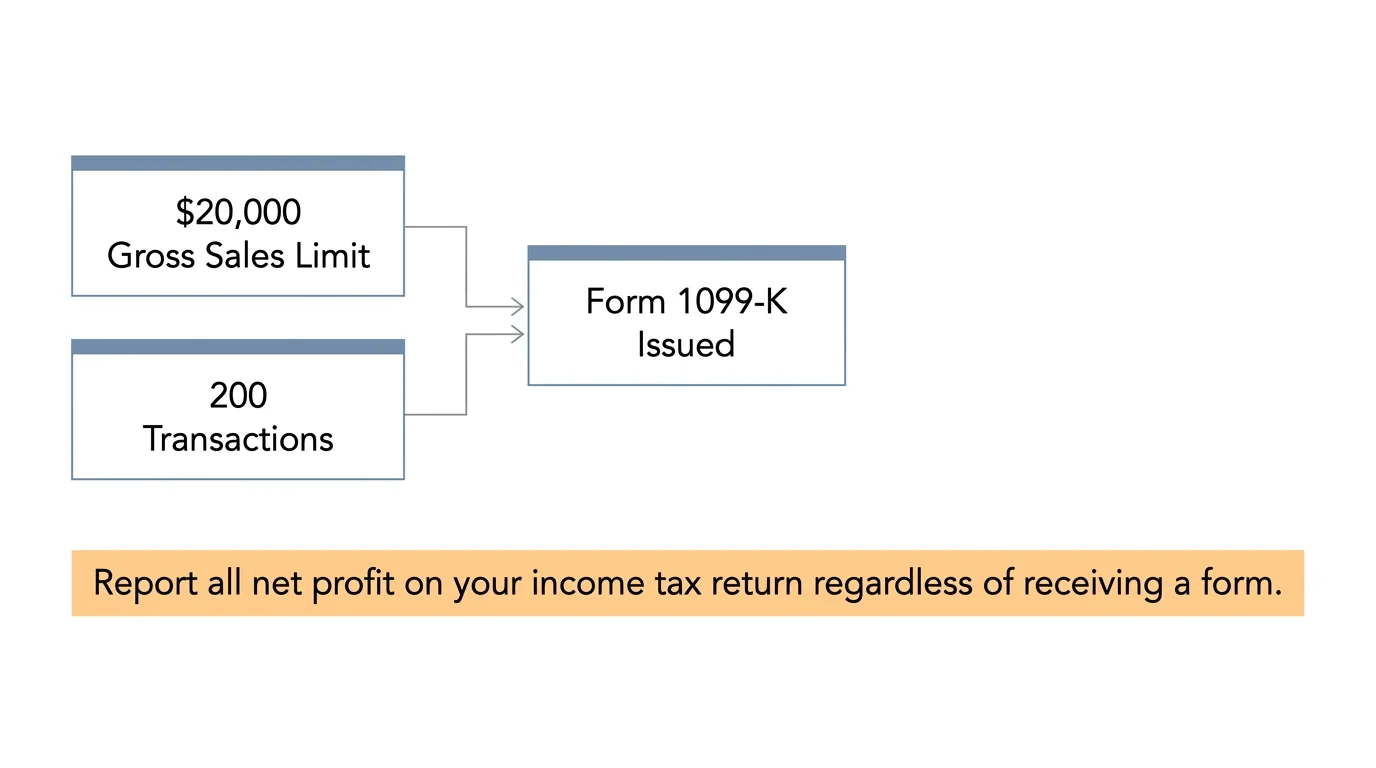
- Tax Clarity: Under current federal tax laws, payment platforms issue Form 1099-K after you exceed $20,000 in gross sales and 200 transactions, but you must report all net profit on your income tax return regardless of receiving a form.

The Financial and Lifestyle Benefits of Selling Crafts in Retirement
Retirement presents a unique opportunity to realign your daily schedule around personal passions. Monetizing a hobby transforms creative hours into tangible financial returns without the rigidity of traditional employment. A modest monthly profit of $300 to $1,000 can cover utility bills, fund travel funds, or pay for home improvements, leaving your main retirement nest egg intact.
Beyond monetary gains, launching a small creative business supports healthy aging. Engaging in regular craft production, digital photography, listing creation, and customer communication stimulates cognitive function and preserves fine motor skills. Furthermore, shipping products to enthusiastic customers across the country fosters a deep sense of accomplishment and social connectedness.
“Retirement is not a financial event; it is a life event that requires a new purpose and structure.” — Mitch Anthony, Retirement Lifestyle Author
Success requires striking a balance between creative joy and business practicalities. Selecting an e-commerce platform that matches your technical comfort level prevents daily technology frustration, allowing you to focus on what you love most: making exceptional crafts.
7 Platforms Where Retirees Are Selling Handmade Items Successfully
Each major online marketplace serves a specific audience and charges a distinct mix of listing fees, monthly subscriptions, and sales commissions. Examining these details helps you protect your profit margins while minimizing setup friction.
1. Etsy: The Industry Heavyweight
Etsy remains the most recognized marketplace for handmade goods, drawing tens of millions of active buyers worldwide. Its sheer volume of buyer traffic provides immediate visibility that independent websites cannot match without heavy advertising spending.
The platform operates on a transparent pay-per-item fee model. You pay $0.20 USD for each item listed, which stays active for four months or until it sells. When a sale occurs, Etsy charges a 6.5% transaction fee on the total order price, including shipping and gift wrapping. For payment processing in the United States, you pay an additional 3% plus $0.25 per transaction. Furthermore, Etsy runs Offsite Ads across search engines and social media; if an offsite ad leads to a sale, Etsy charges a mandatory 12% fee for shops earning $10,000 or more annually, or an optional 15% fee for smaller sellers.
While Etsy brings immense traffic, intense competition means you must invest time in taking high-quality photos and writing detailed item descriptions using targeted search terms.
2. Amazon Handmade: Unmatched Customer Reach
Amazon Handmade allows micro-entrepreneurs to list their unique goods directly within Amazon’s vast retail ecosystem. Artisans gain access to millions of Amazon Prime members who value fast shipping and seamless checkout experiences.
To keep the platform authentic, Amazon maintains a strict application process requiring proof that you handcraft your items. Once approved, Amazon waives its standard $39.99 monthly Professional Seller fee. Instead of charging listing fees or separate credit card processing fees, Amazon collects a flat 15% referral fee per item sold. This predictable, all-inclusive pricing structure simplifies cost accounting for retirees who prefer avoiding multi-layered fee calculations.
3. MakerPlace by Michaels: Tailored for Traditional Crafters
Launched by craft supply giant Michaels, MakerPlace offers a dedicated venue built specifically for handmade creators and instructors. The platform integrates seamlessly with Michaels’ existing customer base, attracting buyers who genuinely appreciate artisanal craftsmanship.
MakerPlace provides two distinct pricing tiers depending on your expected sales volume:
- Basic Plan: $0 monthly membership fee, a 4% referral fee, a 3% transaction fee, plus $0.20 per item sold, with zero listing fees.
- Professional Plan: $9.98 per month (or $110 billed annually), a reduced 2% referral fee, a 3% transaction fee, plus $0.20 per item sold, with zero listing fees.
This tiered system allows senior makers to start on the free tier without monthly overhead and upgrade to the professional plan as sales scale up.
4. Goimagine: The Purpose-Driven Marketplace
Goimagine operates as a “Caring Economy” platform, donating 100% of its marketplace profits to children’s charities such as Horizon Horizons and Toys for Tots. For retirees seeking a deeply meaningful venture, selling on Goimagine aligns creative effort with charitable giving.
The platform strictly limits sellers to United States-based makers who handcraft their products. Goimagine charges $0 listing fees, operating instead through flat monthly subscription plans ranging from $2.50 to $10 per month, depending on your inventory size. Additionally, standard payment processing fees average around 3.5% to 5% per transaction. The platform’s supportive community forum makes it exceptionally welcoming for senior sellers navigating online sales for the first time.
5. Shopify: Total Brand Independence
If you prefer complete control over your store branding, pricing, and customer communications without competing alongside rival sellers on the same page, Shopify provides an ideal solution. Rather than a marketplace, Shopify offers a standalone website builder tailored for e-commerce.
Shopify offers multiple plan levels to accommodate different business sizes:
- Starter Plan: $5 per month, allowing you to sell products through social media links, email newsletters, or messaging apps without building a full online store.
- Basic Plan: $39 per month (or $29 per month billed annually), offering a complete custom online store with credit card rates of 2.9% plus $0.30 per online transaction.
- Grow Plan: $105 per month (or $79 per month billed annually), providing advanced reporting and lower credit card rates for expanding businesses.
Building a Shopify store requires more technical initiative or assistance from family members, and you must generate your own web traffic through social media or word of mouth. However, it completely eliminates third-party platform policy changes that could disrupt your business.
6. Ruby Lane: Premium Prices for High-End Goods
Ruby Lane specializes in antiques, fine collectibles, vintage fashion, and high-end handcrafted items. If you create complex woodworking pieces, custom oil paintings, fine jewelry, or heirloom textiles, Ruby Lane offers an affluent customer base accustomed to premium prices.
Ruby Lane charges $0 in listing fees, opting for a flat monthly maintenance fee of $45, which covers unlimited product listings. On actual sales, the platform applies a tiered service fee structure: 9.9% on total order amounts up to $2,500; 5.0% on the portion between $2,500 and $7,500; and 2.5% on any amount exceeding $7,500. This fee structure heavily favors higher-ticket artisan goods over low-cost trinkets.
7. eBay: Ideal for Specialized and High-Volume Items
While known for auctioning secondhand goods, eBay hosts a thriving community of artisans selling custom and upcycled products. Its expansive international reach makes it a dependable choice for unique, hard-to-find handmade items.
Casual sellers receive 250 free listings per month; subsequent listings incur a $0.35 insertion fee per item. When an item sells, eBay charges a standard Final Value Fee, typically around 13.6% for most craft categories, plus a fixed order fee of $0.30 for orders under $10 or $0.40 for orders over $10. eBay’s built-in shipping discount system simplifies generating prepaid labels at home, making parcel dispatch straightforward for seniors.
Comparing Platform Costs, Fees, and Best Uses
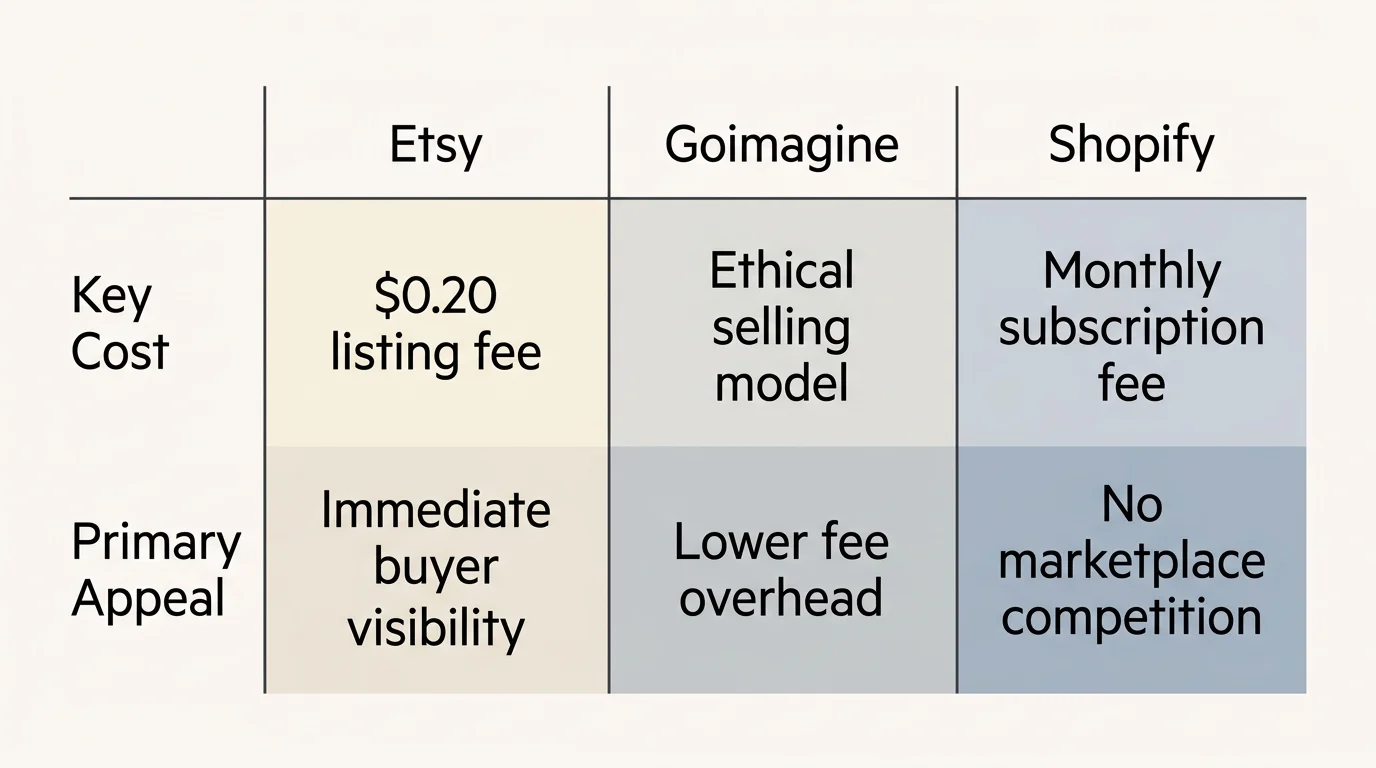
To help you evaluate these options at a glance, the table below compares fee structures and recommended product types across all seven platforms:
| Platform | Listing Fee | Monthly Subscription | Transaction / Referral Fee | Best Suited For |
|---|---|---|---|---|
| Etsy | $0.20 per item (4 mos.) | None | 6.5% + 3% + $0.25 (US processing) | General handmade goods, personalized gifts, jewelry |
| Amazon Handmade | $0 | $0 (Waived $39.99 fee) | Flat 15% referral fee | High-volume makers aiming for Prime buyers |
| MakerPlace by Michaels | $0 | $0 (Basic) or $9.98/mo (Pro) | 4% referral + 3% processing (Basic) | Traditional craft supplies, home decor, tutorials |
| Goimagine | $0 | $2.50 to $10.00/mo | 3.5% to 5.0% processing fee | Ethical makers desiring charitable profit impact |
| Shopify | $0 | $5/mo (Starter) or $39/mo (Basic) | 2.9% + $0.30 per card transaction (Basic) | Established artisans building an independent brand |
| Ruby Lane | $0 | $45.00/mo maintenance | 9.9% (up to $2.5k) down to 2.5% | Fine woodworking, original artwork, high-end crafts |
| eBay | 250 free, then $0.35 | None (for basic accounts) | ~13.6% + $0.30 or $0.40 per order | Upcycled crafts, custom wood items, high volume |
Navigating IRS Rules and Social Security Impact
Understanding the tax implications of your online sales keeps your business profitable while preventing unwelcome surprises during tax season. Operating a craft business requires clear recordkeeping and awareness of federal reporting guidelines.
Following legislative adjustments under the One Big Beautiful Bill Act (OBBBA), payment processors and marketplaces only automatically send Form 1099-K to the Internal Revenue Service and sellers when gross payments exceed $20,000 AND transaction volume exceeds 200 orders in a calendar year. However, tax liability rules remain unchanged: all net profit generated from your craft business is legally subject to federal and state income taxes, regardless of whether a platform issues a Form 1099-K.
“Taking charge of your income streams gives you absolute control over your financial peace of mind in retirement.” — Jean Chatzky, Financial Educator
If you receive Social Security retirement benefits and have reached your Full Retirement Age (FRA), earned income from your craft store will not reduce your monthly benefit payments. However, if you claim benefits before reaching your FRA, earned net income above the annual earnings limit can result in temporary benefit withholdings. Review current earnings test rules on the official Social Security Administration website before scaling up high-volume sales.

What Can Go Wrong: Common Pitfalls for Senior Sellers
Launching a craft enterprise in retirement brings tremendous joy, but unmanaged administrative oversights can turn a rewarding pastime into a source of stress. Guard against these common operational mistakes:
- Underpricing Your Work: Many retirees charge only for raw materials, ignoring the value of their labor and marketplace fees. Always factor in material costs, platform fees, packing supplies, and a reasonable hourly wage when pricing items.
- Miscalculating Shipping Logistics: Failing to measure and weigh boxed items before setting flat shipping rates leads to unexpected postal expenses that quickly eat into profits. Utilize discounted shipping labels through platforms like Etsy, eBay, or Shopify to trim postage costs.
- Neglecting Expense Tracking: Failing to save receipts for fabric, yarn, woodworking tools, shipping boxes, and home office supplies means missing out on valuable tax deductions that reduce your overall net taxable profit.
- Overcommitting Physical Effort: Accepting too many custom orders can trigger physical fatigue or aggravate conditions like arthritis. Pace your production schedules and set realistic handling times on your shop store pages.

When to Consult a Professional
While starting a modest hobby business remains simple, certain financial thresholds warrant guidance from a qualified specialist. Consider consulting a certified public accountant (CPA) or financial advisor in these situations:
- Nearing the Social Security Earnings Limit: If you collect Social Security before your Full Retirement Age and expect net business profits to exceed annual earnings thresholds.
- Approaching Medicare IRMAA Thresholds: Additional business income could raise your Modified Adjusted Gross Income (MAGI) into a higher Medicare Part B and Part D premium bracket (Income-Related Monthly Adjustment Amount).
- Choosing an Operating Structure: Deciding whether to operate as a simple Sole Proprietorship or establish a Limited Liability Company (LLC) to separate personal assets from business liabilities.
- Managing Multi-State Sales Tax: Understanding how automated sales tax collection works across different marketplace platforms versus selling directly through your own website.
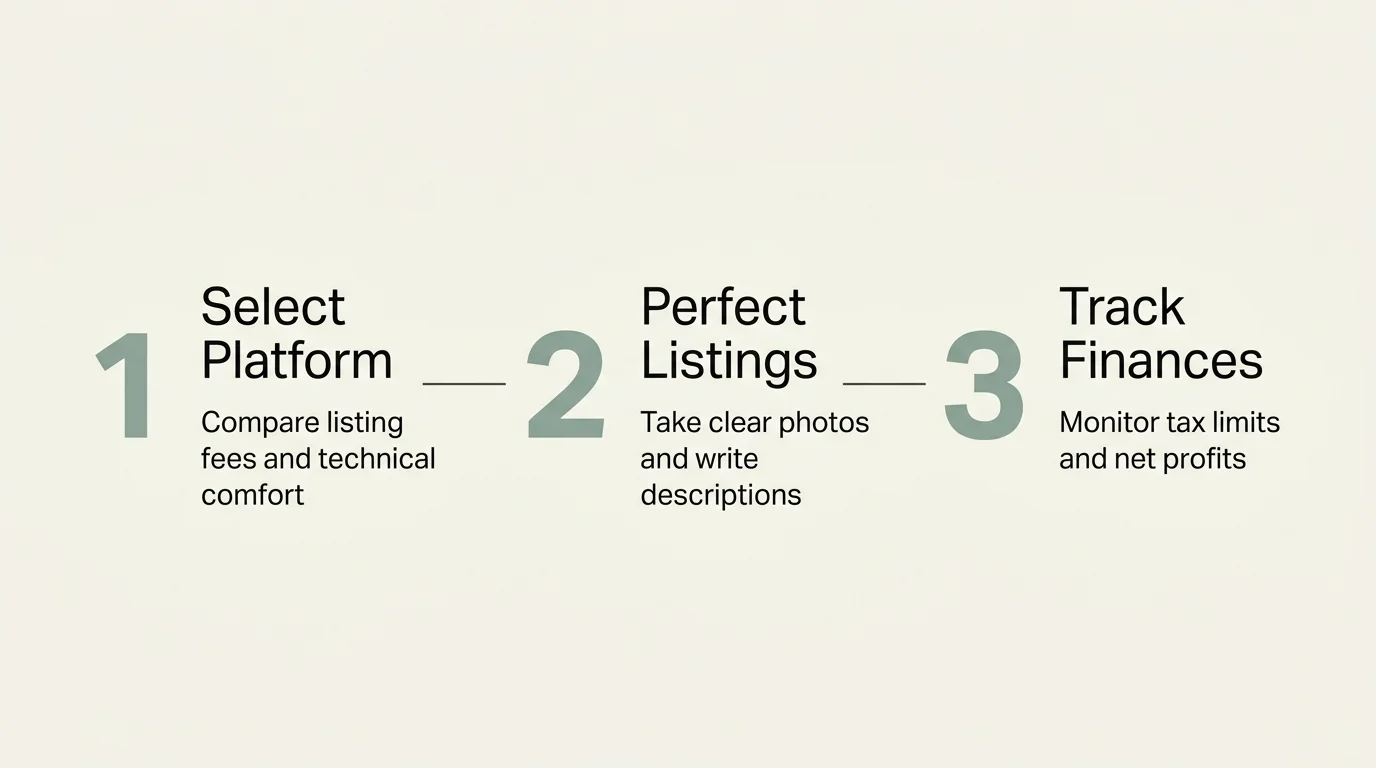
Step-by-Step Guide to Launching Your Handmade Business
Starting your online storefront becomes manageable when broken down into clear, practical milestones. Follow this step-by-step framework to launch smoothly:
- Select 3 to 5 Signature Items: Avoid overwhelming yourself with massive inventory. Begin by listing three to five of your highest-quality, most popular creations.
- Take High-Quality Photography: Use natural daylight and clean, uncomplicated backgrounds. Clear, well-lit photos build immediate trust with prospective online buyers.
- Calculate Accurate Pricing: Multiply your raw material costs by two, add a fair hourly wage for your crafting time, and incorporate platform commission fees to determine a sustainable retail price.
- Set Up a Dedicated Bank Account: Keep your business income and expenses completely separate from personal checking accounts to simplify accounting and tax reporting.
Resources available through consumer education resources like Investor.gov and retiree advocate groups like AARP offer ongoing guidance on managing small business cash flows during retirement years.
Frequently Asked Questions
Do I need a formal business license to sell handmade crafts online?
Requirements vary by municipality and state. While selling occasional items on casual marketplaces may not require formal registration, establishing an ongoing online store generally requires registering a local business tax license or doing-business-as (DBA) name. Check with your local city or county clerk’s office to ensure local compliance.
Will selling my crafts lower my monthly Social Security benefits?
If you have reached your Full Retirement Age, your earnings from craft sales will never reduce your Social Security payment amount. If you claim benefits prior to your Full Retirement Age and your net profit exceeds the annual earnings limit, Social Security temporarily holds back $1 in benefits for every $2 earned above the threshold.
How do online platforms collect and remit sales tax?
Most major marketplaces—including Etsy, Amazon, eBay, and MakerPlace—automatically calculate, collect, and remit state sales tax on your behalf under Marketplace Facilitator laws. If you sell through your own Shopify store, you must configure tax settings to collect sales tax based on state rules where you have physical nexus.
How can I protect myself from online shipping scams?
Always process payments directly through your chosen platform’s secure checkout system. Never accept off-platform checks, wire transfers, or gift card payments, and always ship orders to the verified delivery address provided in your store seller dashboard using trackable shipping services.
Moving Forward with Your Creative Journey
Launching an online store for your handmade crafts allows you to share your creative talents with appreciative buyers across the nation while building a rewarding secondary revenue stream. By selecting the platform that matches your budget, fee tolerance, and technical goals, you can build a sustainable, low-stress business tailored to your lifestyle.
Take time to test one or two platforms with a handful of items before committing to large-scale production. Embrace the learning process, enjoy connecting with new customers, and take pride in knowing that your craft continues to bring value and joy to others.
The information in this guide is meant for educational purposes. Your specific circumstances—including income, health needs, tax situation, and goals—may require different approaches. When in doubt, consult a licensed professional.
Last updated: March 2026. Retirement benefits, tax rules, and healthcare regulations change frequently—verify current details with official sources.









Leave a Reply