
When your Medicare Advantage plan alters its provider directory, an unexpected network shift can abruptly sever access to your trusted doctors, preferred hospitals, and critical prescription drug savings. Over 54% of eligible Medicare beneficiaries—more than 33 million Americans—now rely on Medicare Advantage, yet plans routinely renegotiate provider contracts each autumn. Failing to review these annual network updates can leave you facing denied claims, costly out-of-network bills, or delayed medical treatments. By actively monitoring the critical network modifications outlined in your plan’s Annual Notice of Change, you protect both your physical health and your retirement finances against unforeseen mid-year disruptions.
The Real Mechanics of Medicare Advantage Provider Networks
Unlike Traditional Medicare, which allows you to visit virtually any physician or healthcare facility in the United States that accepts Medicare assignment, Medicare Advantage (Part C) operates through managed care delivery systems. Private insurance carriers build regional networks through negotiated contracts with individual physicians, medical groups, hospital networks, and ancillary service providers. These contracts establish fixed reimbursement rates, clinical protocols, and administrative responsibilities.
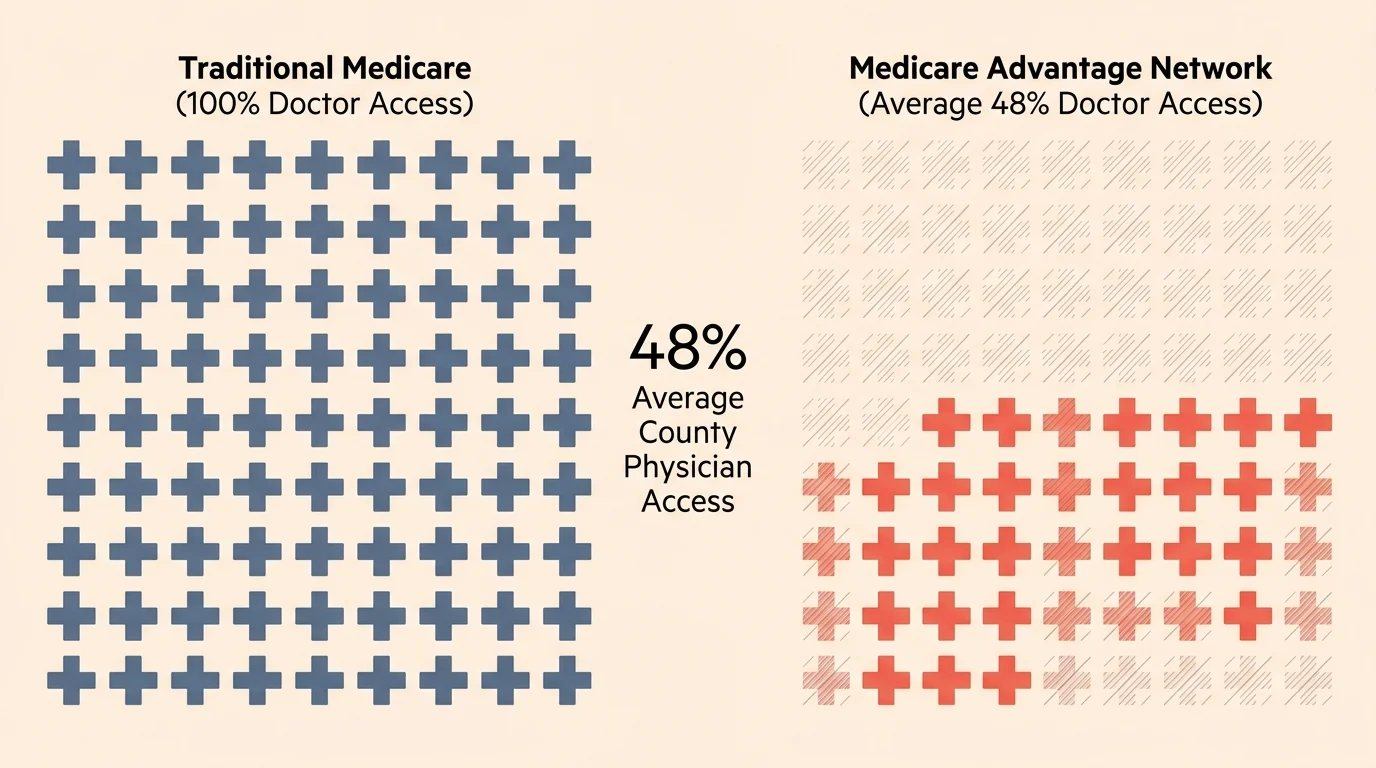
Research published by the Kaiser Family Foundation (KFF) reveals that Medicare Advantage enrollees have access to an average of just 48% of the physicians in their county who participate in Traditional Medicare. This structural limitation means that over half of your local healthcare providers may sit entirely outside your plan’s coverage perimeter. When insurers adjust their networks to control operational costs or negotiate lower reimbursement rates, providers frequently choose to end these commercial relationships.
A critical systemic asymmetry exists between you and your insurer. You are generally locked into your Medicare Advantage plan for the entire calendar year once the annual enrollment windows close. In contrast, healthcare systems and medical practices can cancel their insurer contracts mid-year if negotiations break down. Understanding how these contractual arrangements fluctuate annually enables you to anticipate coverage disruptions before they impact your care.

9 Medicare Advantage Network Changes to Evaluate Annually
Every September, your plan sends you an Annual Notice of Change (ANOC). While most policyholders glance solely at monthly premiums and prescription drug copays, structural provider modifications represent the most consequential changes in your policy. Here are nine critical Medicare Advantage provider network updates you must examine every single year.
1. Primary Care Physician and Medical Group Departures
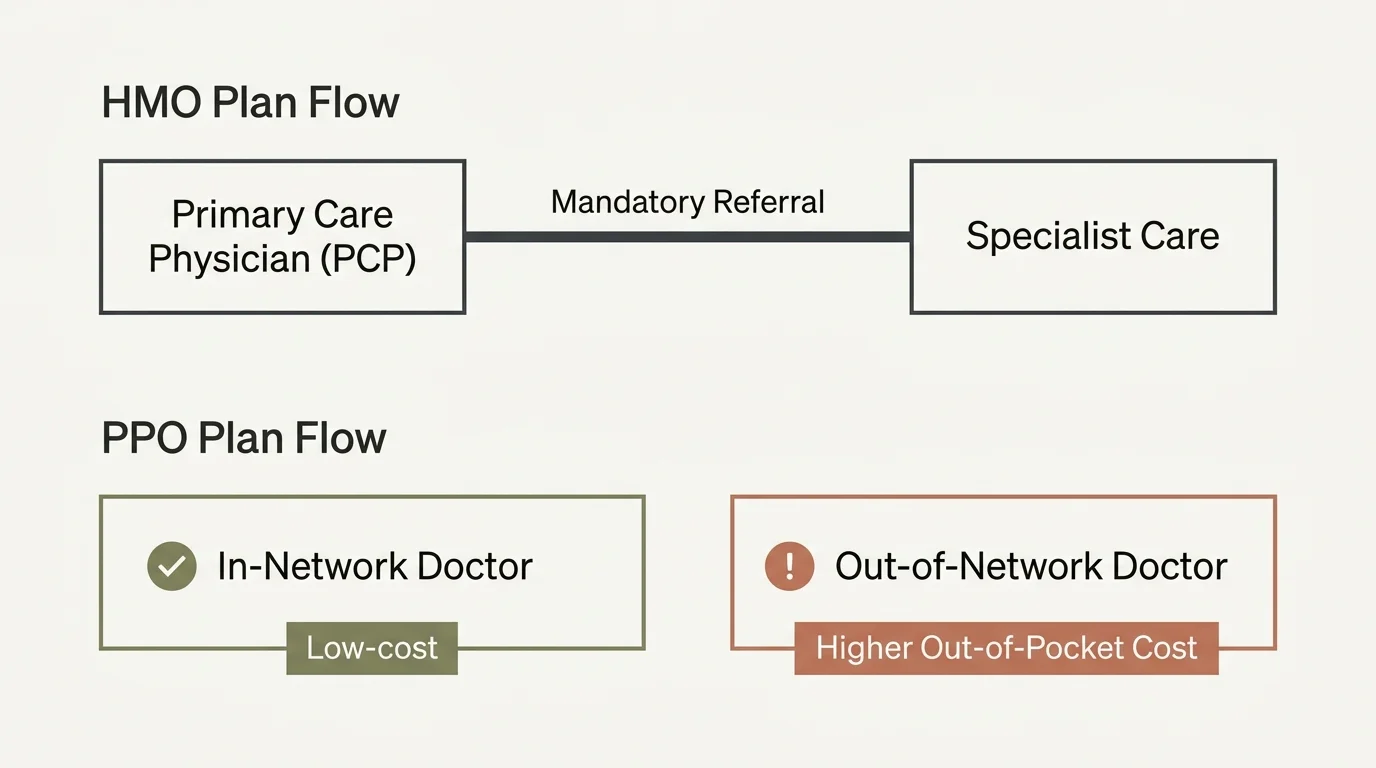
Your relationship with your primary care provider (PCP) anchors your day-to-day healthcare management. In Health Maintenance Organization (HMO) plans and many Preferred Provider Organization (PPO) models, your primary doctor acts as the clinical gatekeeper who authorizes tests, manages chronic illnesses, and issues mandatory specialist referrals. When a large physician group or your individual PCP drops out of your plan’s network, you face immediate friction.
Under regulations enforced by the Centers for Medicare & Medicaid Services (CMS), insurers must provide written notice to affected enrollees at least 30 calendar days before a primary care provider leaves the network. However, receiving a notice in November or mid-year leaves you scrambling to locate a new doctor who is accepting new patients and understands your medical history. Verifying your PCP’s network participation each autumn prevents sudden disruptions to your routine care.
2. Hospital System Contract Battles and Mid-Year Terminations
Hospitals and private Medicare Advantage plans engage in increasingly contentious annual contract renegotiations. Major regional hospital systems frequently threaten to terminate network agreements over low reimbursement rates, delayed payments, and administrative hurdles. When a hospital network leaves your plan, you lose in-network access to its emergency facilities, specialized surgical units, and associated outpatient clinics.
KFF data indicates that approximately 16% of Medicare Advantage plans utilize narrow or ultra-narrow hospital networks. If you require specialized surgical interventions, complex inpatient care, or ongoing outpatient chemotherapy, an abrupt hospital system departure forces you to travel substantially farther for treatment or shoulder ruinous out-of-network bills.
3. Specialized Regional Cancer and Academic Center Exclusions
One of the most significant Medicare Advantage plan network risks involves specialized academic medical centers and National Cancer Institute (NCI)–designated comprehensive cancer centers. Research demonstrates that roughly 40% of Medicare Advantage plans in metropolitan markets with NCI cancer centers do not include these premier institutions in their provider networks.
If you face a serious medical diagnosis, such as advanced cancer, rare autoimmune disorders, or intricate neurological conditions, you may discover that your plan restricts you to community-tier hospitals rather than leading research facilities. Reviewing network inclusions for specialized regional facilities ensures that you maintain access to advanced clinical trials, cutting-edge therapies, and top-tier sub-specialists.
4. Outpatient Behavioral Health and Mental Healthcare Provider Shifts
Access to mental healthcare remains one of the most volatile segments of Medicare managed care. Network directories frequently list behavioral health professionals who are no longer accepting new patients, have retired, or only take self-pay clients—a phenomenon often called “phantom networks.”
To address this issue, CMS enforces rigorous Medicare network adequacy changes under 42 CFR § 422.116, which mandate specific access standards for outpatient behavioral health providers, including clinical psychologists, licensed clinical social workers, marriage and family therapists, and addiction medicine specialists. When reviewing your plan annually, verify that local mental health practitioners actively participate in the network and are accepting appointments.
“A big mistake people make is assuming Medicare covers everything and that costs stay predictable. In retirement, unexpected medical expenses and changing coverage can derail even the best financial plan.” — Suze Orman, Financial Educator and Author
5. Evolving Prior Authorization Protocols and Specialty Barriers
While prior authorization is an administrative tool rather than a physical doctor network, it directly controls which network providers you can actually utilize. Plans alter their prior authorization lists annually, adding pre-approval mandates for specialized magnetic resonance imaging (MRI), joint replacements, physical therapy regimens, and expensive biologic medications.
A recent KFF investigation revealed that Medicare Advantage insurers deny approximately 12% of standard prior authorization requests. Interestingly, among the tiny fraction of patients who formally appeal their denials, 67% of those denials are ultimately overturned. When checking Medicare network changes annually, review the specific services that require prior approval to avoid treatment delays and administrative friction.
6. Preferred vs. Standard Pharmacy Network Reclassifications
Your Medicare Advantage prescription drug coverage (MA-PD) relies heavily on tiered retail pharmacy networks. Insurers categorize pharmacies into two distinct groups: “preferred” network pharmacies and “standard” network pharmacies. While both are in-network, preferred pharmacies feature significantly lower copayments and coinsurance rates for the exact same medications.
Insurers frequently swap preferred agreements between major retail chains (such as shifting from CVS to Walgreens) or drop regional independent pharmacy networks entirely. Although the federal $2,000 annual out-of-pocket prescription cap under the Inflation Reduction Act offers strong financial protection, using a standard rather than a preferred pharmacy will exhaust your budget much faster during the early months of the year.
7. Skilled Nursing Facility and Post-Acute Rehabilitation Pruning
Following a serious hospitalization for a stroke, hip fracture, or major surgery, recovery frequently demands short-term admission to a skilled nursing facility (SNF) or inpatient rehabilitation hospital. Medicare Advantage plans selectively contract with specific post-acute facilities based on cost-efficiency metrics and discharge timelines.
Insurers regularly alter their contracted SNF networks from year to year. If your plan drops the premier, high-rated rehabilitation centers in your community, you may find yourself placed in lower-rated facilities or discharged to home health care before you feel fully stabilized. Reviewing contracted rehabilitation centers provides peace of mind before an acute health crisis occurs.
8. Supplemental Benefit Vendor Shifts (Dental, Vision, Hearing, OTC)
Insurers heavily market extra benefits—including routine dental cleanings, vision hardware allowances, hearing aids, and quarterly over-the-counter (OTC) product allowances. However, the third-party vendor networks administering these supplemental perks shift regularly. An insurer might replace a comprehensive dental network with a restrictive local discount group or switch optical benefits to a vendor with few convenient physical storefronts.
Always verify whether your preferred dentist, optometrist, and audiologist remain active participants in the specific vendor network tied to your plan. Supplemental benefits offer no genuine value if your long-time providers refuse to accept the underlying administrative network.
9. Time-and-Distance Adequacy Standards Across Geographic Zones
CMS establishes strict quantitative metrics to evaluate whether Medicare Advantage plans maintain enough providers within reasonable travel boundaries. These standards vary widely across five county classifications:
- Large Metro Counties: High-density urban areas where providers must typically reside within 5 to 10 miles or 15 to 30 minutes of travel.
- Metro Counties: Standard urban and suburban regions with slightly wider travel allowances.
- Micro Counties: Small towns and micropolitan statistical zones with moderate driving distances.
- Rural Counties: Sparsely populated regions where plans can require beneficiaries to travel up to 30 to 50 miles for certain specialty care.
- Counties with Extreme Access Considerations (CEAC): Frontier areas with the widest permissible geographic distances.
If an insurer modifies its geographic service area or CMS reclassifies your county, your plan may drop localized specialty contracts in favor of regional hubs. This forces you to travel considerably further for routine specialist consultations, infusion therapies, and diagnostic testing.
Comparing Network Vulnerabilities Across Plan Types
Understanding how different Medicare options handle provider networks allows you to choose coverage that matches your health needs and risk tolerance. The following table highlights key network differences across major plan types:
| Plan Type | Network Breadth | Out-of-Network Coverage | Specialist Referrals | Annual Network Risk |
|---|---|---|---|---|
| Medicare Advantage HMO | Narrow to moderate (local/regional) | None (except for emergencies) | Usually mandatory from PCP | High (mid-year drops cause loss of access) |
| Medicare Advantage PPO | Moderate to broad (regional/national) | Yes (with significantly higher cost-sharing) | Generally not required | Moderate (higher cost if provider exits) |
| Medicare Advantage PFFS | Variable (provider-by-provider basis) | Yes (if provider agrees to plan terms) | Not required | High (providers can refuse on visit-by-visit basis) |
| Original Medicare + Medigap | Nationwide (any provider accepting Medicare) | Full national freedom of access | Never required | Extremely low (virtually no private network risk) |

How to Inspect Your Annual Notice of Change (ANOC) for Network Red Flags
To identify provider shifts before they take effect on January 1, adopt a systematic review process each fall during the Medicare Annual Election Period (October 15 – December 7). Follow this four-step audit:
- Audit Your Provider List: Write down every primary doctor, specialist, physical therapist, mental health counselor, hospital system, and pharmacy you used over the past 18 months.
- Verify In-Network Status Online: Access your plan’s digital provider directory after October 1. Keep in mind that CMS mandates plans update directories within 30 days of any contractual change, making the online directory far more accurate than printed booklets.
- Call Provider Billing Offices Directly: Never rely exclusively on insurer directories. Call your doctor’s billing department directly and ask: “Will you be participating in the in-network provider directory for [Specific Plan Name and Plan ID] for the upcoming calendar year?”
- Utilize Official Comparison Tools: Cross-reference your coverage using the official plan finder at Medicare.gov to ensure your medications and preferred clinical facilities remain aligned.
“Consumers deserve clear, accurate information so they can make real choices about their healthcare and their money, rather than getting trapped by fine print.” — Elizabeth Warren, U.S. Senator

Avoiding Common Errors
Navigating Medicare Advantage network changes requires vigilance. Retirees often encounter costly obstacles by making predictable assumptions about their coverage:
- Assuming PPO Plans Make Out-of-Network Care Affordable: While PPO plans permit out-of-network visits, your coinsurance can surge from a reasonable $20 copay up to 40% or 50% of the total allowed charge. Furthermore, out-of-network medical expenses apply toward a substantially higher separate out-of-pocket maximum.
- Overlooking Pharmacy Status Changes: Many policyholders verify their physicians but forget their pharmacy. If your maintenance pharmacy shifts from preferred to standard status, your out-of-pocket medication costs can double or triple overnight.
- Ignoring Mid-Year Contract Termination Notices: If you receive a letter stating your hospital system or physician group is terminating its contract, do not ignore it. Investigate whether other contracted providers in your area meet your clinical needs immediately.
- Confusing Brand Names with Plan Networks: A large insurer like UnitedHealthcare, Humana, or Aetna offers dozens of distinct plans in a single county. Just because your physician accepts one plan from an insurer does not mean they accept all plan variations. Always match the exact Plan Name and Contract ID number.

When DIY Isn’t Enough
While most healthy retirees can independently evaluate their network coverage, certain complex circumstances require specialized professional intervention. Consider seeking professional guidance from your State Health Insurance Assistance Program (SHIP) or an independent licensed Medicare broker in the following scenarios:
- Managing Complex, Multi-Specialist Medical Regimens: If you are actively undergoing cancer treatment, organ transplant evaluation, or complex cardiovascular care involving multiple medical centers, professional assistance ensures you do not accidentally disrupt life-sustaining care coordination.
- Experiencing a Mid-Year Hospital System Contract Termination: If your primary healthcare system terminates its contract outside standard enrollment windows, an expert can help you determine if you qualify for a Special Enrollment Period (SEP) or invoke continuity-of-care protections that legally force the insurer to cover ongoing treatment at in-network rates for up to 90 days.
- Attempting to Return to Original Medicare with Medigap: Switching back to Traditional Medicare during the Medicare Advantage Open Enrollment Period (January 1 – March 31) is straightforward, but qualifying for a Medicare Supplement (Medigap) policy generally requires medical underwriting unless you qualify for specific guaranteed issue rights under federal or state law.
- Coordinating Medicare Advantage with Employer Retiree or VA Benefits: Integrating private managed care networks with Veterans Affairs healthcare or corporate retiree health reimbursement arrangements requires careful coordination to avoid forfeiting valuable lifetime benefits. Guidance from organizations like the National Council on Aging (NCOA) or AARP can clarify these interactions.
Frequently Asked Questions
What should I do if my doctor leaves my Medicare Advantage network mid-year?
If your doctor leaves your plan mid-year, contact your insurer to locate an in-network alternative or request “continuity of care” coverage. CMS rules frequently allow patients undergoing active treatment for serious conditions to continue seeing their departed doctor at in-network cost-sharing levels for up to 90 days. You can also switch plans during the Medicare Advantage Open Enrollment Period (January 1 – March 31) if the departure occurs around the turn of the year.
Can a hospital drop my Medicare Advantage plan without warning?
Hospitals must provide contractual notice to the insurance carrier before terminating an agreement, and the insurer is legally required to notify affected patients at least 30 days prior to the termination date. However, active contract negotiations often continue down to the final deadline, occasionally resulting in eleventh-hour resolutions or sudden provider drops.
How do I confirm if my specialist is truly in-network for next year?
Do not rely solely on online insurer directories or marketing materials. Call your specialist’s administrative billing office directly. Provide the full plan name, contract type (HMO, PPO, POS), and the specific CMS Plan ID number found on the front of your insurance card or enrollment brochure.
Do network changes affect my prescription drug costs?
Yes. Medicare Advantage prescription drug plans routinely reclassify retail and mail-order pharmacies between preferred and standard tiers. If your regular pharmacy moves from preferred to standard status, you will pay higher copayments or coinsurance for your prescription fills, even though the pharmacy remains technically in-network.
Protecting Your Healthcare Continuity
Maintaining uninterrupted access to your doctors and hospitals requires annual diligence. By setting aside an hour each October to thoroughly audit your Annual Notice of Change, cross-checking your provider list against updated plan directories, and confirming participation directly with your physicians’ offices, you insulate yourself against unexpected coverage surprises.
Take proactive control of your Medicare coverage this year. Review your provider directory, calculate your true out-of-pocket costs, and ensure your health plan continues to serve your clinical and financial needs seamlessly throughout retirement.
This article provides general retirement education and information only. Every retiree’s situation is unique—what works for others may not work for you. For personalized advice, consider consulting a qualified financial professional such as a CFP or CPA.
Last updated: March 2026. Retirement benefits, tax rules, and healthcare regulations change frequently—verify current details with official sources.









Leave a Reply