
Leaving the workforce feels like the ultimate milestone, yet sudden expenses and volatile markets often disrupt that dream. Recognizing early warning signs allows you to regain financial control before depleting your principal.
Federal Reserve research indicates that roughly 26% of American retirees eventually return to the labor force. Spotting budget shortfalls and emotional fatigue early empowers you to transition back on your own terms.
If your nest egg erodes faster than anticipated, reentering the workforce restores cash flow and preserves independence. Here are twelve unmistakable signals that unretiring is your smartest strategic move.
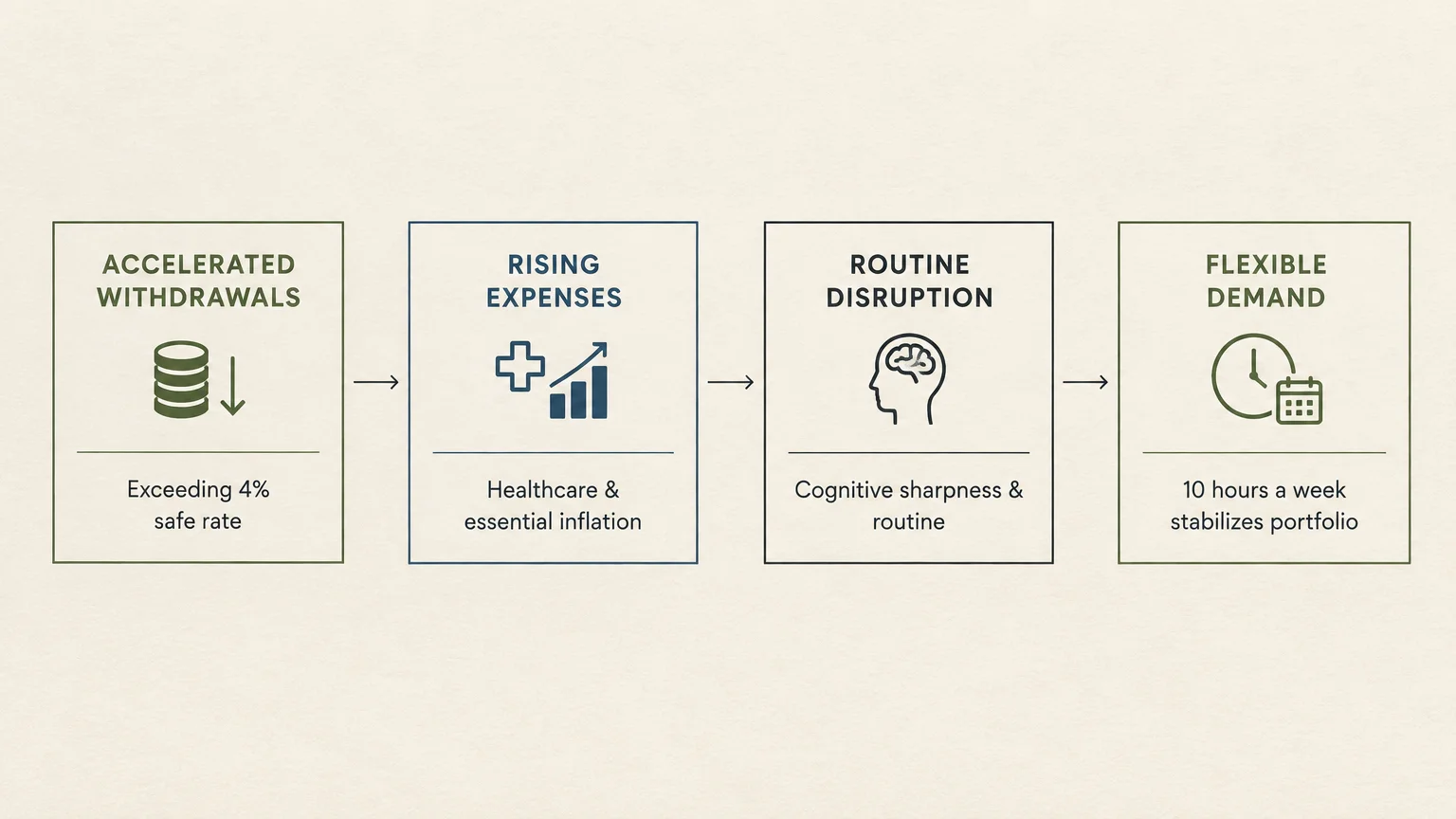
At a Glance: The Essentials
Unretirement has become a standard phase of modern longevity rather than a personal failure. Many retirees move between full-time leisure, part-time consulting, and flexible employment as their needs evolve.
- Accelerated Withdrawals: Withdrawing more than 4% annually exhausts smaller portfolios rapidly during market corrections.
- Rising Baseline Expenses: Surging healthcare premiums, property taxes, and grocery costs erode purchasing power.
- Loss of Personal Routine: Chronic boredom and lack of workplace engagement diminish cognitive sharpness and emotional health.
- Flexible Labor Demand: Employers actively seek seasoned professionals for fractional, consulting, and seasonal roles.
Returning to work even ten hours a week transforms your retirement math. Earned income halts portfolio liquidations and gives your invested assets room to recover.
1. Your Portfolio Withdrawal Rate Exceeds Safe Boundaries
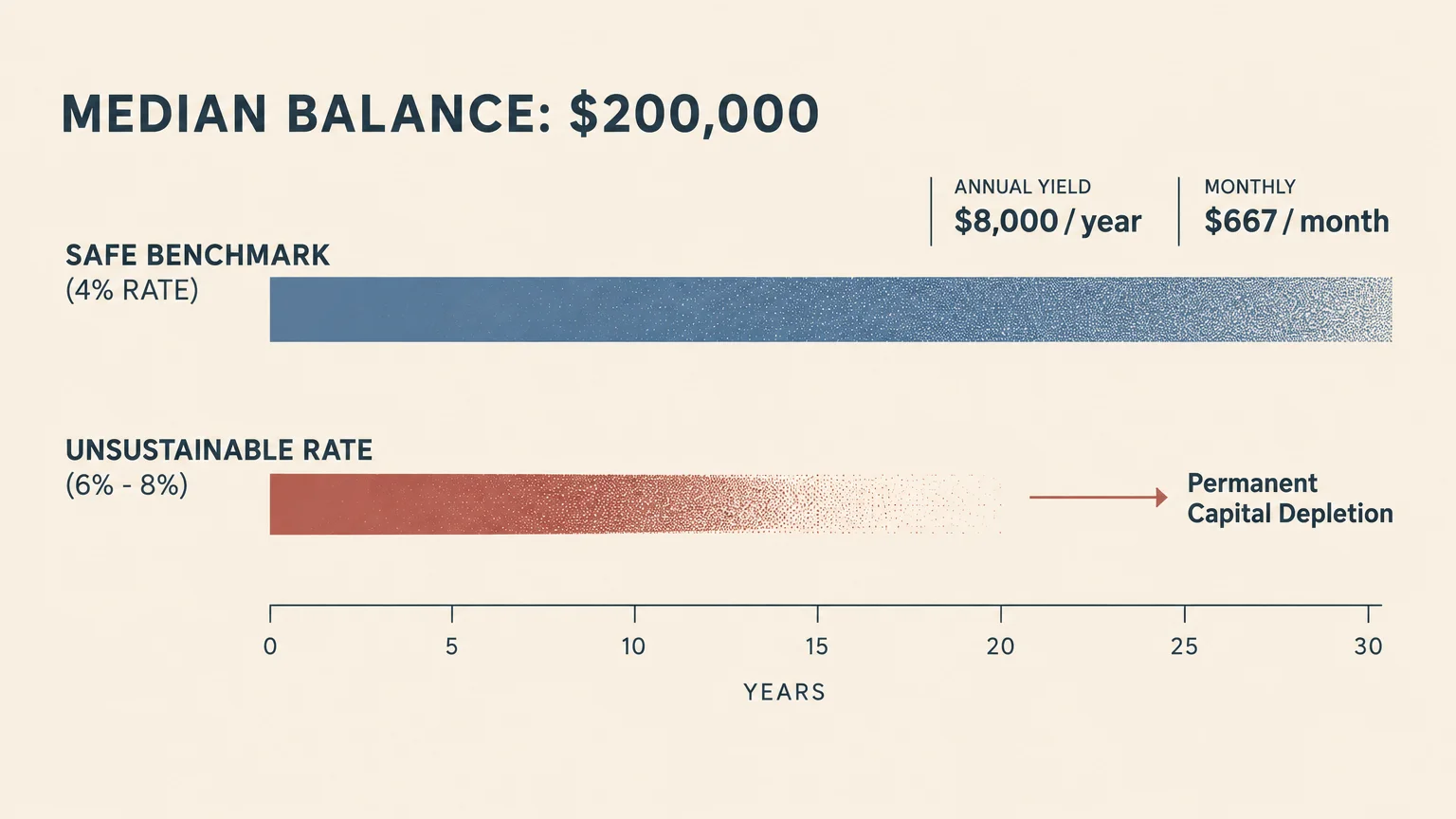
The classic 4% guideline assumes your portfolio survives thirty years through balanced asset growth. If you consistently withdraw 6% to 8% to cover baseline expenses, your capital will vanish rapidly.
According to the Federal Reserve Survey of Consumer Finances, the median retirement balance for Americans aged 65 to 74 is approximately $200,000. Applying a prudent 4% withdrawal rate yields only $8,000 annually, or $667 per month.
When unexpected living costs force you to double that withdrawal rate, your capital base erodes permanently. Returning to work replaces those portfolio draws with fresh cash flow.
2. Sequence of Returns Risk Strikes in Your First Five Years
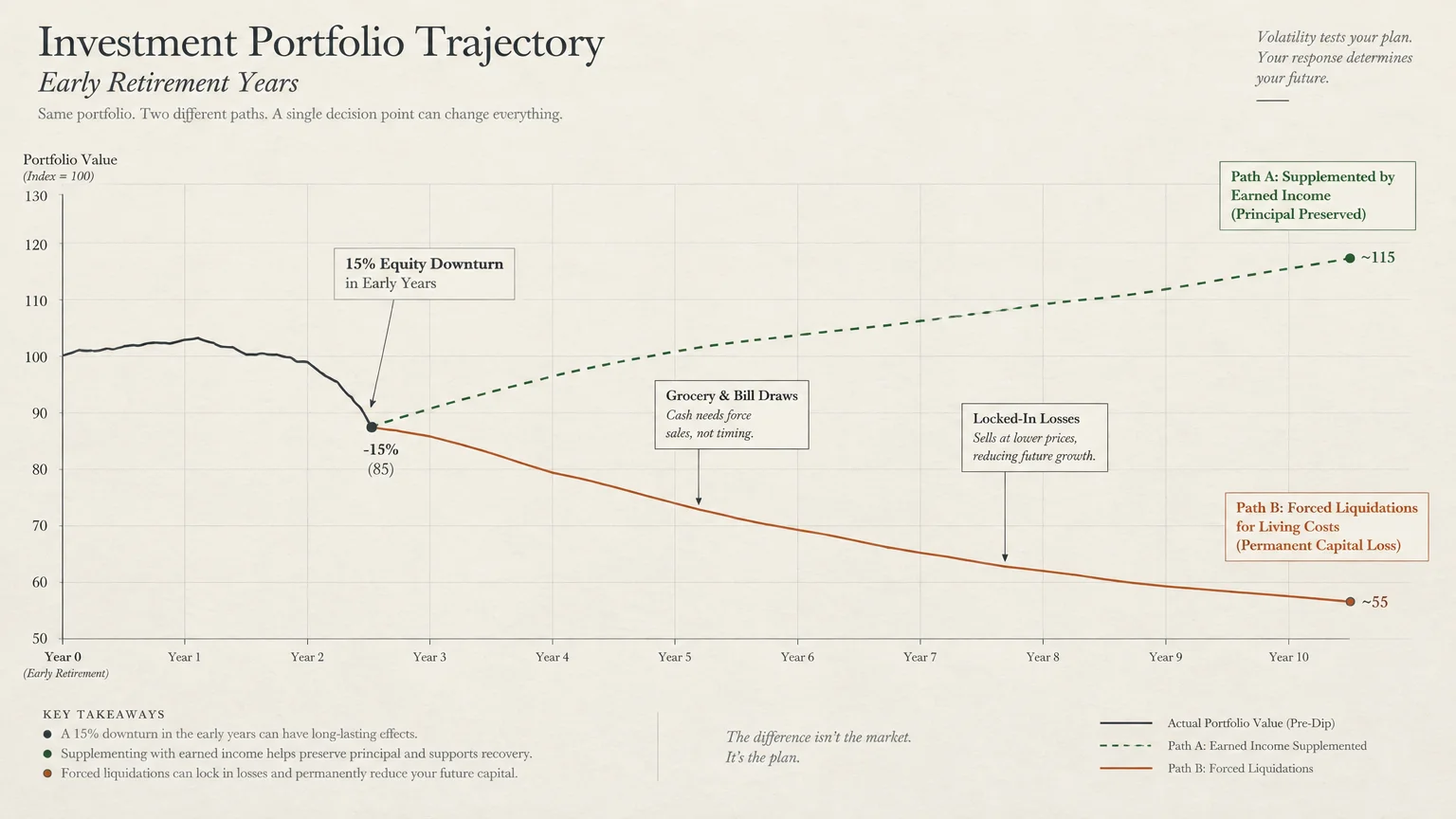
Experiencing market downturns during the earliest years of retirement creates catastrophic sequence-of-returns risk. Selling depressed equities to fund living expenses permanently reduces your portfolio’s ability to rebound.
When stock valuations drop 15%, liquidating shares to pay groceries locks in those losses forever. You cannibalize future compounding to meet immediate monthly bills.
Securing part-time employment eliminates the need to harvest depressed investments. Your earned income shields your nest egg until broader financial markets recover.
3. Out-of-Pocket Healthcare Costs Exceed Your Projections
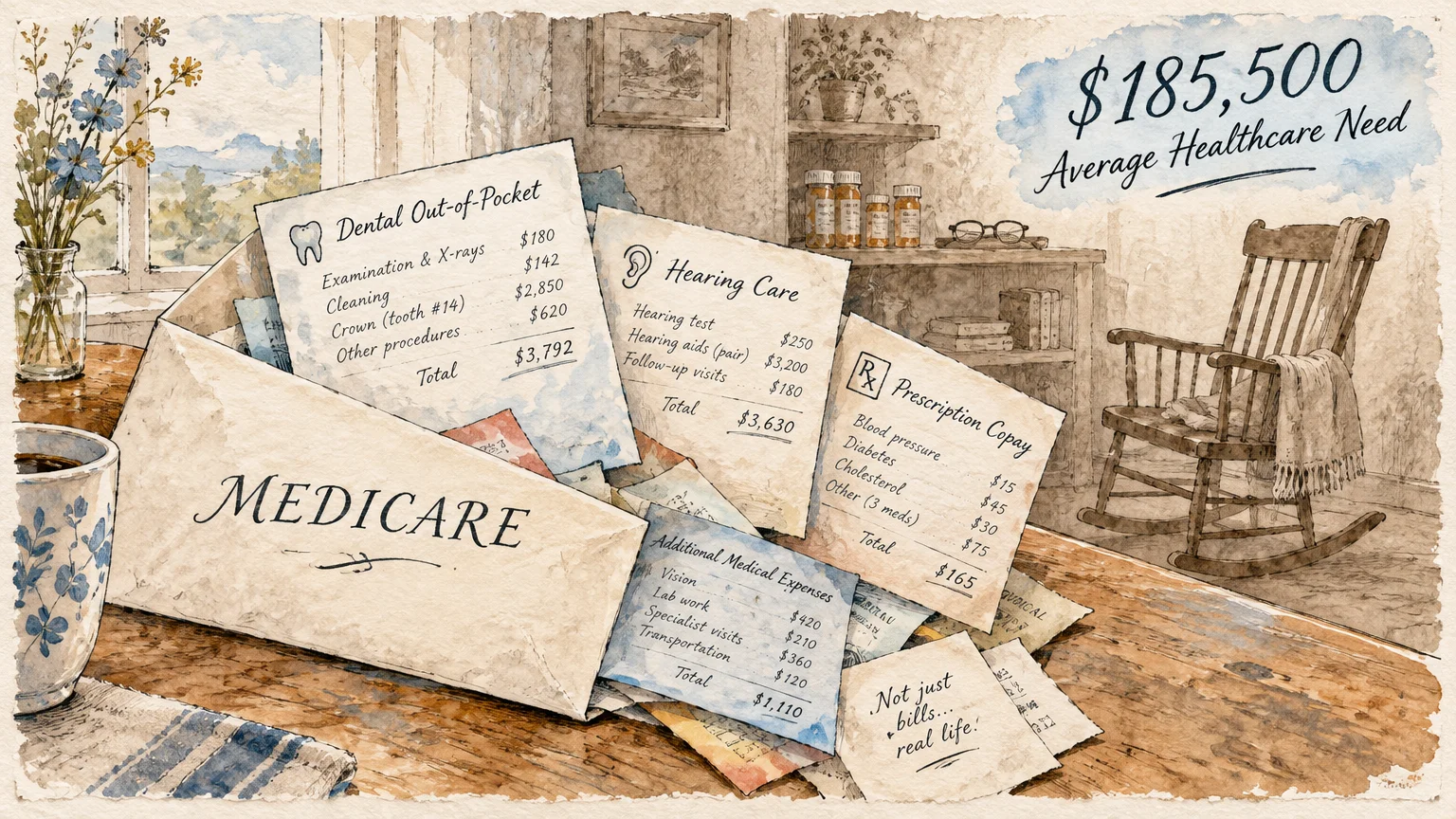
Many individuals mistakenly assume Medicare covers every medical expense after age 65. Fidelity Investments estimates that an average 65-year-old individual retiring in 2026 requires roughly $185,500 in after-tax savings just for healthcare.
Routine dental procedures, vision care, hearing aids, and private prescription copayments accumulate rapidly. These out-of-pocket medical bills quickly dismantle carefully structured household budgets.
Review standard charges directly through Medicare.gov to understand your statutory exposure. Securing employment with comprehensive group health benefits can dramatically curb these mounting expenses.

4. Non-Discretionary Inflation Eats Away at Fixed Budgets
Cumulative inflation strikes retirees particularly hard because basic necessities experience higher price volatility. Spikes in homeowners insurance, municipal property taxes, utility bills, and food costs directly squeeze fixed incomes.
Even moderate inflation degrades nominal purchasing power over a twenty-year retirement timeline. A pension that comfortably covered expenses five years ago may now barely manage utility bills.
Earned income provides an immediate, adjustable defense against rising living costs. Working enables you to keep pace with price increases without compromising your lifestyle.
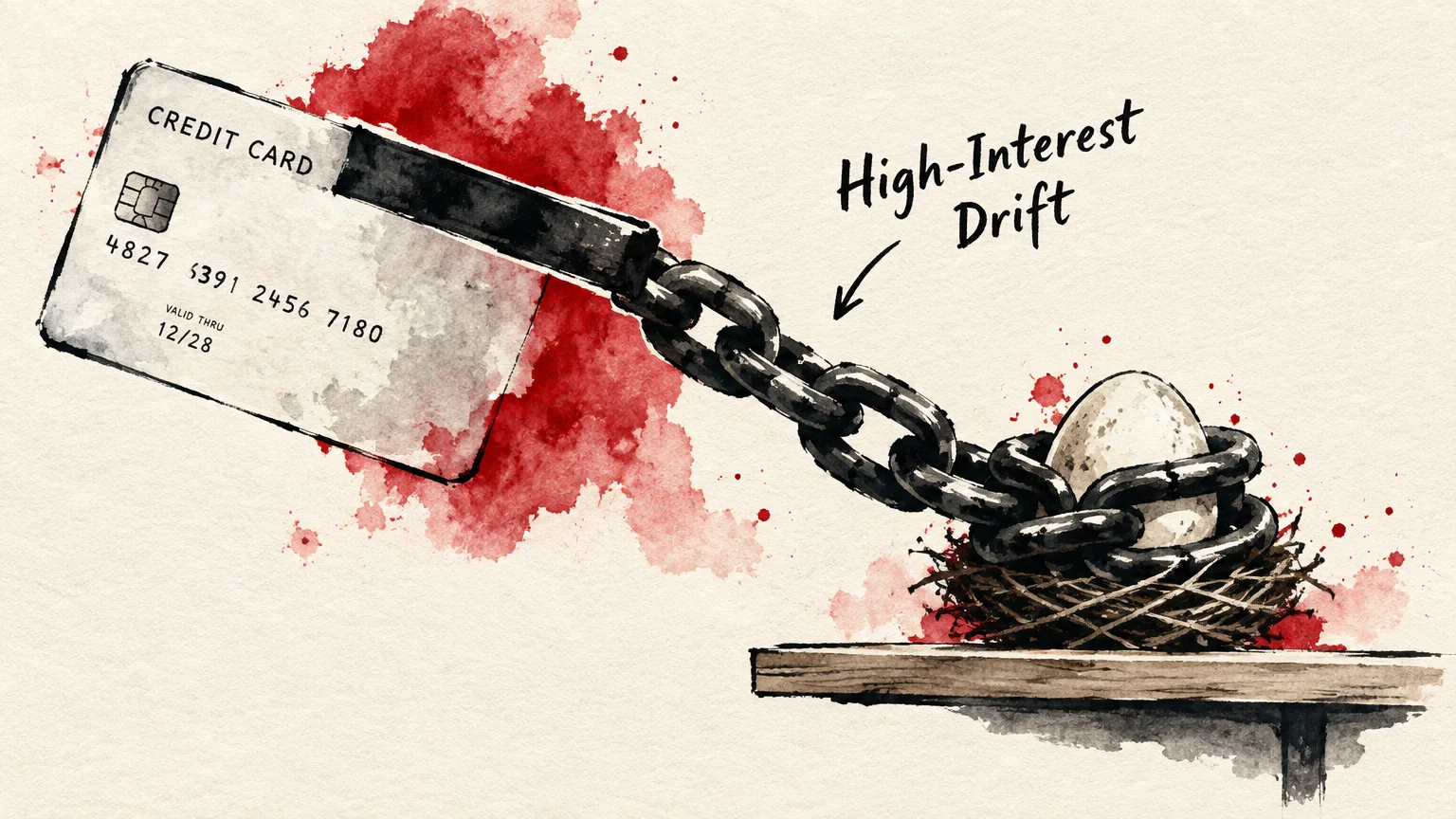
5. High-Interest Consumer Debt Starts Creeping Inward
Carrying credit card balances in retirement indicates that your monthly cash outflow outstrips your recurring distributions. Using revolving credit cards with 20% interest rates to bridge monthly deficits creates a compounding crisis.
Retirees living on fixed distributions cannot easily out-earn aggressive debt charges. Every dollar directed toward compounding credit card interest is a dollar stolen from essential living needs.
Unretiring creates the dedicated revenue stream required to extinguish high-interest debt immediately. Working preserves your assets from aggressive debt service charges.
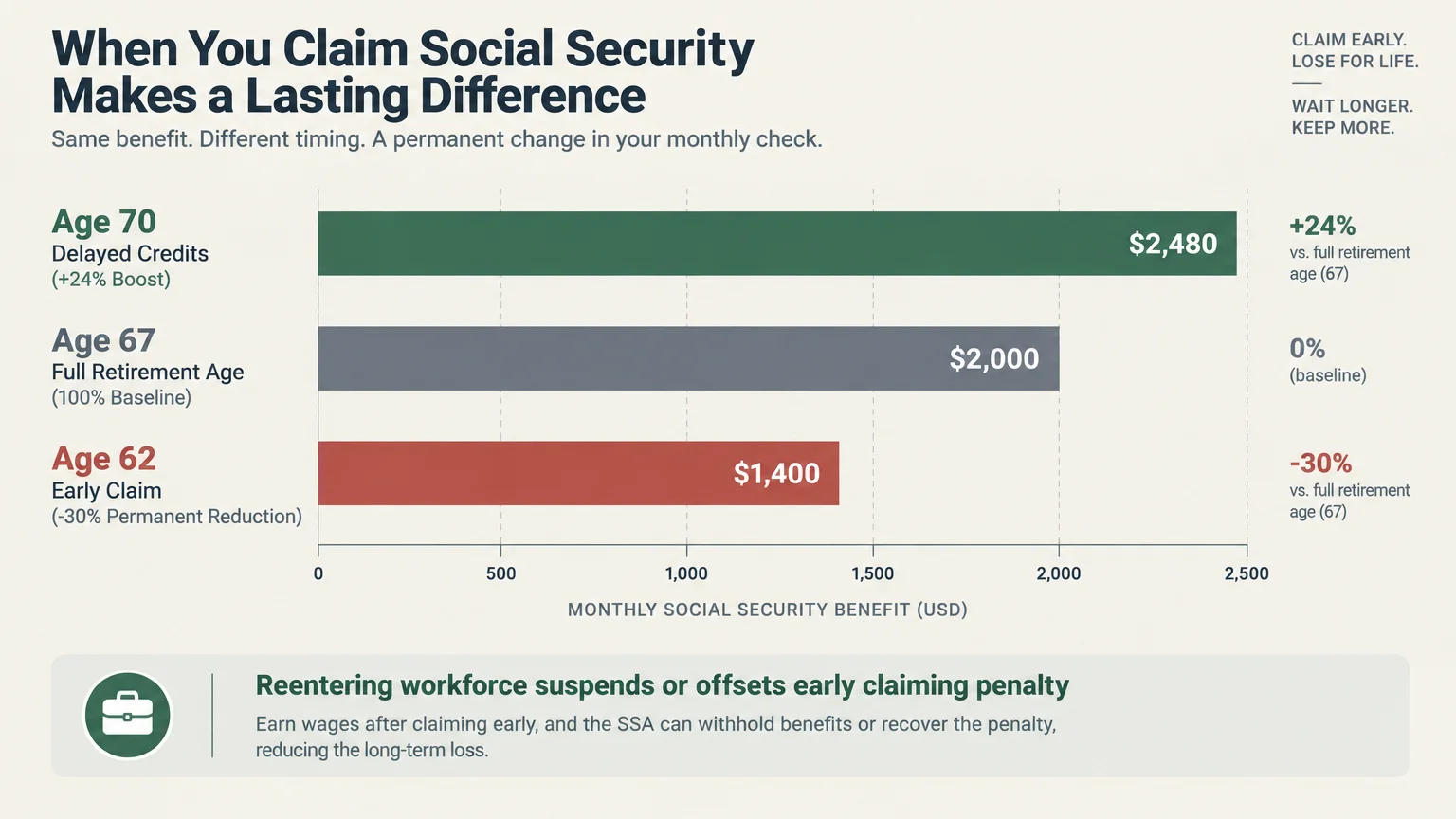
6. An Early Social Security Claim Has Pinched Your Monthly Income
Claiming Social Security at age 62 permanently slashes your monthly benefit check by up to 30% compared to full retirement age. Many retirees who claim early realize too late that the reduced benefit leaves little discretionary buffer.
Review your personal earnings records and baseline calculations at the official Social Security Administration website. If you claimed early and struggle financially, returning to work can stabilize your monthly finances.
If you have reached Full Retirement Age, you can suspend your benefit to earn delayed retirement credits until age 70. This strategic reset increases your permanent monthly payout by 8% for each year you wait.
“A retirement without a paycheck requires discipline, but returning to work should be viewed as an empowerment strategy, not a personal failure.” — Suze Orman, Personal Finance Expert

7. Daily Boredom and Lack of Structure Diminish Your Energy
Retirement often brings sudden disorientation once the novelty of unstructured free time fades. Days lose clear definitions when you wake up without scheduled projects, meetings, or shared deadlines.
Research published by AARP reveals that 14% of reentering workers returned to work primarily to combat mental stagnation and maintain social engagement. Intellectual stimulation protects executive cognitive function as you grow older.
Returning to professional environments reintroduces healthy accountability, deadlines, and social purpose. Work provides a natural framework that enriches personal days off.

8. Chronic Social Isolation Replaces Your Workplace Camaraderie
The modern workplace serves as a central hub for daily human interaction and mutual support. Stepping away from colleagues often creates an unanticipated social vacuum that casual community hobbies cannot fill.
Prolonged social isolation carries severe physical and emotional health risks comparable to chronic medical conditions. Passive television consumption frequently fills empty hours when personal connections decline.
Reentering the workforce immediately reestablishes a dynamic circle of peers, clients, and collaborators. Workplace conversations build meaningful belonging and reduce loneliness.
“Retirement is an illusion. We need purpose, structure, and community to thrive at every age.” — Mitch Anthony, Author of The New Retirementality

9. You Are Subsidizing Adult Children or Aging Parents
Many retirees discover that family support obligations do not stop when personal paychecks end. Financial help for struggling adult children or aging parents can rapidly deplete your retirement reserves.
Covering rent, down payments, or assisted living bills for family members drains accounts rapidly. You cannot secure a low-interest loan to fund your own golden years.
Returning to work creates an auxiliary income stream that funds these familial obligations safely. Professional earnings allow you to help family members without liquidating personal retirement assets.

10. Relentless Financial Anxiety Destroys Your Peace of Mind
Tracking market fluctuations with daily dread indicates that your retirement risk profile is improperly balanced. Experiencing panic over routine restaurant dinners or car repairs ruins the leisure you spent decades saving for.
Retirement should provide freedom and relaxation rather than chronic financial stress. If budgeting creates daily marital tension, your current distribution plan is unsustainable.
Earning an active paycheck, even on a flexible schedule, restores your psychological equilibrium. Active wages replenish checking accounts and dissolve persistent scarcity mindsets.

11. Large Deferred Capital Expenditures Loom on the Horizon
Aging roofs, failing climate systems, and high-mileage vehicles trigger sudden multi-thousand-dollar expenses. When several major capital obligations strike simultaneously, emergency liquidations can devastate a modest portfolio.
Withdrawing $25,000 directly from your nest egg during a down market permanently impairs asset growth. Many retirees struggle to replace that capital through regular investment returns.
Taking a temporary contract or seasonal role provides cash to finance major repairs outright. Targeted employment protects your baseline portfolio from severe capital calls.

12. Lucrative, Flexible Consulting Opportunities Emerge
Unretirement is not always driven by economic distress; high market demand for your expertise presents outstanding lifestyle opportunities. Former employers and industry competitors frequently pay premium hourly rates for institutional knowledge.
Independent consulting lets you dictate project timelines, work remotely, and refuse tedious administrative overhead. You monetize your expertise while preserving control over your calendar.
Financial education resources on Investopedia highlight how consulting income allows retirees to defer portfolio draws and build surplus wealth. Embracing these lucrative opportunities enriches retirement rather than limiting it.
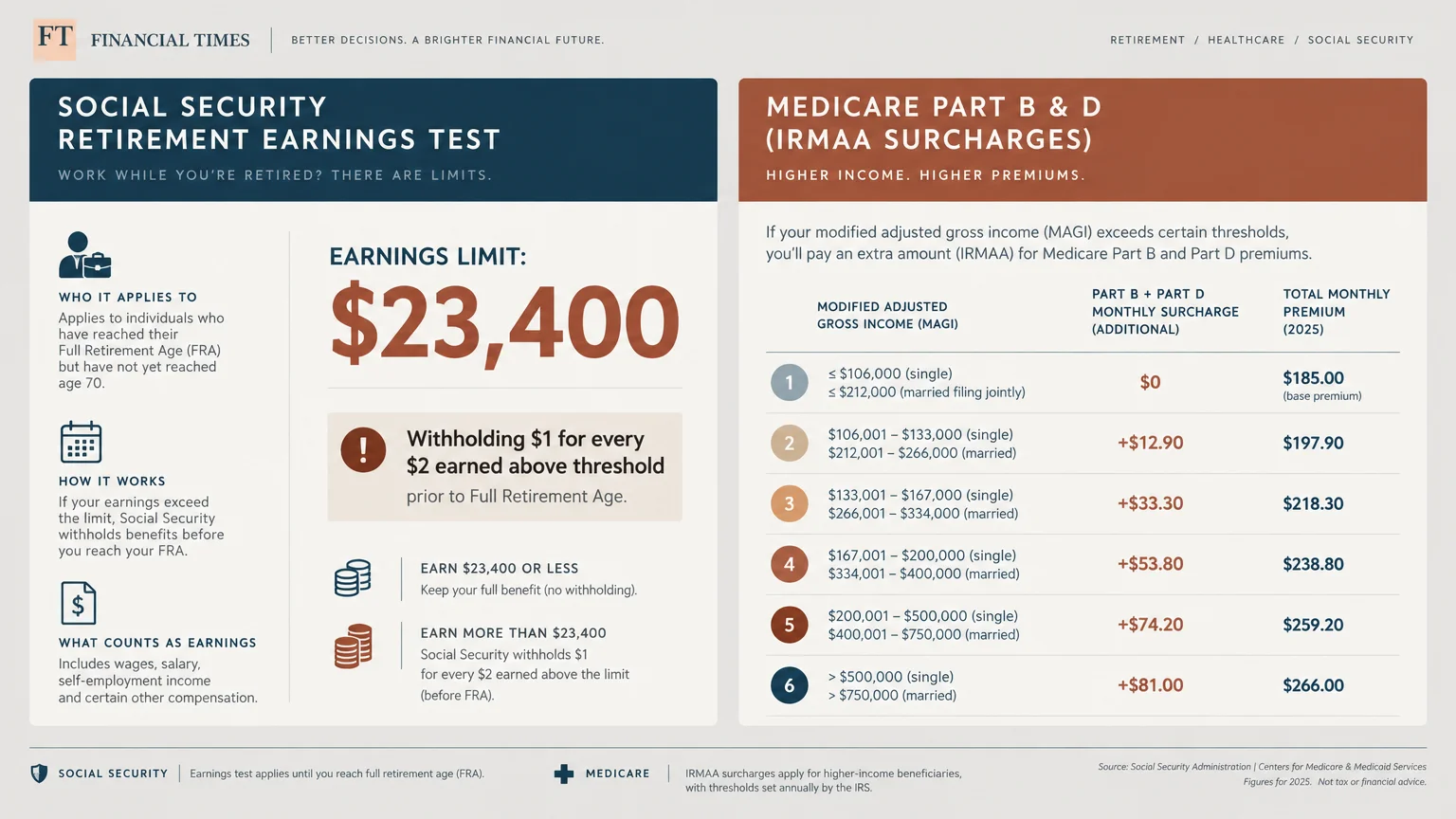
Regulatory Thresholds: Social Security and Medicare Limits
Navigating the transition back into the workforce requires careful attention to statutory federal earnings limitations. Exceeding income thresholds before Full Retirement Age (FRA) triggers benefit reductions and healthcare changes.
The Retirement Earnings Test applies exclusively to individuals who claim Social Security benefits before reaching FRA. Once you attain full retirement age, federal regulations place zero limits on your earned income.
| Statutory Rule / Metric | 2025 Threshold | 2026 Threshold | Operational Impact on Unretirees |
|---|---|---|---|
| RET Limit (Under FRA All Year) | $23,400 / year ($1,950 / mo) | $24,480 / year ($2,040 / mo) | SSA withholds $1 in benefits for every $2 earned above this threshold. |
| RET Limit (Year Reaching FRA) | $62,160 / year ($5,180 / mo) | $65,160 / year ($5,430 / mo) | SSA withholds $1 in benefits for every $3 earned above threshold until FRA month. |
| Standard Medicare Part B Premium | $185.00 / month | $202.90 / month | Standard monthly cost deducted automatically from Social Security checks. |
| Medicare Part B Annual Deductible | $257.00 / year | $283.00 / year | Annual out-of-pocket baseline before Part B outpatient coverage begins. |
| Employer Coverage Exemption | 20+ Employees | 20+ Employees | Allows workers 65+ to defer Part B premiums penalty-free via group plans. |
Any Social Security benefits withheld under the earnings test are not permanently forfeited. Upon reaching Full Retirement Age, the agency recalculates your monthly benefit upward to credit those withheld payments.
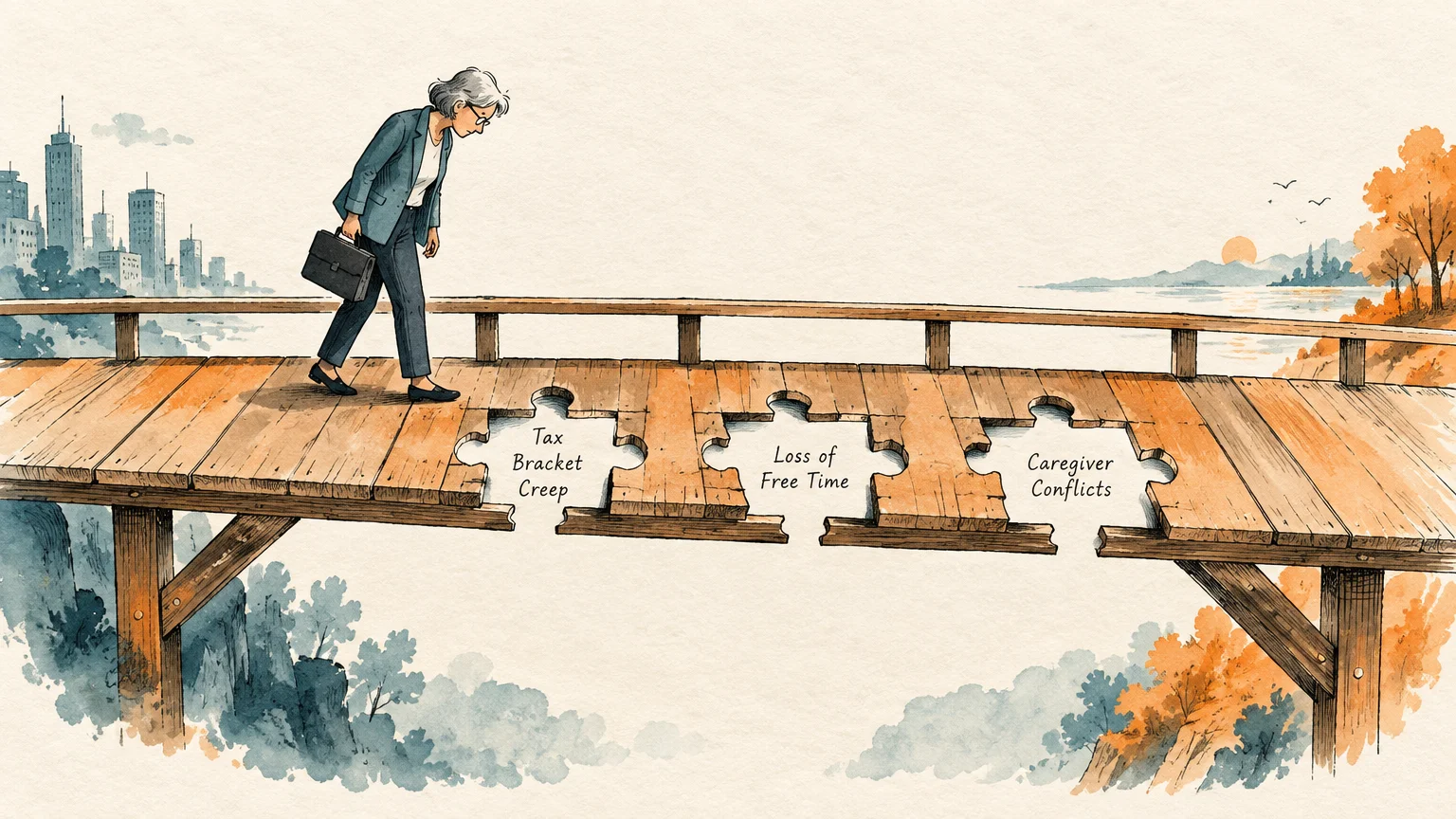
What Can Go Wrong When You Unretire
Reentering the workforce resolves cash flow issues, but poor planning introduces unwelcome tax and administrative hurdles. Understanding common pitfalls keeps your return to work profitable and manageable.
- Triggering Medicare IRMAA Surcharges: Significant consulting revenue can push your modified adjusted gross income past statutory tiers. This triggers steep Medicare Part B and Part D premium surcharges two years later.
- Forgetting State and Federal Income Tax Brackets: New wages layer directly on top of taxable pension payments and required minimum distributions. This push can lift your top marginal dollars into a significantly higher tax bracket.
- Physical Exhaustion and Health Burnout: Taking demanding full-time jobs can tax your physical health and strain relationships. Prioritize flexible, lower-stress roles that honor your stamina and lifestyle priorities.
- Violating Employer Benefit Enrollment Windows: Transitioning between private group insurance and Medicare requires strict adherence to special enrollment timelines. Missing deadlines can trigger lifetime late-enrollment penalties.
Carefully evaluate potential net earnings after accounting for income taxes, transportation costs, and professional apparel. Retaining clear financial boundaries ensures your employment serves your broader retirement goals.

When to Consult a Professional
Unretiring creates cross-currents involving tax codes, investment management, and government entitlements. A fee-only financial planner or certified public accountant ensures your earned income improves your overall balance sheet.
- Evaluating Benefit Suspension: A planner helps determine whether suspending your Social Security benefits at Full Retirement Age optimizes your lifetime household payouts.
- Managing Income-Related Monthly Adjustment Amounts: Tax specialists structure contract deductions, HSA contributions, and retirement plan deferrals to keep you below punitive IRMAA thresholds.
- Coordinating Primary Healthcare Coverage: Health insurance advisors confirm whether your employer’s group plan qualifies as primary coverage over Medicare.
- Rebalancing Investment Allocations: Advisors adjust your portfolio risk levels because renewed wages reduce the need for aggressive liquid yields.
Professional guidance prevents costly compliance mistakes and maximizes your take-home pay. Strategic advice ensures your return to work permanently strengthens your financial security.
Frequently Asked Questions
Does returning to work permanently reduce my Social Security benefits?
No, returning to work never causes a permanent loss of your Social Security benefits. If earnings exceed annual thresholds before your Full Retirement Age, withheld benefits are credited back to increase your monthly payouts at FRA.
Can I drop Medicare Part B if my new job offers health insurance?
You can drop or delay Medicare Part B without penalty only if your employer employs twenty or more individuals. Group health plans from smaller companies act secondary to Medicare, making Part B mandatory to avoid coverage lapses.
Will returning to work increase my future Social Security payouts?
Social Security calculates benefit amounts using your highest thirty-five inflation-indexed earnings years. If current wages exceed an earlier low-earning year in your career history, the administration recalculates your baseline benefit upward.
What happens to my employer retirement accounts if I unretire?
Taking a job that provides a 401(k) or 403(b) allows you to contribute earned income and reduce taxable wages. Some company plans even let you defer Required Minimum Distributions from that specific employer plan while actively working.
Unretiring offers a reliable, empowering strategy to protect your long-term wealth, revitalize your daily routine, and maintain financial autonomy. Approaching your return to work with a clear plan ensures that every hour invested strengthens your golden years.
The information in this guide is meant for educational purposes. Your specific circumstances—including income, health needs, tax situation, and goals—may require different approaches. When in doubt, consult a licensed professional.
Last updated: March 2026. Retirement benefits, tax rules, and healthcare regulations change frequently—verify current details with official sources.









Leave a Reply