
Discovering that a criminal stole your hard-earned money triggers immediate panic, but rapid intervention can prevent catastrophic losses. Taking the correct actions during the first few hours directly determines how much money you recover.
Older Americans lost more than $7.7 billion to fraud according to recent FBI reporting, with investment scams causing the steepest damages. Scammers target retirees precisely because you have spent decades accumulating savings and home equity.
This scam recovery checklist walks you through eight urgent steps to lock down accounts, secure your identity, and preserve your financial independence.

The Essentials: Immediate Actions at a Glance
Time is your most valuable asset when fighting financial fraud. Fraud networks move stolen funds rapidly through layered accounts and cryptocurrency exchanges to erase the paper trail.
Executing an organized response minimizes your legal liability and protects your remaining wealth. Focus on these foundational priorities the moment you suspect foul play:
- Sever communications: Cut all contact with the suspected scammer immediately, hanging up phone calls and closing remote desktop sessions.
- Notify institutions: Alert your banks, credit card issuers, and brokerage firms to freeze accounts and initiate payment recalls.
- Seal your credit: Place credit freezes across Equifax, Experian, and TransUnion to block unauthorized loan applications.
- Document everything: Preserve call logs, text messages, fraudulent emails, wire instructions, and transaction numbers.
1. Sever Contact and Isolate Your Devices
Your first move requires total disengagement from the criminal. Hang up the telephone, cease replying to text messages, and block the scammer’s email addresses.
Fraudsters rely on emotional manipulation and urgency to maintain control over victims. Continuing communication exposes you to deeper deception; cut the connection without offering explanations or warnings.
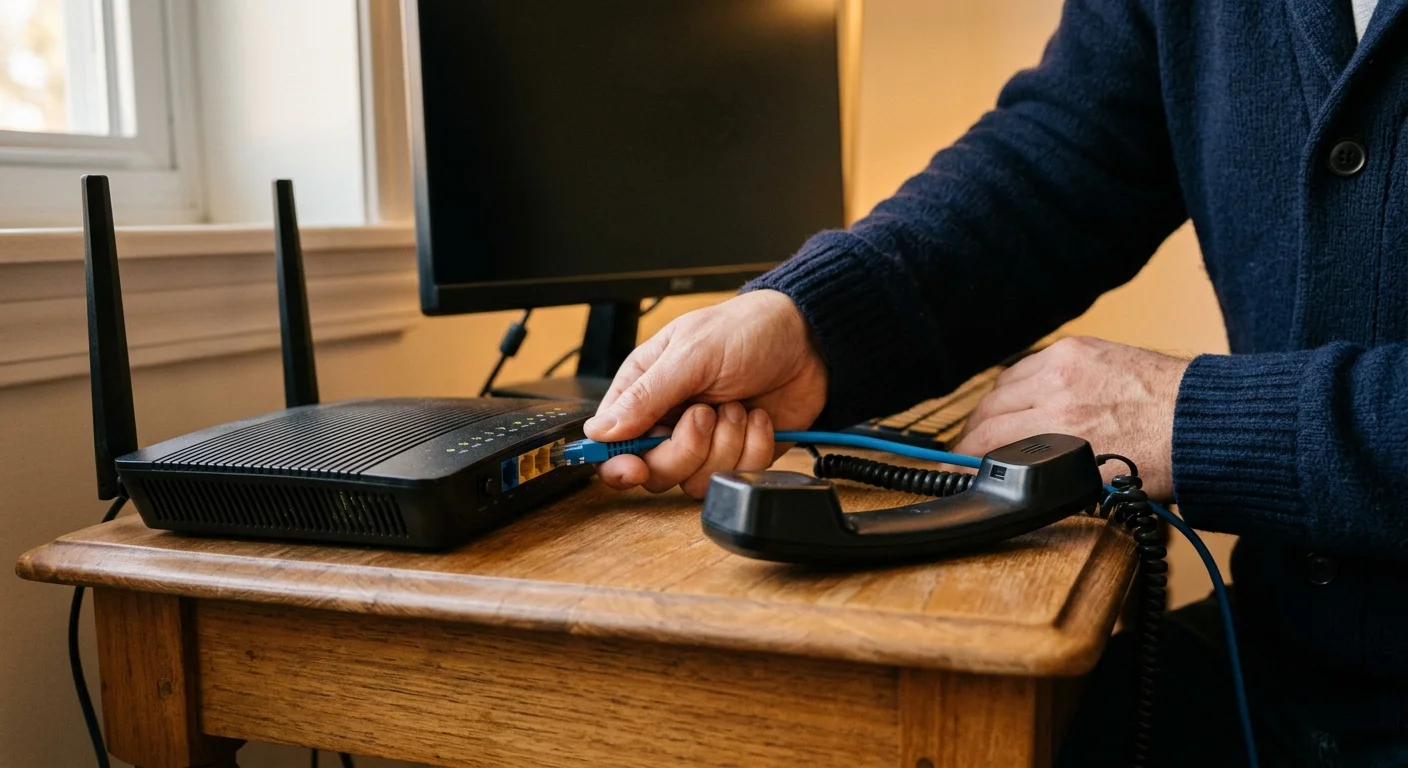
If you granted the scammer remote computer access through software like AnyDesk, TeamViewer, or UltraViewer, disconnect your internet immediately. Unplug the Ethernet cable or power down your Wi-Fi router instantly.
Remote desktop applications allow criminals to install background surveillance tools, keystroke loggers, and credential-harvesting scripts. Keeping the device offline stops active data transfers.
Leave the affected computer powered off until a certified computer repair professional can inspect it. You can also run reputable offline antivirus software to remove hidden malicious programs.
Do not use the compromised computer to change sensitive passwords or check retirement balances. Perform all subsequent recovery actions from a completely separate, secure device, such as a spouse’s tablet or a mobile phone.

2. Alert Your Financial Institutions and Halt Transactions
Call the fraud department of every financial institution connected to the scam within minutes of realizing what happened. Use the official phone number printed on the back of your payment card or on your monthly statement.
Federal regulations establish strict timelines that dictate your financial exposure after unauthorized account activity. Moving quickly protects you from absorbing severe financial losses under federal banking rules.
If you transferred funds through a wire, instruct your bank to issue an immediate wire recall notice. Ask the bank’s fraud team to contact the receiving institution to freeze the incoming funds.
When domestic or international wires exceed certain thresholds, financial institutions can collaborate with federal task forces. The FBI Financial Fraud Kill Chain can assist banks in freezing stolen money, but this mechanism works best within 72 hours of the wire.
Review the specific regulatory deadlines governing your accounts to understand your personal liability limits under federal law:
| Payment Method | Governing Regulation | Reporting Window | Maximum Consumer Liability |
|---|---|---|---|
| Debit Card / ACH | Regulation E (Electronic Fund Transfer Act) | Within 2 business days | $50 |
| Debit Card / ACH | Regulation E (Electronic Fund Transfer Act) | 2 to 60 calendar days | $500 |
| Debit Card / ACH | Regulation E (Electronic Fund Transfer Act) | After 60 calendar days | Unlimited liability for new transfers |
| Credit Card | Regulation Z (Fair Credit Billing Act) | Before card use, or number stolen only | $0 |
| Credit Card | Regulation Z (Fair Credit Billing Act) | Within 60 days of statement | $50 maximum |
| Bank Wire Transfer | Uniform Commercial Code Article 4A | Within 72 hours for best recall odds | Variable; recovery depends on fund recovery |
| Gift Cards / P2P Apps | Terms of Service / Limited Regulatory Caps | Immediate notification required | Often 100% loss unless balance unredeemed |
Federal protections distinguish sharply between credit cards and debit cards. The Consumer Financial Protection Bureau (CFPB) enforces these consumer protections across commercial banks and credit unions.
Credit card transactions carry the strongest legal shields because the card issuer’s money is at stake rather than your liquid cash. Unauthorized credit card charges limit your exposure to $50, and issuers routinely waive that fee entirely.
Debit cards draw directly from your checking or savings accounts, which places your everyday living capital at risk. Reporting debit card compromises within two business days caps your loss at $50, but waiting longer than 60 days leaves you entirely unprotected.
3. Freeze Your Credit Across the Three Major Bureaus
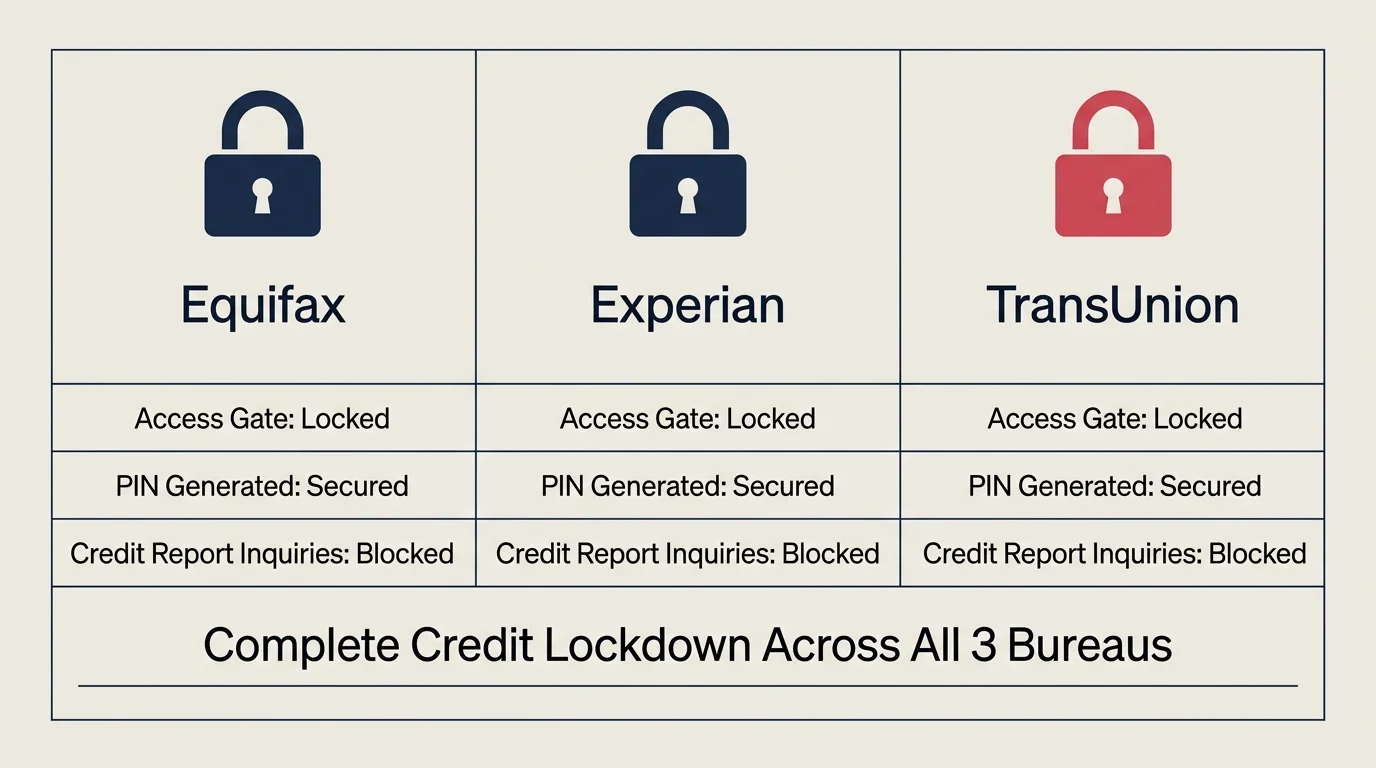
Preventing identity theft after fraud requires locking down your credit profiles at all three nationwide credit bureaus: Equifax, Experian, and TransUnion. Scammers frequently use stolen personal details to open fraudulent credit cards, lines of credit, or auto loans.
Under the Economic Growth, Regulatory Relief, and Consumer Protection Act, freezing and unfreezing your credit report is 100% free by federal law. Never pay a third-party company or bureau subscription to lock your credit reports.
A credit freeze blocks prospective lenders from accessing your credit history, preventing them from approving new credit accounts in your name. Legitimate creditors will not extend financing without reviewing your credit file first.
Contact each credit reporting agency individually, because establishing a freeze at one bureau does not automatically protect the other two. Set up an online profile with each agency and record your login credentials and personal identification PINs securely:
- Equifax: Visit Equifax.com/personal/credit-report-services or call 1-888-298-0045.
- Experian: Visit Experian.com/freeze or call 1-888-397-3742.
- TransUnion: Visit TransUnion.com/credit-freeze or call 1-888-909-8872.
A credit freeze does not alter your existing credit accounts, credit score, or your ability to use existing credit cards. When you legitimately need to apply for new credit, you can lift the freeze temporarily using your private PIN.
You can also place a free, one-year fraud alert on your file by contacting any one of the three agencies. The agency you contact must notify the remaining two bureaus automatically to flag your file.
A fraud alert forces prospective lenders to take extra steps to verify your identity before opening accounts. However, a full credit freeze offers substantially stronger security for long-term fraud recovery.
4. Reset Credentials and Secure Digital Gateways
Once you disconnect corrupted hardware and notify your financial institutions, secure your digital footprint against secondary intrusions. Compromised passwords often lead criminals into other unrelated services through automated credential-stuffing attacks.
Begin by changing passwords for your primary email accounts. Your email address acts as the master key to your digital life, enabling password resets across all banking and investment platforms.
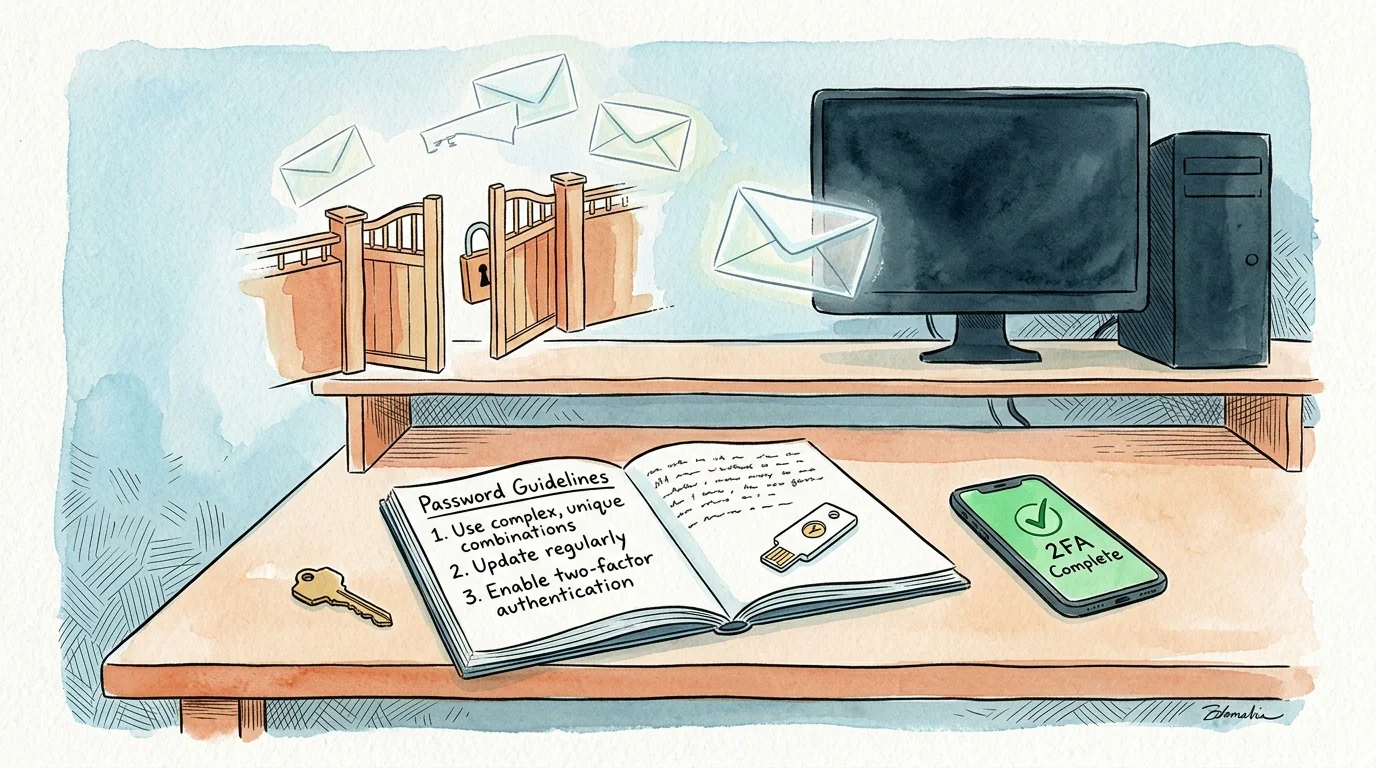
Craft unique passphrases consisting of at least sixteen characters, blending upper- and lowercase letters, numbers, and symbols. Never reuse passwords across banking, healthcare, retirement, or social media portals.
Adopt a reputable password manager to generate and store complex credentials automatically. Password managers remove the burden of memorizing dozens of complex passphrases while keeping your credentials encrypted.
Activate multi-factor authentication (MFA) across every account that supports it. Multi-factor authentication requires a second verification step before granting access to your sensitive records.
Avoid SMS text message verification codes whenever possible, as cybercriminals can intercept text messages through SIM-swapping schemes. Instead, select software-based authenticator apps like Google Authenticator or Microsoft Authenticator, or utilize physical security keys.
“Consumer financial protection is not just about keeping markets fair; it is about ensuring that no American sees their lifetime of savings wiped out by predatory actors and deceptive practices.”
— Elizabeth Warren, U.S. Senator and Consumer Protection Advocate

5. File an Official Identity Theft Report at IdentityTheft.gov
If the scam involved the disclosure of your Social Security number, date of birth, or account passwords, report it to the Federal Trade Commission. The federal government operates a centralized recovery hub at IdentityTheft.gov.
IdentityTheft.gov guides you through a customized, step-by-step recovery process based on the exact personal information you exposed. The platform produces an official FTC Identity Theft Report upon completion.
Your FTC Identity Theft Report serves as an essential legal instrument. It proves to banks, credit bureaus, and collection agencies that fraudulent debts and accounts were created by a criminal rather than through your own default.
Under federal consumer protection laws, credit reporting agencies must suppress fraudulent information from your credit report once you present an official FTC report. Creditors also cannot sell fraudulent debts to debt collectors once you supply this documentation.
Store physical and electronic copies of this completed report alongside your police reports. You will repeatedly reference your FTC complaint number throughout the administrative recovery phase.
6. Report the Crime to Federal and Local Authorities
Reporting fraud holds financial criminals accountable and creates the official records necessary to dispute unauthorized transactions. Many victims hesitate to contact law enforcement, yet official reports remain mandatory for significant bank reconciliations.
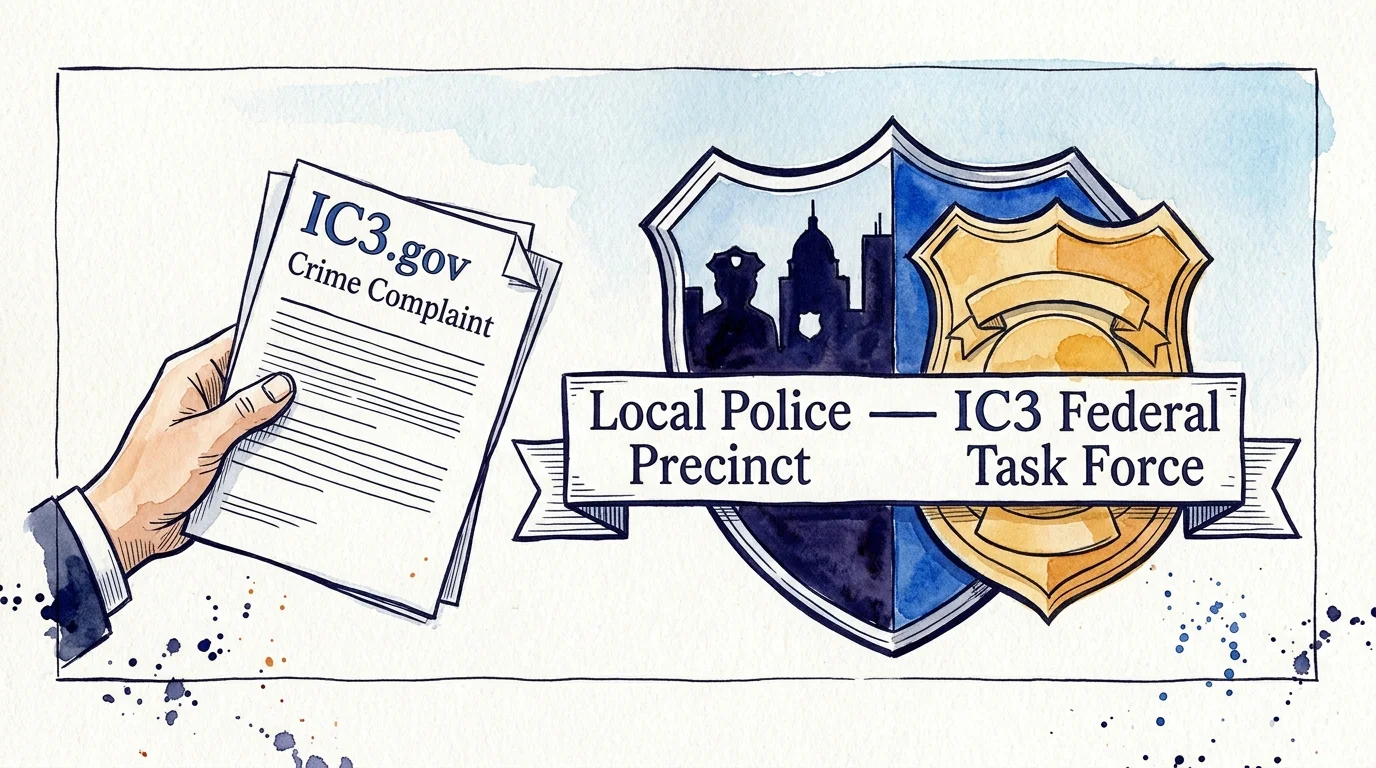
File an initial internet crime report through the FBI’s Internet Crime Complaint Center at IC3.gov. This specialized portal tracks wire fraud, business email compromise, cryptocurrency investment fraud, and international criminal enterprises.
The FBI aggregates IC3 complaint data to detect patterns, identify illicit financial mules, and disrupt international cyber syndicates. Providing complete transaction hashes, account numbers, and communication transcripts assists active investigations.
File a complementary report through the FTC’s civil reporting site at ReportFraud.ftc.gov. The FTC analyzes these complaints to build administrative enforcement actions and civil lawsuits against deceptive organizations.
Older adults can also access personalized administrative support through the Department of Justice. The DOJ National Elder Fraud Hotline operates at 1-833-FRAUD-11 (1-833-372-8311), providing free case managers who support victims through every recovery hurdle.
Visit your local municipal police department or county sheriff’s office to file an official criminal police report. Bring printed copies of your bank statements, fraudulent correspondence, phone numbers, and your FTC report.
Local law enforcement officers might initially hesitate to file a report if the perpetrator operates overseas. Respectfully insist on obtaining an official police report number, reminding the officer that your financial institutions require one to process fraud claims.

7. Safeguard Your Social Security and Government Benefits
Criminals routinely target retirement payments, Medicare credentials, and veteran benefits to divert direct deposit streams into rogue accounts. Securing your public benefits safeguards your steady monthly retirement income.
If your Social Security number was compromised, notify the Social Security Administration Office of the Inspector General online at OIG.ssa.gov or by phone at 1-800-269-0271. Check your records at the official Social Security Administration (SSA) website.
Log into your personal “my Social Security” account to review your direct deposit banking information. Verify that the bank routing numbers and account numbers match your active checking accounts exactly.
If you have not created an online account, register one immediately before a scammer creates an unauthorized profile using your credentials. Add enhanced security options, including mandatory two-step verification through Login.gov or ID.me.
Request an Identity Protection PIN (IP PIN) from the Internal Revenue Service to block fraudulent tax filings. A criminal with your personal details can file a false return early in the tax year to steal your refund.
The IRS IP PIN consists of a private six-digit code assigned to you annually. The IRS automatically rejects any electronic tax filing that lacks this protective code.
Review your quarterly Medicare Summary Notices to confirm that no healthcare providers billed Medicare for equipment or services you never received. Report suspicious medical billings directly to Medicare fraud investigators at 1-800-MEDICARE.

8. Maintain an Exhaustive Fraud Documentation Log
Recovering from fraud requires persistent administrative coordination over several months. Maintaining an organized, chronological dossier ensures critical evidence remains accessible when disputing charges or applying for restitution.
Purchase a dedicated physical notebook or set up a secure spreadsheet to track all fraud-related conversations. Disorganized documentation creates confusion, causes missed deadlines, and harms your credibility during dispute reviews.
Record the exact date, time, and full name of every bank representative, law enforcement officer, and agency specialist you speak with. Always write down the direct phone extension and unique case reference number assigned to your claim.
Preserve every scrap of direct evidence linked to the fraud scheme. Create a dedicated folder containing the following critical materials:
- Transaction receipts: Bank wire confirmation slips, cashier’s check receipts, electronic transfer summaries, and gift card serial numbers.
- Digital exchanges: Printed copies of all email headers, text messages, social media chats, and voicemails from the fraudster.
- Official forms: Certified copies of your local police report, FTC Identity Theft Report, and IC3 acknowledgment receipt.
- Written correspondence: Physical letters sent to creditors via USPS Certified Mail with return receipts requested.
When sending dispute documents to financial institutions, never mail your original documents. Always send photocopies, keeping the original evidence safely preserved inside your primary binder.
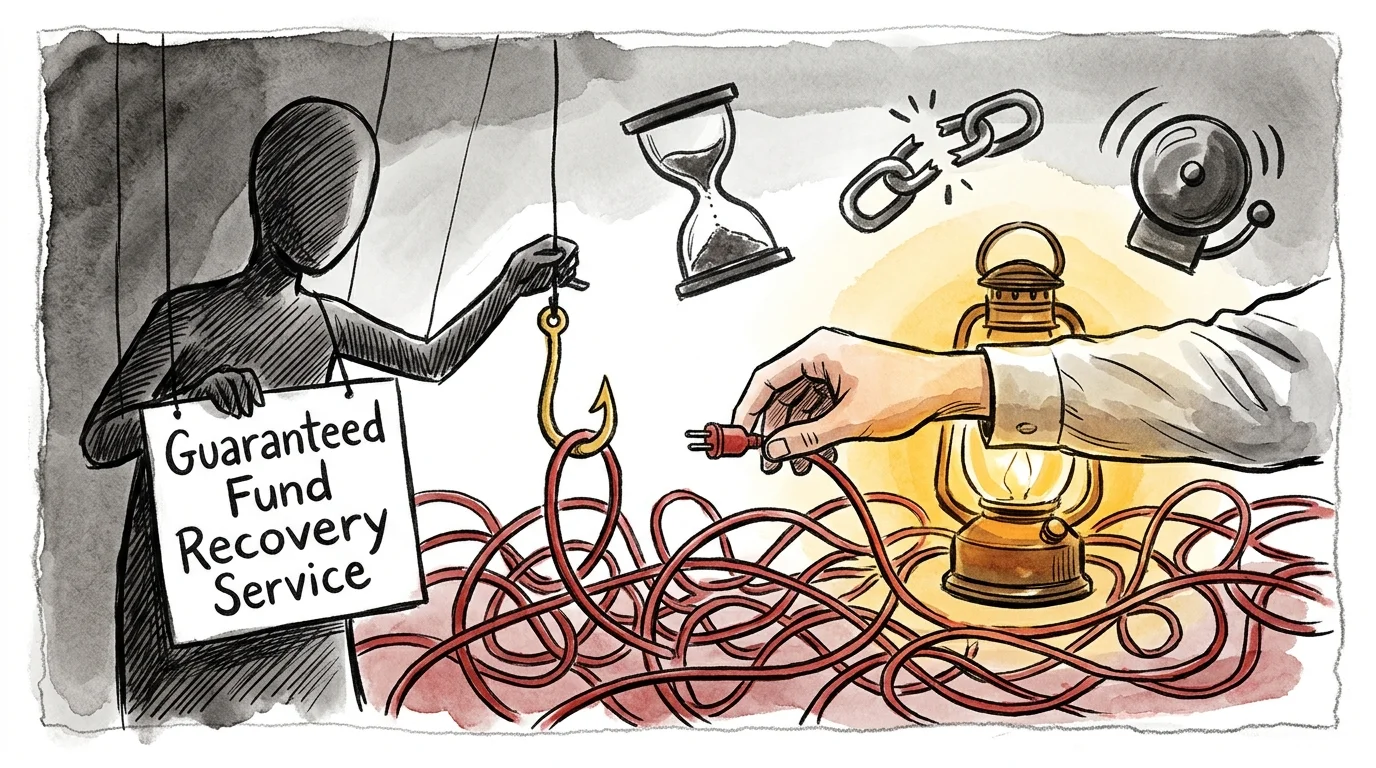
What Can Go Wrong: Critical Mistakes to Avoid
Experiencing financial fraud creates intense emotional stress, which often triggers hasty decisions that deepen the financial damage. Recognizing common post-fraud traps prevents you from falling into secondary scams.
The most dangerous pitfall involves falling prey to secondary “recovery scammers.” These predators monitor public complaint forums, social media channels, and dark web victim lists to identify vulnerable targets.
Recovery scammers pose as private investigators, ethical hackers, or international regulatory agents promising to retrieve your lost funds for an upfront fee. Legitimate government entities, including the FBI and FTC, will never contact you demanding money to recover stolen assets.
Private entities cannot hack into overseas cryptocurrency wallets or foreign bank accounts to claw back money. Paying an upfront fee to a recovery specialist almost always results in a complete loss of those additional funds.
Another damaging misstep involves hiding the fraud from family members, trusted advisors, or legal professionals out of shame. Deceptive criminals exploit sophisticated psychological tactics developed by organized syndicates; falling victim is not an indicator of diminished intelligence.
Isolating yourself prevents trusted relatives from providing administrative and emotional support during an exhausting recovery process. Consumer advocacy organizations like AARP emphasize that open communication reduces the isolation that fraudsters exploit.
Failing to inspect recurring bank statements represents another widespread mistake. Victims often focus solely on the single large transaction that caught their attention, overlooking smaller subscription charges and trial withdrawals.
Scammers frequently test stolen financial credentials using nominal transactions under five dollars before initiating massive withdrawals. Carefully audit six months of historical statements across all checking accounts, credit cards, and home equity lines of credit.

When to Consult a Professional
Many fraud disputes resolve through standard consumer banking channels and credit bureau interventions. However, complex fraud cases frequently require specialized professional expertise to limit long-term legal and financial liability.
Consider retaining professional advisors if your situation matches any of the following circumstances:
- Catastrophic retirement balance depletion: If you lost substantial sums from a 401(k), traditional IRA, or brokerage account, consult a fee-only Certified Financial Planner. Financial planning education through Investor.gov can help you evaluate safe restructuring options.
- Complex tax complications: Scams involving unauthorized early retirement distributions trigger immediate income tax liabilities and early withdrawal penalties. A Certified Public Accountant (CPA) can help you navigate casualty loss rules and dispute erroneous 1099-R forms filed with the IRS.
- Persistent legal threats and unauthorized collections: If debt collection agencies pursue you aggressively for debts created by an identity thief, hire a consumer rights attorney. An attorney can enforce protections under the Fair Debt Collection Practices Act.
- Compromised estate planning and power of attorney documents: If a caregiver, estranged relative, or financial predator manipulated your estate documents, retain an elder law attorney. They can petition the court to revoke fraudulent powers of attorney, freeze contested trusts, and protect your remaining assets.
Frequently Asked Questions
Can I recover money sent through a bank wire transfer?
Recovering wire funds depends heavily on how quickly you act. If you notify your bank within 72 hours, their fraud division can collaborate with the FBI’s Recovery Asset Team to halt the wire before the recipient bank releases the cash.
Once the recipient withdraws the wired funds or converts them into non-custodial cryptocurrency, the probability of recovery drops significantly. Nevertheless, filing official reports creates the documentation required for potential legal restitution later.
Does homeowner’s insurance cover financial scams and identity theft?
Standard homeowner’s insurance policies rarely cover direct cash losses resulting from voluntary transfers or deceptive scams. However, many modern policies include optional identity theft endorsements that reimburse administrative recovery expenses.
These policy riders typically cover lost wages, notary fees, certified mailing costs, and reasonable attorney fees associated with repairing your identity. Contact your insurance agent to check if your policy carries fraud or cyber protection endorsements.
How do I know if my Social Security number is being used fraudulently?
Warning signs include unexpected letters from the IRS about multiple tax returns, unfamiliar credit accounts appearing on your credit reports, or sudden interruptions in your direct deposit benefits. You might also receive bills for medical services you never received.
Review your Social Security earnings statement annually through your online account to verify that no unauthorized employment earnings are reported under your number. Report any discrepancies immediately to the Social Security Administration.
Will freezing my credit hurt my credit score?
Freezing your credit has zero impact on your existing credit score. It simply restricts third-party lenders from pulling your credit files to review your creditworthiness for new loans.
Your existing accounts will continue to report payment histories and balances to the bureaus exactly as they did before the freeze. You can also unfreeze your file online within minutes whenever you choose to apply for legitimate financing.
Regaining control over your financial affairs after a scam requires methodical action, persistent documentation, and steady emotional resolve. Focus on executing one protective action at a time, leaning on federal resources and trusted family members to assist you through the administrative process.
This is educational content based on general retirement and financial principles. Individual results vary based on your situation. Always verify current benefit rules, tax laws, and eligibility requirements with official sources like SSA, Medicare.gov, or the IRS.
Last updated: March 2026. Retirement benefits, tax rules, and healthcare regulations change frequently—verify current details with official sources.








Leave a Reply