
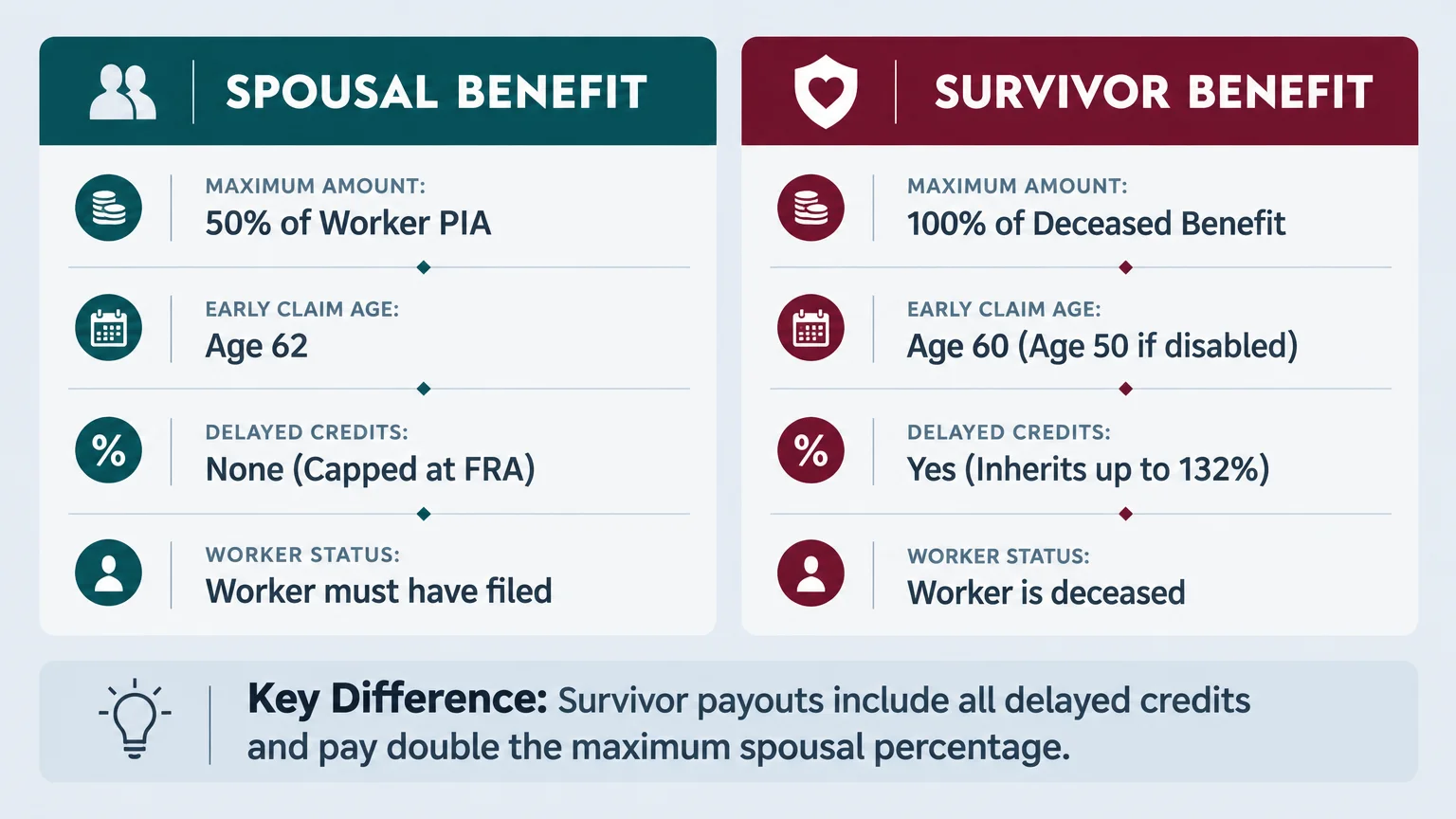
Comparing Social Security Spousal and Survivor Benefits
Understanding how auxiliary benefit types differ helps you choose the right claiming timeline. Review the core distinctions below to evaluate which rules match your household circumstances.
| Benefit Type | Earliest Claiming Age | Maximum Benefit Amount | Subject to Deemed Filing? | Impacted by Family Maximum? |
|---|---|---|---|---|
| Standard Spousal | 62 (or any age with qualifying child) | 50% of earner’s PIA | Yes | Yes |
| Divorced Spousal | 62 | 50% of ex-spouse’s PIA | Yes | No |
| Child-in-Care Spousal | Any age (child under 16 or disabled) | 50% of earner’s PIA | No | Yes |
| Surviving Spouse | 60 (or 50 if disabled) | Up to 100% of deceased earner’s actual benefit | No | Yes |

Common Mistakes to Avoid
Waiting past Full Retirement Age to claim spousal benefits is a widespread mistake. Spousal benefits never earn delayed credits, so delaying past FRA forfeits money permanently.
Another trap involves the Social Security Retirement Earnings Test for beneficiaries who work before reaching FRA. In 2025, the SSA withholds $1 for every $2 earned above $23,400.
In 2026, that earnings threshold increases to $24,480 before benefit withholding begins. In the calendar year you reach FRA, the earnings limit rises to $65,160.
Divorced individuals also mistakenly assume their ex-spouse will find out if they claim benefits. The claiming process is completely private and never impacts your former partner’s financial situation.
Surviving spouses often miss out on thousands by failing to coordinate personal and survivor claims. Failing to alternate between benefits eliminates one of the greatest retirement planning advantages available.









I want to receive this info. Very informative!