
4. The Child-in-Care Spousal Benefit Under Age 62
Most spouses believe they must wait until age 62 to access auxiliary payments. However, the child-in-care provision allows an eligible spouse to claim benefits at any age.
You qualify if you care for your spouse’s biological or adopted child who is under age 16. You also qualify if you care for their child who became permanently disabled before age 22.
The primary worker must be currently receiving retirement or disability benefits for you to receive this benefit. You can collect up to 50 percent of their base benefit with zero early-filing age penalty.
Once the child reaches age 16, these payments stop until you reach age 62 and file standard social security for spouses.
5. Deemed Filing Exemption for Surviving Spouses
The Bipartisan Budget Act of 2015 eliminated the popular restricted application strategy for living workers. Under universal deemed filing, claiming personal retirement or spousal benefits forces you to claim both simultaneously.
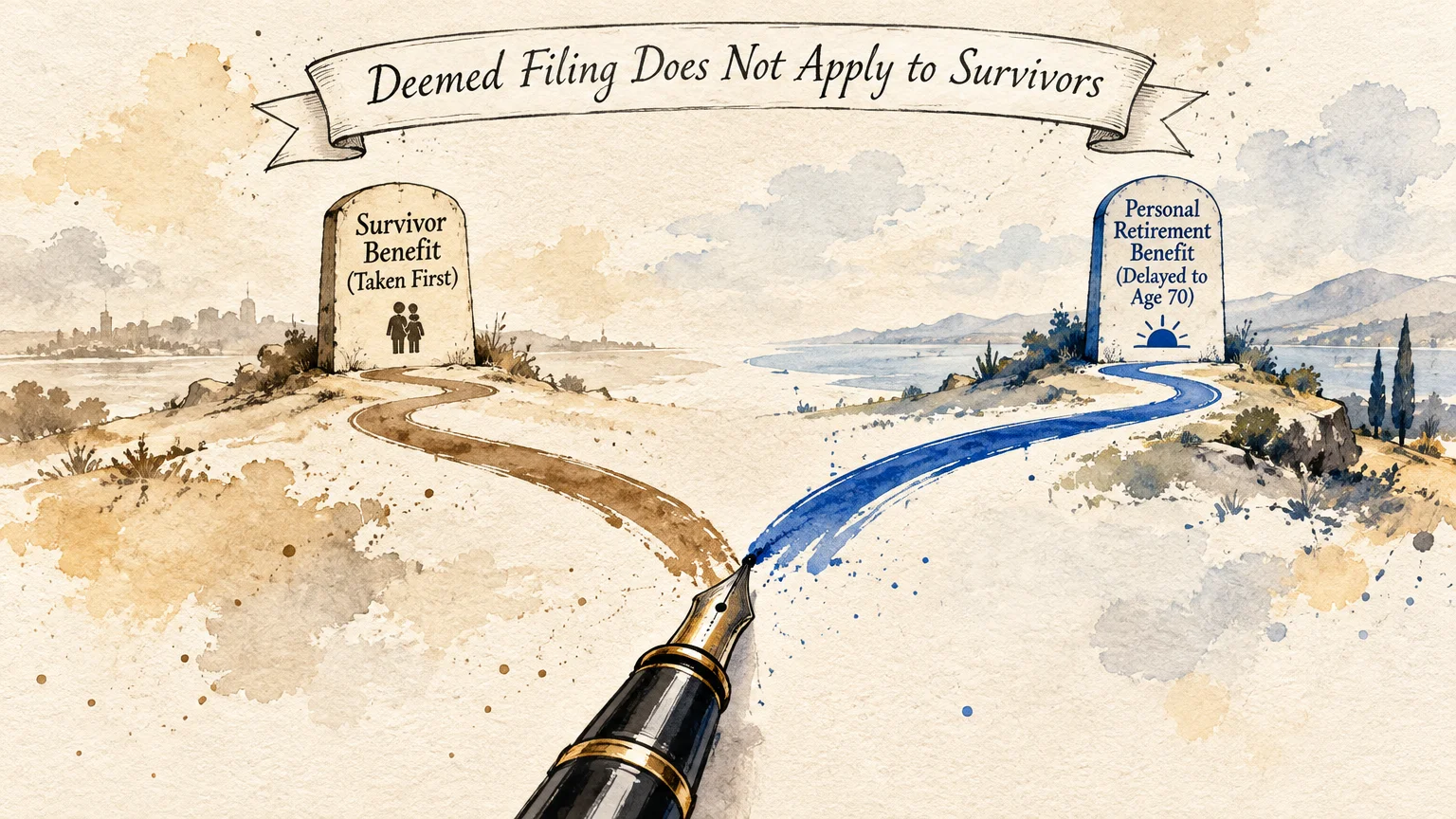
Survivor benefits are entirely exempt from deemed filing rules. Widows and widowers retain the statutory right to separate their survivor benefit from their personal retirement benefit.
You can collect a survivor benefit as early as age 60 while letting your own retirement benefit grow. At age 70, you can switch over to your own maximum earned benefit.
Alternatively, you can claim your own smaller benefit at 62 and switch to a full survivor benefit at Full Retirement Age. This tactical switching offers immense planning flexibility for surviving spouses.








I want to receive this info. Very informative!