
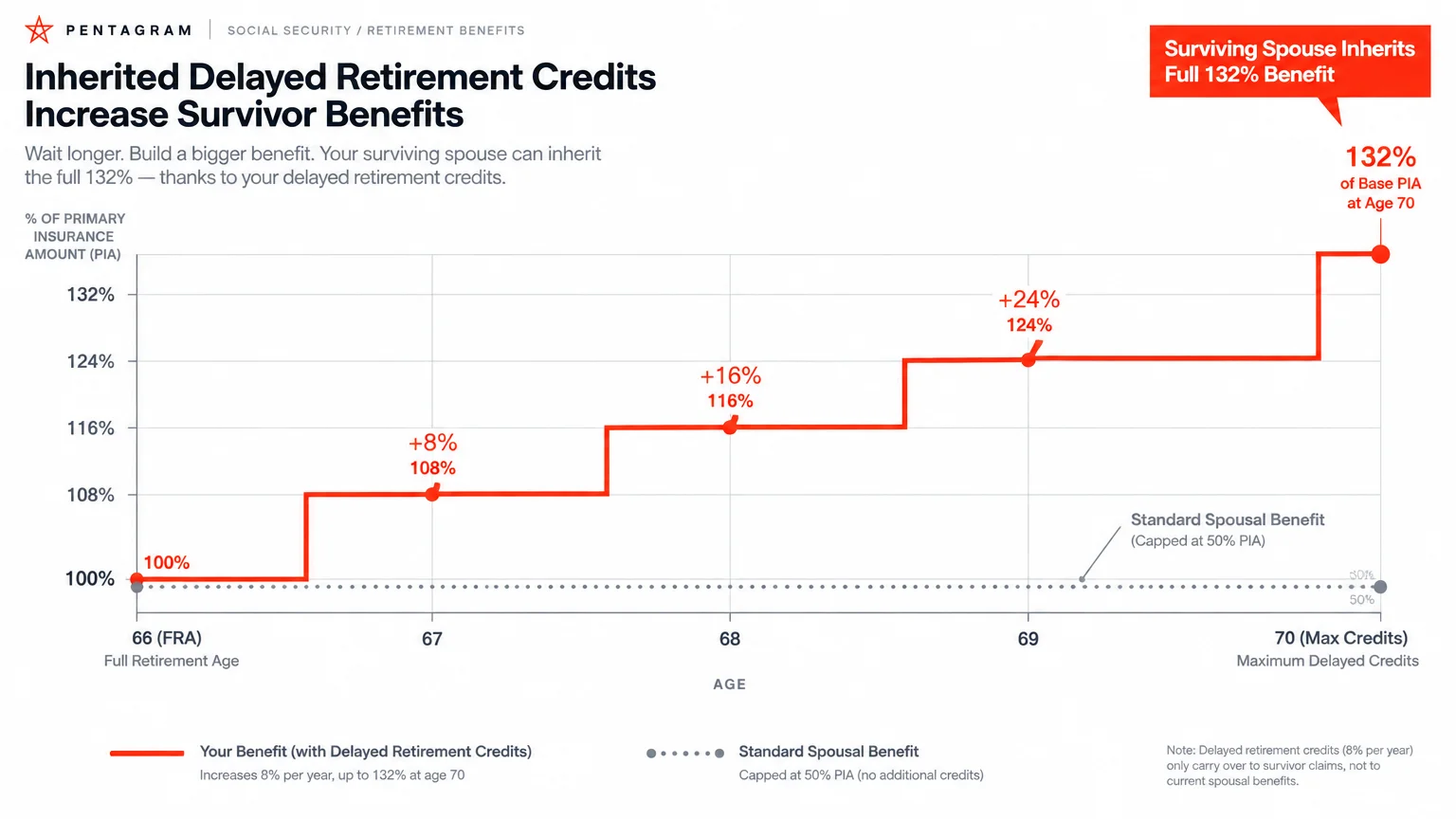
6. Inherited Delayed Retirement Credits on Survivor Benefits
Regular spousal benefits never exceed 50 percent of the earner’s base benefit, regardless of when they file. Survivor benefits work very differently by transferring up to 100 percent of what the deceased actually received.
When a primary earner waits until age 70 to collect, they accumulate Delayed Retirement Credits. Those credits boost their check by 8 percent per year past full retirement age.
If the primary earner passes away, the surviving spouse inherits that entire enhanced monthly benefit. Delaying the primary worker’s claim protects the surviving spouse against long-term poverty late in life.
“Delaying Social Security until age 70 is the best financial investment you can make for your surviving spouse.” — Suze Orman, Personal Finance Author and Host

7. Remarriage Protections After Age 60
Divorced spousal benefits permanently end if you remarry someone else. In contrast, survivor benefits offer unique marriage flexibility once you reach age 60.
If you remarry at or after age 60—or age 50 if disabled—you keep collecting your deceased spouse’s survivor benefit. Remarriage does not interrupt or reduce those monthly checks.
You can even compare your survivor benefit against the spousal benefit of your new partner. Social Security will award you the higher amount between the two records.









I want to receive this info. Very informative!