
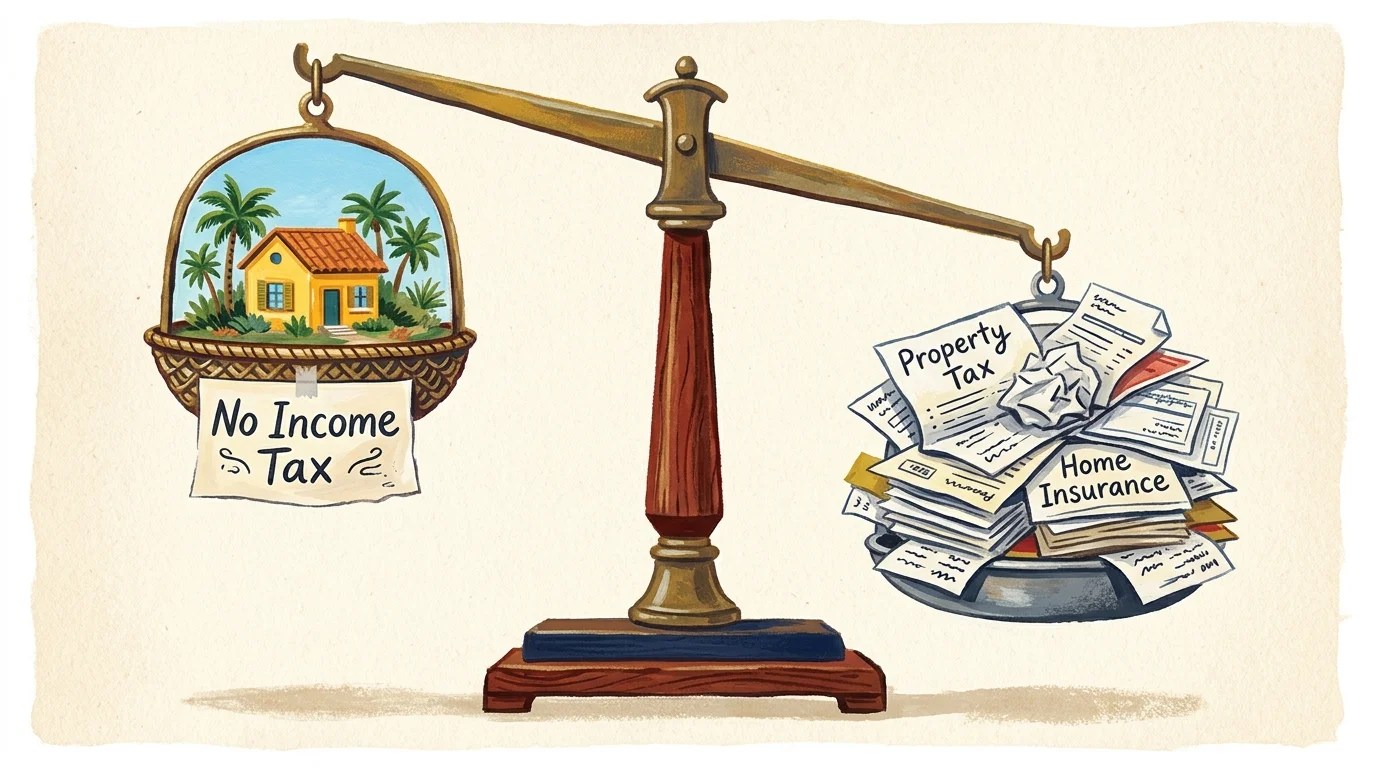
2. Underestimating the Real Cost of Living and Hidden Taxes
Financial motives heavily influence late-life moves. Transamerica data reveals that 36% of moving retirees seek a lower cost of living, while 33% aim to downsize their primary home. However, financial surveys from TIAA and Nationwide indicate that between 55% and 76% of retirees express overall financial regrets, frequently citing a poor understanding of total living expenses after moving.
Headline tax rates often deceive homebuyers. Moving to states like Texas or Florida—famous for having no state personal income tax—frequently exposes retirees to other heavy taxes. For instance, local jurisdictions in Texas compensate for zero income tax with high property taxes and an average combined state and local sales tax rate of roughly 8.2%. Similarly, coastal states face unprecedented home insurance spikes driven by severe climate events, with Florida homeowners seeing annual premiums jump by several thousand dollars in recent years.
| Cost Factor | Common Pre-Move Assumption | Actual Relocation Reality | Long-Term Financial Impact |
|---|---|---|---|
| State Income Tax | Moving to a zero-income-tax state saves significant money. | Higher local sales taxes, property taxes, and municipal fees offset income tax savings. | Neutral or negative net cash flow savings for average spenders. |
| Homeowners Insurance | Insurance rates remain fairly static across state lines. | High-risk weather zones carry extreme insurance rates and elevated deductibles. | Adds $2,000 to $8,000+ in unplanned annual home maintenance expenses. |
| Transportation & Travel | Eliminating the daily work commute slashes vehicle expenses. | Frequent cross-country trips to visit children and grandchildren create large travel bills. | BLS data shows transportation averages ~17% of total household spending. |
| Home Downsizing | Smaller square footage automatically guarantees lower overall home expenses. | High home prices, elevated interest rates, and HOA dues eliminate projected savings. | Ties up home equity without yielding anticipated monthly budget relief. |
Unanticipated transit expenses further strain fixed retirement incomes. Data from the U.S. Bureau of Labor Statistics shows that transportation ranks as the second-largest household expense in America, absorbing roughly 17% of total annual spending. When you move hundreds of miles away from family, routine car trips turn into expensive cross-country flights, rental cars, and hotel stays that quickly erode your monthly budget.









Leave a Reply