
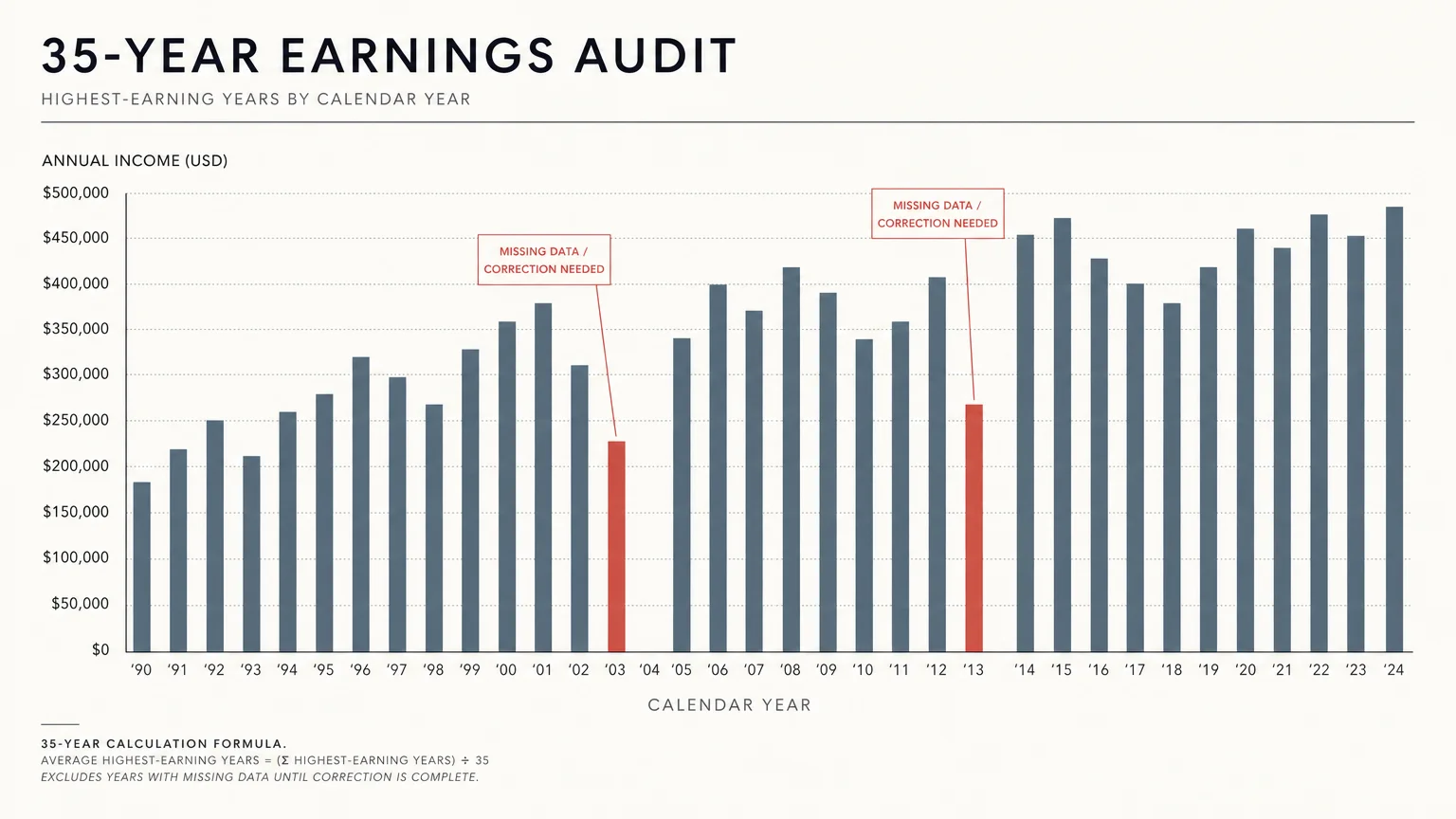
Step 2: Audit Your Lifetime Earnings Record
Your Social Security retirement income is not a flat rate provided to all retirees; it is a highly individualized figure based entirely on your personal work history. Specifically, the SSA calculates your benefit using your Average Indexed Monthly Earnings (AIME). This formula takes your 35 highest-earning years, adjusts them for historical wage inflation, and averages them out to determine your base benefit amount.
Because the formula strictly uses 35 years, any missing data can severely impact your final payout. If you only worked for 30 years, the SSA will insert five zeros into your calculation, dragging down your overall average. More importantly, administrative errors occur. Employers sometimes fail to report earnings correctly, or clerical errors detach your income from your Social Security number. If you spot a missing year of income that you know you worked, you bear the responsibility of correcting the record.
Reviewing your earnings record requires vigilance. Inside your online account, navigate to the earnings history tab and cross-reference the numbers with your old W-2s or tax returns. If you find a discrepancy, gather your documentation and contact the SSA immediately.
While you generally have three years, three months, and 15 days to correct an error after the year the wages were earned, exceptions exist for obvious clerical mistakes or missing employer reports. Correcting a single missing high-earning year can increase your monthly benefit for the rest of your life.









I have read this email and i honestly don’t understand what am supposed to do at this time
Start at Step 1: Set up an account.
They don’t want you to understand. That’s more money left in the system
Control control control