
Rising living expenses and relentless congestion are driving hundreds of thousands of older Americans away from sprawling urban centers. Every year, nearly one million retirees relocate across state lines in search of lower costs and a slower daily pace.
Instead of settling in massive metropolitan hubs, retirees increasingly choose mid-sized cities that offer high-caliber medical systems, rich community amenities, and attainable housing prices. These destinations deliver big-city conveniences without the crushing financial friction.
Downsizing your geographic footprint can preserve your nest egg while dramatically improving your daily quality of life.
Why Retirees Are Fleeing Mega-Metros for Mid-Sized Hubs
For decades, major cities like New York, Los Angeles, and Chicago attracted retirees who wanted world-class culture and prominent medical centers. Today, demographic data tells a dramatically different story.
Data from the U.S. Census Bureau shows major metropolitan centers consistently logging the nation’s steepest net outflows of residents aged 60 and older. Daily congestion, elevated municipal tax burdens, and soaring living expenses erode fixed retirement budgets quickly.
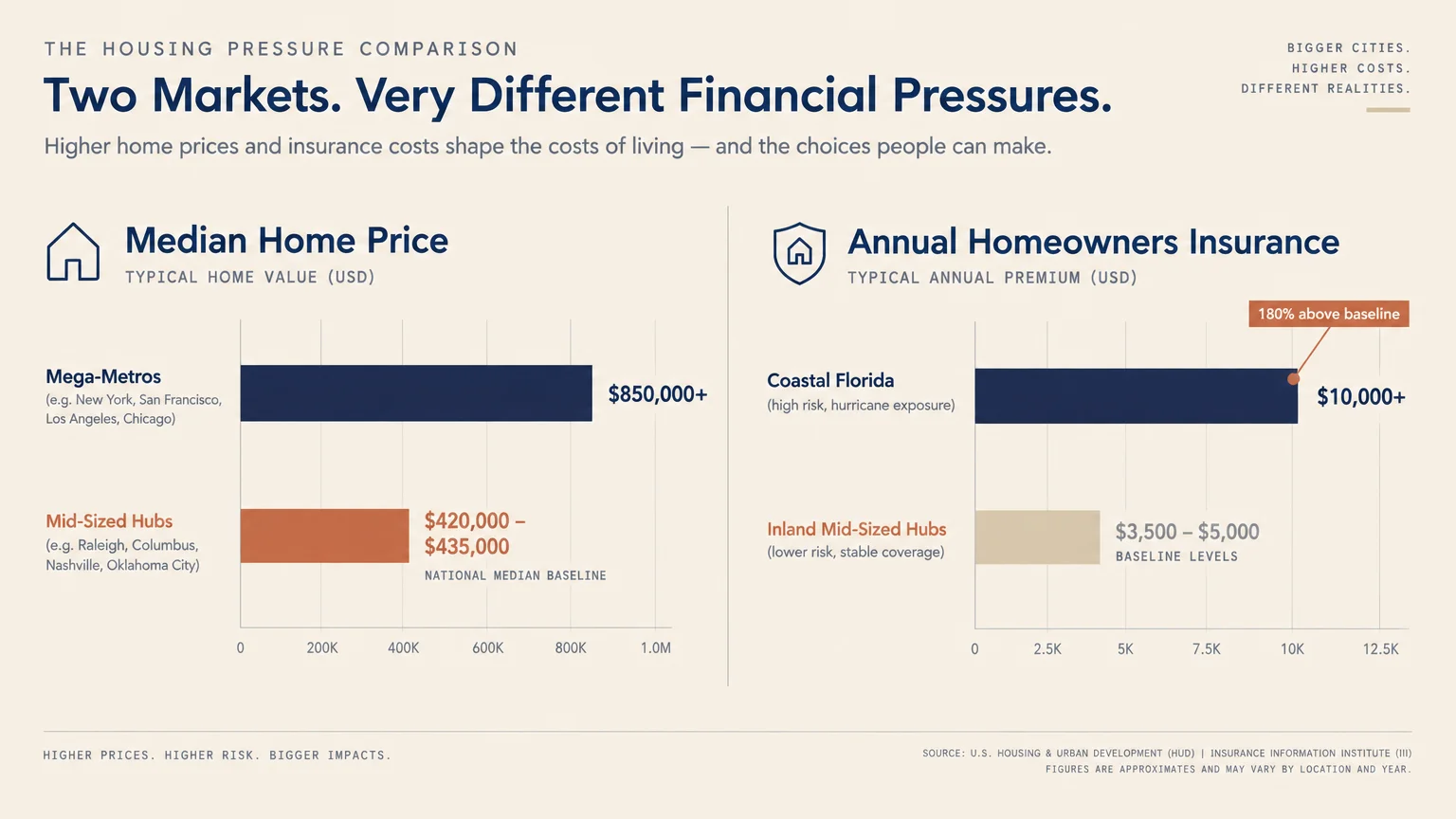
According to the National Association of REALTORS, the national median existing-home price hovers between $420,000 and $435,000. In primary metropolitan centers, benchmark housing costs routinely double or triple that figure.
Mid-sized cities provide an attractive financial compromise. You can unlock substantial home equity by selling an expensive suburban home and purchasing an updated property in a regional hub for far less.
Climate risks and escalating insurance premiums also accelerate this migration away from dense coastlines. In parts of coastal Florida, average annual homeowners insurance premiums now exceed $10,000, roughly 180% above the national baseline.
This financial pressure has sparked a surging “halfback” phenomenon. Retirees who initially moved south are relocating halfway back up into inland mid-sized cities across the Carolinas, Georgia, and Tennessee.
These secondary markets offer mild four-season climates, scenic topography, and stable property insurance markets. You avoid sweltering summer humidity while bypassing the harsh winter freezes of the northern states.
Furthermore, national ranking methodologies have shifted to reflect retiree priorities. When evaluating retirement destinations, organizations like U.S. News & World Report now assign higher weight to daily quality of life and healthcare access over simple tax statistics.

10 Top Mid-Sized Cities for Retirement Relocation
These ten mid-sized cities offer exceptional balances of healthcare infrastructure, attainable housing, tax efficiency, and vibrant recreational opportunities.
1. Mesa, Arizona
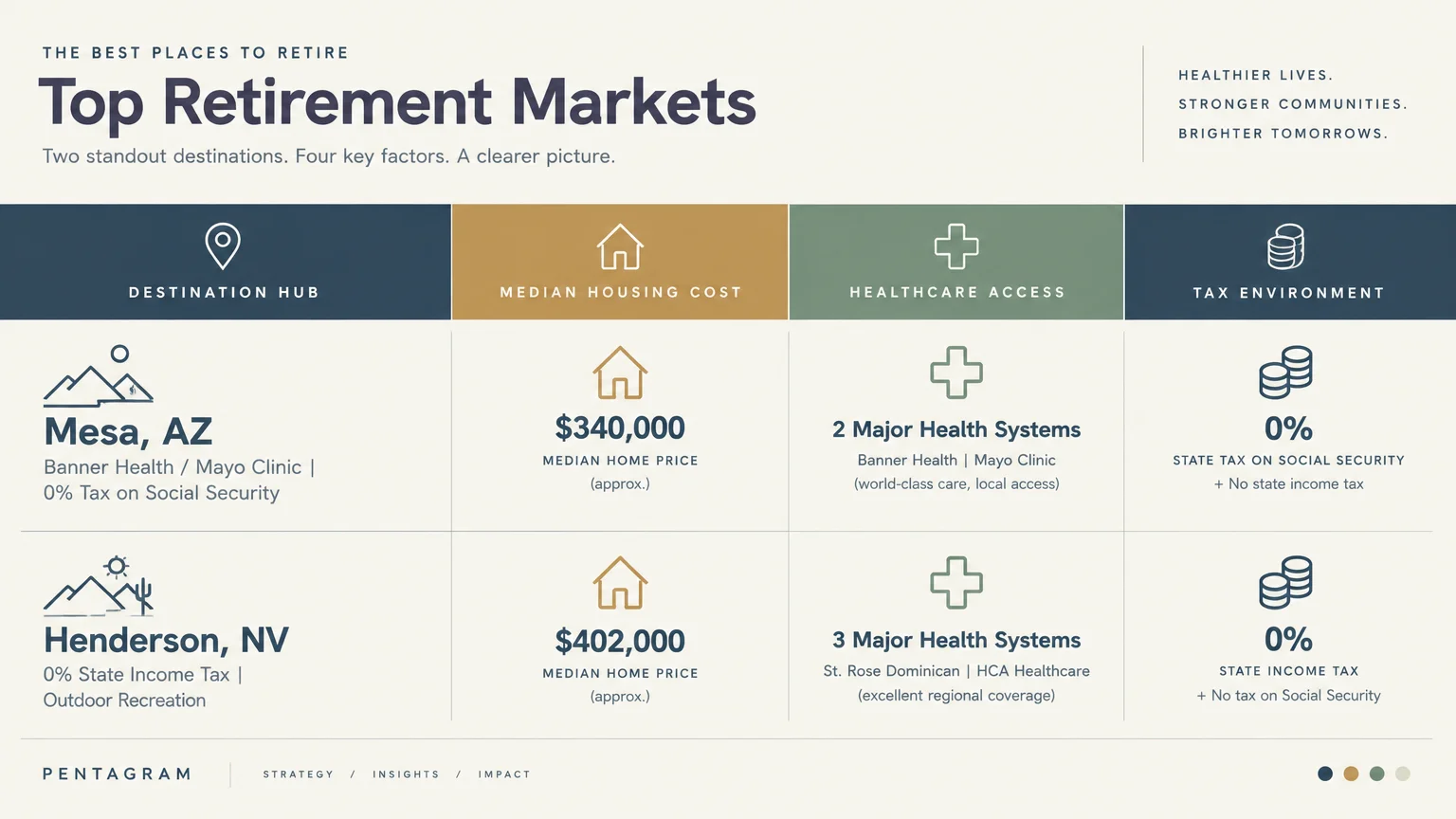
Mesa regularly ranks as the nation’s number one inbound mid-sized destination for retirees, gaining over 2,000 older residents annually. Located just east of Phoenix, it provides desert living without the dense urban gridlock.
Residents enjoy convenient access to premier healthcare institutions, including Banner Health facilities and the renowned Mayo Clinic campus in neighboring Scottsdale. The city also maintains dozens of golf courses and active senior centers.
Housing remains far more reasonable than neighboring Scottsdale or West Coast metros. Arizona completely exempts Social Security benefits from state income taxes, preserving your monthly cash flow.
2. Henderson, Nevada
Henderson sits adjacent to Las Vegas, offering resort-style living backed by robust municipal services. It consistently earns recognition as one of Nevada’s safest communities while maintaining an active, outdoor-focused atmosphere.
Nevada levies zero state individual income tax, meaning your pensions, 401(k) distributions, and Social Security checks remain entirely untouched at the state level. You can compare real-time mortgage rates and local closing costs through resources like Bankrate.
Top-tier healthcare options include the expanding Dignity Health St. Rose Dominican hospital network. Henderson gives you world-class entertainment twenty minutes away while insulating your daily routine in quiet neighborhoods.
3. Greenville, South Carolina
Greenville has transformed into one of the South’s most coveted relocation targets for retirees leaving the Northeast and Florida. Nestled in the foothills of the Blue Ridge Mountains, it features an award-winning, tree-lined downtown.
The city serves as a primary hub for the “halfback” migration wave. Retirees gain comfortable four-season weather, dramatically reduced homeowner insurance rates, and lower property taxes compared to coastal communities.
The Prisma Health and Bon Secours systems deliver comprehensive medical care across the region. Greenville combines Southern charm, a burgeoning culinary scene, and immediate access to scenic mountain hiking trails.
4. Lancaster, Pennsylvania
Lancaster balances lush farmland surroundings with historic architecture and a thriving arts district. It routinely places near the top of national retirement rankings due to exceptional healthcare and affordable housing.
Pennsylvania offers one of the most generous retiree tax structures in the United States. The state completely exempts Social Security, public and private pensions, and traditional IRA or 401(k) withdrawals for individuals over age 59½.
Penn Medicine Lancaster General Health provides nationally recognized clinical care right within city limits. You also remain within a comfortable two-hour drive of Philadelphia, Baltimore, and Washington, D.C.
5. Winston-Salem, North Carolina
Part of North Carolina’s Piedmont Triad, Winston-Salem offers deep cultural roots in fine arts, music, and historic preservation. Its median home prices remain significantly below those in bustling Raleigh or Charlotte.
Healthcare serves as a foundational pillar for the local economy. Retirees gain direct access to two major academic health networks: Atrium Health Wake Forest Baptist and Novant Health.
North Carolina exempts Social Security income from taxation and maintains a low, flat individual income tax rate. Winston-Salem provides an inviting, temperate climate with easy weekend drives to both the Blue Ridge Parkway and Atlantic beaches.
6. Knoxville, Tennessee
Situated along the Tennessee River, Knoxville blends university-town energy with spectacular mountain vistas. It serves as the primary gateway to the Great Smoky Mountains National Park, providing boundless outdoor recreation.
Tennessee imposes no state personal income tax on wages, pensions, or retirement account distributions. The overall cost of living sits well below the national average, particularly regarding utility rates and real estate prices.
The University of Tennessee Medical Center delivers Level I trauma care and specialized geriatric medicine. Knoxville’s downtown features historic theaters, farmers markets, and lively walkable public squares.
7. Midland, Michigan
Midland gained national attention after earning the number one overall spot in U.S. News & World Report’s expanded retirement index. The city provides small-city charm paired with civic infrastructure typically found in major metros.
Its median home sales price sits near $206,000, offering remarkable value compared to national figures. Generous historical investments from local corporate foundations support world-class botanical gardens, civic centers, and public parks.
MyMichigan Health, affiliated with the University of Michigan Health System, ensures residents receive advanced clinical care locally. Michigan also offers favorable state tax deductions for public and private retirement income.
8. St. Petersburg, Florida
St. Petersburg delivers coastal living without the overwhelming sprawl and cost profile of Miami. Situated on Tampa Bay, it holds a Guinness World Record for the most consecutive days of sunshine.
The city features a walkable waterfront district packed with world-renowned museums, outdoor cafes, and marinas. Bayfront Health and St. Anthony’s Hospital anchor an expansive regional medical network.
Florida levies zero personal income tax, protecting distributions from retirement savings accounts. St. Petersburg allows retirees to enjoy an active boating, arts, and coastal lifestyle at a manageable pace.
9. Green Valley, Arizona
Green Valley sits twenty miles south of Tucson along the base of the Santa Rita Mountains. It functions primarily as an unincorporated retirement community designed specifically around active senior lifestyles.
The median single-family home price sits around $282,000, making it one of the Southwest’s most affordable retirement enclaves. A central recreation corporation provides access to over a dozen community centers, pools, and fitness complexes.
Its higher elevation creates cooler summer temperatures than Phoenix while keeping winter days comfortably warm. High-level specialized medical facilities are readily available in neighboring Tucson.
10. Pittsfield, Massachusetts
Pittsfield serves as the cultural and commercial heart of the scenic Berkshires in western Massachusetts. It appeals to retirees seeking historic New England charm without Boston’s exorbitant housing prices.
The median home value sits around $310,000, representing a substantial discount compared to coastal Massachusetts markets. The surrounding area hosts iconic cultural institutions such as Tanglewood, Jacob’s Pillow, and the Norman Rockwell Museum.
Berkshire Health Systems provides comprehensive hospital and specialty care throughout the county. Pittsfield gives you lush mountain landscapes, distinct seasonal beauty, and rich historic architecture.
Comparing the Top Mid-Sized Retirement Markets
Choosing the right destination requires balancing housing costs against tax policies and lifestyle attributes. This comparison table highlights key variables across our ten featured mid-sized cities.
| City & State | Median Home Price Range | State Income Tax on Pensions/401(k) | Social Security Tax Status | Primary Lifestyle Appeal |
|---|---|---|---|---|
| Mesa, AZ | $410,000 – $435,000 | Flat rate (2.5%) | 100% Exempt | Desert golf, cactus recreation, warm winters |
| Henderson, NV | $440,000 – $475,000 | No state income tax | 100% Exempt | Resort amenities, master-planned living |
| Greenville, SC | $310,000 – $340,000 | Graduated (up to 6.4%) | 100% Exempt | Mountain foothills, walkable downtown |
| Lancaster, PA | $315,000 – $345,000 | 100% Exempt (age 59½+) | 100% Exempt | Farmland heritage, low healthcare friction |
| Winston-Salem, NC | $270,000 – $295,000 | Flat rate (4.5%) | 100% Exempt | Academic medical hubs, rich arts legacy |
| Knoxville, TN | $325,000 – $355,000 | No state income tax | 100% Exempt | Smoky Mountains access, vibrant college town |
| Midland, MI | $205,000 – $225,000 | Flat rate (4.25% with deductions) | 100% Exempt | Exceptional civic parks, quiet neighborhoods |
| St. Petersburg, FL | $375,000 – $410,000 | No state income tax | 100% Exempt | Waterfront culture, sunny coastal recreation |
| Green Valley, AZ | $275,000 – $295,000 | Flat rate (2.5%) | 100% Exempt | Dedicated 55+ infrastructure, mountain views |
| Pittsfield, MA | $295,000 – $325,000 | Flat rate (5.0%) | 100% Exempt | Berkshires arts, four distinct seasons |

Strategic Tax Advantages in Mid-Sized Markets
Relocating across state lines can alter your annual tax liabilities significantly. Evaluating how your destination treats diverse retirement income streams helps protect your monthly purchasing power.
Currently, 42 states and Washington, D.C., completely exempt Social Security benefits from state income taxation. Several states, including Kansas, Missouri, Nebraska, and West Virginia, have recently eliminated or finalized phaseouts of these taxes.
Only eight states still tax Social Security benefits under certain income thresholds. Review your baseline benefit projections on the Social Security Administration website before finalizing your relocation timeline.
Furthermore, nine states impose no state individual income tax whatsoever on your distributions: Alaska, Florida, Nevada, New Hampshire, South Dakota, Tennessee, Texas, Washington, and Wyoming. This structure allows traditional IRA and 401(k) withdrawals to flow directly into your household budget.
Other states provide targeted exemptions designed specifically to retain older residents. Pennsylvania, for instance, exempts all qualified retirement distributions and private pensions from its state income tax once you reach age 59½.
“Retirement is not the end of the road, but the beginning of an open highway—and where you choose to park your life determines how far your money and purpose will carry you.” — Mitch Anthony, Author of The New Retirementality
However, you must evaluate the entire state tax picture rather than focusing strictly on income taxes. States with zero income tax frequently make up revenue through elevated sales taxes or higher local property tax assessments.

Pitfalls to Watch For
A successful geographic move requires evaluating practical logistics alongside financial considerations. Overlooking localized living costs can quickly diminish your anticipated relocation savings.
- Property Tax Reassessments: A home’s historical tax rate often resets significantly upon sale. Always verify the projected post-sale assessed value with the county property assessor rather than relying on the seller’s past bills.
- Healthcare Capacity and Wait Times: While mid-sized cities boast excellent hospital facilities, localized specialist shortages can occur. Verify that key primary care doctors and cardiologists currently accept new patients before relocating.
- Insurance Volatility: Severe weather risks affect more than coastal towns. Check regional hail, wildfire, and windstorm insurance premiums before submitting a home purchase offer.
- Isolation from Support Systems: Relocating far from lifelong friends or adult children can cause emotional strain. Ensure your new city offers direct flights or convenient transit back to family hubs.
Take time to test-drive your prospective destination before listing your primary residence. Renting an apartment or extended-stay property for two months during the off-season provides authentic insight into daily community life.

Getting Expert Help
Relocating your primary residence during retirement involves legal, tax, and healthcare adjustments. Consulting certified professionals safeguards your wealth across several complex scenarios:
- Navigating Multi-State Tax Domicile: If you retain ownership of a secondary home, state tax authorities may challenge your residency change. A certified public accountant helps establish clear physical domicile records to avoid dual-state tax audits.
- Coordinating Medicare Plan Coverage: Medicare Advantage networks and Part D prescription formularies vary dramatically by county. Explore plan availability and regional provider directories via Medicare.gov before moving.
- Restructuring Real Estate Equity: Converting significant home equity into reliable retirement income requires careful tax planning. Review consumer protections and reverse mortgage rules via the Consumer Financial Protection Bureau when restructuring real estate debt.
- Updating Estate Planning Documents: Wills, healthcare proxies, and power-of-attorney documents are governed by state-specific statutes. An estate attorney licensed in your new home state ensures your directives remain fully enforceable.
Frequently Asked Questions About Retiring to Mid-Sized Cities
What defines a mid-sized city for retirees?
Mid-sized cities generally feature municipal populations between 50,000 and 500,000 residents. They offer major regional medical facilities, cultural infrastructure, and regional commercial airports without the severe congestion or high overhead of major metropolises.
Why are retirees leaving Florida for other southern mid-sized cities?
Rapidly climbing property insurance rates, rising real estate valuations, and heavy traffic have pushed many Florida retirees north. Mid-sized markets in South Carolina, North Carolina, and Tennessee provide lower insurance costs and milder summer temperatures.
Do mid-sized cities have adequate medical care for aging adults?
Most mid-sized relocation hubs host comprehensive regional hospital networks and academic medical centers. However, you should confirm that local specialists accept your specific Medicare Advantage or Medigap supplemental coverage before committing to a home purchase.
Is it better to rent or buy when relocating in retirement?
Renting for six to twelve months allows you to evaluate neighborhoods, traffic patterns, and seasonal weather changes without transaction friction. It prevents costly buyer’s remorse if a particular community fails to meet your lifestyle expectations.
Next Steps for Your Retirement Relocation
Transitioning to a mid-sized city can reduce your monthly living expenses while expanding your everyday recreational opportunities. Create a list of non-negotiable personal preferences, spanning from climate comfort to specialized healthcare requirements.
Schedule an extended visit to your top two target cities outside of peak vacation seasons. Connecting with neighborhood groups, visiting local medical centers, and touring diverse housing styles will confirm whether a community matches your long-term retirement vision.
This is educational content based on general retirement and financial principles. Individual results vary based on your situation. Always verify current benefit rules, tax laws, and eligibility requirements with official sources like SSA, Medicare.gov, or the IRS.
Last updated: March 2026. Retirement benefits, tax rules, and healthcare regulations change frequently—verify current details with official sources.









Leave a Reply