
Navigating Supplemental Security Income (SSI) used to feel like walking a financial tightrope, where accepting a hot meal from a neighbor or getting help with rental payments could trigger a sudden drop in your monthly check. Major policy overhauls implemented by the Social Security Administration give millions of low-income seniors and beneficiaries with disabilities greater financial breathing room. Key SSI program improvements remove food from in-kind support reductions, expand rental subsidy protections nationwide, broaden public assistance household definitions, and cap overpayment clawbacks at a fair 10%. Understanding these new SSI rules helps you protect your maximum monthly benefit, reduce paperwork stress, and secure every dollar you deserve in 2026.
The Essentials: Key SSI Updates at a Glance
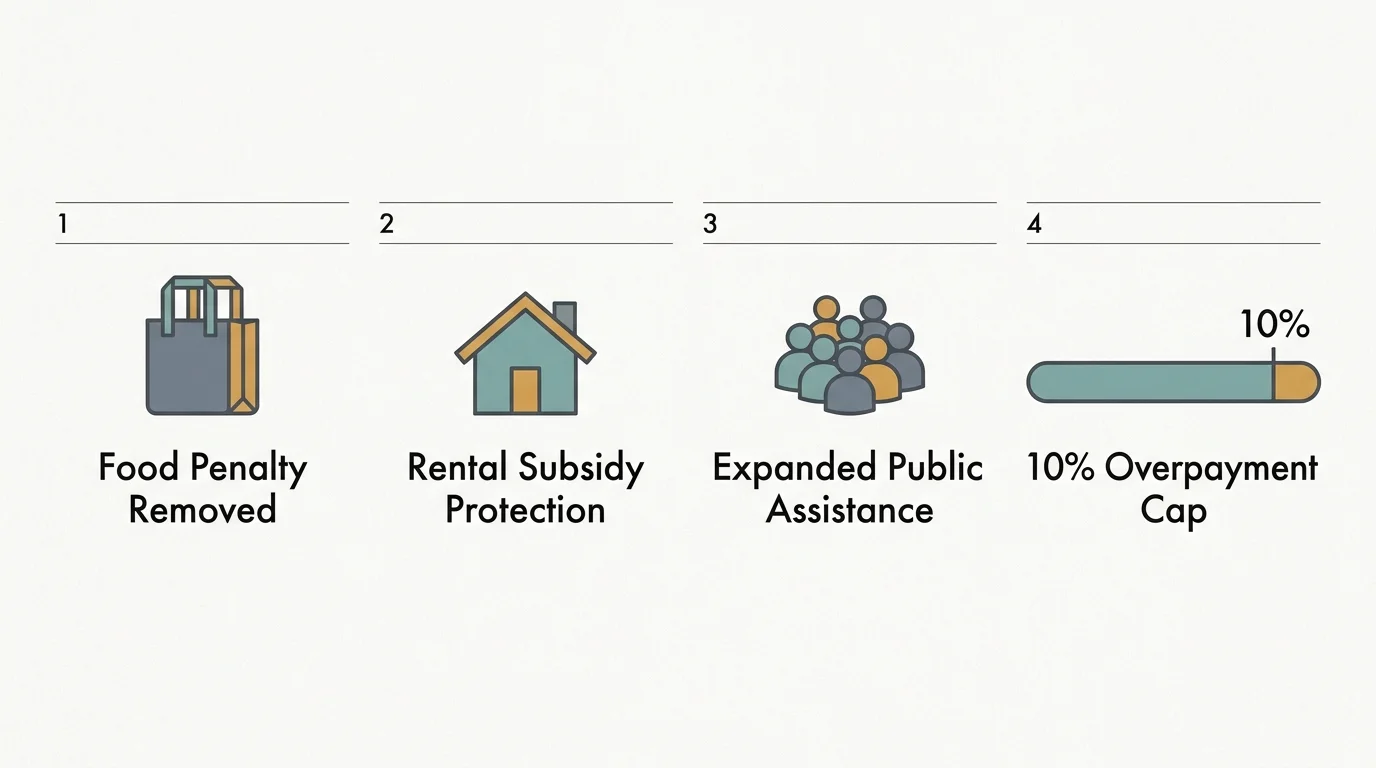
If you or a loved one rely on Supplemental Security Income to cover basic living expenses, recent administrative updates represent the most meaningful modernization of the program in decades. These changes directly eliminate administrative burdens and protect monthly income for recipients across the nation.
- Food Removed from In-Kind Support Calculations: Grocery assistance, community meals, and free food from family members no longer reduce your monthly SSI check.
- Nationwide Rental Subsidy Protection: Landlords or relatives offering discounted rent no longer trigger benefit reductions if you meet basic payment thresholds.
- Expanded Public Assistance Household Status: Households now qualify for PA status if just one other member receives public benefits, with SNAP benefits added as a qualifying income source.
- 10% Cap on Overpayment Recovery: The default benefit withholding rate for overpayment collections dropped dramatically from 100% to just 10%.
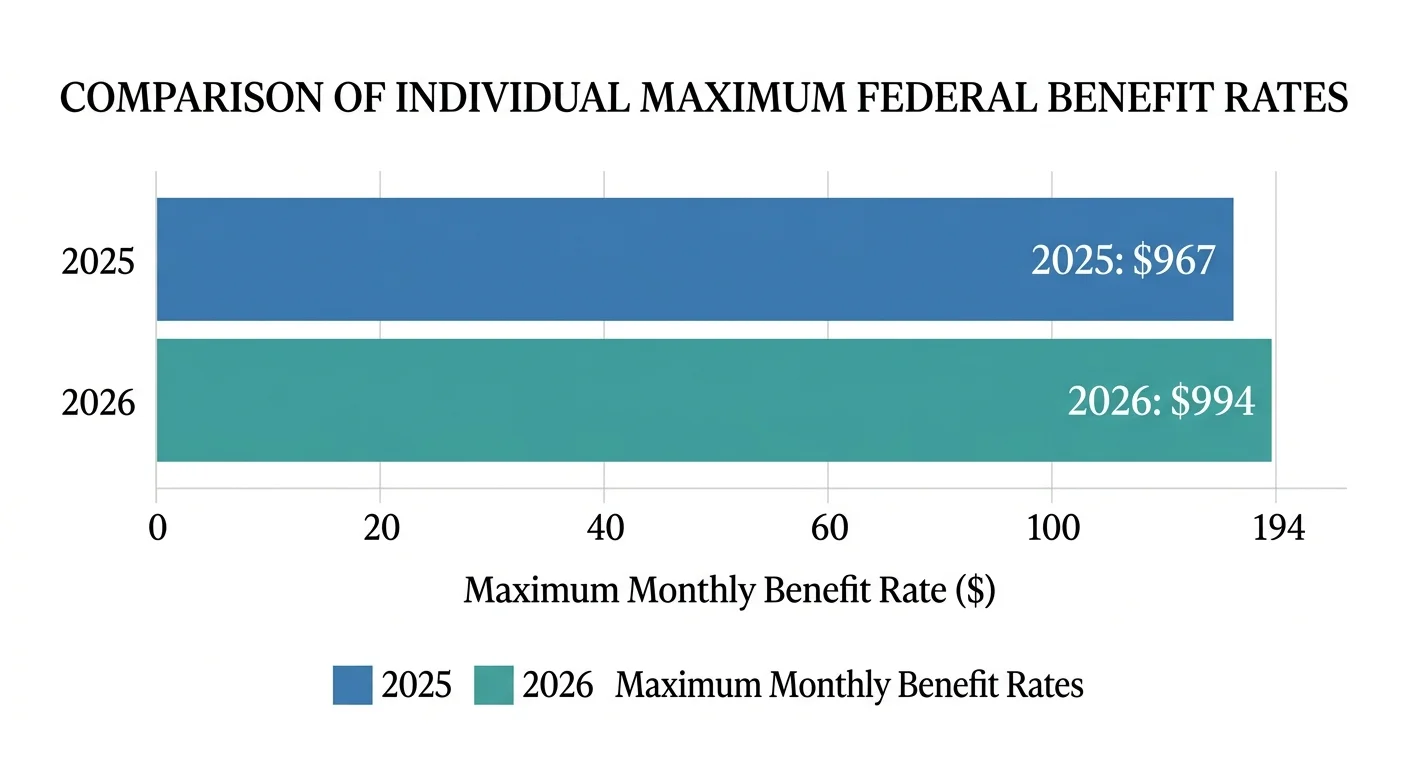
- Increased Federal Benefit Rates: Cost-of-living adjustments raised individual maximum federal benefits to $967 per month in 2025 and $994 per month in 2026.

1. Elimination of the Food In-Kind Support and Maintenance Penalty
For decades, the Social Security Administration operated under a restrictive framework known as In-Kind Support and Maintenance (ISM). Under the old system, if family members, friends, or local charitable organizations regularly provided you with food or meals, the government treated that assistance as unearned income. Consequently, the agency reduced monthly benefit payments by up to one-third of the maximum Federal Benefit Rate—a penalty known as the Presumed Maximum Value (PMV) reduction.
This policy forced many vulnerable recipients to refuse help from loved ones or hide simple acts of assistance to preserve their fixed income. Effective September 30, 2024, official regulations removed food entirely from ISM calculations. The agency now evaluates in-kind support based solely on shelter expenses, such as rent, mortgage payments, property taxes, heating fuel, gas, electricity, water, and sewer services.
Consider how this change operates in everyday life:
- Groceries Paid by Family: If an adult child buys $300 worth of groceries for you every month, SSA no longer counts this as income, and your SSI check remains untouched.
- Shared Household Meals: If you live with relatives who buy and prepare all household food, you no longer need to complete tedious paperwork detailing grocery splits or meal sharing.
- Community Food Assistance: Food pantries, hot meal programs, and church donations carry zero impact on your SSI eligibility or benefit amount.
By eliminating food from ISM calculations, the federal government removed a massive administrative burden that previously required caseworkers to audit personal dining habits and grocery receipts.
“Financial security for vulnerable seniors isn’t just about the size of a check; it’s about eliminating arbitrary rules that punish families for helping each other.” — Elizabeth Warren, U.S. Senator

2. Nationwide Expansion of the Rental Subsidy Policy
Shelter costs present the single largest financial challenge for fixed-income retirees and individuals with disabilities. Prior to recent reforms, living in housing where someone else paid a portion of your rent created immediate conflicts with SSA rules. If your landlord or a relative charged you rent below fair market value, the agency classified the discount as unearned income and cut your SSI payment.
A flexible exception known as the Rental Subsidy Policy previously existed in only seven states: Connecticut, Illinois, Indiana, Kentucky, New York, Wisconsin, and Vermont. On September 30, 2024, the Social Security Administration expanded this vital policy to cover all 50 states, the District of Columbia, and Northern Mariana Islands.
Under the updated nationwide policy, SSA will not apply a benefit reduction if you meet either of two basic requirements:
- You pay monthly rent equal to or exceeding the Presumed Maximum Value (PMV), which equals one-third of the maximum federal benefit rate plus $20.
- You pay monthly rent equal to or exceeding the fair market value of the property.
For 2026, the maximum individual federal benefit rate stands at $994 per month. One-third of that amount is $331.33. Adding the $20 general income exclusion brings the PMV baseline to $351.33 per month. If you pay at least $351.33 in rent each month—even if your landlord or family member normally rents the apartment for $1,200—the Social Security Administration will not penalize you with a reduced SSI benefit check.
This uniform rule allows families to offer affordable housing to elderly relatives without inadvertently triggering severe benefit cuts. If you previously suffered a payment reduction due to discounted rent outside the original seven states, review your housing arrangement with the SSA to request an adjustment under these Supplemental Security Income updates.
3. Broadened Definition of Public Assistance Households and SNAP Inclusion
Another profound improvement involves how the federal government defines a “Public Assistance Household.” When an SSI recipient lives in a public assistance household, SSA assumes that all shelter costs are equitably distributed among residents. This designation completely shields recipients from in-kind shelter reductions, granting them full monthly benefit payments.
Under the legacy rules, a household qualified for this status only if every single member living under the roof received a recognized form of public income-maintenance assistance. If even one relative worked a part-time job or received private retirement income, the entire home lost its public assistance designation, subjecting the SSI recipient to complex shelter audits.
The revised regulations introduce two fundamental improvements:
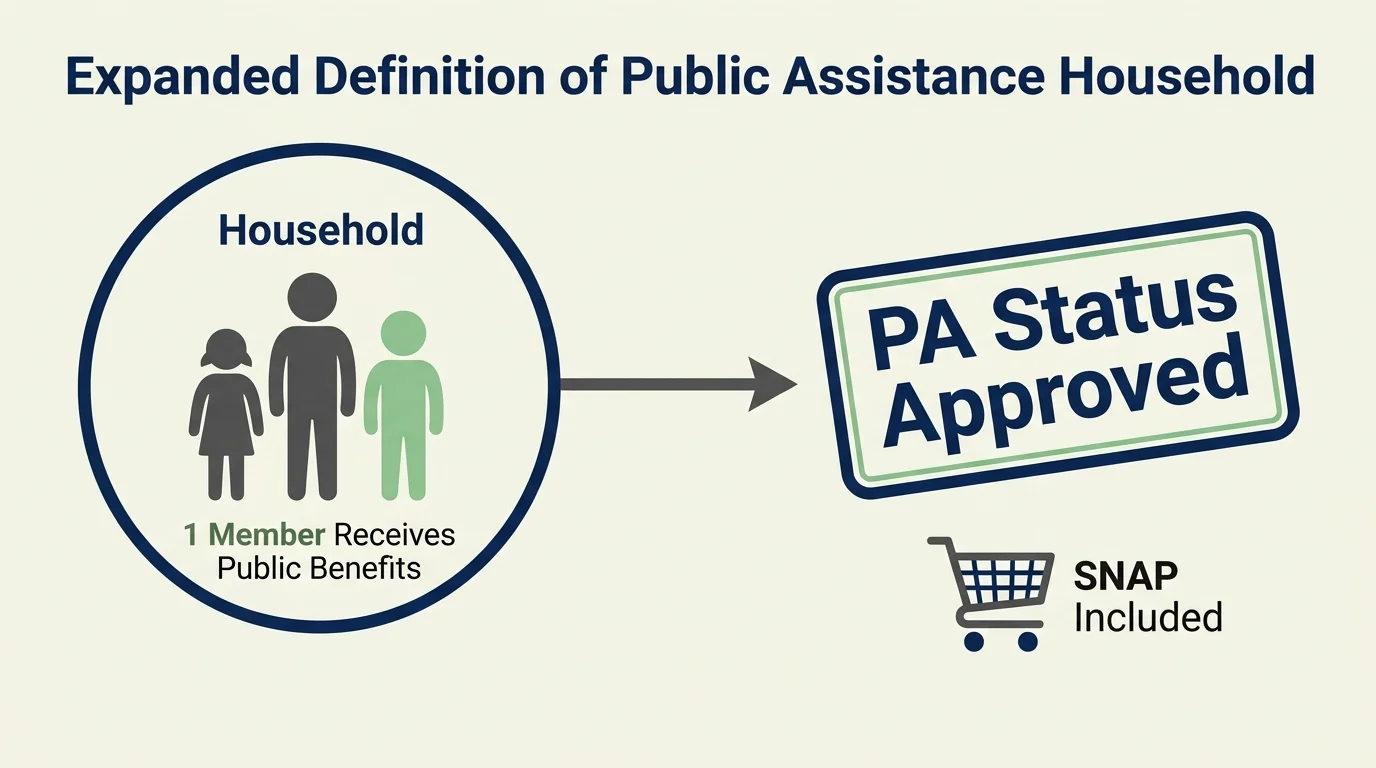
First, a home now qualifies as a Public Assistance Household if the SSI recipient and at least one other household member receive qualifying public benefits. Every person in the residence no longer needs to be on public assistance.
Second, the agency formally added the Supplemental Nutrition Assistance Program (SNAP)—commonly known as food stamps—to the list of qualifying public income-maintenance programs. Other qualifying programs include:
- Temporary Assistance for Needy Families (TANF)
- Medicaid (if tied to cash assistance)
- Supplemental Security Income (SSI)
- General Assistance programs funded by states or localities
- Veterans Affairs (VA) pensions based on need
Because millions of low-income families rely on SNAP, adding food assistance to this policy allows vastly more households to achieve PA status. Once designated a Public Assistance Household, you no longer face benefit reductions if other household members pay a larger share of rent or utilities.
4. Overpayment Recovery Cap: Relief from Sudden Benefit Loss
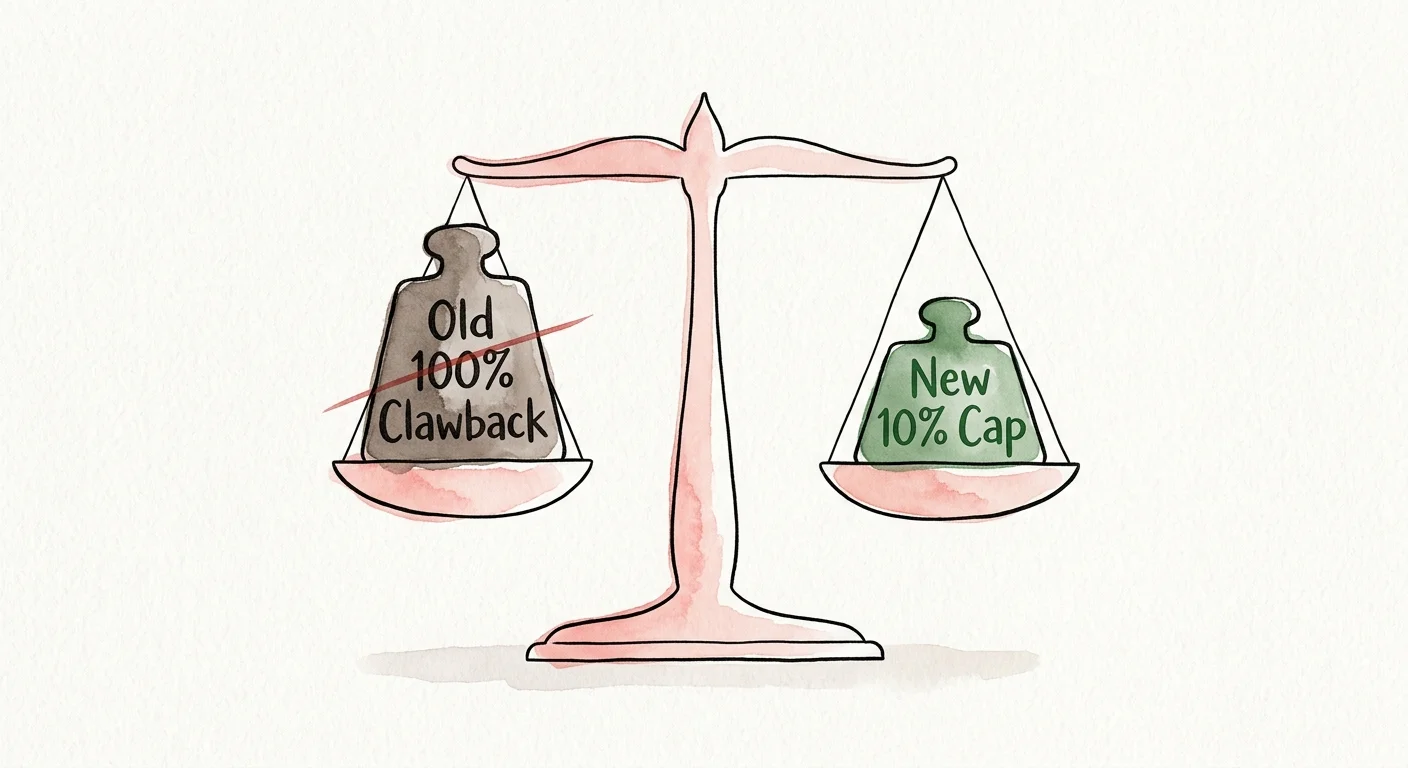
Perhaps no administrative issue creates more sudden panic for recipients than receiving an overpayment notice from the Social Security Administration. Historically, if the agency determined it had overpaid you—even due to its own accounting mistakes or processing backlogs—the default recovery protocol demanded 100% of your monthly SSI benefit check until the alleged debt was fully satisfied.
Losing an entire monthly check left recipients unable to buy medication, purchase food, or avoid eviction. To prevent severe economic hardship, the agency established a landmark policy change lowering the default overpayment collection rate to 10% of your monthly total benefit (or $10, whichever is greater).
For example, if you receive the 2026 maximum individual benefit of $994 per month, the default withholding for an overpayment balance cannot exceed $99.40 per month. This leaves you with $894.60 to meet your daily survival needs while the debt settles slowly over time.
You maintain clear administrative rights if you receive an overpayment demand:
- Right to Appeal: If you believe the overpayment figure is incorrect, file Form SSA-561 within 60 days to freeze collection efforts while the agency reviews your file.
- Right to Request a Waiver: If the overpayment was not your fault and paying it back would cause financial hardship, submit Form SSA-632 to request a full waiver of the debt.
- Flexible Repayment Terms: If a 10% reduction still causes severe financial distress, you can negotiate lower monthly payments down to as little as $10 per month.
Reviewing overpayment claims through official resources like the Consumer Financial Protection Bureau can help you navigate dispute procedures effectively.
“When you are living on a fixed income, every dollar counts. Protecting recipients from sudden full-benefit withholdings restores basic dignity and stability to the safety net.” — Suze Orman, Financial Educator
5. 2025 and 2026 SSI Payment Amounts and Cost-of-Living Adjustments
To combat inflation and maintaining purchasing power, SSI benefits automatically undergo an annual Cost-of-Living Adjustment (COLA) based on changes in the Consumer Price Index for Urban Wage Earners and Clerical Workers (CPI-W). Understanding exact benefit figures allows you to construct a dependable household budget.
In 2025, a 2.5% COLA increased maximum federal benefits. In 2026, an additional 2.8% COLA further elevated payment thresholds across all beneficiary categories. The state supplementary payments provided by certain states add to these baseline federal totals.
The following comparison table breaks down federal payment levels and structural policy shifts across recent years:
| Metric / Rule Feature | 2024 Baseline | 2025 Policy Standard | 2026 Current Standard |
|---|---|---|---|
| Individual Maximum FBR | $943 / month | $967 / month | $994 / month |
| Eligible Couple Maximum FBR | $1,415 / month | $1,450 / month | $1,491 / month |
| Essential Person Limit | $472 / month | $484 / month | $497 / month |
| Food Included in ISM? | Yes (until Sept 30) | No (Fully Exempt) | No (Fully Exempt) |
| Rental Subsidy Coverage | 7 States Only (pre-Sept) | Nationwide (50 States) | Nationwide (50 States) |
| Overpayment Default Rate | 100% Withholding | 10% Cap | 10% Cap |
These annual COLA adjustments happen automatically; you do not need to submit applications or complete annual check-ups simply to receive your updated cost-of-living increase.

6. What Remains Unchanged: Navigating the $2,000 Asset Limit
While recent SSI program improvements delivered sweeping relief regarding food, housing, and overpayments, the foundational asset limits governing program eligibility remain rigid. Federal statute continues to restrict countable financial resources to:
- $2,000 for an eligible individual
- $3,000 for an eligible couple
Because Congress has not updated these asset thresholds since 1989, remaining under these statutory caps requires strategic planning. Accumulating even $2,001 in countable liquid assets on the first day of a calendar month can suspend your benefit payments and endanger linked Medicaid coverage.
To protect your eligibility, distinguish between countable and non-countable assets under current rules:
Exempt (Non-Countable) Assets Include:
- The primary home you live in and the land it sits upon.
- One vehicle used for transportation for you or a household member.
- Household goods, furniture, personal effects, and wedding rings.
- Burial plots and designated burial funds saved up to $1,500 per person.
- ABlE Accounts (Achieving a Better Life Experience) holding up to $100,000 without affecting SSI eligibility for individuals whose disability began before age 26 (expanding to age 46 in 2026).
Countable Assets Include:
- Cash balances in checking, savings, or money market accounts.
- Certificates of Deposit (CDs), stocks, bonds, and mutual funds.
- Real estate assets that are not your primary residence.
- Cash value of life insurance policies if total face value exceeds $1,500.
If you receive back pay or lump-sum retroactive benefits from the Social Security Administration, that money is exempt from asset calculations for exactly nine months. You must spend down retroactive funds on exempt goods or deposit them into an ABLE account within nine months to prevent benefit disqualification. To explore benefit screening tools, check resources provided by USA.gov Benefits.
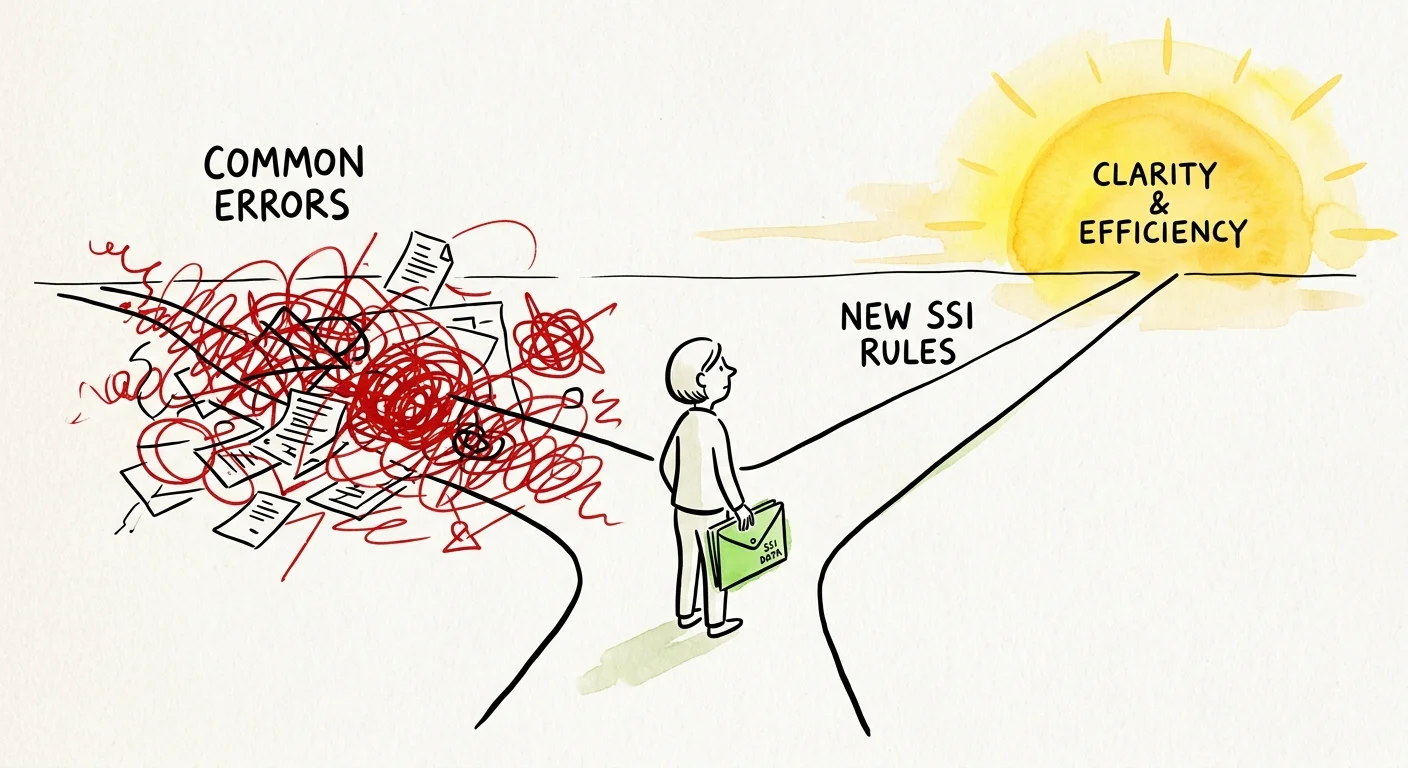
Avoiding Common Errors When Navigating New SSI Rules
Even with favorable policy changes, simple administrative misunderstandings can cause benefit disruptions. Steering clear of frequent mistakes keeps your monthly benefits flowing smoothly without unexpected suspensions.
1. Failing to Report Housing Changes Promptly
Although food non-longer reduces your benefit, changes in who lives with you or shifts in your total rental costs still require reporting. Failing to inform the SSA within 10 days after the end of the month in which a change occurred can trigger inaccurate benefit amounts.
2. Assuming Asset Limits Increased with Inflation
Do not confuse the annual COLA benefit increase with resource limits. While your monthly check grew in 2025 and 2026, the $2,000 individual spending limit remains strict. Keep your checking account balance managed carefully at the start of every month.
3. Ignoring Overpayment Notices
If you receive an overpayment letter, do not put it aside in fear. The SSA automatically limits recovery to 10%, but ignoring the notice forfeits your right to request a complete waiver or appeal the calculation within the mandatory 60-day window.
4. Misunderstanding Rent Documentation Requirements
To benefit from the expanded nationwide Rental Subsidy Policy, maintain written lease agreements or signed landlord statements proving you pay rent equal to or exceeding the Presumed Maximum Value ($351.33 in 2026). Keep rent receipts or bank statements showing steady monthly payments.

When DIY Isn’t Enough: Securing Expert Assistance
While most SSI recipient changes simplify self-management, specific complex scenarios require professional financial or legal guidance. Handling difficult administrative disputes alone can lead to unnecessary loss of income.
Consider seeking assistance from a legal aid attorney, accredited representative, or certified planner in these situations:
- Large Overpayment Demands: If the SSA claims you owe thousands of dollars due to old administrative errors, a legal advocate can assist in gathering documentation to secure a full waiver under financial hardship rules.
- Inheritances and Personal Injury Settlements: Receiving a lump sum of money instantly jeopardizes your $2,000 resource cap. Professional counsel can assist in setting up a First-Party Special Needs Trust or ABLE account to protect your safety net.
- Complex Shared Housing Arrangements: If your local SSA office fails to properly apply the broadened Public Assistance Household rules to your mixed-benefit home, an advocate can file a formal reconsidering appeal.
- Transitioning from SSDI to SSI: Managing concurrent Social Security Disability Insurance and SSI payments involves intricate earnings tests that benefit from legal guidance.
Organizations such as the National Council on Aging offer localized benefit enrollment centers and advisory resources for seniors navigating these steps.
Frequently Asked Questions About SSI Updates
Do I need to report grocery gifts or free meals from my family to the SSA?
No. As of September 30, 2024, the Social Security Administration removed food entirely from In-Kind Support and Maintenance calculations. Groceries, free meals, and food pantry items no longer affect your SSI eligibility or payment amount.
How does the new rental subsidy rule help me if I live with my adult children?
If you pay rent to your children that meets or exceeds the Presumed Maximum Value ($351.33 per month in 2026), the SSA will not reduce your SSI check, even if market rent in that neighborhood is significantly higher. This rule now applies nationwide across all 50 states.
What should I do if the Social Security Administration docks 100% of my check for an overpayment?
Contact the SSA immediately or visit your local office. Point out the agency’s policy capping default overpayment recovery at 10%. You can also file Form SSA-632 to request a full waiver if paying back the money creates severe hardship.
Does receiving SNAP (food stamps) help me get higher SSI benefits?
Yes, indirectly. SNAP is now recognized as a qualifying benefit under the broadened Public Assistance Household definition. If you and at least one other person in your home receive public benefits like SNAP, your home gains PA Household status, protecting your SSI check from shelter-based reductions.
Did federal SSI asset limits increase for 2026?
No. Federal asset limits remain fixed by federal statute at $2,000 for individuals and $3,000 for married couples. However, assets held in qualified ABLE accounts or primary homes do not count toward these limits.
Taking Action: Protecting Your Monthly Benefits
These administrative updates mark a transformative turn toward a more reasonable, compassionate Supplemental Security Income program. By eliminating food penalties, capping overpayment clawbacks, and expanding rental protections, federal policies finally align with the daily realities facing low-income seniors and individuals with disabilities.
Take charge of your benefits today by reviewing your current living arrangements, updating rental agreements with your local SSA office if necessary, and checking your online account status. Staying proactive ensures you receive every dollar of support you are legally entitled to receive in 2026 and beyond.
The information in this guide is meant for educational purposes. Your specific circumstances—including income, health needs, tax situation, and goals—may require different approaches. When in doubt, consult a licensed professional.
Last updated: March 2026. Retirement benefits, tax rules, and healthcare regulations change frequently—verify current details with official sources.









Leave a Reply