
Every year, millions of Medicare beneficiaries pay out-of-pocket for medical tests or skip life-saving evaluations entirely, unaware that Original Medicare covers over two dozen essential screenings at absolutely no cost. While most retirees recognize basic blood pressure checks, critical benefits—such as bone density scans, lung cancer screenings, and specialized diabetes prevention programs—remain drastically underutilized. Navigating the Medicare preventive services list allows you to protect both your health and your retirement budget. By understanding how to access these free medicare screenings, schedule your yearly medicare wellness visit properly, and avoid hidden billing traps, you ensure maximum coverage without unexpected medical bills.
Why Thousands of Retirees Leave Free Medicare Care on the Table
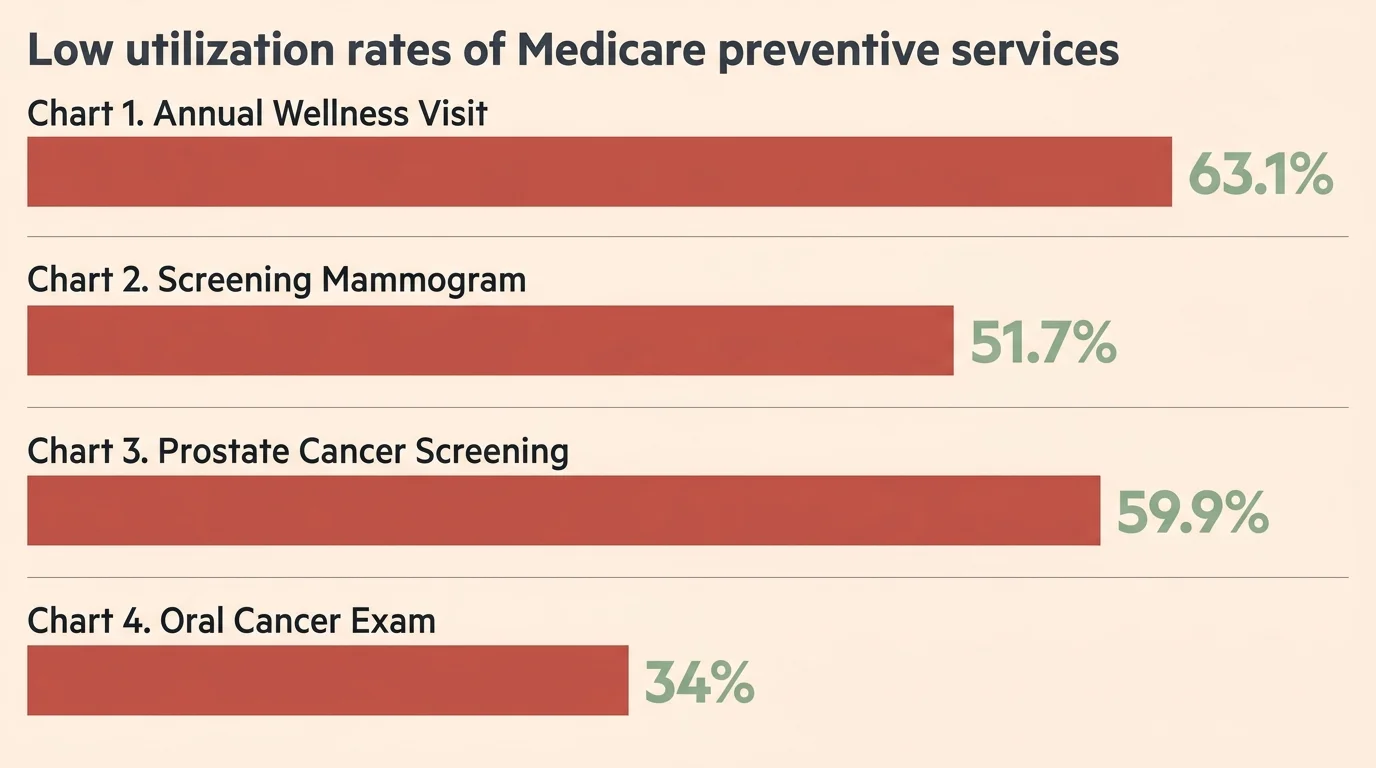
Medicare Part B covers more than 20 preventive care services at a $0 out-of-pocket cost, provided your healthcare provider accepts Medicare assignment. Despite this robust coverage, official utilization rates show that most retirees let these valuable benefits expire unused each year. According to data from the Centers for Medicare & Medicaid Services (CMS), only 63.1% of community-dwelling Medicare beneficiaries completed an annual wellness visit medicare exam in 2024. That leaves over a third of enrolled retirees missing out on their annual preventive planning sessions.
The gap becomes even wider when examining specialized early-detection screenings. In 2024, only 51.7% of eligible female Medicare beneficiaries received an annual screening mammogram. Prostate cancer screenings reached 59.9% of eligible male beneficiaries, while oral cancer exams saw a staggering low participation rate of just 34%. These numbers reveal a widespread issue: millions of older Americans pay into a system for decades, yet fail to claim the full spectrum of medicare preventive care benefits available to them.
Why do so many retirees bypass these services? Confusion surrounding coverage guidelines remains the primary culprit. Many beneficiaries assume that “preventive care” means a standard yearly physical exam—a service that Original Medicare specifically does not cover. Others fear surprise medical bills, having previously encountered unexpected facility fees or out-of-network diagnostic charges. Understanding how Medicare classifies preventive screenings empowers you to claim every free service you deserve while keeping your health care spending firmly under control.

The Critical Difference: Routine Physicals vs. The Annual Wellness Visit
One of the most expensive misunderstandings in retirement healthcare involves the difference between a routine head-to-toe physical exam and Medicare-covered preventive visits. Original Medicare Part B explicitly excludes routine physical exams from its benefit schedule. If you schedule a yearly checkup and ask your physician for a standard hands-on physical, your provider will bill you for a routine office visit, subjecting you to the Part B annual deductible and a 20% coinsurance fee.
Instead, Medicare structures its coverage around two distinct preventive appointments: the one-time “Welcome to Medicare” visit and the recurring annual wellness visit medicare program. During your first 12 months of Part B enrollment, you qualify for the initial “Welcome to Medicare” visit. This baseline assessment establishes your medical history, reviews risk factors for chronic conditions, checks your functional ability and safety, and provides referrals for appropriate free medicare screenings.
Once you complete your first year on Part B, you unlock the Annual Wellness Visit (AWV) every 12 months. Rather than conducting a physical hands-on examination, your doctor uses this appointment to perform a Health Risk Assessment, screen for cognitive impairments like dementia or mild cognitive decline, review your medication list, and create a personalized 5-to-10-year prevention plan. To help you distinguish between these options, the table below outlines key feature differences across all three exam types.
| Feature / Benefit | “Welcome to Medicare” Visit | Annual Wellness Visit (AWV) | Routine Physical Exam |
|---|---|---|---|
| Eligibility Window | First 12 months of Part B enrollment | Once every 12 months (after 12 months on Part B) | Available anytime upon patient request |
| Your Out-of-Pocket Cost | $0 (No copay or deductible) | $0 (No copay or deductible) | Not covered by Original Medicare (100% patient cost or Part B deductible + 20%) |
| Primary Clinical Focus | Baseline medical history, vision check, risk factor baseline | Health Risk Assessment, cognitive check, long-term prevention plan | Hands-on body physical (listening to heart/lungs, reflex tests, organ palpation) |
| Provider Requirement | Must accept Medicare assignment | Must accept Medicare assignment | N/A (Patient pays out-of-pocket) |
7 High-Value $0 Medicare Preventive Services Most Retirees Miss
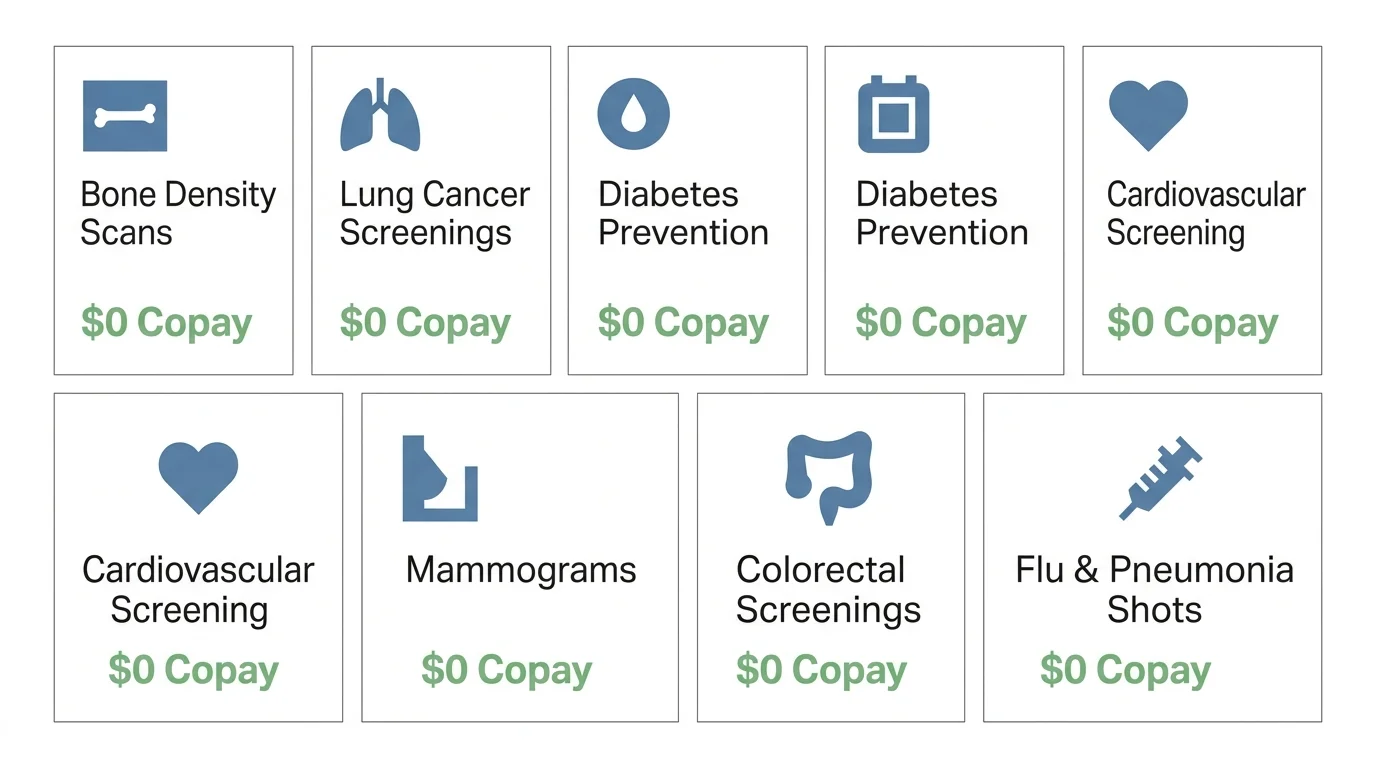
Beyond standard wellness checkups, Medicare funds dozens of specialized screenings aimed at identifying serious illnesses before symptoms appear. Below are seven high-value services included on the official medicare preventive services list that retirees frequently overlook.
1. Abdominal Aortic Aneurysm (AAA) Screening
An abdominal aortic aneurysm occurs when the lower portion of the body’s main artery becomes enlarged and dangerously weak. Because these aneurysms rarely present early symptoms, medical professionals call them “silent killers.” Medicare covers a one-time ultrasound AAA screening at $0 out-of-pocket for beneficiaries who meet specific risk criteria. You qualify if you have a family history of abdominal aortic aneurysms or if you are a man aged 65 to 75 who has smoked at least 100 cigarettes during your lifetime.
2. Bone Mass Density (Osteoporosis) Measurements
Osteoporosis weakens bones, leaving seniors vulnerable to life-altering hip, spine, and wrist fractures. Medicare covers bone density DXA scans at $0 every 24 months—or more frequently if medically necessary—for qualified high-risk individuals. Eligible beneficiaries include women whose doctors determine they are estrogen-deficient, individuals receiving long-term steroid treatments, and anyone with vertebral fractures or suspected osteoporosis. Schedule this scan through your primary care physician to monitor bone health over time.
3. Low-Dose CT Lung Cancer Screening
Lung cancer remains one of the leading health risks for aging adults, yet early detection dramatically improves long-term prognosis. Medicare covers an annual low-dose computed tomography (LDCT) lung cancer screening at $0 cost for adults aged 50 to 77 who have a 20+ pack-year smoking history (for example, smoking one pack daily for 20 years or two packs daily for 10 years). You qualify if you currently smoke or have quit within the past 15 years, provided you receive a written order from your physician following a shared decision-making visit.
4. Medicare Diabetes Prevention Program (MDPP)
If your doctor diagnoses you with prediabetes, Medicare provides access to an intensive, structured lifestyle intervention known as the Medicare Diabetes Prevention Program. This benefit costs $0 and offers up to 16 weekly core behavioral change sessions over six months, followed by ongoing monthly maintenance meetings. Trained coaches guide you through dietary adjustments, exercise routines, and strategies to prevent full-onset type 2 diabetes. You qualify if your fasting plasma glucose reading falls between 100 and 125 mg/dL or your HbA1c level sits between 5.7% and 6.4% within 12 months of starting the program.
5. Annual Depression & Mental Health Screenings
Mental well-being directly impacts physical longevity, yet many retirees suffer from undetected depression following major life transitions like retirement, bereavement, or managing chronic pain. Medicare covers an annual clinical depression screening at $0 once every 12 months. Your primary care provider must conduct this assessment in a setting equipped to provide follow-up treatment, counseling, or direct psychiatric referrals.
6. Alcohol Misuse & Cardiovascular Behavioral Counseling
Preventive care extends to actionable behavioral guidance designed to protect your heart and liver. Medicare covers one annual cardiovascular behavioral therapy session at $0 to help you lower blood pressure, improve your diet, and implement lifestyle changes. Additionally, if your primary care provider identifies signs of unhealthy drinking patterns, Medicare covers up to four face-to-face alcohol misuse counseling sessions each year at no cost to you.
7. Specialized Cancer Screenings (Colorectal, Cervical, and Mammograms)
While many seniors schedule routine mammograms, other vital cancer screenings fall through the cracks. Medicare covers screening colonoscopies every 10 years (or every 2 years for high-risk individuals), stool-based DNA tests such as Cologuard every 3 years, and flexible sigmoidoscopies every 4 years at $0 out-of-pocket. Pap tests and pelvic exams are also covered at $0 every 24 months for average-risk women, or every 12 months for those at elevated risk.
“An ounce of prevention is worth a pound of cure. Taking advantage of guaranteed preventive services protects your health and keeps unexpected medical bills from eroding your retirement nest egg.” — Benjamin Franklin, Author and Statesman

Navigating Potential Medicare Cost Traps and Fine Print
While preventive care rules sound straightforward, minor procedural differences can turn a completely free appointment into an unexpected medical invoice. Staying informed about medical billing practices protects you from accidental financial surprises.
The most common cost trap occurs during screening colonoscopies. Under Medicare guidelines, a standard preventive screening colonoscopy costs $0. However, if your gastroenterologist identifies a polyp and performs a biopsy or tissue removal during the procedure, medical coders reclassify the service as a diagnostic intervention. Under federal regulations, Medicare waives the Part B deductible for this procedure, but you remain responsible for a 15% coinsurance fee for the doctor’s service. Ask your provider’s billing office in advance how their clinic processes potential polyp removals during routine screenings.
Another common billing trap involves “dual-billing” during your medicare wellness visit. If you bring up new physical symptoms—such as knee pain, shortness of breath, or persistent insomnia—or ask your doctor to evaluate an existing chronic condition during an Annual Wellness Visit, your physician will bill a separate evaluation and management (E/M) service code. While Medicare pays for the wellness assessment at $0, your physician will bill the separate E/M code against your Part B deductible and 20% coinsurance.
To keep your preventive visits entirely cost-free, review this essential pre-appointment checklist before heading to the clinic:
- Confirm Medicare Assignment: Verify that your healthcare provider and clinic accept original Medicare assignment, taking the Medicare-approved amount as full payment.
- Use Exact Appointment Terminology: Tell the scheduling staff specifically: “I am booking my Medicare Annual Wellness Visit.” Avoid requesting a “yearly physical” or “routine checkup.”
- Separate Non-Preventive Concerns: Schedule a separate diagnostic appointment to discuss new physical complaints, medication alterations, or specific pain issues.
- Verify Laboratory Coverage: Clarify with your doctor whether requested blood tests (such as a Comprehensive Metabolic Panel or thyroid check) qualify as free preventive screenings or diagnostic lab work.

Professional vs. Self-Guided: Managing Your Preventive Healthcare Plan
Managing healthcare logistics requires balancing your personal health needs with appropriate professional support. Review these real-world scenarios to decide whether to manage your preventive schedule independently or seek expert guidance.
Scenario 1: Standard Annual Screening Routine (Self-Guided)
If you are generally healthy, comfortable using online portals, and already enrolled in Original Medicare, you can manage your preventive schedule independently. By creating an account on Medicare.gov, you can review your claim history, track eligibility dates for your next mammogram or bone density scan, and schedule appointments directly with network providers.
Scenario 2: Transitioning from Employer Healthcare to Medicare (Professional Guidance)
If you recently retired and transitioned from a private employer insurance plan to Medicare, navigating different screening schedules can feel overwhelming. Consult a State Health Insurance Assistance Program (SHIP) counselor or a licensed Medicare specialist. These advisors explain how Medicare Advantage (Part C) or Medicare Supplement (Medigap) plans handle preventive service networks and out-of-pocket billing rules.
Scenario 3: Managing Multiple Chronic Conditions (Professional Guidance)
If you manage complex conditions like type 2 diabetes, heart disease, or chronic kidney disease, diagnostic testing often overlaps with preventive screenings. Work closely with a primary care case manager or patient navigator. They organize your appointments, ensuring your doctor orders screenings under appropriate preventive billing codes while bundling diagnostic checkups efficiently.
Scenario 4: Resolving an Unexpected Medical Bill (Self-Guided / Administrative Support)
If you receive a bill for a preventive service that should have been covered at $0, take action immediately. Contact your provider’s billing office to check if they entered an incorrect diagnostic billing code instead of a preventive code. If the clinic refuses to re-code the claim, file a formal appeal through Medicare using your official Summary Notice (MSN) statement.

Common Mistakes to Avoid
Steer clear of these frequent oversights to maximize your medical benefits and protect your financial plan throughout retirement:
- Mistaking the Annual Wellness Visit for a hands-on physical exam: Requesting a routine physical leads to unexpected diagnostic billing. Keep wellness visits focused on long-term prevention planning.
- Missing the 12-month window for the “Welcome to Medicare” visit: You can only access this baseline benefit during your first 12 months of Medicare Part B coverage. Once that window closes, you must wait for the standard Annual Wellness Visit.
- Assuming Medicare Advantage covers non-network providers at $0: While Medicare Advantage plans must cover Part B preventive services at $0, they usually require you to visit in-network doctors and facilities.
- Failing to schedule high-value diagnostic scans: Ignoring specialized benefits like low-dose CT lung scans or DXA bone density tests allows hidden conditions to progress unmonitored.
- Discussing active medical complaints during a preventive wellness visit: Introducing new medical issues during an Annual Wellness Visit triggers separate diagnostic office charges under Medicare Part B.
Frequently Asked Questions
Are Medicare preventive services completely free if I have a Medicare Advantage plan?
Yes. By law, Medicare Advantage (Part C) plans must cover all Part B preventive services at $0 out-of-pocket, provided you use an in-network healthcare provider. However, Medicare Advantage plans may require prior authorizations or referrals from your primary care doctor for specialized screenings like low-dose CT scans.
How often does Medicare pay for a bone density test?
Medicare Part B covers a DXA bone density measurement once every 24 months at $0 for qualified high-risk beneficiaries. If your doctor determines that your medical condition requires more frequent monitoring—such as tracking active osteoporosis medication treatments—Medicare may cover scans more frequently under diagnostic rules.
Can I receive an Annual Wellness Visit and a routine physical exam during the same appointment?
While your doctor can physically perform both exams during one visit, Original Medicare only pays for the Annual Wellness Visit component at $0. You or your supplemental insurance plan will be responsible for the cost of the routine physical exam and any diagnostic lab tests ordered during that checkup.
What should I do if my doctor bills me for a $0 preventive service?
First, examine your Medicare Summary Notice (MSN) or Explanation of Benefits (EOB) to identify the specific procedure code billed. Call your doctor’s billing office and ask them to verify whether they submitted the service under a preventive billing code or a diagnostic code. If the clinic made a coding error, request that they resubmit the claim to Medicare.
Taking full advantage of your medicare preventive care benefits safeguards your physical health while protecting your retirement savings from preventable medical expenses. Schedule your upcoming annual wellness visit medicare exam today, review the full medicare preventive services list with your primary care team, and request the specialized screenings you qualify for. For additional guidance on managing healthcare costs in retirement, explore research resources provided by the National Institute on Aging and the National Council on Aging.
This article provides general retirement education and information only. Every retiree’s situation is unique—what works for others may not work for you. For personalized advice, consider consulting a qualified financial professional such as a CFP or CPA.
Last updated: March 2026. Retirement benefits, tax rules, and healthcare regulations change frequently—verify current details with official sources.








Leave a Reply