
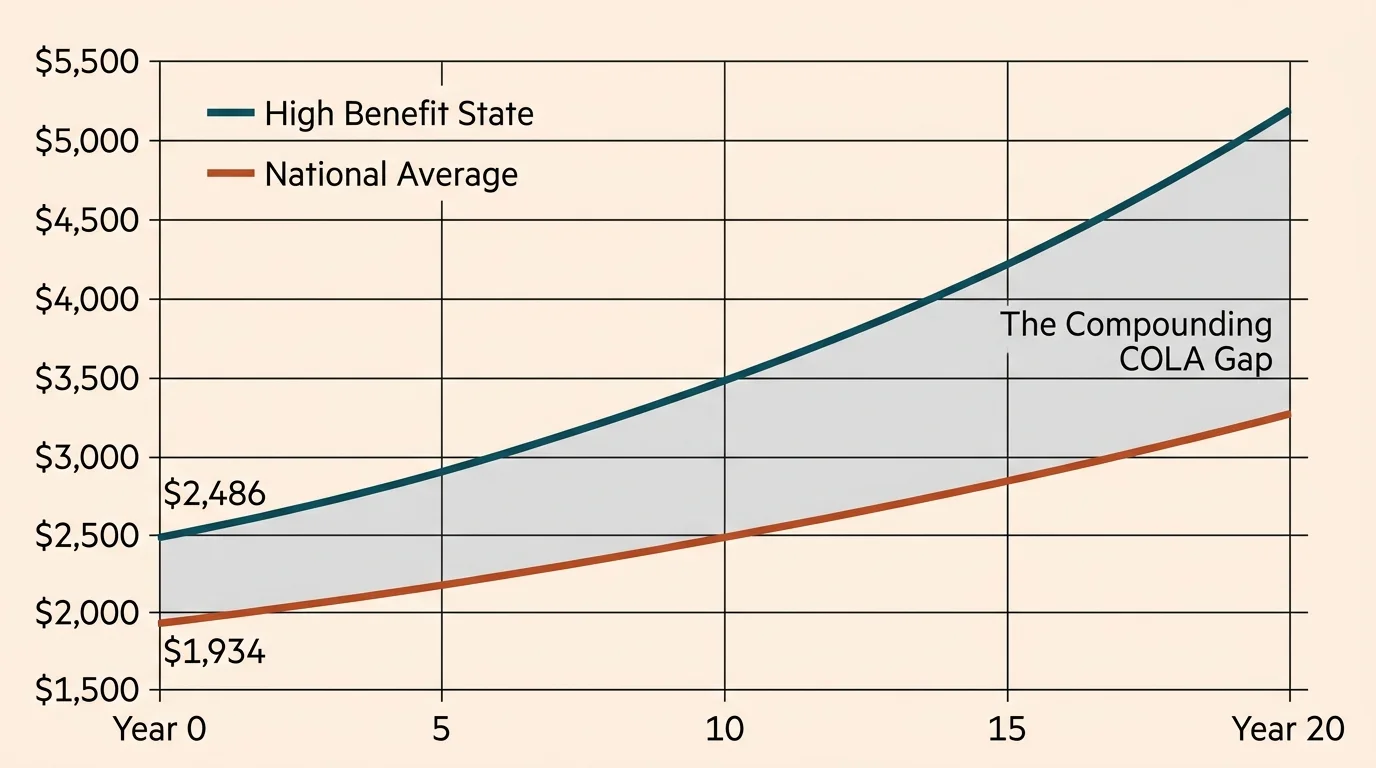
The Wealth Gap: Why Cost-of-Living Adjustments Compound the Divide
Understanding how the annual Cost-of-Living Adjustment (COLA) works provides crucial insight into why these ten states consistently pull away from the rest of the country. When inflation adjustments are announced, they are always delivered as a percentage multiplier, not a flat dollar amount.
If the government announces a 2.8 percent COLA, a retiree living in Mississippi receiving $1,700 a month will see an increase of roughly $47. However, a retiree in New Hampshire receiving $2,400 a month will see an increase of roughly $67. Over a twenty-year retirement, these percentage-based adjustments compound dramatically. The math fundamentally guarantees that high-benefit states will continue to widen the dollar gap over low-benefit states over time.









Leave a Reply