
Carrying a mortgage into retirement once signaled poor financial planning. Today, millions of financially savvy Americans deliberately choose to keep their home loans to build greater wealth.
According to the Harvard Joint Center for Housing Studies, 41% of homeowners aged 65 to 79 carry mortgage debt. That figure represents a massive surge from previous decades.
Retaining your home loan allows you to preserve liquidity and avoid catastrophic tax liabilities. Smart retirees now treat low-cost housing debt as an intentional wealth management tool.
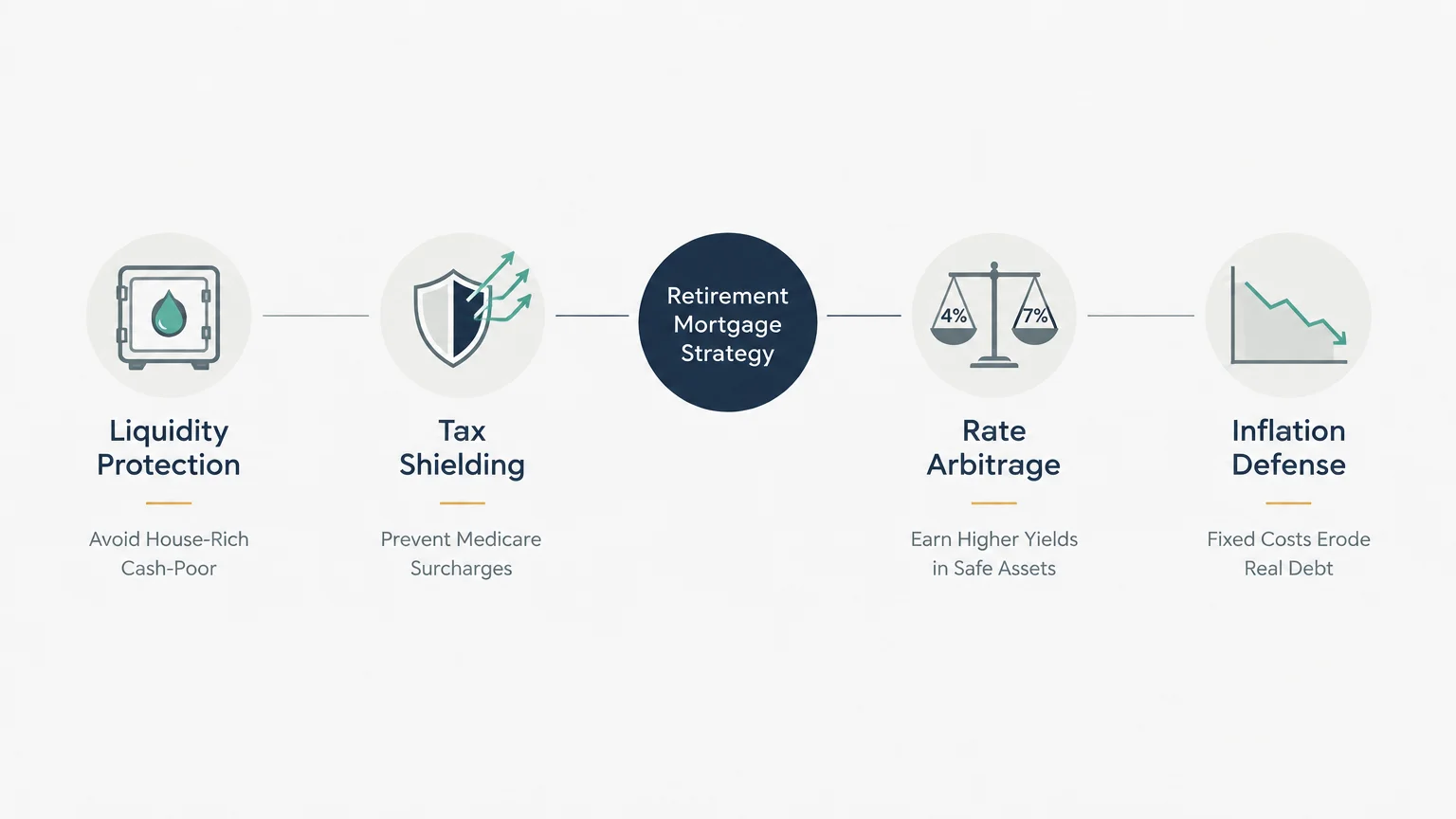
At a Glance: The Retirement Mortgage Strategy
- Liquidity Protection: Keeping cash in liquid accounts protects you from becoming house-rich and cash-poor during medical crises.
- Tax Shielding: Liquidating tax-deferred retirement accounts to eliminate debt can trigger severe Medicare surcharges and tax spikes.
- Rate Arbitrage: Record-low fixed rates from recent years allow your money to earn higher returns in safe investments.
- Inflation Defense: Fixed monthly housing costs allow inflation to erode the real value of your remaining debt balance.
The Changing Reality of Retirement Debt
Retirement advice used to follow an inflexible rule. Workers aimed to burn their mortgage papers at their retirement parties.
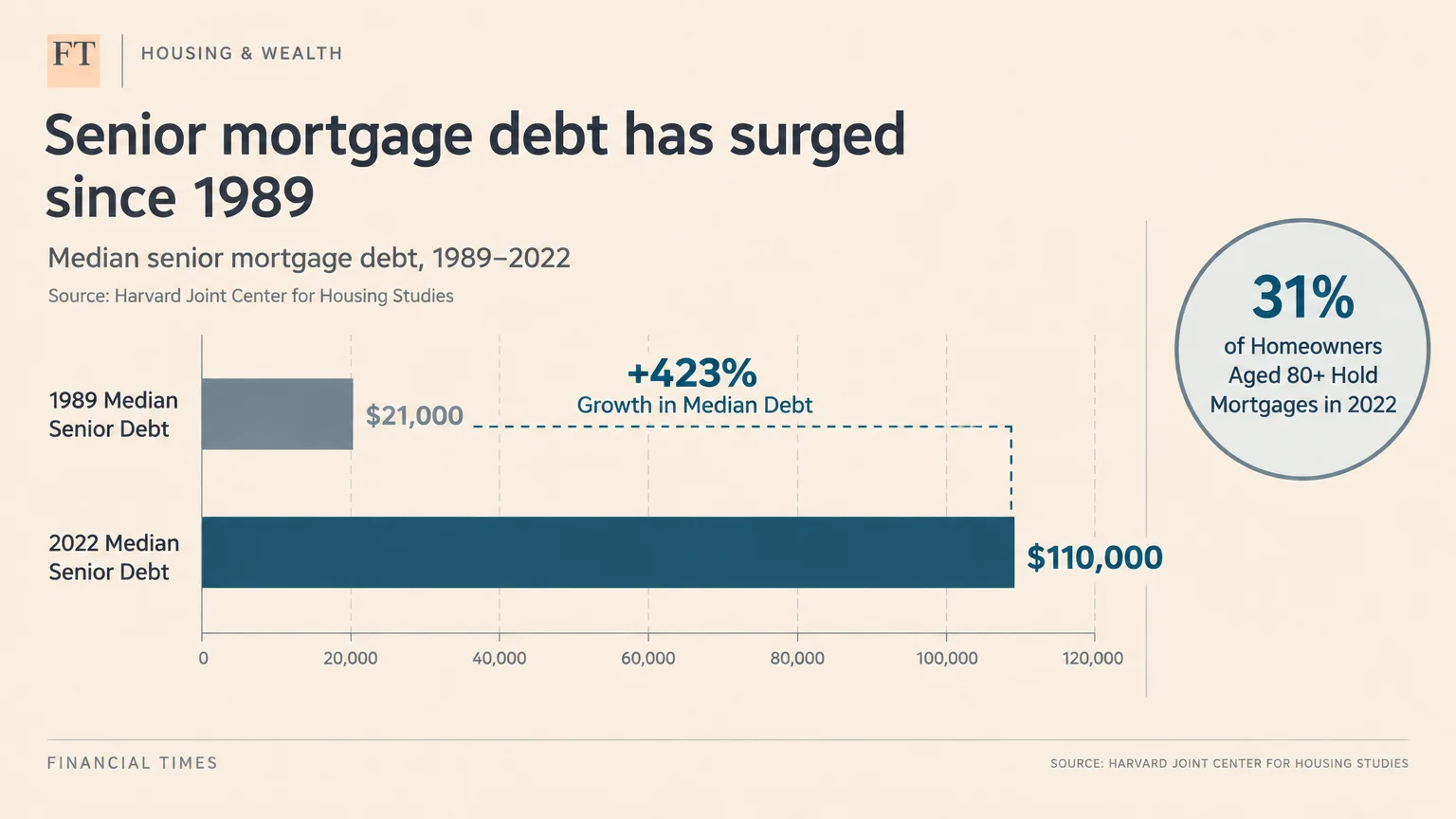
Financial realities have shifted drastically over the past three decades. The Harvard Joint Center for Housing Studies reports that median senior mortgage debt increased by over 400% between 1989 and 2022.
Senior homeowners owed a median of $110,000 in 2022, compared to just $21,000 in 1989. Even among homeowners aged 80 and older, 31% held home loans in 2022.
Modern retirees do not keep housing debt because they failed to save. Many retain their loans because doing so optimizes their overall net worth and cash security.
“The 30-year mortgage is the best instrument in the world… especially when you can lock in low rates and let your capital compound.” — Warren Buffett, Chairman and CEO of Berkshire Hathaway
10 Reasons Retirees Are Keeping a Mortgage on Purpose
1. Capturing Positive Rate Arbitrage
Between 2020 and 2021, millions of American homeowners locked in 30-year fixed mortgages between 2.5% and 3.5%. These historic lows created an unprecedented wealth-building opportunity.
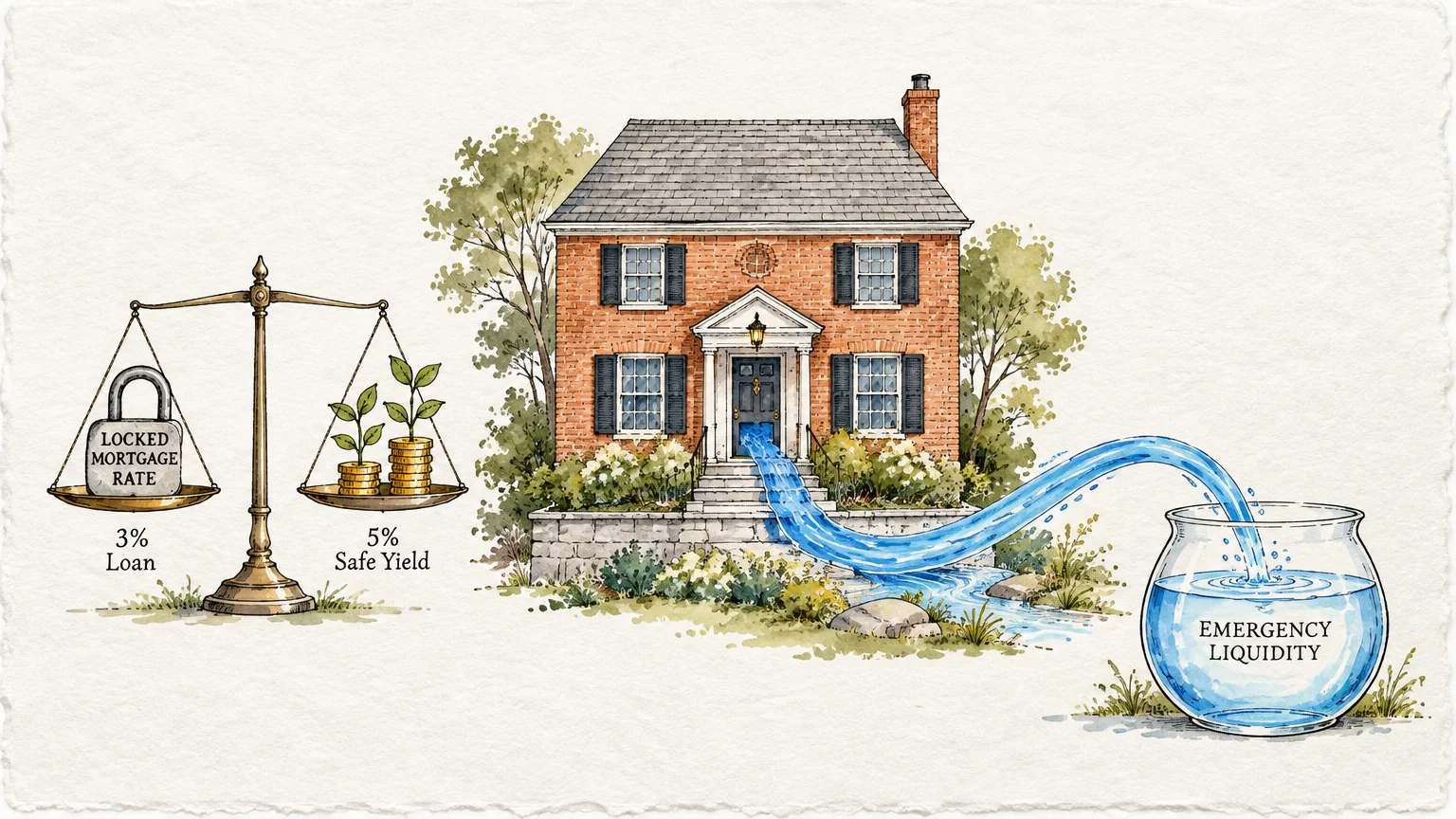
When you hold a 3% mortgage, paying it off early yields an effective 3% return. You can easily earn 4% to 5% in low-risk Treasury bills or certificates of deposit.
Sending extra principal payments to your lender locks your capital into an asset with a lower return. Keeping the loan allows your surplus cash to generate reliable income elsewhere.
2. Preserving Vital Emergency Liquidity
Home equity represents dead cash that you cannot spend at the grocery store. Your home equity will not help you pay for an unexpected health emergency.
Liquidating your savings to pay off a house leaves you vulnerable to sudden cash shocks. You cannot easily access home equity when health problems arise.
Retaining a manageable monthly payment keeps substantial cash reserves in your high-yield savings accounts. Cash on hand provides genuine peace of mind during unforeseen life disruptions.
3. Sidestepping Costly Medicare IRMAA Surcharges
Most retirees hold the bulk of their net worth inside pre-tax accounts like traditional 401(k) plans and IRAs. Withdrawing hundreds of thousands of dollars to pay off a mortgage produces taxable income.
A massive withdrawal causes your Modified Adjusted Gross Income (MAGI) to skyrocket. This spike triggers the Income-Related Monthly Adjustment Amount (IRMAA) administered by the Centers for Medicare & Medicaid Services.
CMS assesses IRMAA surcharges two years after your income spikes. Single filers earning over $106,000 and couples exceeding $212,000 face punishing increases to their Medicare Part B and Part D premiums.
A single lump-sum mortgage payoff can push you into top IRMAA brackets. You could pay hundreds of extra dollars per month for your baseline healthcare coverage.
4. Protecting Social Security Benefits from Tax Traps
Large retirement account withdrawals do not just trigger Medicare surcharges; they also destroy the tax efficiency of your Social Security payments. Congress created Social Security taxation thresholds decades ago without indexing them to inflation.
The Internal Revenue Service calculates provisional income by adding half your Social Security benefits to your other adjusted gross income. Exceeding $32,000 for couples or $25,000 for singles makes your benefits taxable.
If provisional income exceeds $44,000 for married filers, up to 85% of your Social Security benefits face federal taxes. A huge mortgage payoff withdrawal instantly triggers this threshold.
Spreading your mortgage payments across normal monthly cash flow preserves your low tax bracket. You keep more of your hard-earned government benefits every year.
5. Avoiding CFPB Underwriting Roadblocks
Borrowing money becomes significantly harder once you step away from full-time employment. The Consumer Financial Protection Bureau enforces strict Ability-to-Repay rules on all mortgage originations.
Mortgage underwriters evaluate predictable monthly taxable cash flow rather than total paper net worth. Having millions in an investment account does not guarantee easy loan approval without regular income streams.
If you pay off your home and later need capital, qualifying for a new loan proves difficult. Lenders require complex asset-depletion documentation or substantial pension streams.
Keeping an existing, low-rate mortgage eliminates the need to jump through bureaucratic underwriting hoops. You preserve your borrowing leverage while you still have it locked in place.
6. Letting Inflation Devalue Your Fixed Debt
Inflation erodes consumer purchasing power, but it acts as a massive benefit for fixed-rate borrowers. While food, energy, and medical care costs increase, your principal and interest payment never changes.
Over a decade, a $1,400 monthly mortgage payment becomes significantly cheaper in real terms. You repay your fixed loan using future dollars that possess far less purchasing power.
Meanwhile, your home value typically appreciates alongside broader economic price increases. Fixed-rate debt functions as an exceptional personal hedge against ongoing currency debasement.
7. Mitigating Senior Longevity Risk
Living into your 90s requires an investment portfolio that compounds continuously over three decades. Tying up large sums in home equity prevents those funds from working for you in the financial markets.
Long-term equity investments historically deliver returns that exceed borrowing costs on low-interest debt. Even moderate compound growth over twenty years outpaces a 3.5% mortgage expense.
Siphoning $200,000 from your brokerage accounts to pay off real estate permanently interrupts market compounding. That lost growth could leave you short of capital in your late 80s.
“A paid-off home gives you emotional peace that math simply cannot quantify.” — Dave Ramsey, Personal Finance Author and Host
8. Funding Home Accessibility Modifications
Most aging Americans want to stay in their existing homes as long as possible. The AARP reports that the overwhelming majority of older adults prefer aging in place.
Modifying a home for accessibility requires substantial up-front liquidity. Widening doorways, adding ground-floor walk-in showers, and building ramps cost thousands of dollars.
Retirees who drain their liquid accounts to eliminate debt often lack cash for these structural modifications. Keeping your mortgage intact leaves ample reserves to modify your living space safely.
9. Optimizing Real Estate for Generational Wealth Transfer
Strategic estate planning requires careful evaluation of tax rules surrounding inherited property. Under current tax law, real estate receives a stepped-up basis upon your death.
Your heirs inherit real estate at fair market value, eliminating capital gains taxes accrued during your lifetime. The mortgage debt balance passes along with the property.
Heirs can easily sell the home, settle the low-balance mortgage, and pocket remaining gains tax-free. Liquid investments that you kept instead of paying off the house continue benefiting your beneficiaries.
10. Eliminating the “House-Rich, Cash-Poor” Trap
Owning a million-dollar home provides zero financial help if you lack money to pay property taxes. Counties foreclose on paid-off homes just as quickly as mortgaged properties when taxes lapse.
Many seniors find themselves house-rich but desperately cash-poor. They sit on immense home equity while struggling to afford routine home maintenance and prescription drugs.
Maintaining a balanced balance sheet protects your quality of life. Monthly housing payments remain painless when supported by strong, diversified cash reserves.
Mortgage Strategies Compared: Payoff vs. Keeping the Loan
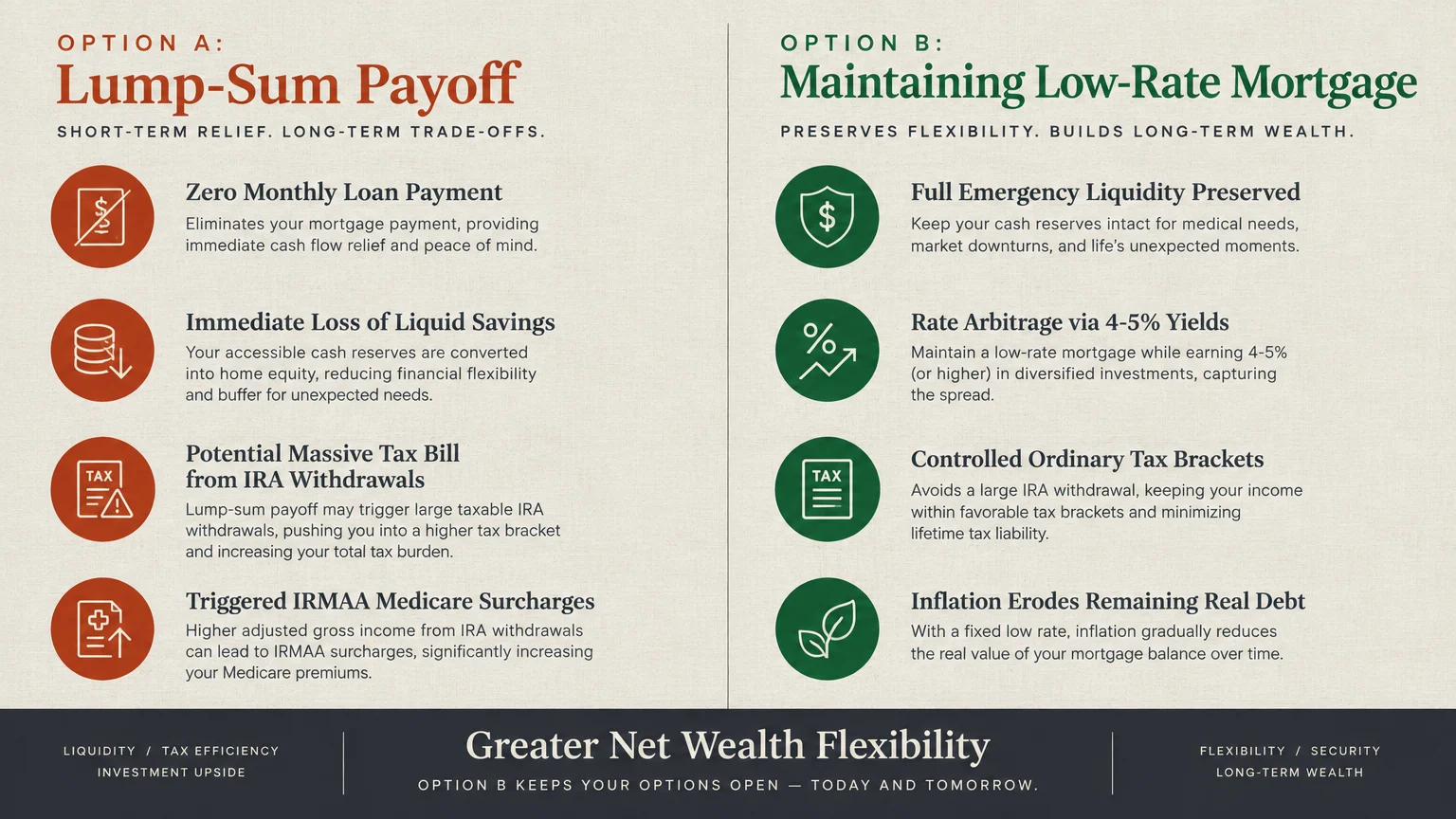
Every financing choice carries distinct mathematical and practical consequences. Review how keeping a low-rate loan compares to executing an immediate lump-sum payoff.
| Financial Category | Keeping a Low-Rate Mortgage | Paying Off Debt with Pre-Tax Savings |
|---|---|---|
| Immediate Liquidity | High; preserves cash reserves for crises | Low; equity is trapped in illiquid brick and mortar |
| Income Tax Exposure | Low; standard distributions keep tax brackets stable | High; large withdrawals push you into top marginal brackets |
| Medicare Premiums | Base rates; avoids income-based IRMAA surcharges | High surcharges applied to Part B and Part D coverage |
| Social Security Impact | Protects benefits from aggressive provisional taxation | Triggers federal taxes on up to 85% of monthly benefits |
| Net Worth Growth Potential | High; surplus capital compounds in financial markets | Restricted; returns capped at the eliminated interest rate |
| Psychological Freedom | Requires comfort with carrying structured debt | Provides total emotional satisfaction of zero debt |

Avoiding Common Errors When Managing Retirement Debt
Keeping a mortgage in retirement can be brilliant, but errors can ruin your plan. Avoid these critical mistakes to protect your financial security.
First, never maintain a high-interest mortgage. Keeping a 7% or 8% loan in retirement rarely makes mathematical sense, because guaranteed risk-free investments cannot beat that borrowing cost.
Second, avoid taking unnecessary risks with your preserved cash. If you choose not to pay off a 3% mortgage, do not gamble that payoff money in volatile speculative assets.
Keep your housing payoff reserve inside high-yield savings accounts, short-term Treasuries, or quality dividend funds. The interest earned must remain reliable and liquid.
Third, do not forget property taxes, homeowners insurance, and maintenance costs. Even after paying off a mortgage, these ongoing housing expenses increase every single year.

When DIY Isn’t Enough: Navigating Complex Housing Decisions
Deciding whether to eliminate housing debt involves complex cross-currents between taxes, investment yields, and health considerations. Consult a fee-only Certified Financial Planner or CPA during the following scenarios:
- Navigating Multi-Tier IRMAA Cliffs: If your planned withdrawal lands near a Medicare premium threshold, professional tax planning prevents expensive mistakes.
- Balancing Roth Conversions with Mortgage Payoffs: Simultaneously converting pre-tax IRAs to Roth accounts while servicing mortgage debt requires exact tax-bracket matching.
- Assessing Medicaid Eligibility Rules: Home equity rules and asset lookback periods vary widely by state when preparing for potential long-term care needs.
- Executing Asset-Depletion Mortgages: If you plan to downsize or relocate after retiring, you need expert guidance to qualify under strict post-employment lending rules.
Frequently Asked Questions About Mortgages in Retirement
Should I pay off my mortgage before retiring if I have a 3% interest rate?
Most financial advisers recommend keeping a 3% fixed mortgage. You can safely earn higher yields in conservative cash equivalents while preserving crucial emergency liquidity.
Can I still deduct mortgage interest on my taxes after retiring?
Most retirees no longer deduct mortgage interest. The high standard deduction—especially with bonus deductions for taxpayers aged 65 and older—usually exceeds total itemized deductions.
What happens if I pass away while carrying a mortgage?
Your mortgage does not disappear upon death; it remains attached to the real estate. Your heirs can choose to assume the loan, refinance it, or sell the property to satisfy the balance.
Will paying off my mortgage lower my monthly living costs significantly?
Paying off a mortgage eliminates principal and interest payments, but you still owe property taxes, hazard insurance, and upkeep. In high-tax jurisdictions, non-mortgage housing expenses remain substantial.
Strategic Next Steps for Your Retirement Mortgage
Take time to audit your current balance sheet before making emotional decisions about your mortgage. Calculate the exact interest rate on your loan and compare it against current yields on safe cash equivalents.
Review your upcoming taxable distributions with an accountant to model the impact of any accelerated principal payments. Balancing mathematical optimization with personal emotional comfort will ensure you thrive throughout your retirement years.
The information in this guide is meant for educational purposes. Your specific circumstances—including income, health needs, tax situation, and goals—may require different approaches. When in doubt, consult a licensed professional.
Last updated: March 2026. Retirement benefits, tax rules, and healthcare regulations change frequently—verify current details with official sources.









Leave a Reply