
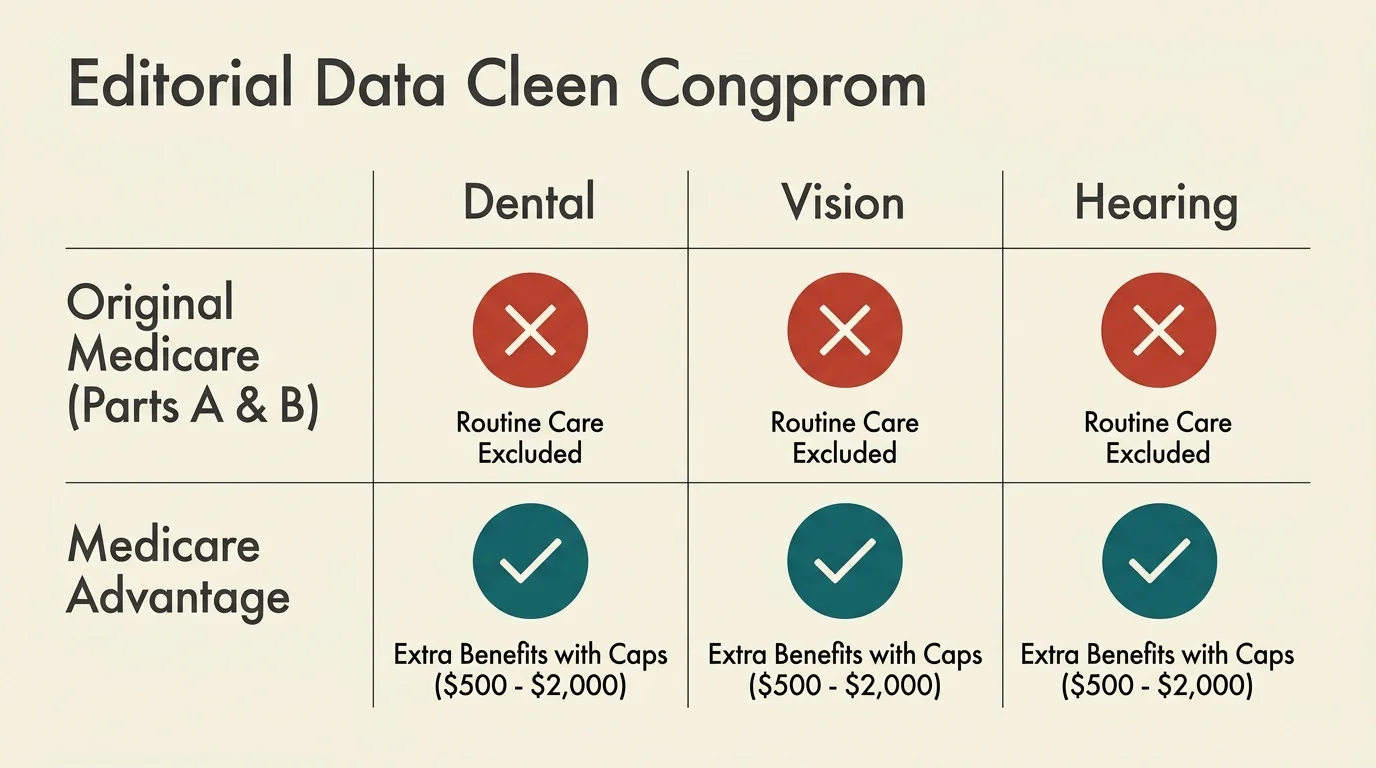
Original Medicare leaves massive gaps in dental, vision, and hearing care, surprising millions of retirees who expect comprehensive coverage upon turning 65. Traditional Medicare explicitly excludes routine dental cleanings, corrective eyeglasses, and hearing aids under federal law, forcing older adults to handle these essential healthcare expenses out of pocket. While private Medicare Advantage plans offer supplemental benefits, annual spending limits and strict network rules still leave many enrollees with substantial bill balances. Understanding exactly what Medicare pays for—and where your personal liability begins—allows you to build a practical funding strategy, protect your retirement portfolio, and avoid unexpected financial strain when routine care becomes medically necessary.
The Essentials
- Original Medicare Excludes Routine Care: Parts A and B do not cover routine dental cleanings, fillings, dentures, routine eye exams, prescription glasses, or hearing aids.
- Strict Medical Exceptions Exist: Medicare Part B covers specific medical procedures, including cataract surgery, diabetic eye exams, diagnostic hearing tests, and pre-treatment dental clearance for major surgeries or dialysis.
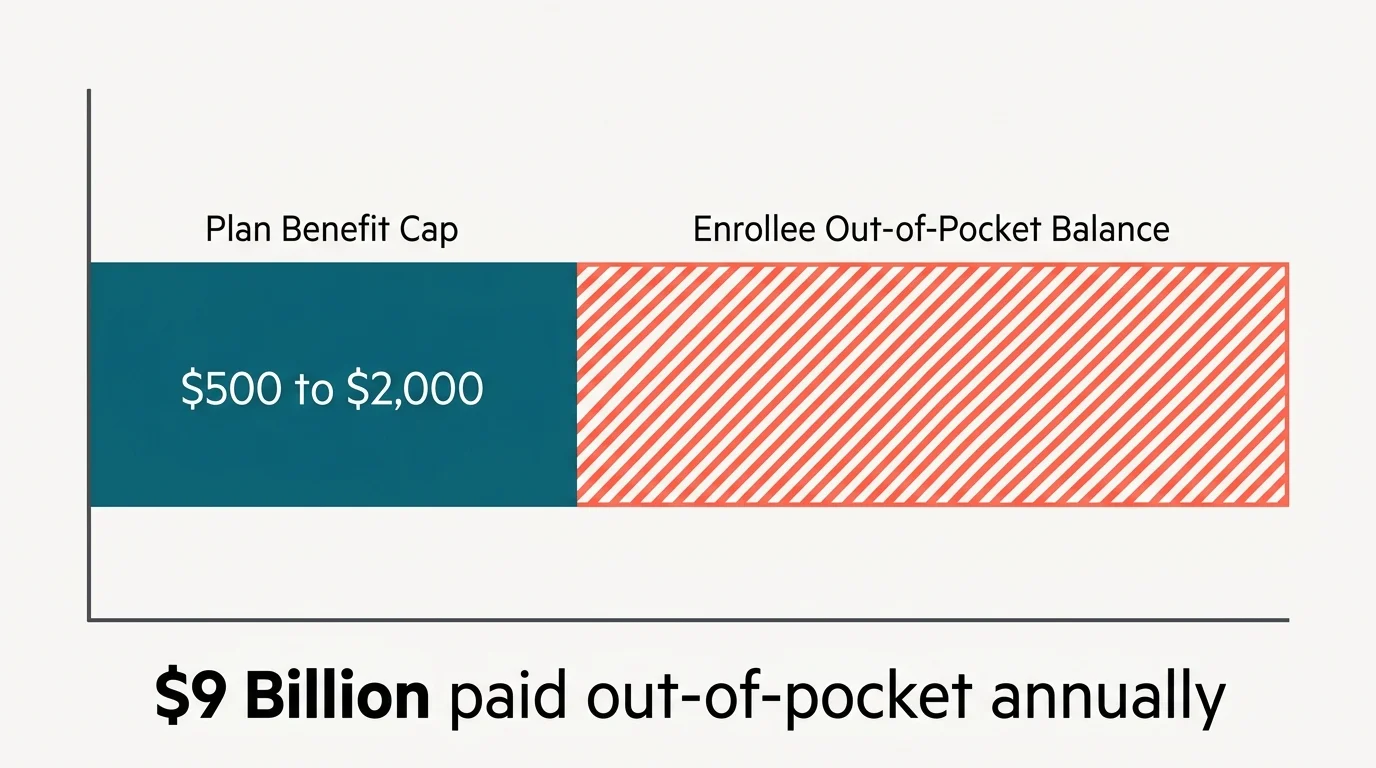
- Medicare Advantage Caps Benefits: Private Advantage plans cover 97%+ of enrollees with extra benefits, but annual benefit caps (typically $500 to $2,000) leave enrollees paying over $9 billion out of pocket annually.
- Standalone Options Bridge the Gap: Individual dental and vision policies, dental savings plans, and over-the-counter (OTC) hearing aids offer practical ways to manage routine expenses.

1. The Original Medicare Exclusion Rule (Parts A and B)
When Congress passed the Social Security Act of 1965 to create Medicare, lawmakers designed the program primarily to protect older Americans from devastating hospital stays and major medical crises. They deliberately excluded routine dental, vision, and hearing care from the core benefit structure. Decades later, these statutory exclusions remain intact under Original Medicare (Part A and Part B).
If you rely solely on Original Medicare, you must pay 100% of the cost for routine services out of pocket. Part A covers inpatient hospital stays, and Part B covers doctor visits, outpatient care, and medical diagnostics. In 2025, the standard monthly Medicare Part B premium is $185.00, and the annual Part B deductible is $257.00. However, paying these premiums and satisfying your deductible does not unlock routine coverage for your teeth, eyes, or ears.
Data from the Kaiser Family Foundation (KFF) reveals that traditional Medicare beneficiaries who used dental care spent an average of $1,107 out of pocket in a single year due to the total absence of routine benefit coverage. When you calculate the cumulative costs over a twenty-year retirement, routine cleanings, periodic fillings, new prescription lenses, and eventual hearing aids can easily exceed tens of thousands of dollars.
“Healthcare costs in retirement represent one of the single biggest threats to your financial freedom. Preparing for routine dental, vision, and hearing expenses before you enroll in Medicare ensures that unexpected medical bills will not derail your long-term income plan.” — Jean Chatzky, Financial Journalist and Author
What Original Medicare Does Not Cover
Original Medicare excludes a wide range of essential services that maintain your daily quality of life:
- Routine Dental Care: Preventive cleanings, routine checkups, x-rays, cavity fillings, tooth extractions, root canals, crowns, bridges, dentures, and dental implants.
- Routine Vision Care: Annual refractions for corrective lenses, routine eye exams for frame fitting, eyeglasses (frames and lenses), and contact lenses.
- Routine Hearing Care: Routine hearing evaluations, audiograms for hearing aid selection, hearing aid fittings, and the physical hearing aid devices themselves.
Understanding these hard boundaries prevents costly surprises when you visit your provider. While Original Medicare maintains strict exclusions, federal regulations do allow specific exceptions when dental, vision, or hearing conditions intersect directly with complex medical treatments.

2. Medical Exceptions: When Original Medicare Does Pay
While Original Medicare denies routine maintenance, Medicare Part B covers dental, vision, and hearing services when they serve a direct medical or surgical purpose. Knowing how to classify care correctly helps you claim every dollar of coverage to which you are entitled.
Expanded “Medically Necessary” Dental Rules
The Centers for Medicare & Medicaid Services (CMS) expanded Medicare Part B coverage for dental care through updates to the Physician Fee Schedule. Original Medicare pays for clinical dental examinations and infection eradication when those procedures directly affect the success of an covered major medical procedure.
Under current CMS regulations, Part B covers oral health services in the following specific clinical scenarios:
- Organ Transplants: Dental exams and pre-transplant oral infection treatments prior to organ transplant surgery.
- Cardiac Valve Replacements: Oral health evaluations and treatments required to eliminate active oral infections before heart valve replacement or endovascular valve procedures.
- Head and Neck Cancer Treatments: Dental examinations, extractions, and oral clearance prior to receiving radiation or chemotherapy for head and neck cancers.
- End-Stage Renal Disease (ESRD): Effective January 1, 2025, Medicare covers pre-treatment dental examinations and oral infection treatments for beneficiaries with ESRD who are initiating dialysis.
Medicare covers the dental service to eliminate infection and protect the medical outcome. However, Medicare does not pay for restorative dental work—such as permanent crowns or implants—after the primary medical procedure concludes.
Vision Exceptions Covered by Part B
Medicare Part B covers medical eye conditions, surgical interventions, and specific diagnostic screenings for high-risk individuals. You pay your 20% Part B coinsurance after meeting your annual $257.00 deductible for the following services:
- Cataract Surgery and Post-Surgical Eyeglasses: Part B covers outpatient cataract removal surgery and the insertion of a standard intraocular lens. Following cataract surgery with an intraocular lens insertion, Medicare covers **one pair of standard eyeglasses or one set of contact lenses** provided by a Medicare-enrolled supplier. If you select upgraded, designer, or progressive frames, you must pay the price difference out of pocket.
- Diabetic Retinopathy Exams: Part B covers an annual dilated eye exam for beneficiaries diagnosed with diabetes. An eye doctor licensed in your state must perform the exam.
- Glaucoma Screenings: Medicare covers an annual glaucoma screening for individuals at high risk, including beneficiaries with a family history of glaucoma, people with diabetes, and African Americans aged 50 and older.
- Macular Degeneration Management: Part B covers diagnostic testing and medical treatments—such as ocular injections—for age-related macular degeneration (AMD).
Hearing and Balance Exceptions
Original Medicare does not cover hearing aids or routine hearing exams. However, Part B covers diagnostic hearing and balance evaluations when your physician orders them to diagnose a specific medical condition. Covered medical reasons include evaluating sudden hearing loss, persistent vertigo, tinnitus, acoustic neuroma, or inner ear trauma. You pay your standard 20% coinsurance for the doctor’s diagnostic service, but Medicare will not cover any subsequent hearing aid recommendation or device fitting.
3. Medicare Advantage Extra Benefits: Promises vs. Reality
Because Original Medicare leaves substantial gaps in coverage, private insurance companies emphasize supplemental dental, vision, and hearing benefits when marketing Medicare Advantage (Part C) plans. According to research from AARP and health policy analysts, over 54% of all eligible Medicare beneficiaries—more than 30 million older Americans—are enrolled in private Medicare Advantage plans.
Data from KFF shows that 97%+ of individual Medicare Advantage plans offer supplemental dental, vision, and hearing benefits. Specifically, 100% of plans offer vision benefits, 98% offer dental coverage, and 96% provide hearing benefits. However, significant differences exist between advertised benefits and real-world out-of-pocket spending.
“Never assume private insurance or Medicare Advantage covers everything. Read the benefit caps, understand your deductible, and keep an emergency cash cushion specifically set aside for healthcare out-of-pocket costs.” — Suze Orman, Personal Finance Expert
The Out-of-Pocket Spending Gap
A national study published in JAMA Network Open highlighted a staggering disparity between plan spending and consumer costs. While Medicare Advantage plans spend approximately $3.9 billion annually on dental, vision, and hearing benefits, enrollees still pay **$9.2 billion per year in out-of-pocket costs** for those exact same services.
Several plan restrictions drive this substantial financial gap:
- Annual Dollar Caps: Most Medicare Advantage plans limit total annual dental coverage to an maximum allowance—typically capped between $500 and $2,000 per year. A single root canal and crown can cost $1,500 to $2,500, exhausting your entire annual benefit allowance immediately.
- Coinsurance Requirements: While plans often cover preventive cleanings at 100%, major services like dentures, deep cleanings, or bridges usually require a 50% coinsurance payment from you.
- Provider Network Restrictions: Health Maintenance Organization (HMO) plans pay nothing if you visit an out-of-network dentist, optometrist, or audiologist. Preferred Provider Organization (PPO) plans allow out-of-network care but charge significantly higher coinsurance rates.
- Prior Authorization Bottlenecks: Medicare Advantage insurers frequently require prior authorization before approving major dental procedures or specialized hearing aids, resulting in administrative delays or coverage denials.
Before enrolling in a Medicare Advantage plan solely for its extra benefits, inspect the plan’s Evidence of Coverage (EOC) document. Check the exact annual coverage limit, verify that your favorite providers participate in the network, and review the coinsurance percentages for complex procedures.

4. Alternative Strategies to Cover Dental, Vision, and Hearing Gaps
If you choose Original Medicare (with or without a Medigap policy), or if your Medicare Advantage plan caps benefits too tightly, you need proactive funding strategies to offset healthcare costs. Several viable alternatives exist to lower your out-of-pocket expenses.
Standalone Dental and Vision Policies
Private insurance carriers sell individual dental and vision policies directly to seniors. These standalone plans operate independently of your Medicare coverage.
- Dental Insurance: Standalone plans charge monthly premiums ranging between $30 and $60 per month. Most implement a “100-80-50” benefit structure: covering 100% of preventive cleanings, 80% of basic fillings, and 50% of major procedures. Pay close attention to waiting periods; many standalone plans require you to pay premiums for 6 to 12 months before covering major treatments like crowns or bridges.
- Vision Insurance: Standalone vision plans cost between $10 and $20 per month. They provide free annual vision exams and offer annual frame allowances (typically $120 to $200) alongside fixed copays for standard corrective lenses.
Dental Savings and Discount Plans
Dental savings plans offer a flexible non-insurance alternative. You pay an annual membership fee (usually $100 to $200 per year) to access a contracted network of dentists who agree to perform procedures at discounted rates, typically saving members 10% to 60% on routine and complex dental work.
Discount plans feature distinct advantages for retirees:
- No annual benefit maximum caps.
- No waiting periods—you can use discounts immediately upon activation.
- No claim paperwork or prior authorization approvals required.
Over-the-Counter (OTC) Hearing Aids
Following landmark regulatory updates by the U.S. Food and Drug Administration (FDA), adults with perceived mild-to-moderate hearing loss can purchase over-the-counter (OTC) hearing aids directly from retail stores and online pharmacies without a medical exam, prescription, or audiologist fitting.
Prescription hearing aids purchased through an audiologist traditionally cost between $3,000 and $6,000 per pair. High-quality OTC hearing aids cost between $300 and $1,200 per pair. For retirees facing total out-of-pocket responsibility under Original Medicare, OTC hearing devices deliver substantial savings for mild hearing impairment.
Strategic Use of Health Savings Accounts (HSAs)
You cannot contribute new funds to a Health Savings Account (HSA) once you enroll in any part of Medicare. However, you can spend existing HSA funds tax-free at any age to cover qualified medical, dental, vision, and hearing expenses.
Using accumulated HSA dollars to pay for routine dental cleanings, prescription eyeglasses, or hearing aid batteries preserves your taxable retirement distributions and minimizes your income tax obligations in retirement.

5. Comparing Coverage Options for Routine Care
Selecting the right path depends on your health needs, financial budget, and personal preference for provider flexibility. The table below compares how different plan structures handle routine dental, vision, and hearing costs.
| Coverage Option | Routine Dental | Routine Vision | Routine Hearing | Typical Out-of-Pocket Risk |
|---|---|---|---|---|
| Original Medicare (Parts A & B) | No coverage (0%) | No routine coverage (0%) | No routine coverage (0%) | Very High: You pay 100% of routine care costs. |
| Original Medicare + Medigap | No coverage (Medigap does not cover routine care) | No coverage (except Part B post-cataract standard glasses) | No coverage (0%) | Very High: Medigap only pays Medicare-approved medical deductibles/coinsurance. |
| Medicare Advantage (Part C) | Covered (usually $500–$2,000 annual cap) | Covered (annual allowance for frames/lenses) | Covered (copays or fixed device allowances) | Moderate: Subject to network limits, coinsurance, and low annual caps. |
| Standalone Senior Dental/Vision Plan | Covered (100% preventive, 50% major care) | Covered (exam copays + frame allowances) | Rarely covered (requires separate hearing rider) | Moderate: Premium costs plus waiting periods and annual maximums apply. |
| Dental Discount / Savings Plan | 10% to 60% direct price discounts | Discount networks available on select plans | Discount networks available on select plans | Predictable: No annual caps; you pay discounted fee-for-service prices. |
6. What Can Go Wrong: Critical Mistakes Retirees Make
Navigating healthcare choices in retirement requires meticulous attention to detail. Avoid these common financial and operational pitfalls when managing dental, vision, and hearing care.
Assuming Medicare Advantage Covers Major Oral Surgery
Many retirees select a Medicare Advantage plan expecting full coverage for dental implants, bridges, or full dentures. When they visit the dentist, they discover the plan’s annual maximum allowance caps out at $1,000, leaving them responsible for $4,000 in remaining surgical expenses. Always review your plan’s benefit limit before scheduling major procedures.
Forfeiting the Post-Cataract Optical Benefit
Medicare Part B covers one pair of standard eyeglasses or contact lenses after cataract surgery with an intraocular lens implant. However, beneficiaries frequently lose this benefit by purchasing glasses through non-Medicare enrolled optical shops. To claim this benefit, you must buy your eyewear through a supplier enrolled in the Medicare program, and your provider must submit the claim directly to Part B.
Buying Standalone Plans Right Before Major Surgery
Purchasing individual dental insurance a week before an scheduled root canal or crown often leads to denied claims. Most standalone dental insurance policies enforce 6- to 12-month waiting periods for basic and major restorative procedures. If you need immediate complex care, a dental savings plan provides instant fee reductions without waiting periods.
Ignoring Provider Network Boundaries
If you enroll in a Medicare Advantage HMO plan, visiting an out-of-network dentist or optometrist means the insurer will pay $0 toward your care. Verify that your trusted healthcare providers participate in the plan’s network every single year during the open enrollment period, as network contracts change annually.
Neglecting Preventive Care to Save Money
Skipping routine dental cleanings or regular eye exams to avoid out-of-pocket costs creates severe medical and financial complications later. Periodontal disease increases systemic inflammation linked to heart disease, while unaddressed vision loss and hearing loss double the risk of falls and accelerate cognitive decline. Utilizing non-profit resources from the National Council on Aging can help you locate low-cost preventive screening programs in your community.

7. When to Consult a Professional
While basic healthcare decisions are straightforward, complex situations require personalized professional guidance to protect both your health and retirement finances. Consider consulting a professional under the following circumstances:
- When Planning Major Medical Surgery Requiring Dental Clearance: If you face heart valve replacement, organ transplantation, or head and neck radiation therapy, consult your medical specialist and a hospital social worker. They will coordinate pre-treatment oral clearance under expanded Medicare Part B billing rules so you avoid unexpected out-of-pocket dental charges.
- When Transitioning to Medicare During Initial Enrollment: Work with an independent, licensed Medicare advisor or your local State Health Insurance Assistance Program (SHIP) counselor. They can analyze your health profile and evaluate whether Original Medicare with a Medigap policy or a Medicare Advantage plan offers the best financial protection for your recurring dental, vision, and hearing needs.
- When Budgeting Large Healthcare Outlays Within Your Financial Plan: If you face major reconstructive dental work or high-end prescription hearing aids costing thousands of dollars, consult a Certified Financial Planner (CFP). A financial professional will design an efficient withdrawal strategy from your retirement accounts—such as utilizing Roth IRAs or HSAs—to prevent pulling extra income that could inadvertently trigger higher Medicare Part B and Part D premiums via Income-Related Monthly Adjustment Amounts (IRMAA).
8. Frequently Asked Questions
Does Original Medicare cover dental implants under any circumstances?
No. Original Medicare (Parts A and B) explicitly excludes dental implants under all circumstances. Even if you require an implant for functional chewing after a medical extraction, Medicare views the implant as routine restorative dentistry. You must pay for implants out of pocket or use supplemental private insurance, Medicare Advantage benefits, or a dental discount plan.
How much does Medicare Part B pay for glasses after cataract surgery?
Medicare Part B pays 80% of the Medicare-approved amount for one pair of standard frames and basic single-vision or bifocal lenses following cataract surgery with an intraocular lens insertion. You pay the remaining 20% coinsurance after meeting your Part B deductible ($257.00 in 2025). If you choose upgraded frame designs, anti-glare coatings, or progressive lenses, you must pay those additional costs out of pocket.
Can I purchase a standalone dental plan if I stay on Original Medicare?
Yes. You can enroll in a standalone individual dental policy offered by private insurance carriers at any time. These policies operate completely independently of Original Medicare. You pay a monthly premium directly to the dental insurance carrier, and the policy covers routine cleanings, basic fillings, and major restorative work based on its specific schedule of benefits.
Are over-the-counter (OTC) hearing aids high quality?
FDA-cleared over-the-counter hearing aids provide excellent sound amplification and technology for adults with mild-to-moderate hearing loss. Many models feature Bluetooth streaming, directional microphones, and smartphone app adjustments. However, if you suffer from severe or profound hearing loss, complex medical ear conditions, or asymmetric hearing damage, you should see an audiologist for custom prescription hearing aids.
Why did I receive a bill after getting my teeth cleaned under Medicare Advantage?
You may receive a bill if your dentist charged more than your plan’s maximum allowable fee schedule, if you exceeded your plan’s annual maximum coverage cap (e.g., $1,000 per year), or if you visited an out-of-network dentist. Review your Explanation of Benefits (EOB) statement from your insurer to verify why the charge was denied or partially covered.
Taking Control of Your Healthcare Costs
Navigating Medicare coverage for dental, vision, and hearing services requires clarity and planning. Start by reviewing your current health needs and auditing your existing insurance policies. If you opt for Original Medicare, build a designated healthcare savings fund or enroll in a standalone dental and vision plan to absorb routine costs. If you choose Medicare Advantage, monitor your annual benefit maximums, stick strictly to in-network providers, and track your out-of-pocket spending throughout the year.
Taking an active approach to your routine health care preserves your independence, protects your physical well-being, and guards your retirement savings against unexpected medical costs. This article provides general retirement education and information only. Every retiree’s situation is unique—what works for others may not work for you. For personalized advice, consider consulting a qualified financial professional such as a CFP or CPA.
Last updated: March 2026. Retirement benefits, tax rules, and healthcare regulations change frequently—verify current details with official sources.









Leave a Reply