
The Tax Trap: Your Provisional Income Calculation
While the earnings test represents a temporary withholding of benefits, the taxation of your benefits represents a permanent loss of funds to the IRS. Most retirees assume their Social Security checks arrive tax-free. Unfortunately, working while collecting benefits often drives your overall income into a bracket where up to 85 percent of your Social Security becomes subject to federal income tax.
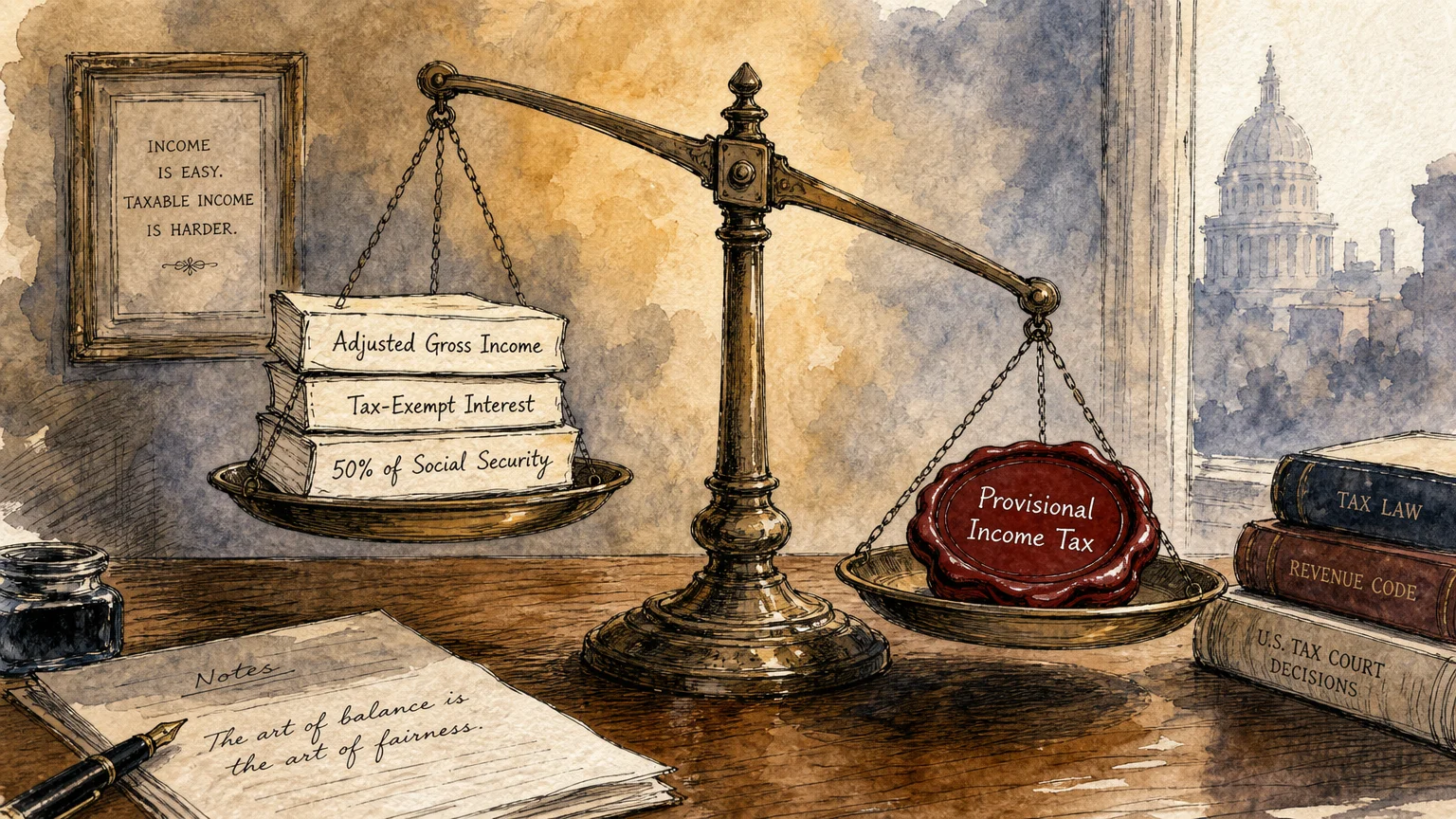
The Internal Revenue Service (IRS) determines the taxability of your benefits using a metric called Provisional Income. To find this number, you add your Adjusted Gross Income (AGI), any nontaxable interest you receive (such as from municipal bonds), and exactly one-half of your annual Social Security benefits.
If you file your taxes as an individual and your Provisional Income exceeds $25,000, your benefits become taxable. For married couples filing jointly, the base threshold is $32,000.
These thresholds have not been adjusted for inflation since they were introduced decades ago, meaning practically any retiree who works a part-time job will cross them. If your combined income pushes past the second tier—$34,000 for individuals and $44,000 for couples—up to 85 percent of your benefits will be taxed at your standard marginal income tax rate.
This creates a compounding financial headache. Continuing to work not only subjects you to the Retirement Earnings Test withholding, but the wages you earn also increase your Provisional Income, thereby increasing the taxes you owe on whatever benefits you actually get to keep.
Efficient benefit planning requires you to evaluate the net, after-tax value of claiming early while employed.









Leave a Reply