
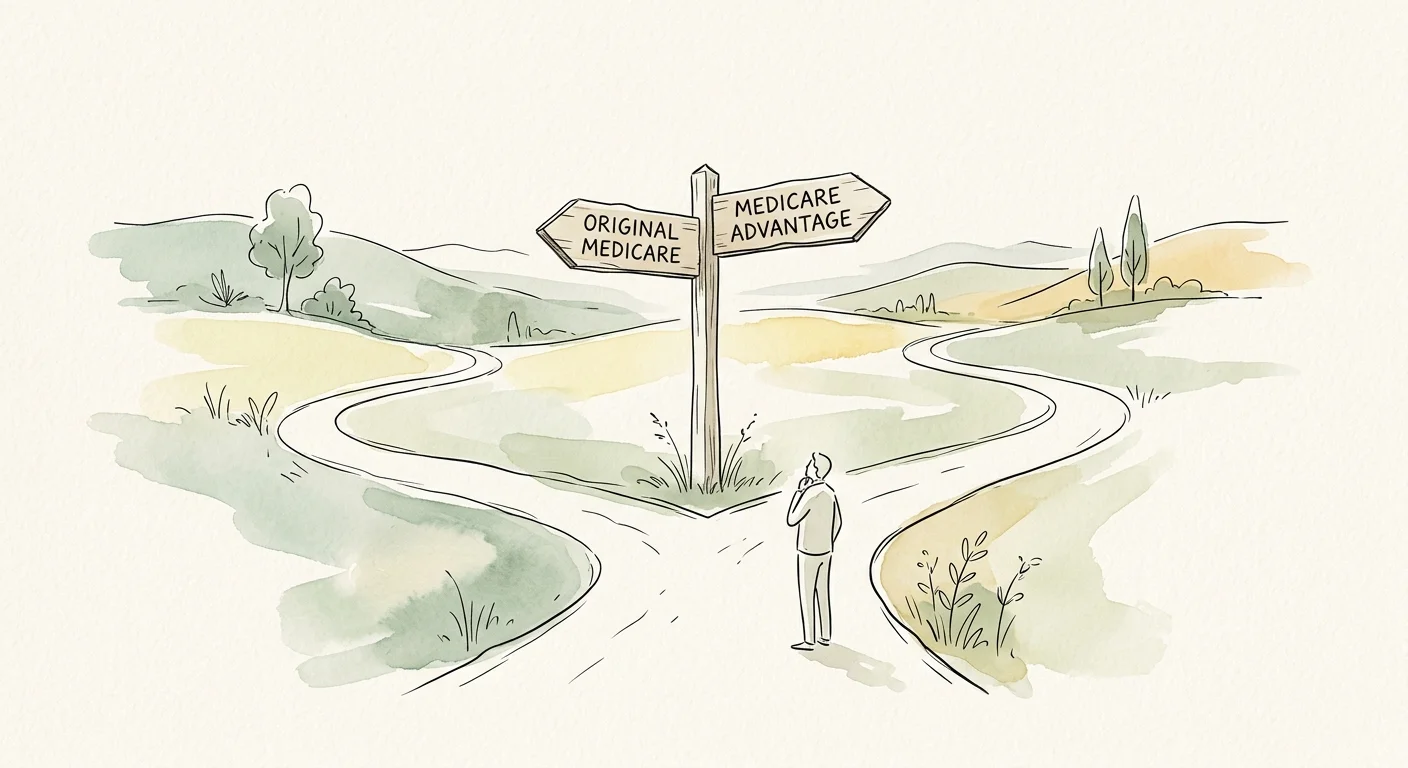
The Fork in the Road: Original Medicare vs. Medicare Advantage
When reaching your 65th birthday, you must choose between two primary pathways for receiving your benefits: Original Medicare combined with supplemental coverage, or a Medicare Advantage plan (Medicare Part C).
Original Medicare consists of government-administered Part A and Part B. Under Original Medicare, you can consult any physician, specialist, or healthcare facility across the United States that accepts Medicare, without needing primary care doctor referrals or prior authorizations. Because Original Medicare leaves you exposed to a 20% coinsurance liability without a financial cap, most beneficiaries add a private Medicare Supplement Insurance policy (Medigap) alongside a standalone Part D prescription drug plan. Medigap policies pay for out-of-pocket costs like copayments, coinsurance, and deductibles.
Medicare Advantage (Part C) serves as a private insurance alternative to Original Medicare. Private insurance plans contract with Medicare to deliver your Part A and Part B benefits, usually bundling Part D prescription coverage and minor vision, hearing, or dental perks into a single policy. However, Medicare Advantage plans operate through restricted provider networks (such as HMOs or PPOs), require primary care referrals for specialists, and utilize pre-authorization requirements before approving complex medical procedures.
“Understanding your healthcare costs in retirement is just as critical as managing your investment portfolio.” — Jean Chatzky, Financial Journalist and CEO of HerMoney
| Feature | Original Medicare + Medigap + Part D | Medicare Advantage (Part C) |
|---|---|---|
| Provider Choice | Nationwide access; see any doctor accepting Medicare. | Restricted to local/regional HMO or PPO network providers. |
| Specialist Access | Direct access; no primary care physician referral required. | Usually requires referrals from a primary care doctor. |
| Prior Authorization | Rarely required for covered medical procedures. | Mandatory for many treatments, scans, and specialist visits. |
| Monthly Costs | Higher fixed monthly costs (Part B + Medigap + Part D premiums). | Lower monthly plan premiums (often $0 beyond Part B premium). |
| Out-of-Pocket Risk | Low and predictable; Medigap covers most copays/coinsurance. | Variable copayments until meeting annual out-of-pocket maximums. |
| Travel Coverage | Comprehensive coverage anywhere within the United States. | Emergency care only outside local plan service area. |
Your 65th birthday triggers a one-time six-month Medigap Open Enrollment Period that begins the exact month your Medicare Part B becomes active. During this six-month window, federal law grants you guaranteed issue rights. Insurance carriers cannot deny you a Medigap policy, exclude pre-existing health conditions, or charge you higher monthly premiums based on your medical history. If you bypass this window and try to switch from Medicare Advantage back to Original Medicare with a Medigap policy years later, insurers in most states can perform medical underwriting, charge higher rates, or reject your application outright due to existing health conditions.









Leave a Reply