
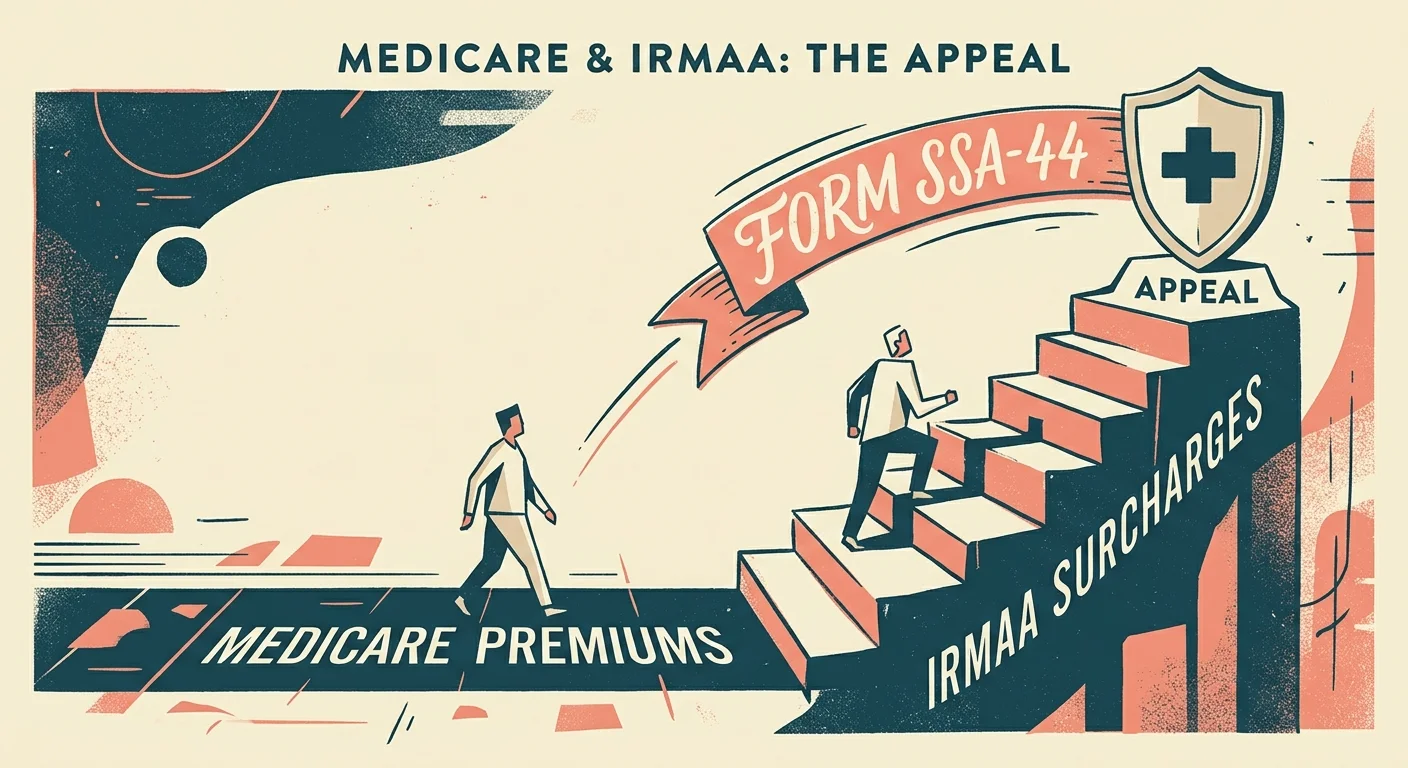
6. Medicare IRMAA Determination Notice
Higher-income retirees receive an Income-Related Monthly Adjustment Amount (IRMAA) notice if their income exceeds statutory thresholds. The Social Security Administration processes tax information supplied by the IRS from two years prior to determine whether you must pay a surcharge on your Medicare Part B and Part D premiums. You can review official premium structures directly on Medicare.gov.
For instance, your Medicare premiums in 2026 rely entirely on the Modified Adjusted Gross Income (MAGI) reported on your 2024 tax return. If your income spiked temporarily due to a one-time event—such as selling a home, taking a large IRA withdrawal, or retiring from a corporate position—the government automatically assesses a substantial monthly surcharge on top of your standard Medicare premium.
If you discard this notice, you miss the opportunity to appeal the adjustment. If your income dropped dramatically due to a qualifying life event (such as work stoppage, work reduction, marriage, divorce, or loss of pension income), you can submit Form SSA-44 (Medicare Income-Related Monthly Adjustment Amount – Life-Changing Event Request). Submitting this form with supporting documentation can lower or eliminate the monthly surcharge, saving you thousands of dollars each year. Keep IRMAA notices alongside your tax records for 3 years.









Leave a Reply