
Sweeping federal retirement policy shifts are rapidly changing how Americans prepare for life after work. Recent executive initiatives directly alter your workplace 401(k) investment options and annual savings limits.
These reforms create substantial opportunities for certain savers while exposing others to hidden investment hazards. Exploring the new retirement savings rules enables you to protect your wealth and make confident decisions.
This guide details the Trump 401k plan explained from every angle. You will discover who benefits from Trump’s retirement plan and who faces serious financial headwinds.
The Trump 401(k) Plan Explained: Key Executive Actions and Policies
Recent federal actions have introduced sweeping changes to the defined-contribution landscape. These updates reshape how employers build retirement menus and how workers invest.
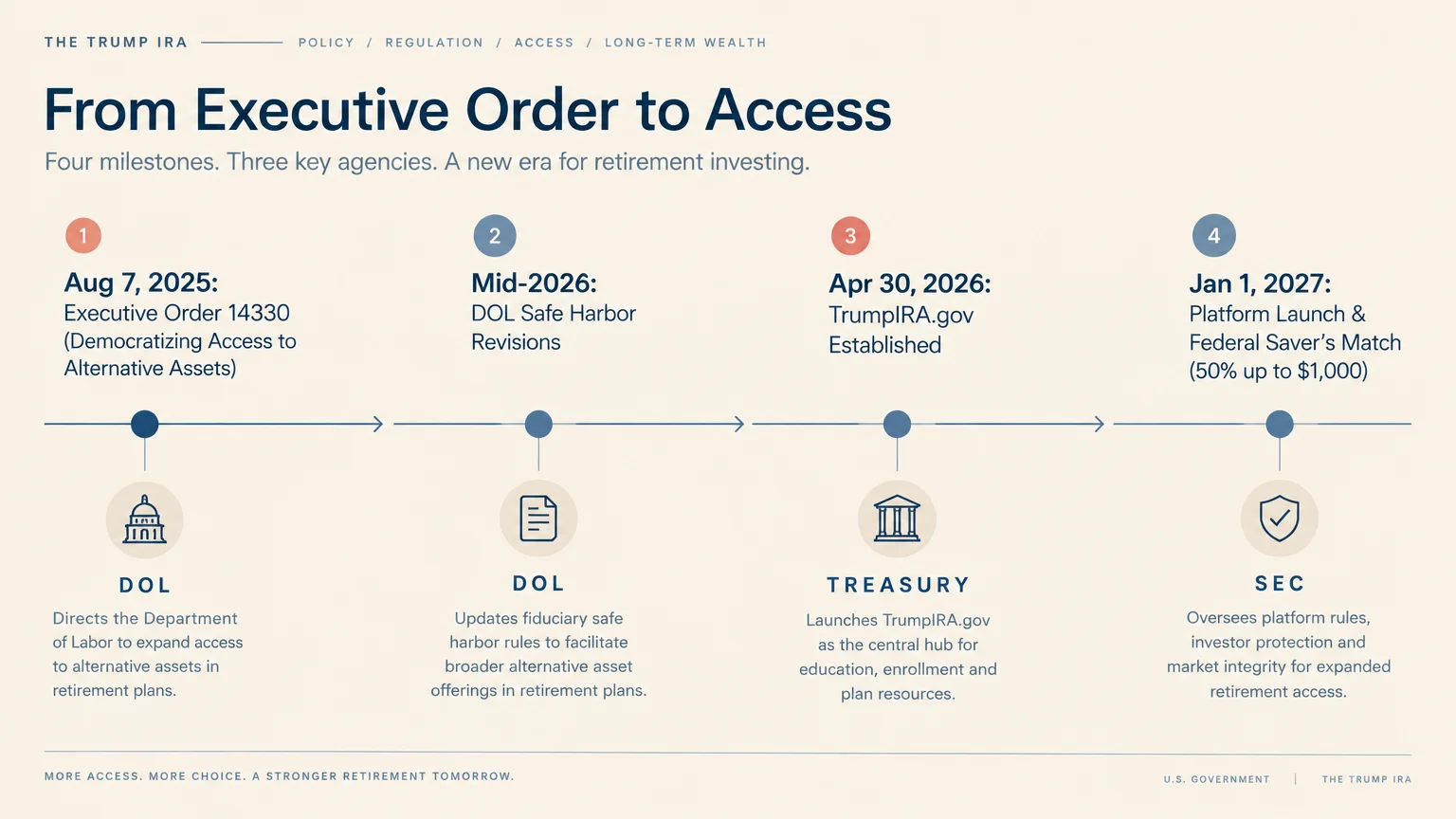
On August 7, 2025, the administration issued Executive Order 14330, titled “Democratizing Access to Alternative Assets for 401(k) Investors.” This directive ordered federal regulators to revisit longstanding rules governing workplace accounts.
Under the order, the Department of Labor (DOL), the Treasury, and the Securities and Exchange Commission must ease restrictions on non-traditional investments. These include private equity, private debt, real estate, and digital assets.
Historically, strict fiduciary rules kept alternative assets out of employer plans. Employers feared expensive lawsuits if high-risk private funds dropped sharply in value.
To eliminate this hesitation, the DOL introduced fiduciary safe harbor revisions in mid-2026. These safe harbors shield employers and plan sponsors from class-action litigation when adding alternatives to 401(k) lineups.
On April 30, 2026, another executive order established a federal comparison platform called TrumpIRA.gov. Scheduled to launch on January 1, 2027, the portal helps uncovered workers secure low-cost Individual Retirement Accounts.
The platform coordinates with the Federal Saver’s Match provision taking effect in 2027. Under this rule, the federal government deposits a direct match of 50% up to $1,000 annually into qualifying accounts.
Meanwhile, the Internal Revenue Service established new limits for workplace retirement contributions. You must understand these limits to balance your annual tax deductions.
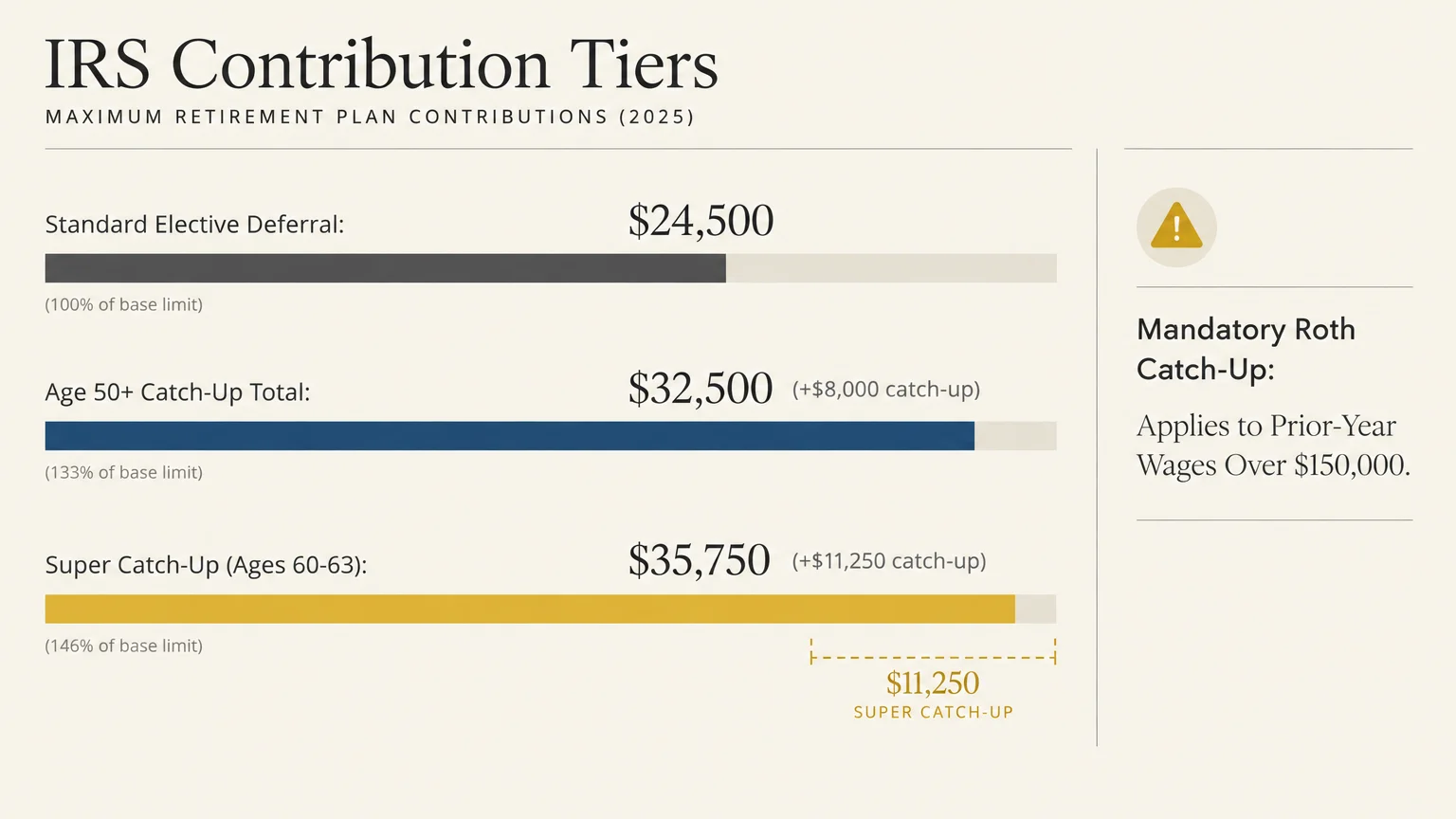
- Standard 401(k) elective deferral limit: $24,500 per year.
- Standard catch-up limit (age 50 and older): An extra $8,000, bringing total annual elective deferrals to $32,500.
- Special “Super Catch-Up” (ages 60 to 63): A higher catch-up limit of $11,250 instead of $8,000.
- Mandatory Roth catch-up rule: Workers earning over $150,000 in prior-year wages must make all catch-up contributions on an after-tax Roth basis.
These 401k policy changes alter how you save, what you pay in fees, and your ultimate investment results.
The Biggest Winners: Who Gains the Most From the New Rules
Every structural change to the financial system creates specific groups that prosper. The current retirement policies favor institutional managers, independent contractors, and savers with long investment horizons.
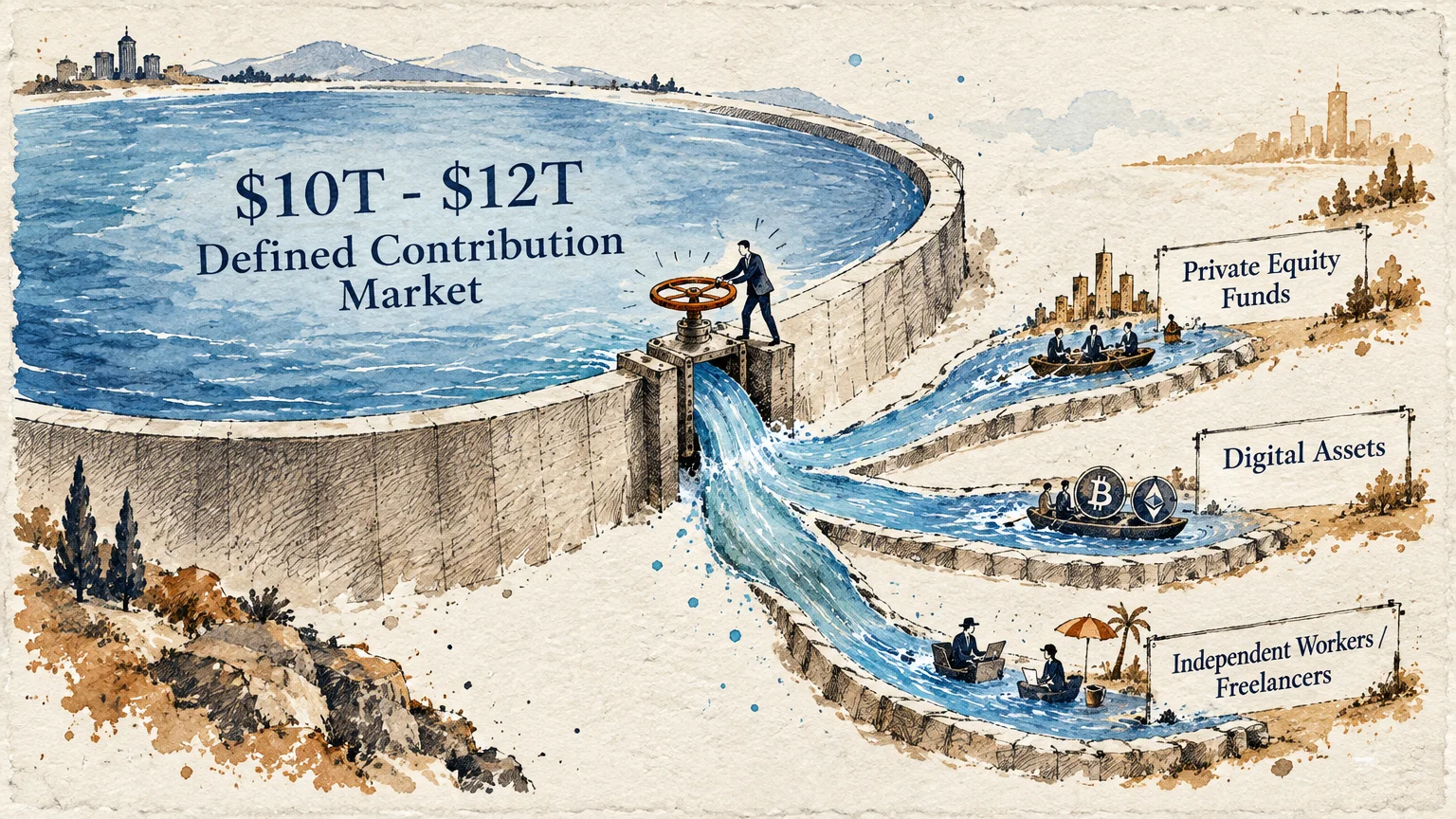
Alternative asset managers represent the largest commercial beneficiaries of these regulatory rollbacks. Private equity firms and cryptocurrency funds have long sought access to the massive defined-contribution marketplace.
Americans hold between $10 trillion and $12 trillion in employer-sponsored retirement plans. Opening 401(k) menus to private assets channels billions of dollars in fresh capital directly to private managers.
Independent workers, freelancers, and small-business employees also gain valuable ground. Millions of Americans work for companies that do not sponsor a traditional retirement plan.
TrumpIRA.gov provides these workers with a centralized marketplace to compare vetted, low-cost private-sector IRAs. It strips away confusion and gives uncovered savers a clear starting point.
Low-to-moderate earners gain a significant boost from the upcoming Federal Saver’s Match in 2027. A worker contributing $2,000 receives a $1,000 government deposit directly into their retirement account.
Unlike previous tax credits that merely lowered tax liability, this match deposits real cash into your account. It accelerates compound growth for households working hard to build a nest egg.
Younger, aggressive investors with decades until retirement may also benefit from diversified asset classes. Private equity and infrastructure debt can provide solid returns when held across several market cycles.
The Potential Losers: Savers Facing Hidden Fees and Market Risks
While the policies deliver advantages to specific groups, other savers face heightened risks. Older workers and conservative investors must evaluate several key vulnerabilities.
Near-retirees within five to ten years of retirement face serious liquidity and drawdown threats. Traditional index funds settle daily, allowing you to rebalance or withdraw money immediately.
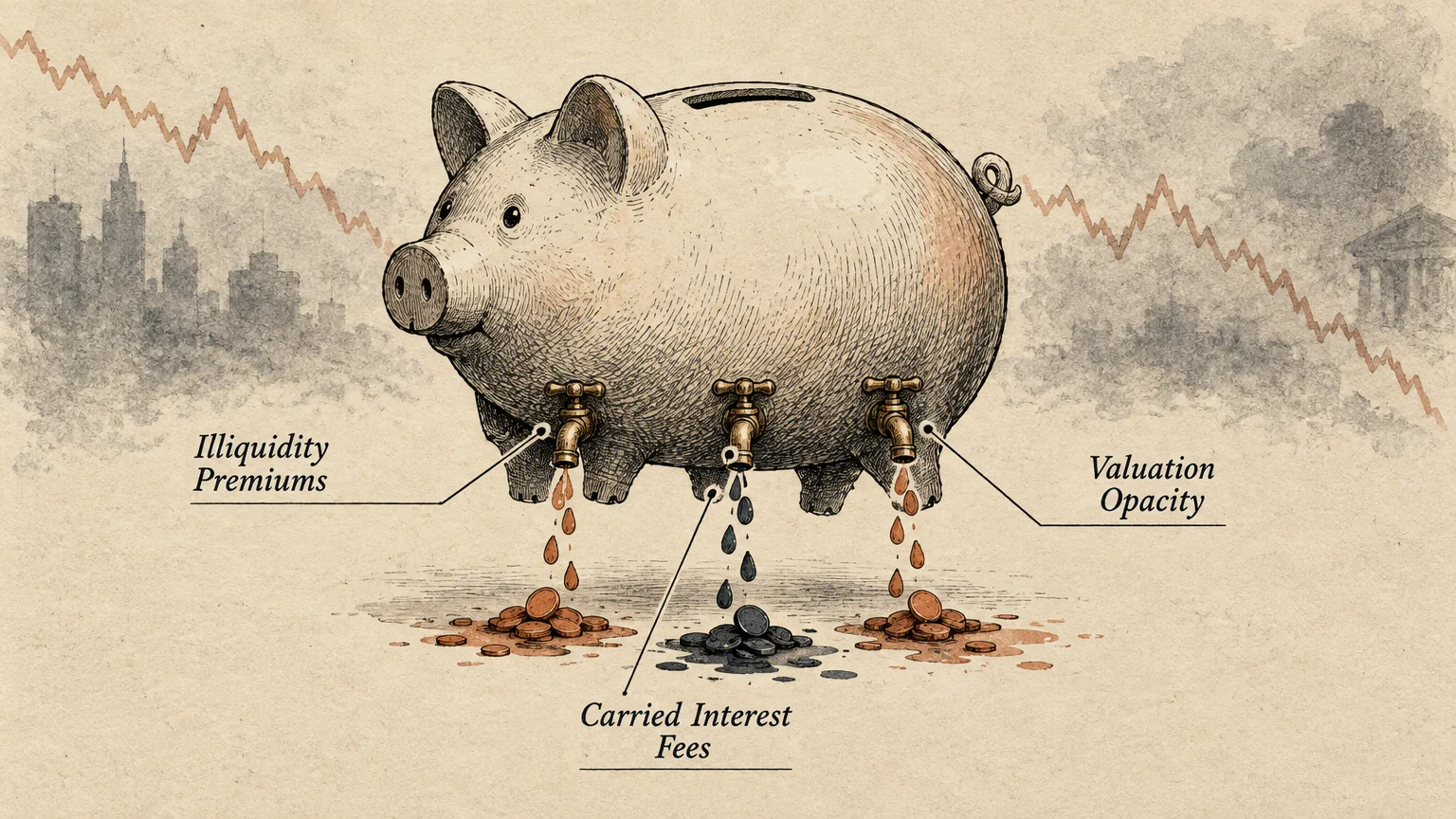
Private equity and real estate investments are illiquid and carry strict withdrawal limits. If the stock market drops as you retire, illiquid holdings can trap your funds.
Plan sponsors frequently embed alternative investments inside default target-date funds. If you do not actively review your fund prospectus, you might take on unwanted risk without realizing it.
Excessive fees represent another hidden danger for retirement savers. Passive index funds often cost less than 0.05% annually, leaving almost all investment gains in your pocket.
Private market funds and digital asset trusts frequently charge management fees between 1.5% and 2.0%. Many private funds also take a 20% cut of performance profits.
“Performance comes and goes, but fees never falter.” — Warren Buffett, Chairman and CEO of Berkshire Hathaway
Over a twenty-year horizon, high expense ratios can strip away tens of thousands of dollars from your balance. The independent research firm Morningstar has repeatedly proven that low fees serve as the single best predictor of future returns.
High-earning pre-retirees also lose an important tax shelter under the new rules. The mandatory Roth rule removes upfront tax deductions on catch-up contributions for workers earning over $150,000.
If you fall into this wage bracket, your catch-up dollars must enter your account after taxes. This rule increases your current-year tax liability when you are in your peak earning years.
Retirement Account Winners and Losers: At-a-Glance Comparison
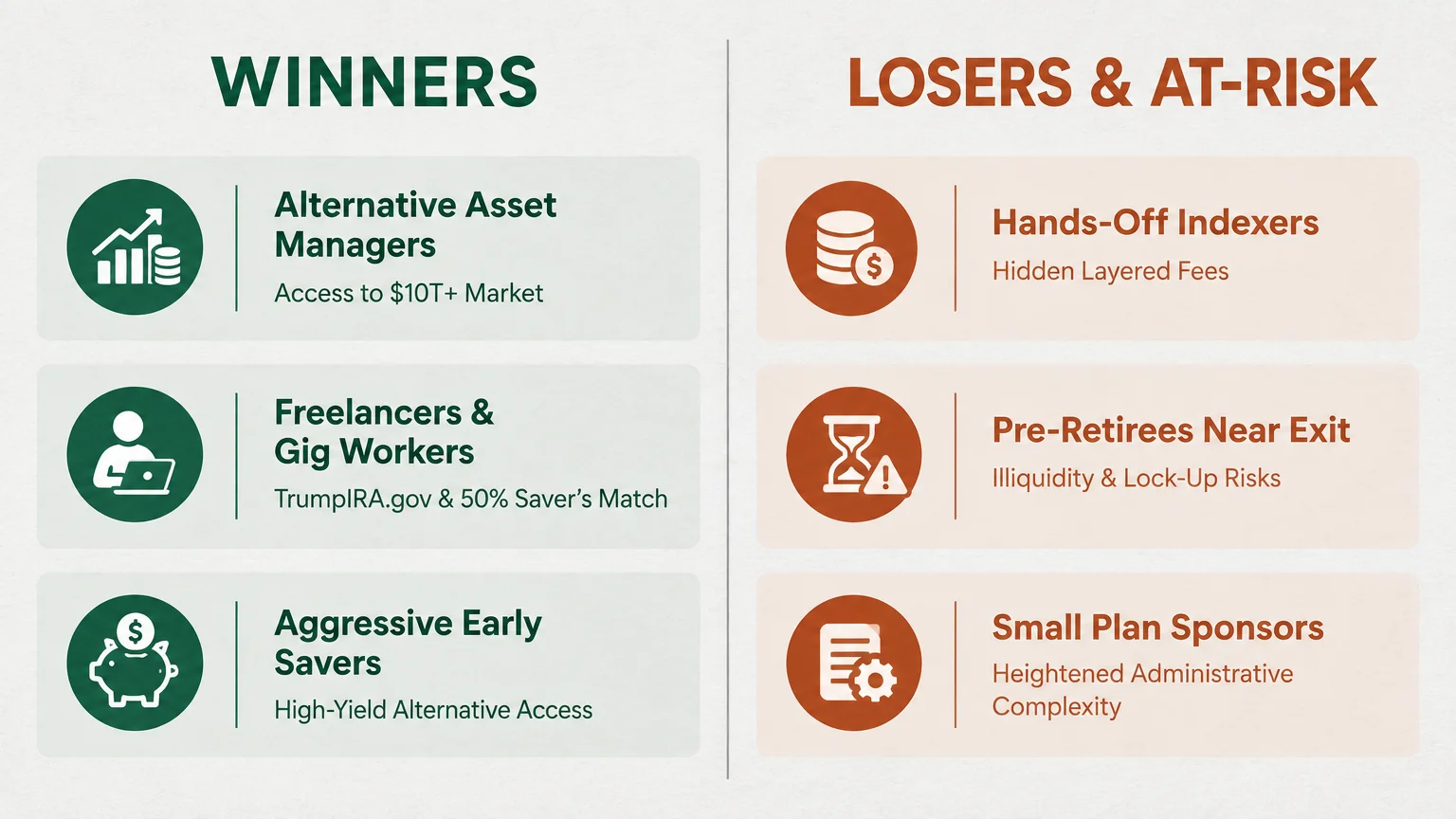
Evaluating your position under these rules helps you avoid costly portfolio missteps. The table below outlines how specific investor groups fare under the updated policies.
| Investor Category | Policy Impact | Primary Advantage | Key Risk or Drawback |
|---|---|---|---|
| Gig Workers & Uncovered Labor | TrumpIRA.gov & Saver’s Match | Direct 50% federal match up to $1,000 into private IRAs. | Must proactively select and maintain individual accounts. |
| Alternative Asset Managers | Executive Order 14330 | Direct access to $10–$12 trillion in retirement assets. | Increased regulatory scrutiny over fund performance. |
| Near-Retirees (Ages 55–65) | Safe Harbor & Alternatives | Potential for non-correlated portfolio diversification. | Illiquidity, high fund fees, and sudden valuation declines. |
| High Earners ($150,000+ Wages) | Mandatory Roth Catch-Up | Tax-free withdrawals during your retirement years. | Loss of current-year pre-tax income deductions. |
| Savers Ages 60 to 63 | Special Super Catch-Up | Ability to save up to $11,250 in catch-up contributions. | Requires sufficient cash flow to maximize higher cap. |
| Passive Target-Date Investors | Alternative Fund Inclusion | Broader asset classes inside automated portfolios. | Higher expense ratios eroding net long-term returns. |
Reviewing this breakdown clarifies whether your current financial strategy requires an immediate pivot. Aligning your accounts with these realities safeguards your retirement income.

401(k) Policy Changes: Navigating Alternatives, Cryptos, and Private Equity
Alternative assets operate very differently from conventional stocks and bonds. Understanding these structural differences helps you evaluate your employer’s investment options.
Traditional mutual funds hold publicly traded securities that price every business day at 4:00 PM Eastern. You can buy or sell shares instantly based on verified market valuations.
Private equity investments purchase stakes in privately owned businesses. These companies do not trade on public exchanges, making precise daily valuations difficult to determine.
Valuations for private assets rely on estimates provided by fund managers rather than continuous market trading. This dynamic can mask portfolio volatility during steep economic downturns.
Digital assets introduce a different challenge centered on extreme price volatility. Cryptocurrencies experience rapid price swings that create substantial risk for older workers.
If your plan adds a multi-asset fund holding cryptocurrency, your portfolio values may fluctuate sharply. A sudden market drop right before retirement can disrupt planned distributions.
You must examine your plan’s annual fee disclosure notice to identify newly added alternative options. Look carefully for embedded performance fees that reduce your compounding power over time.
Tax Shifts and Contribution Limits for Pre-Retirees
Tax management represents a vital component of retirement readiness. The latest savings caps and tax rules demand thoughtful coordination with your overall income strategy.
For workplace plans, the standard contribution ceiling sits at $24,500. Savers age 50 and older can contribute an extra $8,000 in standard catch-up contributions.
Workers aged 60 through 63 receive an even larger savings opportunity. Under the super catch-up provision, your allowable catch-up contribution jumps to $11,250.
If you qualify, you can shelter a total of $35,750 inside your workplace 401(k). This provision provides an exceptional opportunity to build wealth right before you exit the workforce.
However, the mandatory Roth rule complicates tax planning for higher earners. If you earned more than $150,000 in FICA wages in the previous year, catch-up contributions must be Roth.
You lose the upfront tax deduction on those catch-up dollars. While your money grows tax-free for the future, your current taxable income will be higher than expected.
You should calculate whether paying those taxes today fits your overall tax bracket trajectory. If you expect your tax rate to drop in retirement, this rule reduces your savings flexibility.

Professional vs. Self-Guided: Managing Your 401(k) Strategy
Deciding whether to handle your retirement planning independently or hire a financial planner depends on your situation. Here are four common scenarios to consider.
Scenario 1: The Near-Retiree Within 5 Years of Leaving Work
You should work with a professional fiduciary advisor. An advisor can evaluate whether your target-date funds contain illiquid alternative assets that threaten your upcoming retirement withdrawals.
Scenario 2: The Self-Employed or Gig Worker
You can successfully pursue a self-guided route. Utilizing TrumpIRA.gov allows you to select a low-cost, broad-market index IRA and capture the Federal Saver’s Match without advisor fees.
Scenario 3: The High Earner Earning Over $150,000
Professional tax guidance provides immense value here. A certified tax professional helps you structure elective deferrals and Roth catch-ups to minimize your total annual tax burden.
Scenario 4: The Hands-Off Saver with a Long Horizon
A self-guided approach remains practical if you have fifteen or more years until retirement. Sticking to simple index funds across major asset classes keeps your expenses low and your returns consistent.
Common Mistakes to Avoid Under the New Rules
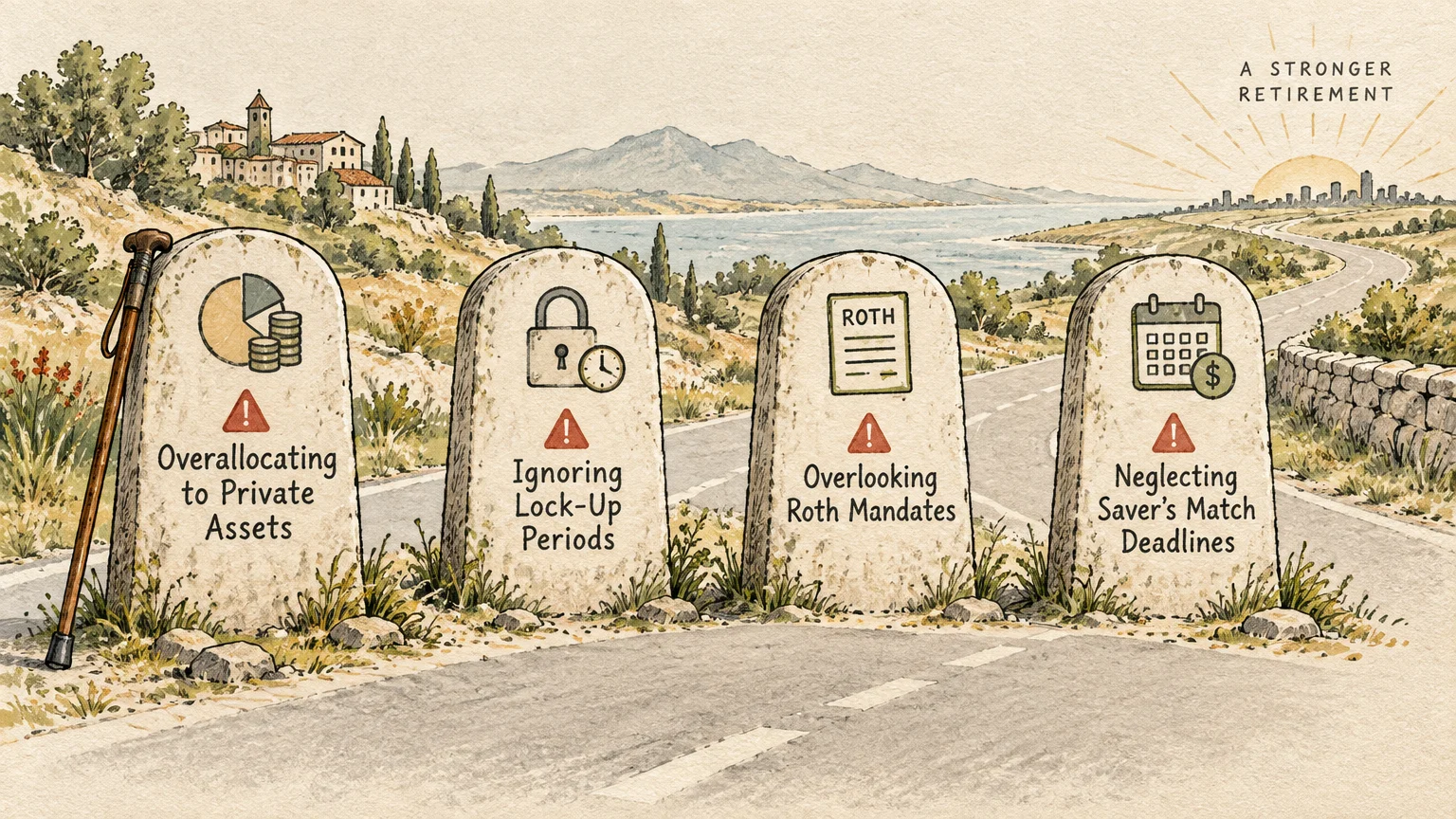
Adjusting your retirement habits to accommodate policy shifts requires steady execution. Avoid these common mistakes as you adjust your nest egg strategy.
- Ignoring your plan’s fee disclosure notices: High management fees in alternative funds quietly eat away your retirement capital over time.
- Overlooking your age 60 to 63 super catch-up window: Missing this four-year window prevents you from depositing an extra $11,250 into your accounts.
- Assuming default target-date funds remain plain vanilla: Always check your fund holdings to confirm managers have not added volatile crypto or illiquid private assets.
- Failing to budget for the mandatory Roth catch-up: High earners who forget this rule face an unpleasant surprise when calculating their annual income taxes.
- Skipping the Federal Saver’s Match if you qualify: Eligible workers leaving the match unclaimed walk away from up to $1,000 in free retirement funds.
Steering clear of these missteps ensures that administrative policy changes support your financial future instead of derailing it.
Frequently Asked Questions About the Trump 401(k) Plan
What is the main goal of the Trump 401(k) plan?
The plan aims to expand alternative investment access inside 401(k)s, shield employers from fiduciary litigation, and provide uncovered workers access to private IRAs.
Can I be forced to invest in private equity or crypto?
Employers cannot force you into specific standalone alternative funds. However, plan sponsors can add these assets to your default target-date fund without requiring your explicit consent.
Who qualifies for the $1,000 Federal Saver’s Match?
Beginning in 2027, low-to-moderate-income workers saving through qualifying retirement accounts or TrumpIRA.gov receive a 50% federal match up to $1,000 annually.
How does the $150,000 wage rule affect my catch-up contributions?
If your prior-year FICA wages exceeded $150,000, your employer plan must direct all catch-up contributions to an after-tax Roth account, eliminating your immediate tax deduction.
Protecting Your Retirement Nest Egg Moving Forward
Navigating retirement policy changes requires proactive monitoring and thoughtful portfolio adjustments. Review your current 401(k) asset allocation, verify your expense ratios, and take advantage of all catch-up limits available to your age group.
The information in this guide is meant for educational purposes. Your specific circumstances—including income, health needs, tax situation, and goals—may require different approaches. When in doubt, consult a licensed professional.
Last updated: March 2026. Retirement benefits, tax rules, and healthcare regulations change frequently—verify current details with official sources.









Leave a Reply