
Rising grocery prices can easily squeeze a fixed retirement income, making fresh produce feel like an unaffordable luxury. Farmers market vouchers provide direct financial assistance so you can purchase fresh, locally grown produce without draining your bank account.
The Senior Farmers’ Market Nutrition Program offers seasonal benefits to help older adults eat healthier foods from local growers. Stacking these credits with regular food assistance can double your seasonal buying power at farm stands across the country.
Learning how the program works helps you claim your rightful benefits before seasonal funding runs out.
The Essentials: Farmers Market Vouchers at a Glance
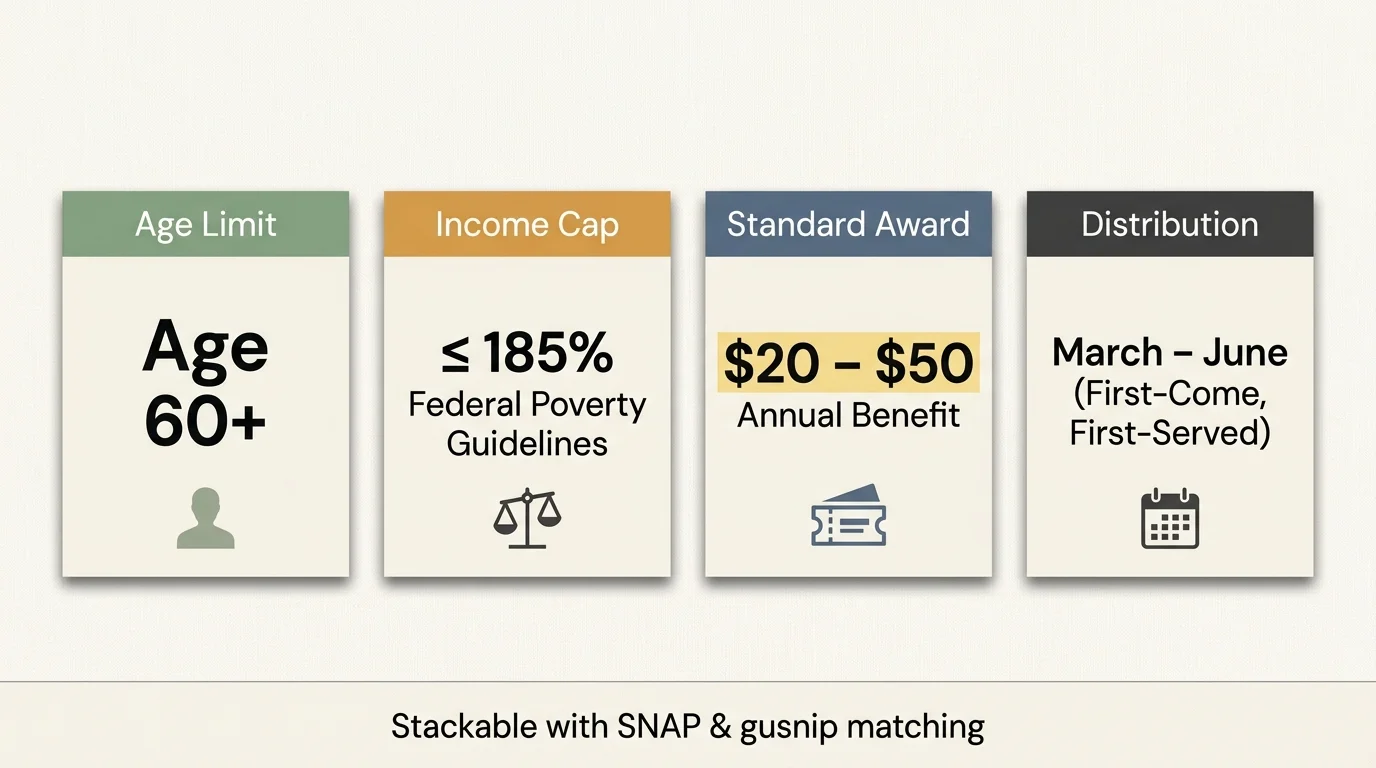
The Senior Farmers’ Market Nutrition Program provides targeted nutrition relief to qualifying older adults. Before applying, review the core elements of the program below.
- Target Audience: Low-income adults aged 60 and older who meet federal income limits.
- Household Income Cap: Gross income must stay at or below 185% of the Federal Poverty Guidelines.
- Benefit Range: Standard federal awards provide between $20 and $50 annually per recipient, though many states supplement this amount.
- Distribution Window: Benefits open on a first-come, first-served basis each spring between March and June.
- Eligible Items: Fresh, unprocessed fruits, vegetables, fresh-cut herbs, and raw honey from certified local growers.
- Bonus Value: You can stack these vouchers with SNAP and local nutrition incentives to double your market dollars.
What Is the Senior Farmers’ Market Nutrition Program?
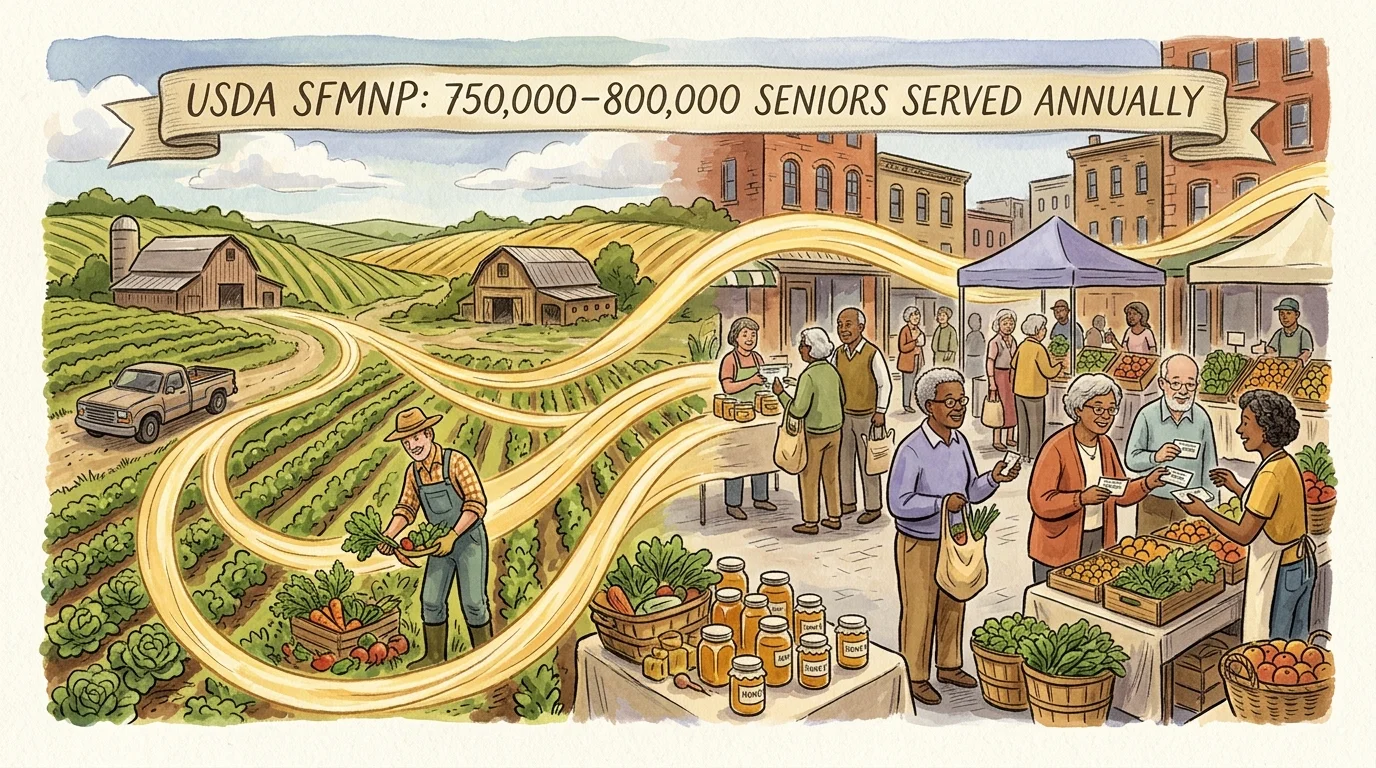
The Senior Farmers’ Market Nutrition Program (SFMNP) is a federally funded initiative authorized through the federal Farm Bill. The United States Department of Agriculture (USDA) oversees the distribution of federal grants to state agencies, territories, and federally recognized tribal governments.
The program serves approximately 750,000 to 800,000 low-income older adults across the country each year. It delivers a proven dual benefit by nourishing retirees while directly supporting regional agricultural economies.
State agencies collaborate with local Area Agencies on Aging, senior centers, and county health departments to distribute benefits. Every dollar spent goes straight to authorized farmers, roadside farm stands, and community-supported agriculture programs.
“Making the most of your money in retirement means knowing what benefits you have earned and claiming them without hesitation.” — Jean Chatzky, Financial Educator
Income and Age Eligibility Guidelines
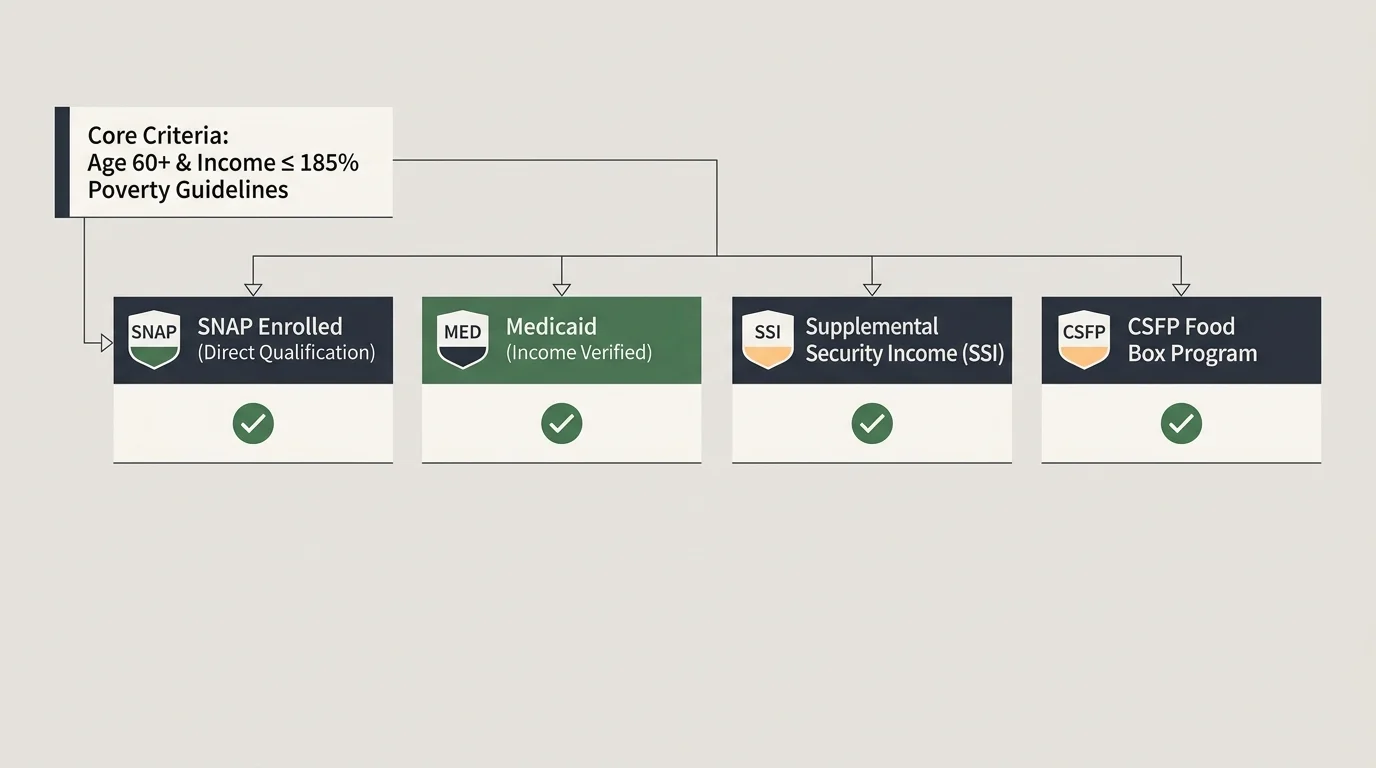
Qualifying for farmers market vouchers requires meeting clear age and income standards established under federal law. You must be at least 60 years old on the day you submit your application.
Your gross household income cannot exceed 185% of the Federal Poverty Guidelines. The Department of Health and Human Services updates these income thresholds annually each spring.
Many states also offer automatic categorical eligibility. If you already participate in other means-tested programs, you often qualify without providing additional income proof.
- Supplemental Nutrition Assistance Program (SNAP): Enrolled seniors routinely qualify for immediate SFMNP participation.
- Medicaid: Active coverage confirms that your household meets low-income verification criteria.
- Supplemental Security Income (SSI): Receiving SSI benefits demonstrates federal income qualification.
- Commodity Supplemental Food Program (CSFP): Seniors enrolled in monthly food box programs generally meet all requirements.
You can check regional assistance programs through the Administration for Community Living to verify local administrative guidelines.
How Benefits Are Delivered: Paper Coupons vs. Electronic Cards
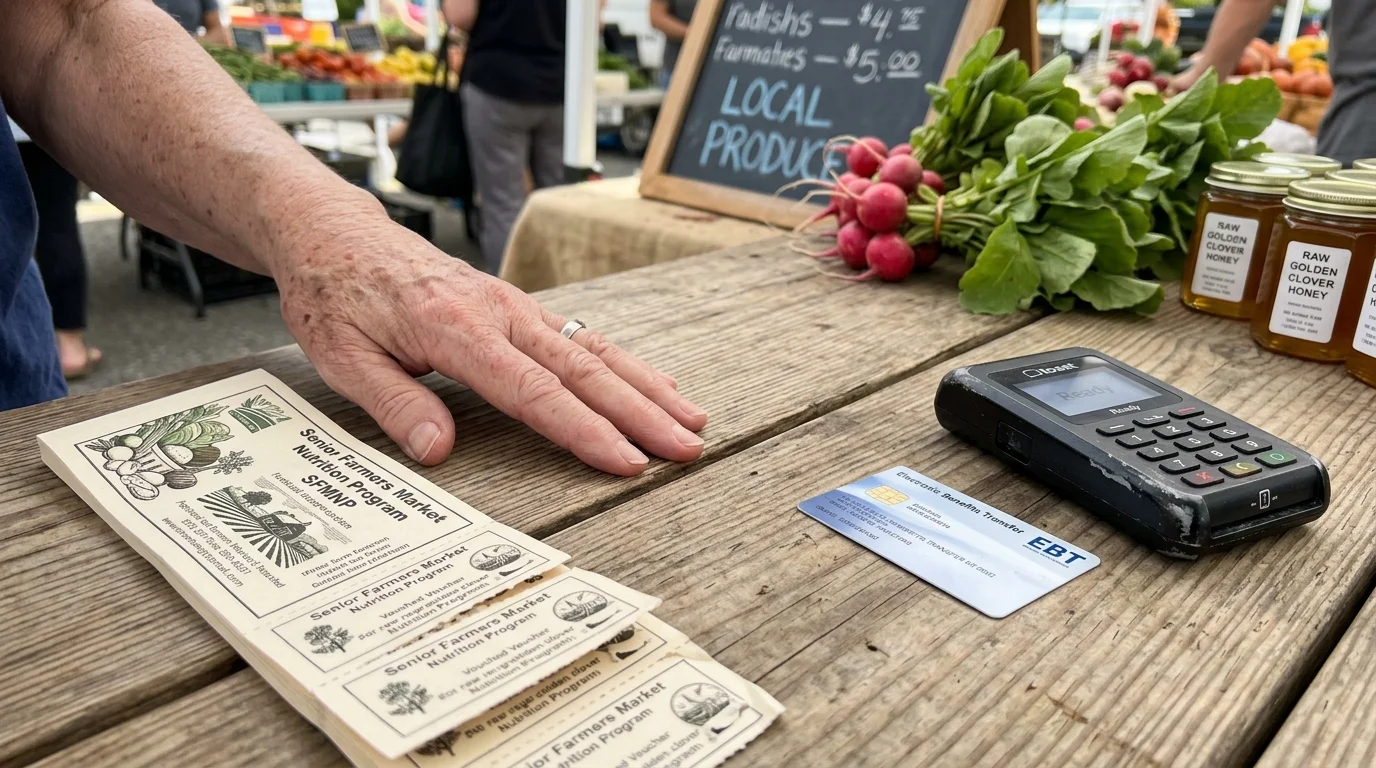
State agencies traditionally distributed SFMNP benefits as physical paper coupon booklets. These booklets typically contained individual checks in $5 increments that you handed directly to certified growers.
Many states have modernized their systems by transitioning to electronic benefit cards or secure smartphone applications. Programs frequently utilize platforms such as SoliMarket to handle point-of-sale digital redemptions.
With an electronic card or QR-code app, the vendor simply scans your card or mobile screen at the stall. The system automatically deducts the purchase total from your seasonal balance, eliminating the hassle of handling paper checks.
If limited mobility or health challenges keep you home, you can designate an authorized proxy. A trusted family member, caregiver, or volunteer can complete the paperwork and shop on your behalf.
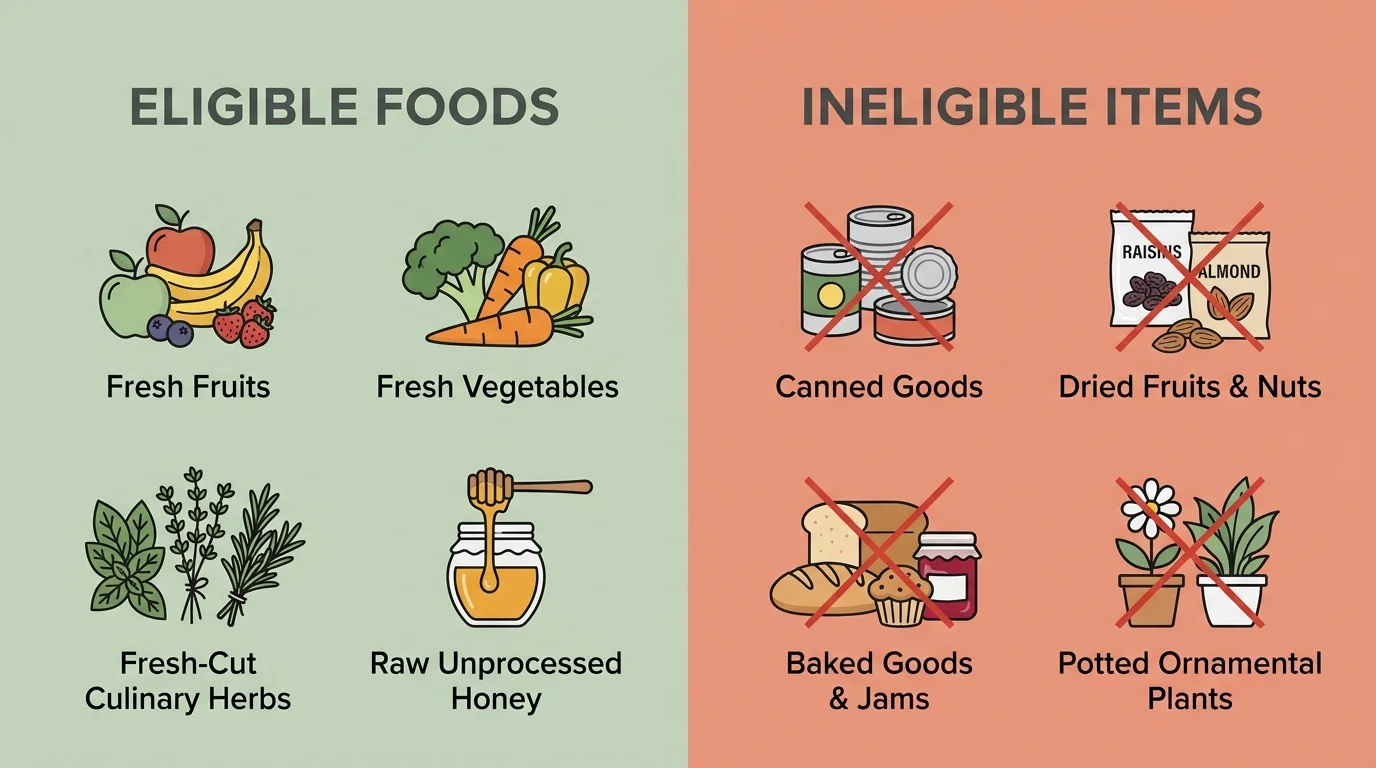
Eligible vs. Ineligible Foods: What You Can Buy
Federal regulations enforce strict rules regarding which grocery items qualify for purchase under the program. Understanding these boundaries ensures smooth transactions when visiting your local market stalls.
| Food Category | Eligible Items | Ineligible Items |
|---|---|---|
| Fruits | Fresh, raw apples, berries, peaches, melons, and citrus grown by authorized producers. | Dried fruits, canned fruits, frozen fruit packages, fruit leather, and fruit pies. |
| Vegetables | Fresh tomatoes, greens, squash, peppers, root vegetables, and sweet corn. | Pickled vegetables, canned beans, prepared salads, and frozen vegetables. |
| Herbs & Seasonings | Fresh-cut basil, cilantro, parsley, dill, mint, and culinary herbs. | Dried herbs, spice blends, tea bags, and live potted herb plants. |
| Honey | Pure, raw, unpasteurized honey produced by local beekeepers. | Flavored syrups, maple syrup, processed honey candies, and comb spreads. |
| Animal Products | None. Animal products are entirely excluded by federal statute. | Fresh meat, poultry, seafood, eggs, cheese, milk, and butter. |
| Prepared Foods | None. All processed or cooked items are excluded. | Cider, jams, jellies, baked goods, artisan breads, and hot meals. |
Authorized farmers display official signage at their booths showing their state program certification. Always verify that a vendor accepts senior nutrition benefits before selecting your produce.
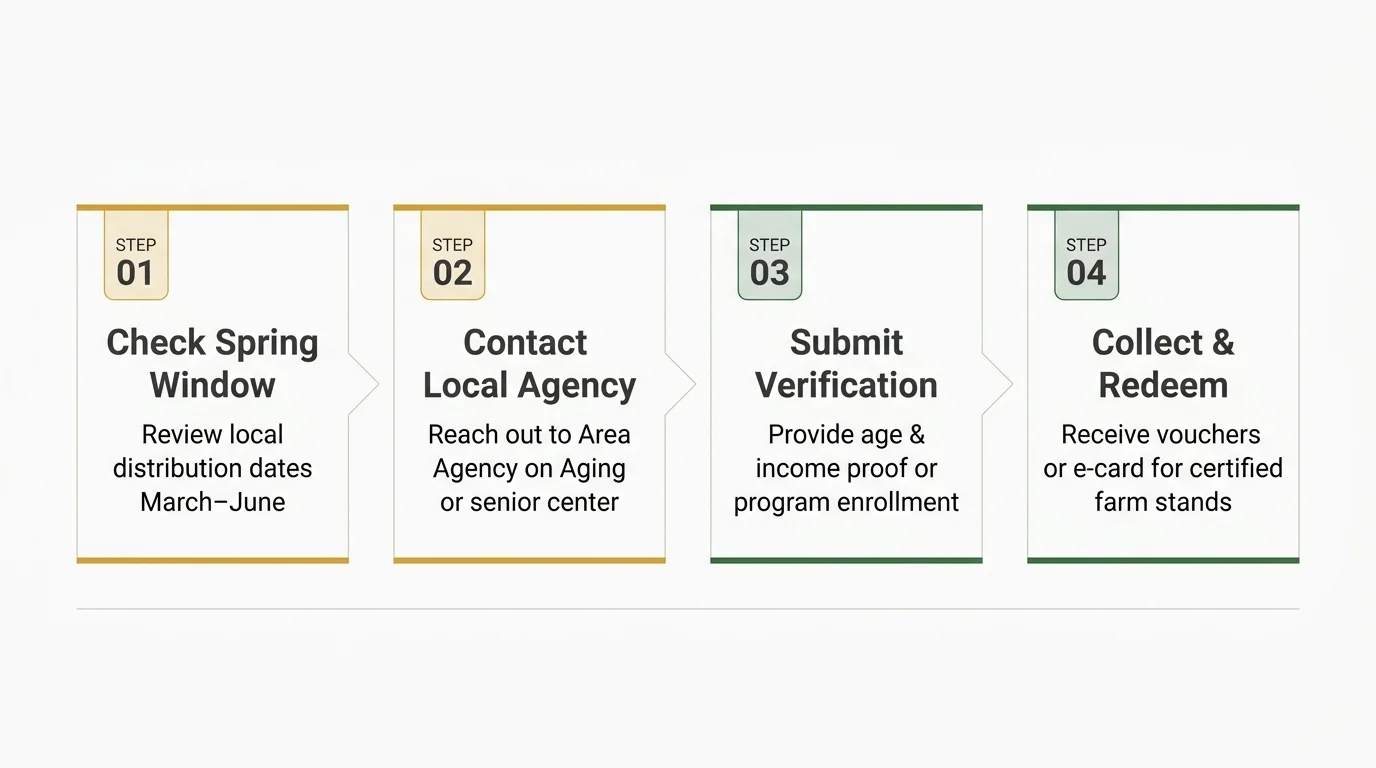
Step-by-Step Application Process
Securing your seasonal vouchers requires timely action because local funding allocations remain strictly limited. Follow these steps to complete your enrollment smoothly.
- Locate Your Distributing Agency: Contact your local Area Agency on Aging, municipal senior center, or county public health office.
- Confirm the Application Window: Ask when registration opens for the current harvest season, which usually occurs between March and June.
- Gather Necessary Documentation: Prepare a government-issued photo ID for age verification, a utility bill for residency, and income tax or benefit statements.
- Submit Your Application: Complete the registration form online, by mail, or in person during designated community distribution events.
- Designate a Proxy if Needed: Submit an authorized proxy form if you require a family member or caregiver to collect and spend your vouchers.
You can locate contact information for your nearest assistance agency by visiting the National Council on Aging resource center.
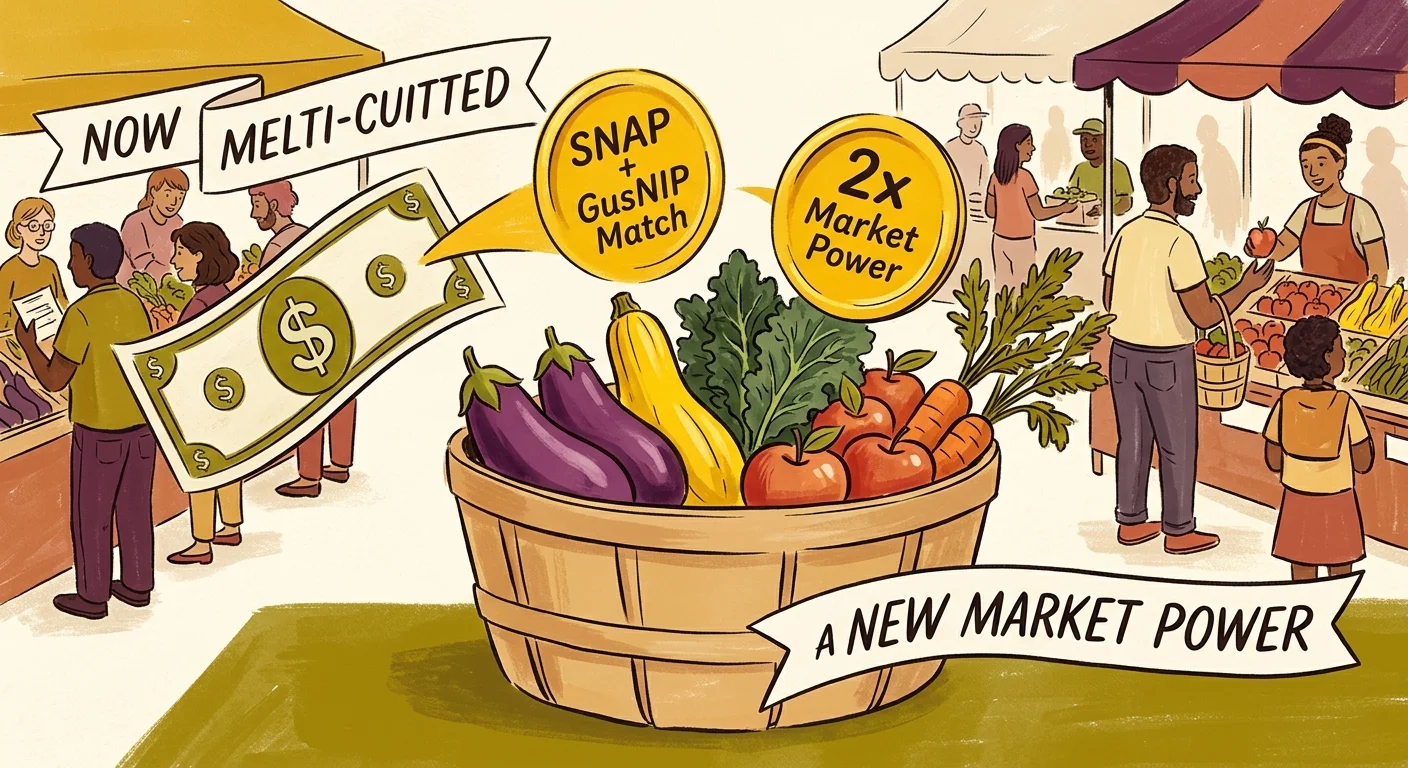
Maximizing Your Benefits with SNAP and GusNIP Matching
You can significantly boost your seasonal fresh food budget by combining your SFMNP allocation with SNAP grocery benefits. Many farmers markets maintain central information booths equipped with electronic SNAP terminals.
When you swipe your SNAP card at participating markets, you can access funding from the Gus Schumacher Nutrition Incentive Program (GusNIP). This federal grant funds statewide matching initiatives such as Double Up Food Bucks and Market Match.
These matching programs offer a dollar-for-dollar match on SNAP spending, frequently matching up to $10 or $20 per visit. If you spend $20 in SNAP funds, you receive an additional $20 in tokens exclusively for fresh fruits and vegetables.
Combining your annual senior farmers market voucher with recurring SNAP matching incentives allows you to bring home abundant fresh produce every week. Review broader federal support opportunities on USA.gov Benefits to explore all food programs available to you.
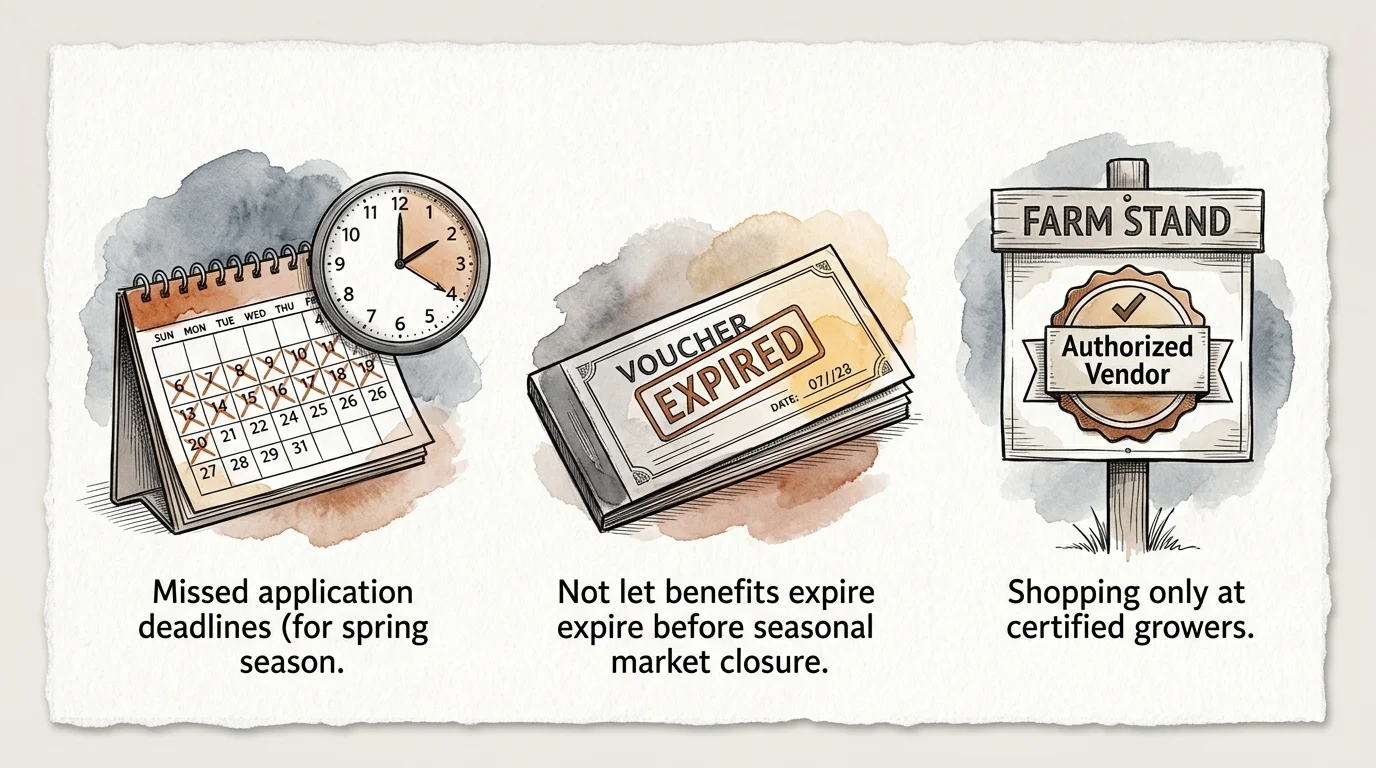
What Can Go Wrong: Mistakes That Cost You Benefits
Missing out on food assistance often comes down to small administrative oversights or misunderstandings about program rules. Review these common pitfalls so you can protect your purchasing power.
- Waiting Too Long to Apply: Programs operate on a strict first-come, first-served schedule; once local funds run out, applications close until next year.
- Letting Benefits Expire: Vouchers carry fixed expiration dates, usually October 31 or November 30, and unused balances do not roll over.
- Assuming You Cannot Qualify with Savings: SFMNP evaluates regular household income rather than personal retirement savings or home equity.
- Expecting Cash Change: Federal rules prohibit farmers from giving cash back if your produce total is less than the coupon denomination.
- Shopping at Unauthorized Stalls: Independent market vendors must hold state certification to process program coupons and electronic cards.

Additional Food Assistance Programs for Older Adults
Farmers market vouchers are designed to supplement your seasonal diet, but other vital programs provide continuous year-round nutrition support. Taking advantage of multiple initiatives ensures consistent access to wholesome food.
The Commodity Supplemental Food Program distributes a monthly box of shelf-stable groceries directly to qualifying seniors aged 60 and older. These boxes contain nutritious items such as canned fruits, vegetables, shelf-stable milk, cereals, and quality proteins.
Meals on Wheels provides home-delivered hot meals to homebound seniors who face mobility or cooking limitations. Meanwhile, local congregate meal programs host nutritious group lunches at community centers, offering social interaction alongside healthy dining.
Explore comprehensive wellness guides and community programs through AARP to identify supportive services active in your neighborhood.
Frequently Asked Questions
Can someone else shop for me using my farmers market vouchers?
Yes. You can appoint an authorized proxy to pick up your vouchers and purchase produce on your behalf by completing a simple designation form.
Do senior farmers market vouchers roll over to next year?
No. Unused benefits expire at the end of the designated harvest season, typically by November 30, and cannot be redeemed the following year.
Can I receive farmers market vouchers if I already get SNAP benefits?
Yes. Receiving SNAP does not disqualify you from SFMNP; in fact, SNAP enrollment frequently confirms your categorical eligibility for market vouchers.
What happens if my produce total is less than the voucher amount?
Farmers cannot give cash change for voucher transactions. You should select an extra piece of fruit or vegetable to use the entire voucher value.
Will getting farmers market vouchers reduce my Social Security checks?
No. SFMNP benefits are non-cash nutrition grants that have zero impact on your Social Security payments, Medicare eligibility, or tax obligations.
Taking Action for Better Nutrition and Savings
Taking full advantage of available nutrition assistance is a practical way to safeguard your budget and support your health throughout retirement. Reach out to your local Area Agency on Aging this spring to secure your vouchers before annual community allocations are exhausted.
This is educational content based on general retirement and financial principles. Individual results vary based on your situation. Always verify current benefit rules, tax laws, and eligibility requirements with official sources like SSA, Medicare.gov, or the IRS.
Last updated: March 2026. Retirement benefits, tax rules, and healthcare regulations change frequently—verify current details with official sources.









Leave a Reply