
Every month, millions of retirees quietly forfeit hundreds of dollars in card benefits they already paid for through annual fees or regular account usage. According to recent financial data, Americans left $27.9 billion in credit card rewards unclaimed in 2024, costing the typical household over $500 in lost value. You might know about basic cash-back multipliers, but issuers hide their most valuable perks—like complimentary primary rental car insurance, extended purchase warranties, cell phone protection, and travel delay coverage—deep in fine-print benefits guides. Unlocking these overlooked credit card perks requires zero additional spending, yet it can shield your fixed income from unexpected expenses, reduce monthly utility bills, and save you thousands of dollars throughout your retirement years.

The Multi-Billion Dollar Gap: Why Retirees Leave Money on the Table
Financial institutions design credit card benefit programs with a distinct business reality in mind: most cardholders pay for premium features through fees or merchant charges, yet only a small fraction ever claim them. Data from the Consumer Financial Protection Bureau (CFPB) shows that while Americans earned $47 billion in credit card rewards in 2024, they redeemed only $43 billion—leaving a massive $4 billion gap in a single year. When you add expired points and forgotten perks to the equation, national statistics reveal that consumers routinely abandon nearly $28 billion in overall value annually.
A study by Bankrate highlights that 23% of rewards credit cardholders—roughly one in four—did not redeem a single point, mile, or cash-back dollar over an entire 12-month period. For Baby Boomers on fixed incomes, this oversight proves especially costly. Research indicates that 55% of retirees rank cash back as their single favorite card feature; however, older adults remain far less likely to cash in their earnings on a monthly or quarterly basis compared to younger demographics. Instead, rewards accumulate silently or, even worse, expire unused.
“Making the most of your money isn’t just about earning more or spending less; it’s about capturing every bit of value from the tools you already use.” — Jean Chatzky, Financial Journalist and Author
Why does this happen? Most credit card issuers do not actively promote these secondary benefits after you open an account. While welcome bonuses and cash-back percentages dominate marketing campaigns, valuable consumer protections sit tucked inside PDF policy guides that few people read. By taking a closer look at your card wallet today, you can immediately begin reclaiming unused credit card rewards and hidden protections that shield your retirement nest egg.

1. Built-In Travel Protections That Cut Vacation Expenses
Travel remains one of the top priorities for modern retirees. Whether you visit grandchildren across the country or take overseas cruises, your credit cards contain built-in travel safeguards that can save you thousands of dollars out of pocket. Many retirees needlessly pay for separate insurance policies or rental counter add-ons because they do not realize their credit card already covers these eventualities.
Primary vs. Secondary Auto Rental Insurance
When you rent a vehicle at an airport counter, agents routinely pressure you into buying their Collision Damage Waiver (CDW) coverage, which adds $15 to $25 per day to your rental invoice. Skipping this counter insurance saves you $105 to $175 on a simple weeklong rental; however, declining counter coverage without a safety net presents real financial risk.
This is where maximizing credit card benefits makes a dramatic difference. Many mid-tier and premium cards offer auto rental collision coverage automatically when you pay for the entire rental with that card and decline the rental agency’s CDW. Crucially, you must understand the distinction between secondary and primary coverage:
- Secondary Coverage: Most standard rewards cards offer secondary insurance. If you damage a rental vehicle, this coverage pays your personal auto insurance deductible and secondary costs, but you must first file a claim through your personal auto policy.
- Primary Coverage: Premium travel cards—and select mid-tier cards—provide primary rental coverage. This means the credit card issuer handles claims directly without touching your personal auto insurance policy; your personal premiums will not rise as a result of an accident in a rental car.
Trip Cancellation, Interruption, and Delay Reimbursements
Senior travelers frequently purchase costly third-party travel insurance policies to cover unforeseen medical events, severe weather, or family emergencies. While specialized trip insurance serves a purpose for complex multi-country itineraries, your credit card may already protect standard flight and hotel bookings.
If illness prevents you from traveling, or if severe weather grounds your flights, cards with trip cancellation coverage reimburse non-refundable passenger tickets, prepaid tours, and hotel charges—often up to $5,000 or $10,000 per covered person. Furthermore, if an airline delays your trip overnight, travel delay perks cover hot meals, hotel rooms, and personal toiletries up to $500 per ticket without requiring you to argue with customer service agents at the airport gate.
Lost, Damaged, or Delayed Luggage Claims
Airlines lose thousands of suitcases every day. If an airline misplaces your luggage for more than six hours, cards featuring baggage delay perks provide $100 to $500 in daily allowances so you can purchase essential clothing, toiletries, and prescription medication while you wait. Should the airline permanently lose your bags, card issuers offer supplemental baggage coverage above the minimum statutory limits enforced by commercial carriers.

2. Consumer Protections for Everyday Purchases and Home Repairs
While travel benefits gain significant attention, everyday credit card benefits retirees frequently ignore apply directly to shopping, major home appliance purchases, and household maintenance. These perks serve as a free insurance policy for goods you buy every day.
Extended Warranty Protection
When you purchase a new refrigerator, television, washing machine, or riding lawnmower, cashiers almost always pitch expensive extended service plans. These retail warranties can add 15% to 30% to the total purchase price. Before paying for an store warranty, check your credit card manual.
Many popular cards feature automatic Extended Warranty Protection. This benefit typically extends an original manufacturer’s U.S. warranty of three years or less by one additional year. If your new dishwasher stops working 14 months after purchase—just after the 12-month manufacturer warranty expires—the credit card company pays to repair or replace the appliance up to the original purchase amount, provided you charged the item to their card.
Purchase Protection and Damage Coverage
Have you ever bought a new item only to drop and break it a week later, or have it stolen from your porch? Purchase Protection shields newly acquired items against theft, accidental damage, or loss due to fire. Most eligible cards extend this coverage for 90 to 120 days from the purchase date, offering limits up to $1,000 or $10,000 per incident.
Consider this concrete example: You buy a high-end digital camera for $800 to document your family reunion. Three weeks later, the camera slips from your hand and shatters on concrete. Rather than swallowing an $800 loss, cardholders with active purchase protection simply file a claim online with their receipt to receive a full repair or replacement credit.
Cell Phone Protection Plans
Cellular carriers charge $10 to $17 per line every month for phone insurance; for a retired couple on a shared plan, that translates to over $300 in annual recurring fees. You can eliminate this expense entirely by leveraging one of the most valuable overlooked credit card perks available today.
Numerous cash-back and travel cards now offer automatic cell phone protection. To activate this perk, you simply pay your monthly wireless bill using that specific card. If your phone gets stolen or suffers accidental damage—including cracked screens—the card issuer reimburses repair costs or replacement expenses up to $600–$800 per claim (usually subject to a modest $50 deductible). Over a three-year period, dropping carrier insurance in favor of card-provided coverage saves hundreds of dollars in direct out-of-pocket costs.

3. Hidden Health, Wellness, and Monthly Utility Subsidies
Card issuers regularly adjust their benefit structures to match changing consumer lifestyles. For retirees, modern credit card portfolios contain surprising subsidies that directly offset recurring living expenses, entertainment costs, and wellness programs.
Streaming and Digital Entertainment Credits
With monthly cable bills soaring, many retirees rely on streaming services like Netflix, Hulu, Disney+, or Peacock for home entertainment. Several mid-tier and premium cards offer monthly statement credits ranging from $7 to $20 when you charge eligible streaming subscriptions to your card. Over twelve months, these credits offset $84 to $240 of your existing entertainment budget without changing your daily routine.
Grocery, Pharmacy, and Gas Multipliers
Fixed-income household budgets suffer significantly during inflationary periods. Using a basic card that yields a flat 1% cash back on all transactions wastes valuable earning potential. Specialized cards designed for seniors offer elevated cash-back tiers on core living costs:
- Supermarkets and Groceries: Select cards yield 3% to 6% cash back on grocery store purchases, returning $180 to $360 annually on a modest $500 monthly food budget.
- Pharmacies: Card options offering 3% cash back at retail pharmacies lower out-of-pocket prescription and medical supply expenses.
- Gas Stations and EV Charging: Earning 3% to 5% at fuel stations directly offsets vehicle operational costs during road trips or daily errands.
Complimentary Concierge Services
Many visa and Mastercard options feature a 24/7 complimentary concierge line. While people assume concierges only serve luxury jetsetters, these representatives assist with mundane practical tasks as well. Concierge specialists can help you locate hard-to-find prescription medical supplies, source tickets to sold-out theater shows, find local contractors in unfamiliar towns, or make dinner reservations at popular restaurants during busy holiday weeks.
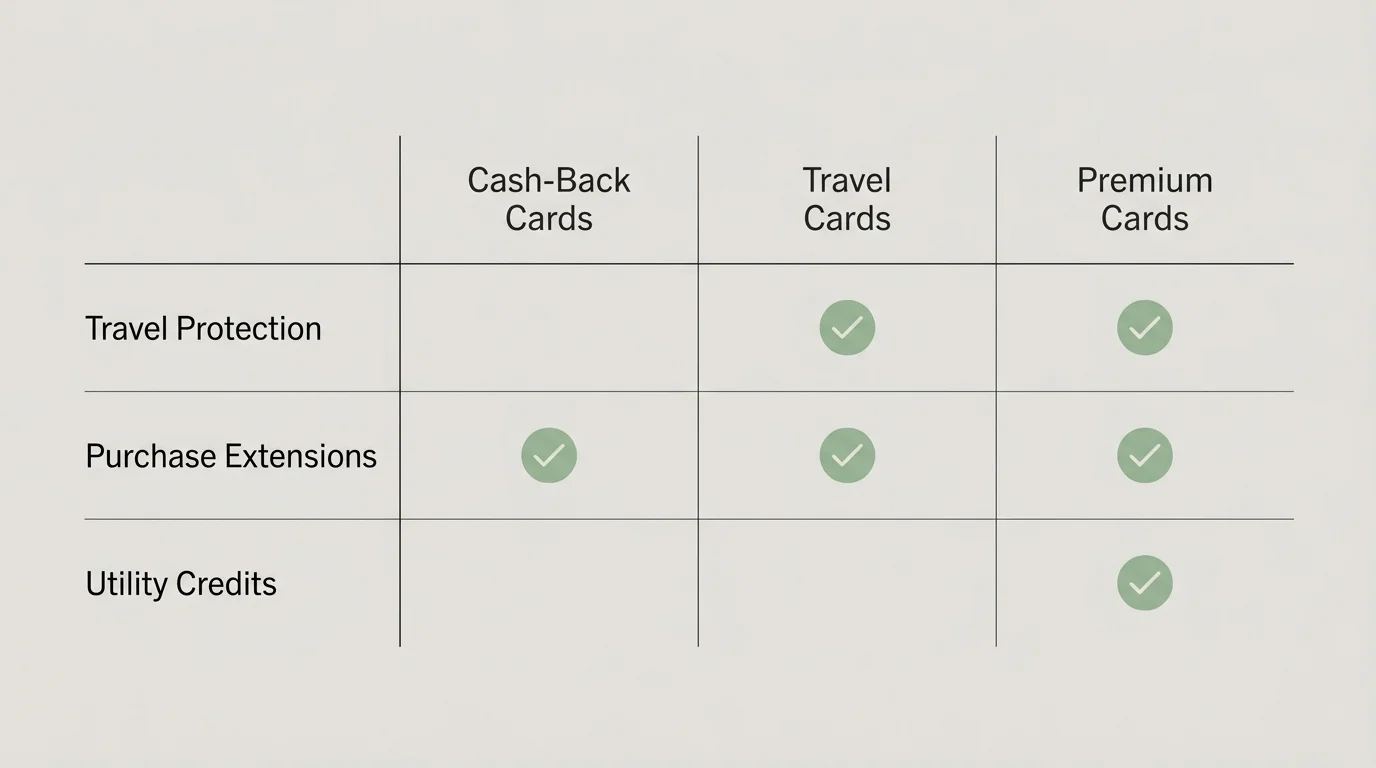
Comparing Overlooked Perks Across Popular Card Categories
Not every credit card contains every feature. To streamline your personal inventory, the comparison table below outlines which card types typically deliver specific overlooked credit card benefits, along with their estimated financial value.
| Card Category | Key Overlooked Perks | Estimated Annual Value | Best Practical Use Case |
|---|---|---|---|
| Premium Travel Cards ($95–$550 Annual Fee) | Primary rental car insurance, trip delay protection, lounge access, TSA PreCheck credits | $400 – $1,200+ | Retirees who travel internationally or fly 3+ times per year |
| No-Fee Cash Back Cards ($0 Annual Fee) | Cell phone protection, elevated pharmacy/grocery rewards, purchase protection | $150 – $400 | Budget-conscious households focused on reducing everyday bills |
| Warehouse & Retail Cards ($0 Tiered Annual Fee) | Extended warranties, roadside assistance dispatch, fuel cash-back bonuses | $100 – $300 | Retirees making major home appliance or tire purchases |

Pitfalls to Watch For: When Card Perks Turn Expensive
Unlocking unused credit card rewards requires a disciplined operational strategy. If you handle credit carelessly, the fees and interest charges will quickly outweigh any financial advantages you gain from card perks.
“Rule No. 1: Never lose money. Rule No. 2: Never forget rule No. 1.” — Warren Buffett, Chairman and CEO of Berkshire Hathaway
The High APR Interest Trap
According to current tracking data from Bankrate, the national average variable credit card APR stands at 19.57%. Carrying a balance from month to month destroys the value of any cash-back rewards or travel protections. For instance, if you earn 3% cash back on a $1,000 purchase but carry that balance for a year at a 20% interest rate, you pay roughly $200 in interest charges to earn a meager $30 reward. Always pay your statement balance in full every 30 days to ensure card issuers never collect interest from your account.
Reward Expiration and Account Inactivity Rules
A major survey by BestMoney travel researchers discovered that 45.1% of travel cardholders allowed earned points or airline miles to expire without redeeming them. Card issuers set specific inactivity rules; for example, if you do not earn or redeem points on a card for 12 to 24 months, the issuer may cancel your reward balance entirely. Prevent this loss by setting up one tiny recurring charge—such as a $5 monthly streaming bill or charitable donation—on older accounts to keep them continuously active.
Confusing Benefit Terms and Filing Deadlines
Credit card coverage programs enforce strict operational timelines. If you experience a rental car accident, you must notify the credit card benefit administrator within 20 to 40 days of the incident, or your claim will be denied outright. Similarly, purchase protection claims usually require formal police reports within 48 hours if theft occurs. Always review benefit claim filing deadlines in your account portal before you travel or make major purchases.
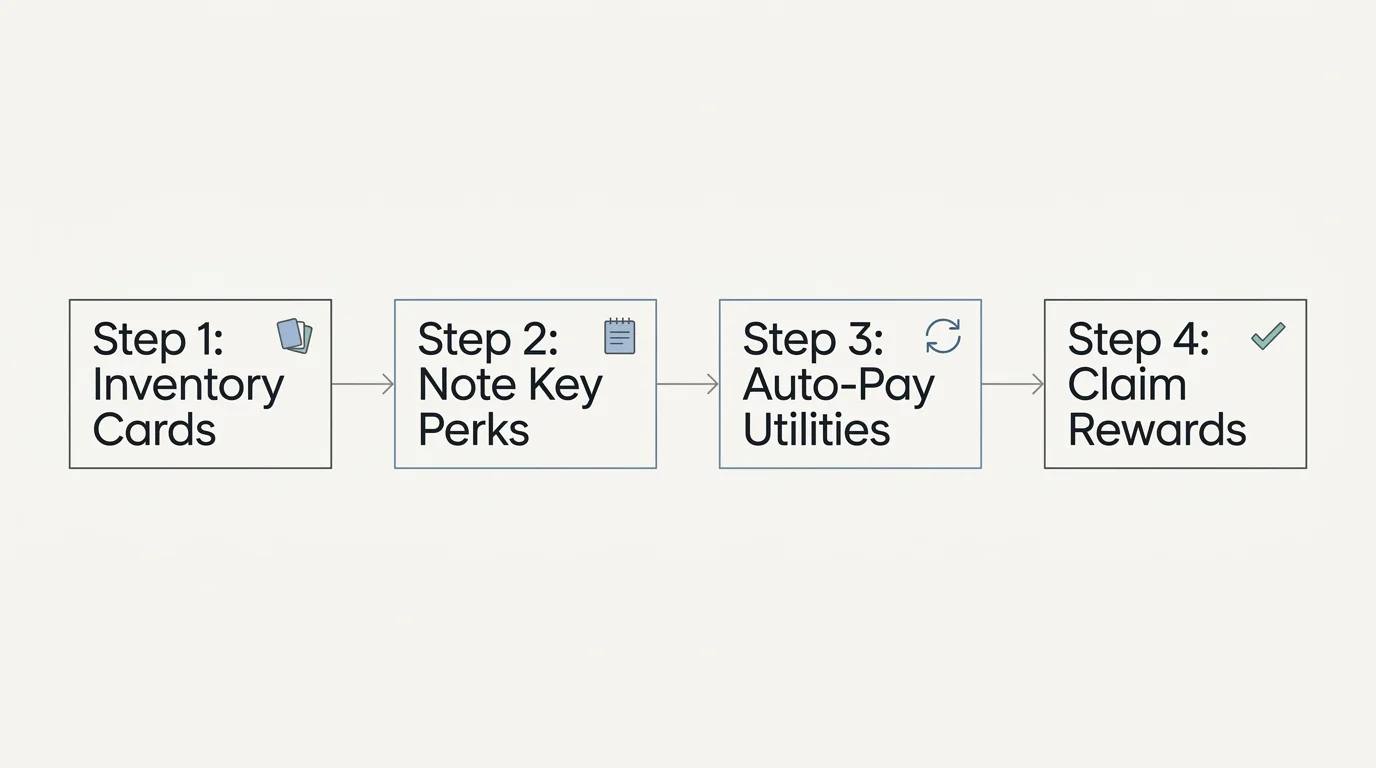
Step-by-Step Action Plan for Maximizing Credit Card Benefits
Transforming complex financial rules into actionable routines keeps your retirement plan secure. Follow these practical steps to ensure you never miss out on credit card perks worth using again:
- Conduct a 15-Minute “Wallet Audit”: Lay out every credit card you own. Log into your online accounts or call customer service to request the full “Guide to Benefits” PDF for each card. Save these digital files in a dedicated folder on your computer.
- Match Cards to Specific Household Expenses: Assign specific cards to distinct spending categories based on their multipliers. Use Card A strictly for groceries and pharmacies; use Card B for gas and cell phone bills; reserve Card C for travel and car rentals.
- Automate Cash-Back Redemptions: Stop hoarding cash-back rewards. Log into your portal and set up automated redemptions so that earned cash automatically deposits into your checking account or applies as a monthly statement credit whenever your balance reaches $25. Organizations like AARP emphasize that systematic cash redemption protects fixed budgets from unexpected price spikes.
- Download Issuer Mobile Apps for Instant Alerts: Install card issuer applications on your smartphone. Many cards require you to manually “activate” quarterly bonus categories or specialized monthly merchant offers before making a purchase. Enabling push notifications ensures you never miss a limited-time rebate.

Getting Expert Help
Navigating credit card management alongside complex retirement strategies can occasionally raise broad financial questions. While basic card management remains straightforward, seeking advice from a Certified Financial Planner (CFP) or non-profit credit counselor proves valuable in specific scenarios:
- Consolidating Debt Before Retirement: If you carry high-interest credit card balances into retirement, a professional counselor can help you structure a zero-percent balance transfer strategy or structured payoff plan to eliminate interest costs entirely.
- Simplifying Complex Reward Portfolios: If managing multiple travel cards becomes overwhelming or stressful, a fee-only financial planner can help you streamline down to one or two all-purpose cash-back cards that preserve simplicity.
- Protecting Against Senior Financial Exploitation: If you notice unauthorized charges or suspect identity theft across your accounts, contact your card issuer’s fraud department immediately and consult resources at Investopedia or local legal aid services to secure your financial identity.
Frequently Asked Questions
Do credit card benefits apply if I use points instead of cash to book a trip?
Yes, in most cases—provided you follow specific payment rules. Many issuers extend trip cancellation, lost luggage, and travel delay protections to bookings made with reward points, provided you pay for taxes and airport fees using that specific credit card. Check your card’s individual guide to benefits to confirm how award travel is treated under their policy terms.
How do I claim extended warranty coverage on a broken appliance?
To file an extended warranty claim, log into your credit card online portal and navigate to the benefits center. You will need four items: the original store purchase receipt showing the charge on that card, your credit card statement matching the transaction, the original manufacturer’s written warranty, and a formal repair estimate from a licensed technician. Submitting these document scans online initiates the claim approval process.
Will filing a rental car claim through my credit card increase my personal auto insurance rate?
If your card provides primary rental car coverage, it handles covered claims directly without involving your personal auto insurer, which prevents rate increases. If your card offers secondary coverage, it pays secondary expenses after your personal auto policy acts first, which means your personal auto rates could still be affected by the primary claim.
Are cash-back credit card rewards taxable income for retirees?
No. The Internal Revenue Service (IRS) treats standard credit card cash back, points, and miles earned through net purchases as a price discount or rebate rather than taxable income. Consequently, you do not pay federal income tax on cash-back redemptions. However, bank account opening bonuses that require no spending threshold may yield a Form 1099-INT for tax reporting purposes.
Closing Strategy for Smart Retirees
Maximizing credit card benefits is not about spending extra money or chasing complicated travel schemes. It is about systematically capturing every dollar of protection, convenience, and cash value built into cards you already carry. By auditing your wallet today, setting up auto-redemptions for cash back, and using card protections for everyday appliance purchases and travel, you can effortlessly plug financial leaks in your monthly budget.
Take one step right now: pick your most frequently used credit card, log into your online account, and locate its benefits guide. Uncovering just one overlooked perk—like complimentary cell phone protection or extended warranty coverage—will keep hundreds of dollars where it belongs: inside your retirement savings account.
This is educational content based on general retirement and financial principles. Individual results vary based on your situation. Always verify current benefit rules, tax laws, and eligibility requirements with official sources like SSA, Medicare.gov, or the IRS.
Last updated: March 2026. Retirement benefits, tax rules, and healthcare regulations change frequently—verify current details with official sources.









Leave a Reply