
Why Pedestrian-Friendly Living is the Ultimate Retirement Asset
Relocating to a community where daily errands require nothing more than a comfortable pair of sneakers completely transforms how you experience your later years. In sprawling suburbs, losing the ability or desire to drive often leads to immediate isolation and a loss of independence. In a walkable town, your world actually expands.
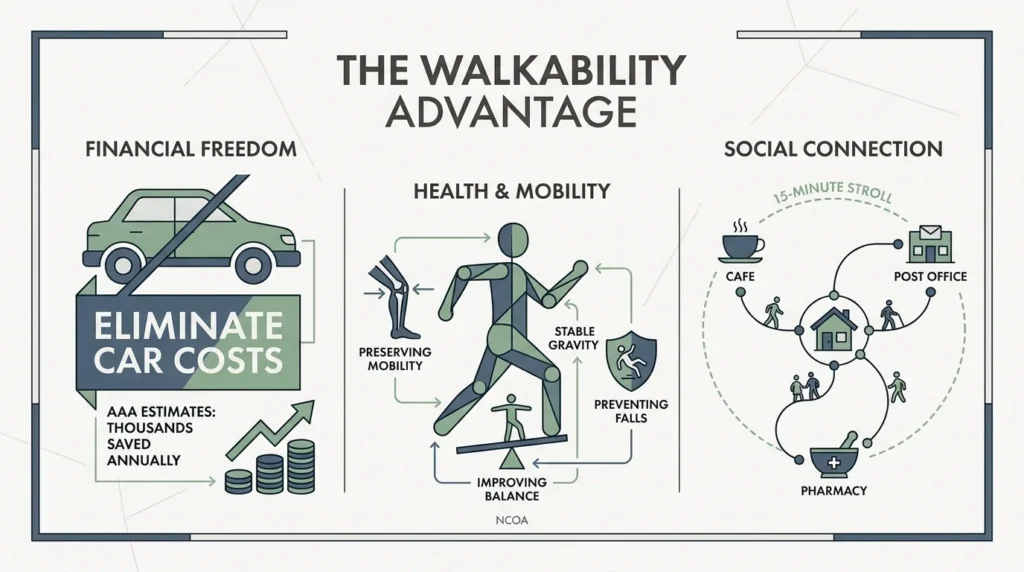
Living in a pedestrian-friendly environment bakes healthy habits directly into your daily routine without requiring a gym membership. A quick walk to the local bakery for morning coffee, followed by an afternoon stroll to the post office and the pharmacy, effortlessly helps you reach daily movement goals.
According to resources from the National Council on Aging (NCOA), regular walking is one of the most effective strategies for preserving mobility, improving balance, and preventing falls as we age.
Furthermore, the financial benefits are substantial. The American Automobile Association routinely estimates that owning and maintaining a single vehicle costs thousands of dollars annually when you factor in insurance, fuel, maintenance, and depreciation.
Downsizing from two cars to one—or eliminating car ownership entirely—frees up significant cash flow that you can redirect toward travel, hobbies, or your long-term healthcare fund.









Leave a Reply