
Timing your retirement decisions accurately can mean the difference between financial independence and tens of thousands of dollars lost to avoidable taxes and penalties. Most savers focus entirely on reaching age 62 or 65 while overlooking critical planning windows.
Federal tax laws, healthcare regulations, and Social Security rules create a precise chronological roadmap spanning from age 50 through 75. Knowing these dates gives you full control over your money.
By mastering these key retirement milestone ages, you protect your hard-earned wealth, minimize your lifetime tax burden, and claim every dollar of benefits you have earned.
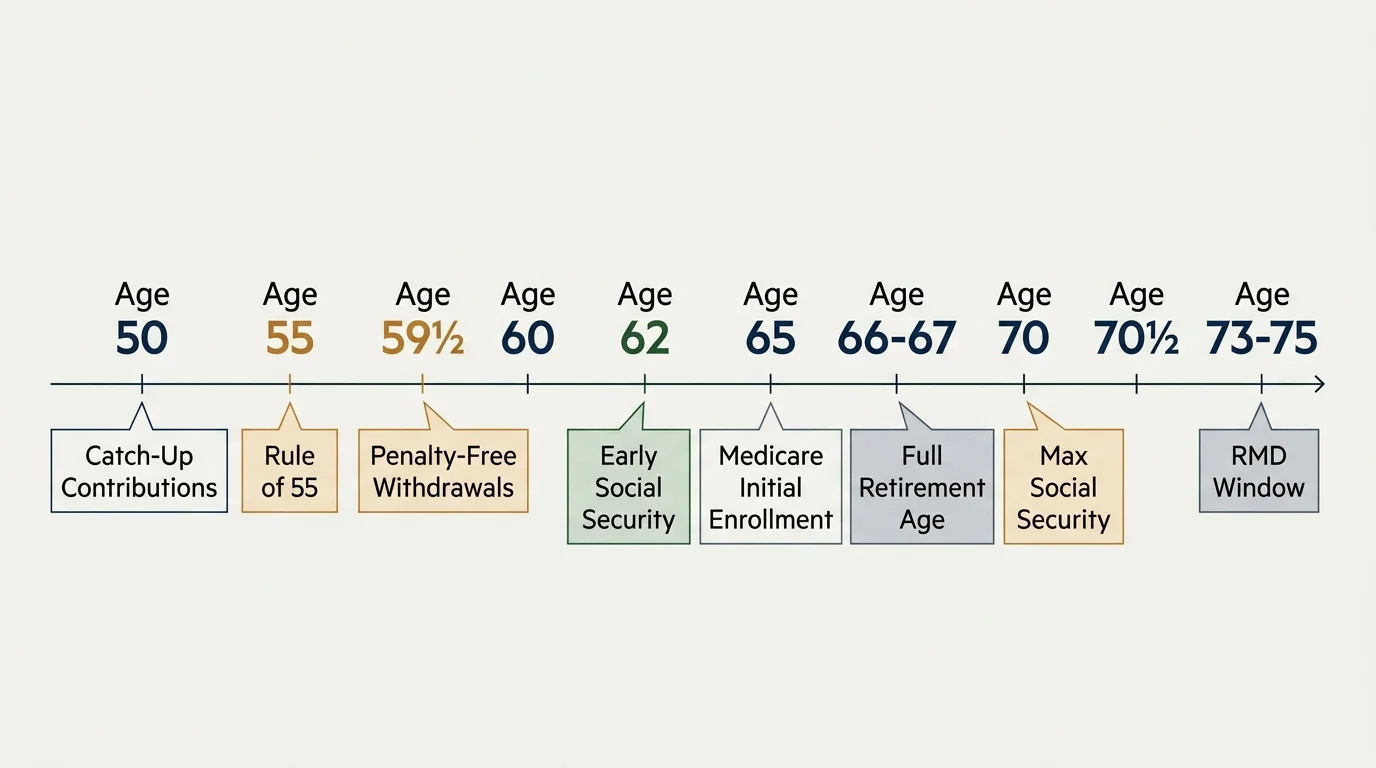
The Essentials: Key Retirement Milestones at a Glance
Navigating the complex landscape of retirement planning requires a clear timeline. Missing a single deadline can trigger permanent benefit reductions, mandatory tax penalties, or forfeited savings opportunities. The table below outlines the critical retirement planning ages that dictate your financial flexibility.
| Milestone Age | Key Benefit or Rule | Critical Action Required | Financial Consequence of Missing |
|---|---|---|---|
| 50 | Standard Catch-Up Contributions | Increase contributions to IRAs and workplace 401(k)/403(b) plans beyond standard elective limits. | Forfeited compounding growth and missed immediate tax deductions. |
| 55 | The Rule of 55 | Access current employer 401(k) funds penalty-free if leaving service in or after your 55th birth year. | Unnecessary 10% early withdrawal penalty if rolling funds into an IRA prematurely. |
| 59½ | Penalty-Free Account Access | Withdraw from qualified retirement accounts without incurring the standard 10% IRS penalty. | Subjecting early distributions to an immediate 10% excise penalty on earnings. |
| 60 | Social Security Survivor Benefits | Widows and widowers can claim reduced survivor benefits on a deceased spouse’s record. | Unclaimed survivor income; benefits do not pay retroactively beyond limited windows. |
| 60 to 63 | SECURE 2.0 Super Catch-Up | Utilize enhanced workplace plan catch-up deferral limits (150% of standard catch-up limit). | Missed opportunity to shelter significant earned income right before full retirement. |
| 62 | Early Social Security Eligibility | Decide whether to file for permanently reduced benefits or delay for higher payouts. | Permanent benefit reduction of up to 30% and exposure to the Social Security earnings test. |
| 65 | Medicare Initial Enrollment | Enroll in Medicare Parts A and B during the 7-month Initial Enrollment Period (IEP). | Lifetime late-enrollment premium penalties and potential gaps in essential health coverage. |
| 66 to 67 | Full Retirement Age (FRA) | Claim 100% of your Primary Insurance Amount with zero earnings penalty restrictions. | Withholding of benefits if working while claiming prior to reaching FRA. |
| 70 | Maximum Social Security Cap | Claim maximum monthly Social Security benefits; Delayed Retirement Credits cease accruing. | Permanent loss of monthly benefit increases—no financial reason exists to delay past 70. |
| 70½ | Qualified Charitable Distributions | Transfer up to annual limits directly from a traditional IRA to a qualified 501(c)(3) charity tax-free. | Charitable giving via standard taxable distributions, inflating adjusted gross income (AGI). |
| 73 to 75 | Required Minimum Distributions | Begin mandatory annual taxable withdrawals from pre-tax retirement accounts under SECURE 2.0. | A harsh 25% IRS excise tax on any undistributed required minimum amount (reduced to 10% if corrected). |
Age 50: Accelerating Wealth with Standard Catch-Up Limits
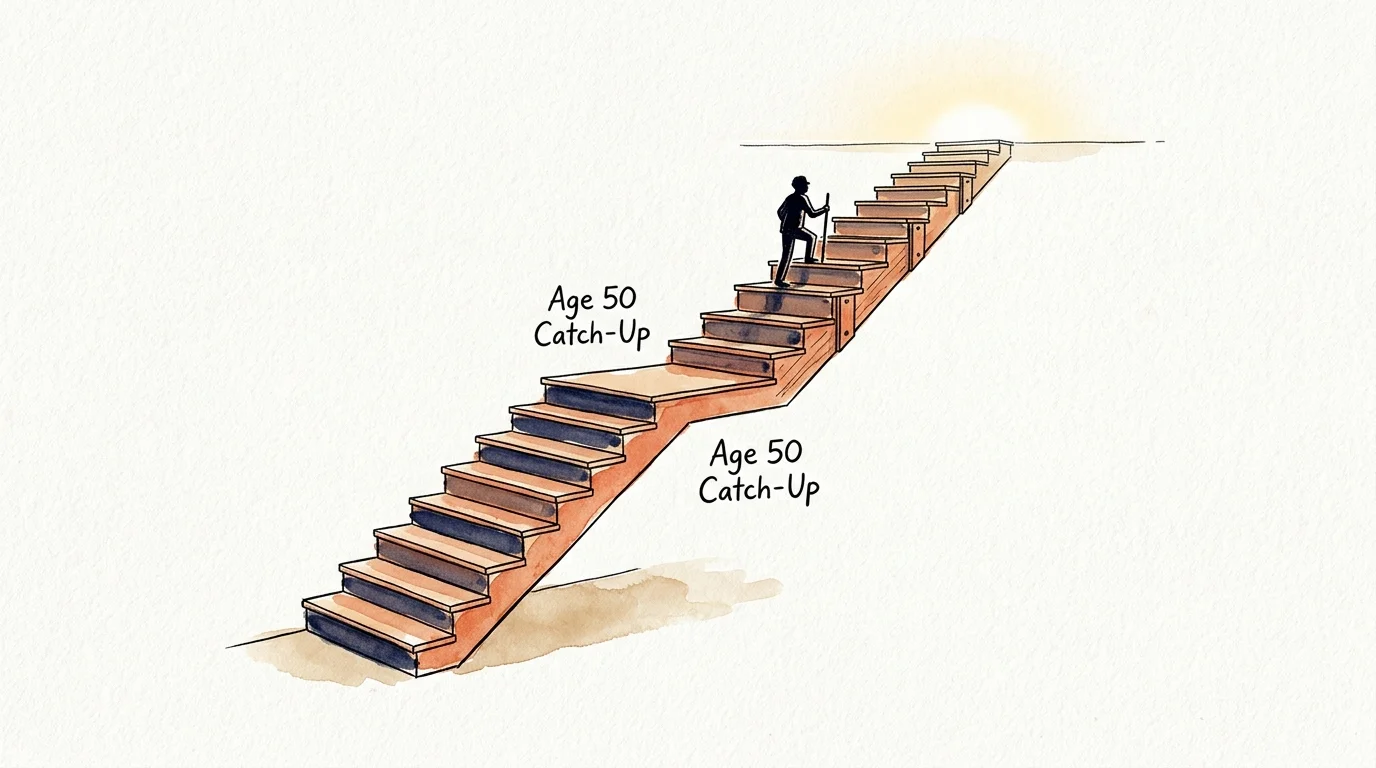
The transition into your fifties marks the formal start of your pre-retirement acceleration phase. The Internal Revenue Service recognizes that many workers face unexpected financial responsibilities during their earlier career years—such as raising children or purchasing a home—and allows individuals aged 50 and older to make standard catch-up contributions to their tax-advantaged accounts.
If you reach age 50 at any point during the calendar year, you can contribute additional funds above the standard annual limits to traditional and Roth IRAs, as well as employer-sponsored retirement plans like 401(k), 403(b), and most 457 plans. This provision allows you to shelter more earned income from current taxation while accelerating the compounding growth of your balances.
- Workplace Plans: You can contribute thousands of dollars above the baseline employee elective deferral limit into your 401(k) or 403(b), lowering your taxable income significantly.
- Individual Retirement Accounts: You can deposit extra funds into your traditional or Roth IRA, giving you greater asset allocation flexibility outside of employer-selected investment menus.
- Health Savings Accounts (HSAs): While the HSA catch-up contribution officially begins at age 55, reaching age 50 is the moment to verify that your medical savings strategy integrates with your broader retirement asset portfolio.
Maximizing these limits during your peak earning years establishes a robust financial buffer. A saver who contributes maximum catch-up amounts from age 50 to age 65 can add hundreds of thousands of dollars to their final portfolio balance, assuming modest market returns.
Age 55: The Underutilized “Rule of 55” Early Exit Strategy
Most workers believe they must wait until age 59½ to access their employer-sponsored retirement plans without incurring early withdrawal penalties. However, the IRS tax code contains a powerful exception known as the “Rule of 55.” This rule serves as a critical bridge for individuals who leave their careers earlier than traditional retirement age.
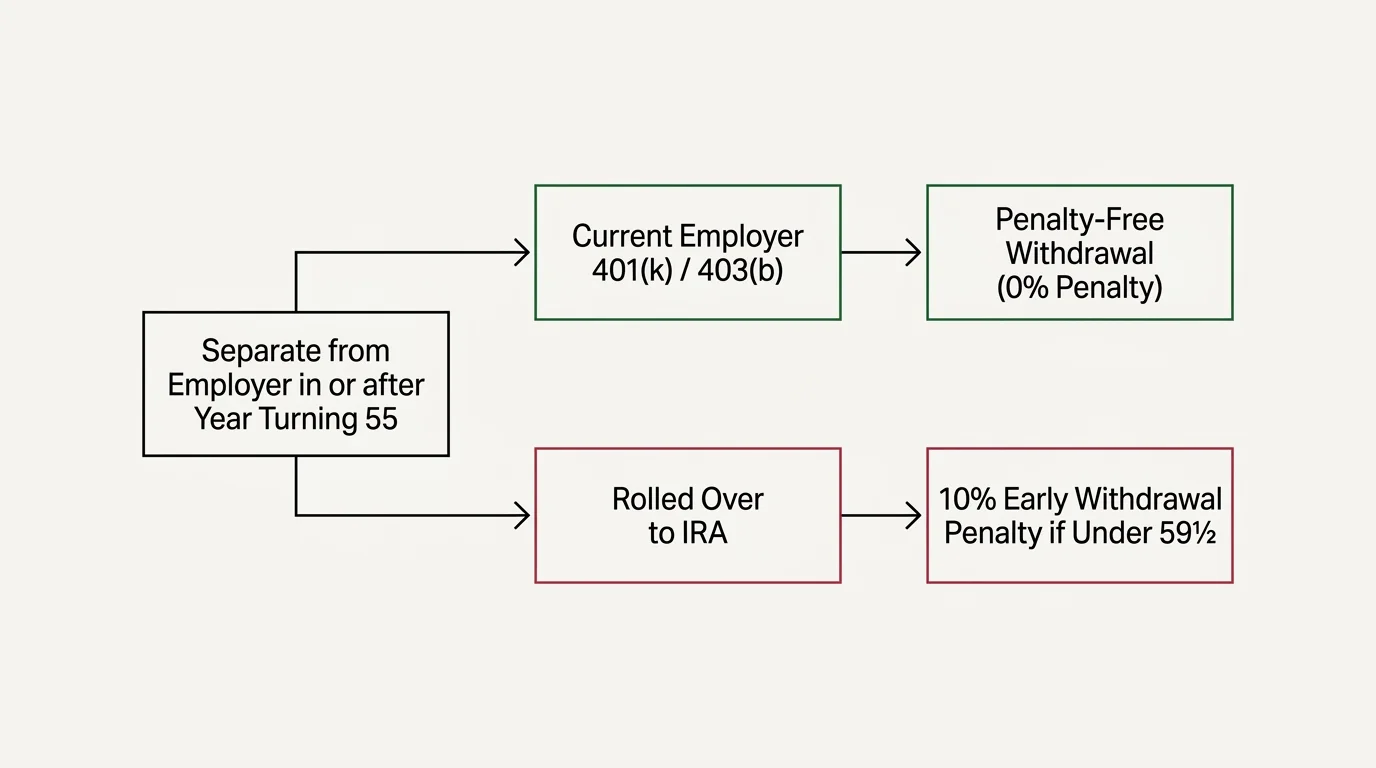
Under this provision, if you separate from service with your employer—whether through voluntary retirement, layoff, or termination—during or after the calendar year in which you turn 55, you can take penalty-free distributions directly from that specific employer’s 401(k) or 403(b) plan. Public safety employees, including law enforcement officers, firefighters, and air traffic controllers, enjoy an even earlier threshold, often accessing plan funds penalty-free starting at age 50.
“Do not save what is left after spending, but spend what is left after saving.” — Warren Buffett, Chairman and CEO of Berkshire Hathaway
To execute the Rule of 55 correctly, you must avoid a catastrophic mistake: rolling your workplace funds into an Individual Retirement Account (IRA). The Rule of 55 applies exclusively to qualified employer-sponsored plans. Once you roll those funds into a traditional or Roth IRA, the standard age 59½ restriction governs the assets, locking your distributions behind a 10% early withdrawal penalty unless another statutory exemption applies.

Age 59½: Unlocking Account Access Without Penalties
Age 59½ represents the definitive universal threshold for accessing your retirement savings. Reaching this half-birthday eliminates the IRS 10% early distribution penalty across all qualified accounts, including traditional IRAs, SEP-IRAs, SIMPLE IRAs, 401(k)s, and 403(b)s.
While reaching age 59½ grants penalty-free access, it does not make all distributions tax-free. Every dollar withdrawn from a traditional pre-tax retirement account is still classified as ordinary income and taxed according to your current marginal federal and state income tax brackets. If you withdraw substantial sums in a single tax year, you risk pushing yourself into higher tax brackets, which can inflate your overall tax liability.
Furthermore, Roth IRA owners must observe the distinct five-year rule regardless of their age. To withdraw the earnings from a Roth IRA tax-free, you must be at least age 59½ and have held your first Roth IRA for at least five full tax years. Understanding these tax layers allows you to construct a systematic, tax-efficient withdrawal schedule rather than pulling random sums that generate unexpected tax bills.
Ages 60 to 63: Survivor Benefits and SECURE 2.0 Super Catch-Ups
The window between ages 60 and 63 contains distinct opportunities for both surviving spouses and high-earning workers preparing for their final career stretch.
Social Security Survivor Benefits at Age 60
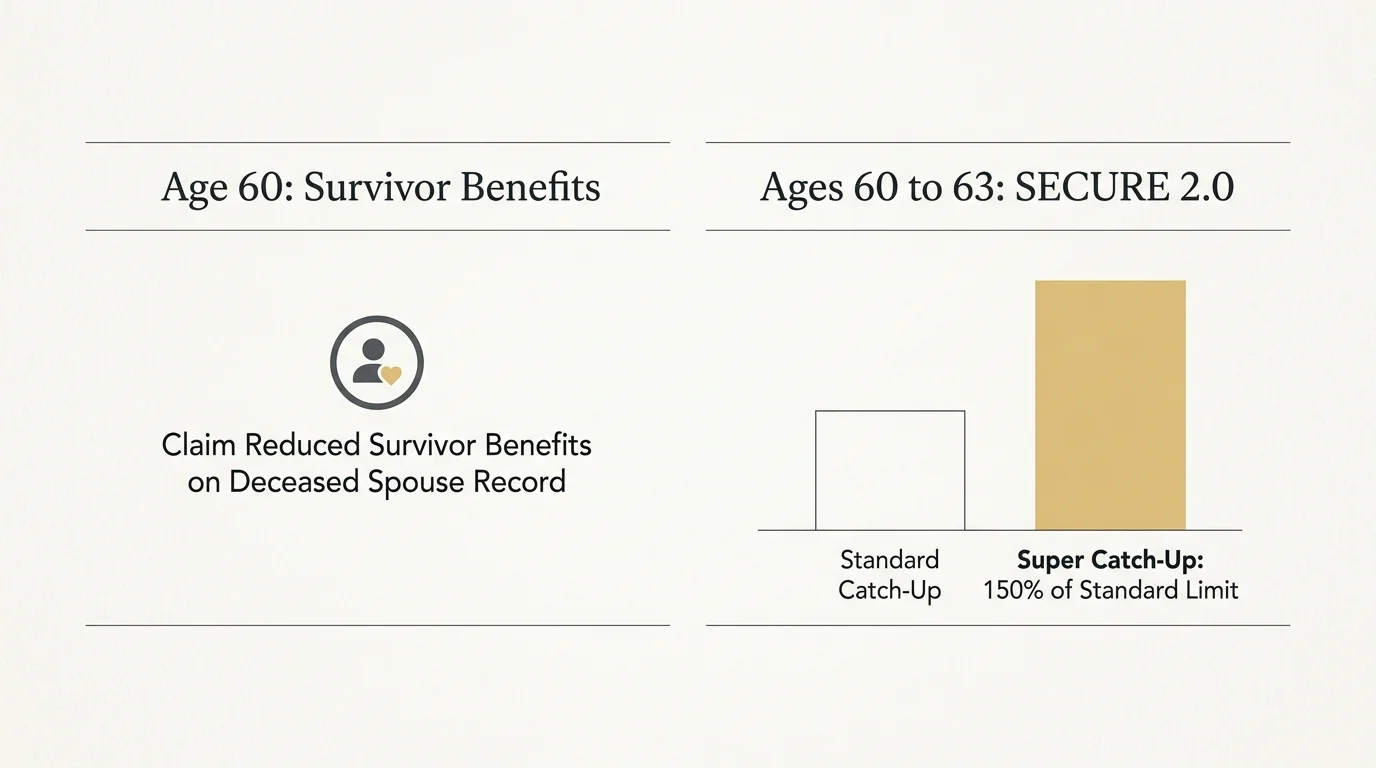
Widows and widowers can claim Social Security survivor benefits as early as age 60 (or age 50 if disabled). If you have lost a spouse who earned higher lifetime wages than you, claiming a survivor benefit early can provide immediate cash flow while allowing your own retirement benefit to continue growing untouched until age 70.
Claiming survivor benefits at age 60 results in a permanent reduction of roughly 28.5% compared to waiting for your survivor Full Retirement Age. However, the strategic advantage lies in sequencing: you can claim a survivor benefit early, switch to your own maximum retirement benefit later, or vice versa, depending on which record yields the higher lifetime payout.
The SECURE 2.0 “Super Catch-Up” (Ages 60–63)
Enacted under the SECURE 2.0 Act, eligible employees aged 60, 61, 62, and 63 can take advantage of an enhanced “super catch-up” contribution limit within participating workplace retirement plans. Instead of the standard catch-up contribution, participants in this four-year bracket can contribute up to 150% of the regular catch-up limit (or $11,250, whichever is greater, indexed for inflation).
This provision offers a final, concentrated tax-deferral opportunity for workers who want to maximize their savings immediately prior to stepping away from the workforce. High earners should note that under SECURE 2.0 guidelines, catch-up contributions for individuals earning above statutory wage thresholds must be directed into after-tax Roth accounts rather than pre-tax traditional accounts.

Age 62: The Early Social Security Claiming Dilemma
Age 62 is the earliest point at which you can claim your own Social Security retirement benefits. Millions of Americans file on their 62nd birthday, but doing so exacts a severe, permanent financial penalty on your monthly income.
When you file for benefits at age 62 instead of waiting for your Full Retirement Age (67 for everyone born in 1960 or later), the Social Security Administration permanently reduces your monthly payout by up to 30%. A baseline monthly benefit of $2,000 at age 67 drops to $1,400 per month for life if claimed at age 62.
In addition to the lifetime benefit reduction, claiming at 62 exposes your payments to the strict Social Security Earnings Test if you continue working:
- If your earned income exceeds the annual statutory earnings limit, the SSA withholds $1 in benefits for every $2 you earn above the limit.
- During the calendar year you reach your Full Retirement Age, a more generous limit applies, withholding $1 for every $3 earned above the higher threshold until the exact month you reach FRA.
- While these withheld funds are credited back to your monthly benefit calculation once you reach Full Retirement Age, filing early while working creates administrative complexity and temporarily starves your cash flow.
Claiming at age 62 makes sense under specific conditions: severe health challenges that reduce life expectancy, prolonged involuntary unemployment, or when early benefits prevent you from liquidating high-performing investment assets during a market downturn.

Age 65: Navigating the Medicare Initial Enrollment Window
While the retirement age for full Social Security benefits has moved to 67, the eligibility age for Medicare remains fixed at 65. Navigating this milestone requires strict adherence to federal calendar deadlines to avoid lifelong premium surcharges.
Your Medicare Initial Enrollment Period (IEP) is a strict 7-month window that includes:
- The 3 months before the month you turn 65
- The month you turn 65
- The 3 months after the month you turn 65
If you do not have creditable health insurance coverage through your current active employer (or your spouse’s current active employer) at an organization with 20 or more employees, you must enroll during this 7-month window via Medicare.gov. COBRA coverage, retiree health plans, and individual marketplace plans do not count as active employer group health coverage.
“You have worked too hard for your retirement to let avoidable Medicare penalties and Social Security claiming mistakes chip away at your financial peace of mind.” — Suze Orman, Personal Finance Expert and Author
Missing your Initial Enrollment Period without qualifying creditable coverage triggers severe consequences:
- Part B Late Enrollment Penalty: Your Part B monthly premium increases by 10% for each full 12-month period you were eligible but failed to enroll. This penalty is permanent and lasts for the rest of your life.
- Part D Late Enrollment Penalty: If you go 63 or more consecutive days without creditable prescription drug coverage, you pay an ongoing 1% monthly penalty based on the national base beneficiary premium.
- Coverage Gaps: You may be forced to wait until the General Enrollment Period (January 1 through March 31), leaving you completely uninsured for months.

Ages 66 to 67: Reaching Full Retirement Age
Your Full Retirement Age (FRA) represents the moment you become entitled to 100% of your Primary Insurance Amount (PIA) from Social Security. For individuals born in 1960 or later, FRA is reached at exactly age 67. For those born between 1943 and 1954, FRA is 66, gradually climbing in two-month increments for birth years 1955 through 1959.
Reaching your Full Retirement Age brings three monumental financial shifts:
- Elimination of the Earnings Limit: You can earn unlimited wages from employment without forfeiting a single dollar of your Social Security benefits.
- Spousal Benefit Activation: If your spouse files on your work record, reaching your FRA ensures they can claim up to the maximum allowable 50% of your Primary Insurance Amount (assuming they have also reached their own FRA).
- Voluntary Suspension Rights: If you claimed your benefit early and regret the decision, you can voluntarily suspend your payments upon reaching FRA to begin earning Delayed Retirement Credits up to age 70.
Age 70: Maximizing Social Security Delayed Retirement Credits
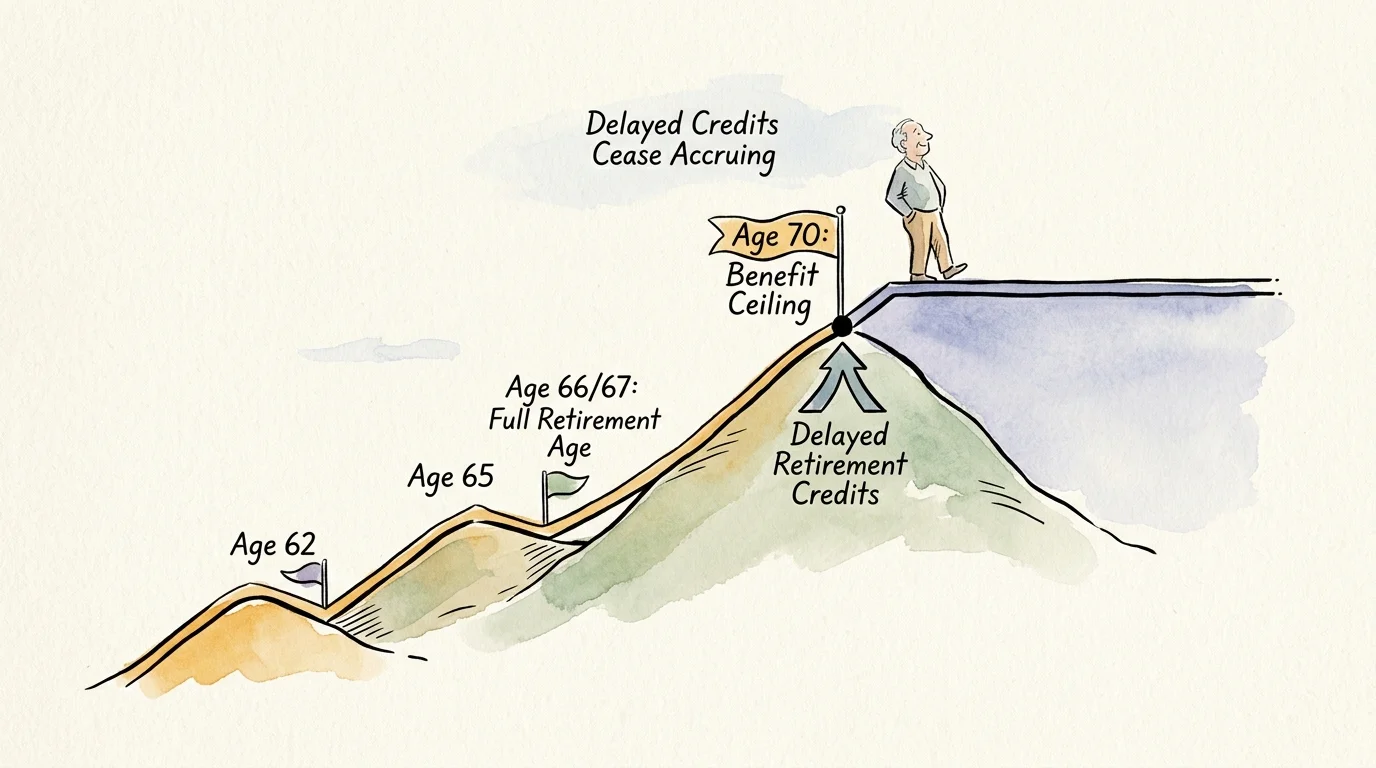
If you delay claiming Social Security past your Full Retirement Age, the government rewards your patience through Delayed Retirement Credits. For every year you delay claiming beyond your FRA up to age 70, your benefit increases by a guaranteed 8% per year (roughly 0.67% for each month delayed).
For individuals with a Full Retirement Age of 67, waiting until age 70 yields a permanent 24% boost in monthly income over their baseline PIA. When factoring in annual Cost-of-Living Adjustments (COLA), which compound on top of this higher baseline, delaying to age 70 acts as an exceptional longevity hedge and an inflation-protected annuity.
There is zero financial incentive to delay claiming Social Security past age 70. Delayed Retirement Credits permanently stop accumulating the month you turn 70. Failing to claim at age 70 means forfeiting monthly checks permanently, as the Social Security Administration will only pay a maximum of six months in retroactive benefits.
Age 70½: Tax-Smart Giving with Qualified Charitable Distributions
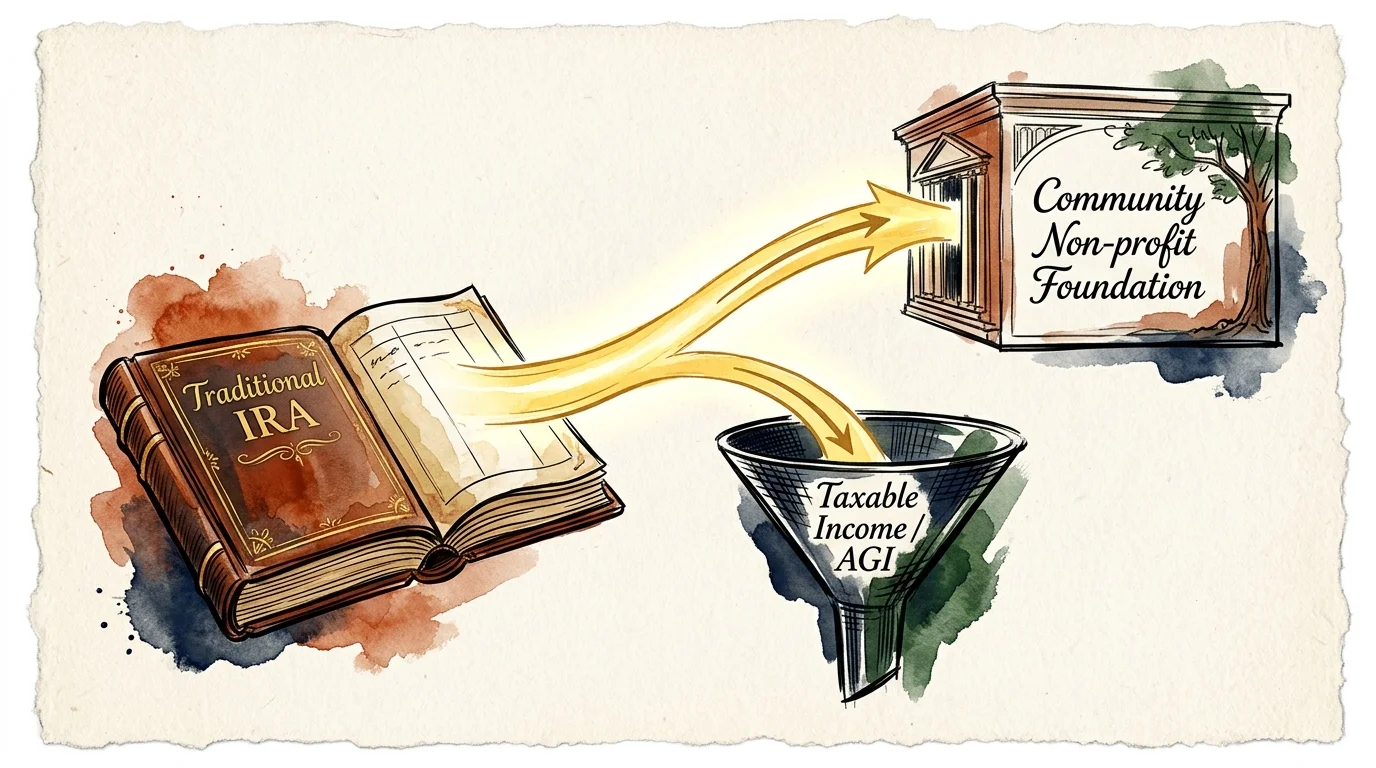
While the SECURE Act pushed the age for mandatory retirement distributions further back, Congress left the starting age for Qualified Charitable Distributions (QCDs) unchanged at exactly age 70½.
A Qualified Charitable Distribution allows you to transfer up to statutory annual limits directly from your traditional IRA to a qualified 501(c)(3) public charity without counting the distribution as taxable income. This strategy delivers substantial tax advantages:
- Lower Adjusted Gross Income (AGI): Unlike a standard charitable deduction, which requires you to itemize on your tax return, a QCD reduces your overall adjusted gross income directly on Form 1040.
- Preserving Tax Credits and Deductions: Keeping your AGI low helps prevent the phase-out of other tax exemptions and deductions.
- Mitigating Medicare IRMAA Surcharges: Income-Related Monthly Adjustment Amounts (IRMAA) increase your Medicare Part B and Part D premiums if your modified AGI exceeds specific tiers. QCDs keep your income below these costly thresholds.
Once you reach the age for Required Minimum Distributions, any QCD you execute counts dollar-for-dollar toward satisfying your annual RMD requirement, allowing you to fulfill your legal withdrawal obligations without adding a single dollar to your taxable income.
Ages 73 and 75: Navigating Required Minimum Distributions
The federal government does not allow pre-tax retirement balances to grow tax-free indefinitely. Eventually, you must withdraw a calculated percentage of your accounts each year and pay ordinary income taxes on the proceeds. These mandatory withdrawals are known as Required Minimum Distributions (RMDs).
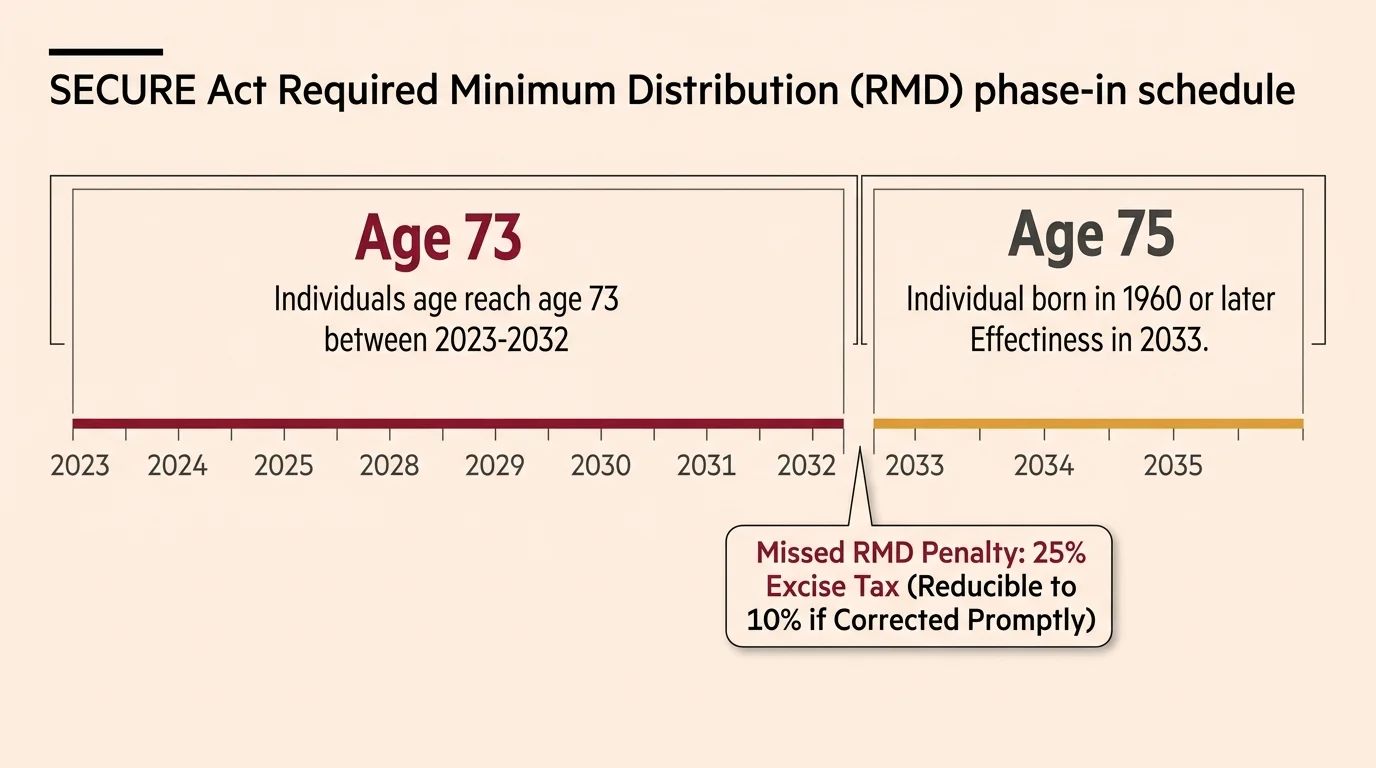
The SECURE 2.0 Act established a clear chronological roadmap for RMD compliance:
- Age 73: Appointed for individuals who reached age 72 after December 31, 2022, or who turn 73 before January 1, 2033 (individuals born between 1951 and 1959).
- Age 75: Becomes the official RMD starting age on January 1, 2033, for individuals born in 1960 or later.
Your annual RMD is calculated by dividing your pre-tax account balances as of December 31 of the previous year by the IRS Uniform Lifetime life expectancy factor. Failing to take your full RMD on time results in a steep 25% excise tax on the amount not withdrawn. If you discover the error and submit a corrected distribution with IRS Form 5329 in a timely manner, the penalty can be reduced to 10%.
Roth IRAs do not require minimum distributions during the owner’s lifetime. Additionally, under SECURE 2.0, designated Roth workplace accounts (such as Roth 401(k)s) are also exempt from pre-death RMD rules, aligning them directly with standard Roth IRAs.
Avoiding Common Errors Across the Retirement Timeline
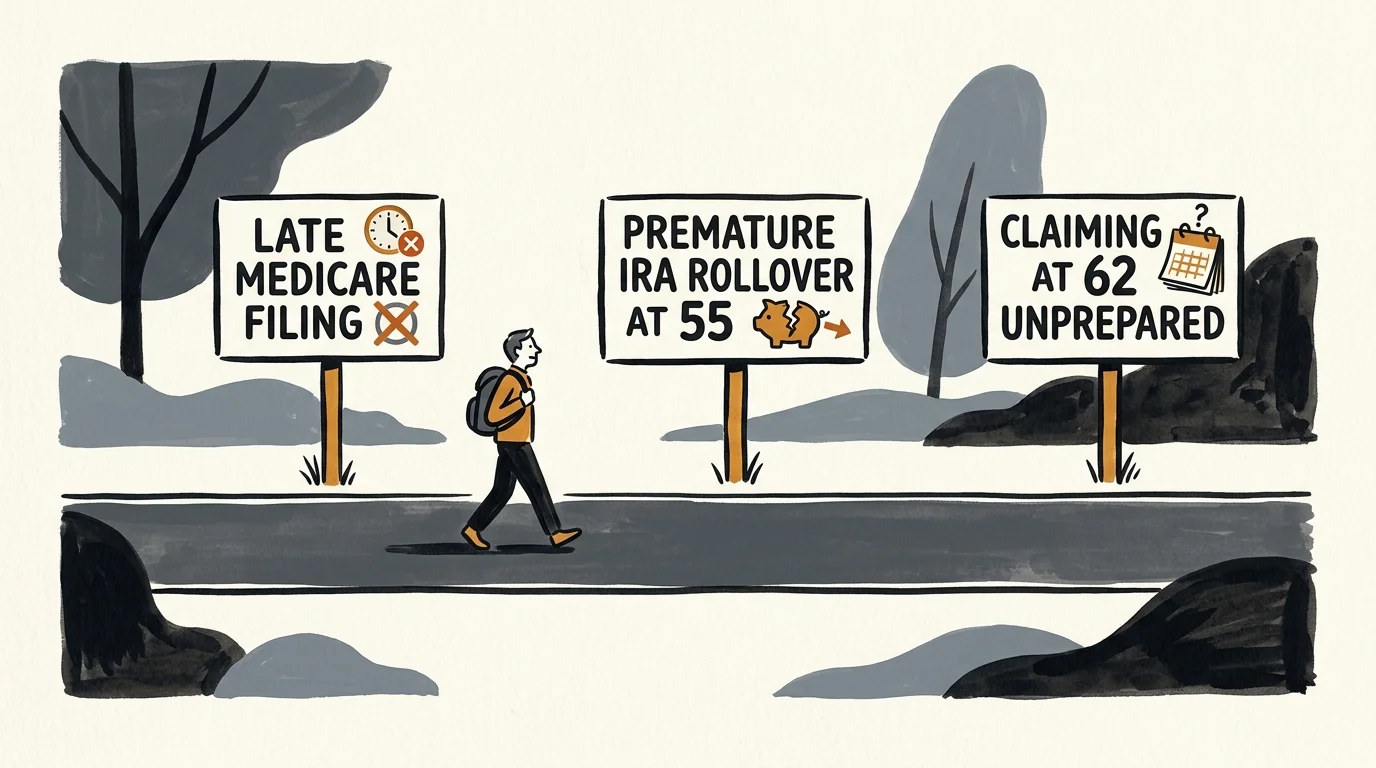
Managing the chronological stages of retirement requires vigilance. Review these common operational missteps to ensure your assets remain protected as you cross each milestone.
- Rolling 401(k) Funds to an IRA at Age 55: If you separate from service and intend to use the Rule of 55, moving your funds into an IRA instantly disqualifies you from penalty-free early access before age 59½.
- Assuming Medicare Enrollment is Automatic: Unless you are already receiving Social Security retirement benefits before age 65, the government will not automatically enroll you in Medicare. You must manually initiate enrollment during your 7-month IEP.
- Ignoring the 5-Year Clock on Roth Conversions: Each individual Roth conversion carries its own separate five-year holding period for penalty-free principal withdrawal if you are under age 59½, distinct from the overarching five-year rule for earnings.
- Neglecting Your First RMD Deadline: While the IRS permits you to delay your very first RMD until April 1 of the year following the year you reach RMD age, doing so forces you to take two RMDs in that single tax year, which can push you into a significantly higher tax bracket.

When DIY Isn’t Enough
While self-directed retirement planning is empowering, certain complex life circumstances demand the technical insight of a qualified, fee-only fiduciary planner or certified tax professional. Consider consulting a professional through the Certified Financial Planner Board under these specific conditions:
- Navigating Multi-Tiered Pension and Social Security Coordination: If you hold a public pension affected by the Windfall Elimination Provision (WEP) or Government Pension Offset (GPO), calculating optimal Social Security claiming ages requires specialized actuarial software.
- Managing Substantial Pre-Tax Balances Facing RMD Cliffs: If your traditional 401(k) and IRA balances exceed $1.5 million, reaching age 73 or 75 can generate massive forced distributions that trigger top-bracket income taxes, large IRMAA Medicare surcharges, and high taxation on Social Security benefits. A CPA can design a multi-year Roth conversion plan to smooth this tax curve.
- Complex Business Owner or Executive Exits: Utilizing the Rule of 55 alongside non-qualified deferred compensation plans (NQDC), concentrated stock positions, or net unrealized appreciation (NUA) strategies requires meticulous tax coordination.
- Navigating Late-Career Divorce or Spousal Loss: Untangling survivor benefits, ex-spousal claiming rights, and Qualified Domestic Relations Orders (QDROs) across key milestone ages involves nuanced legal and tax considerations.
Frequently Asked Questions
Can I use the Rule of 55 on an old 401(k) from a previous employer?
No. The Rule of 55 applies exclusively to the 401(k) or 403(b) plan associated with the employer you separated from during or after the calendar year you turned 55. Assets left in accounts from former employers do not qualify unless you rolled those legacy balances into your final employer’s plan prior to separating from service.
What happens to my Social Security benefit if I claim at 62 but keep working?
If you claim benefits before your Full Retirement Age and earn more than the annual earnings limit, the Social Security Administration will temporarily withhold $1 in benefits for every $2 earned above the threshold. Once you reach your Full Retirement Age, the SSA recalculates your monthly benefit upward to account for the amounts previously withheld.
Do I have to enroll in Medicare at 65 if I am still employed and covered by work insurance?
If you work for an employer with 20 or more employees and have active group health coverage through that employment (or your spouse’s employment), you can delay Medicare Part B without penalty. However, if your employer has fewer than 20 employees, Medicare is primary, and you must enroll at age 65 to avoid coverage gaps and lifetime penalties.
How does the SECURE 2.0 Act affect my RMD starting age?
Under SECURE 2.0, if you were born between 1951 and 1959, your RMD starting age is 73. If you were born in 1960 or later, your RMD starting age is 75. Roth IRAs and designated Roth workplace accounts remain completely exempt from lifetime Required Minimum Distributions.
Every milestone age between 50 and 75 represents a strategic turning point for your financial future. By marking your calendar well in advance, understanding your statutory deadlines, and executing distributions with tax precision, you can navigate your retirement with absolute confidence.
The information in this guide is meant for educational purposes. Your specific circumstances—including income, health needs, tax situation, and goals—may require different approaches. When in doubt, consult a licensed professional.
Last updated: March 2026. Retirement benefits, tax rules, and healthcare regulations change frequently—verify current details with official sources.








Leave a Reply