What Drove the Trump Bump COLA This Year
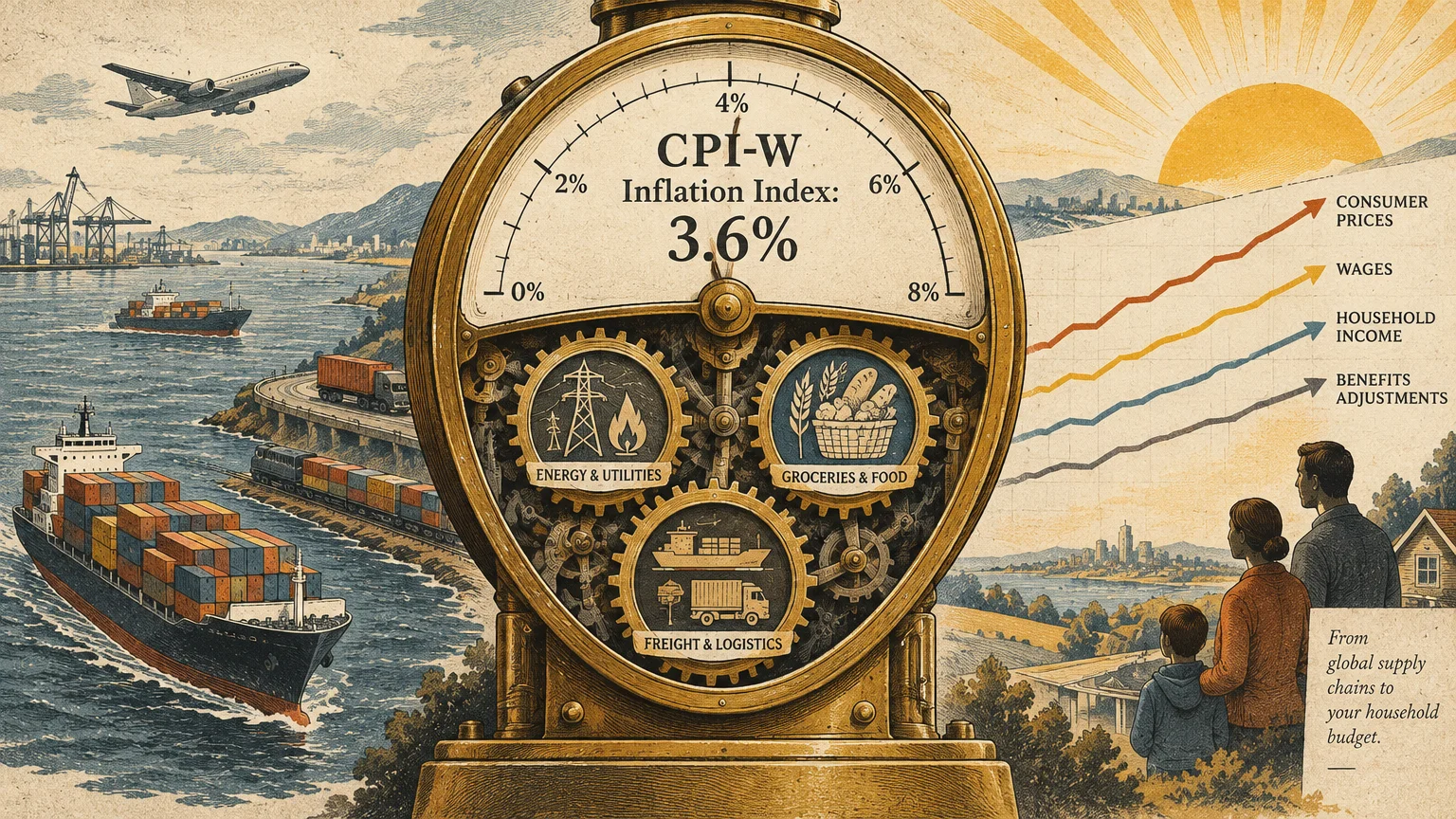
At 3.6%, the 2027 COLA stands as the largest annual increase since the 8.7% jump in 2023. It also ties for the fifth-largest adjustment since 1993, trailing only 2023, 2022, 2009, and 2006.
More notably, 2027 marks the sixth straight year of COLAs at 2.5% or higher. Following increases of 3.2% in 2024, 2.5% in 2025, and 2.8% in 2026, this multi-year run matches an inflation streak last seen between 1988 and 1997.
Economists and market watchers often call this year’s increase the trump bump cola because trade policy and energy shocks pushed consumer prices higher during the measurement window. Understanding those drivers clarifies why a bigger raise still requires disciplined budgeting.
According to a Federal Reserve Bank of New York Liberty Street Economics study cited in October 2026, tariffs enacted in 2025 added an estimated 2.9 percentage points to goods price inflation by February 2026. That research estimated that a 10% across-the-board tariff lifts consumer goods prices by 2.6% after one year.
Although the U.S. Supreme Court struck down the April 2025 tariffs in February 2026, earlier price pass-through had already lifted retail costs. Those higher everyday shelf prices fed directly into the inflation index used to calculate your 2027 raise.
Energy markets added a second wave of price pressure during the spring and summer of 2026. Military conflict with Iran and the closure of the Strait of Hormuz disrupted fuel supplies worldwide.
By May 2026, annualized inflation reached a three-year high of 4.2%. By August 2026, national average gas prices climbed to roughly $4.04 per gallon according to AAA data, squeezing retirees who drive regularly or pay higher utility surcharges.
Because Social Security adjustments look backward, your 2027 check reimburses you for inflation you already absorbed throughout 2026. Treating the 3.6% boost as catch-up money rather than extra windfall cash helps protect your savings over the coming year.
The Rare Bonus for 29 Million Retirees on Original Medicare
A larger Social Security raise only improves your lifestyle if healthcare deductions leave most of it intact. For roughly 29 million retirees enrolled in Original Medicare, 2027 is shaping up to deliver a welcome reversal of recent trends.
Unlike the estimated 36.1 million seniors in private Medicare Advantage plans, most Original Medicare enrollees have their Medicare Part B premiums withheld directly from their monthly Social Security checks. Whenever Part B rises steeply, that deduction quietly shrinks your net raise.
As of November 16, 2026, the Centers for Medicare & Medicaid Services has not yet published finalized 2027 Part B premiums and deductibles. Typically, the agency releases official numbers in mid-November; last year’s rates came out on November 14, 2025.
In the meantime, the 2026 Medicare Trustees Report released on June 9, 2026, provides the official federal baseline for 2027 planning. Trustees project the standard monthly Part B premium will climb by $6.60—or 3.25%—from $202.90 in 2026 to $209.50 in 2027.
Under those same projections, the annual Part B deductible would rise modestly from $283 in 2026 to $292 in 2027. If those estimates hold when CMS makes its formal announcement, 2027 delivers a genuine social security bonus in net purchasing power.
| Benefit Year | Social Security COLA | Medicare Part B Standard Premium | Part B Annual Increase |
|---|---|---|---|
| 2024 | 3.2% | $174.70 | 5.9% |
| 2025 | 2.5% | $185.00 | 5.9% |
| 2026 | 2.8% | $202.90 | 9.7% |
| 2027 (Projected Part B) | 3.6% | $209.50 | 3.25% |
Look closely at the previous three years to see why 2027 stands out. In 2024, 2025, and especially 2026—when Part B jumped 9.7%, or $17.90 per month—healthcare costs grew far faster than Social Security checks.
In 2027, the math flips back in your favor for the first time since 2023. Because the 3.6% COLA outpaces the projected 3.25% medicare part b 2027 increase, an average retired worker earning an extra $75 a month would keep roughly $68.40 after the $6.60 Part B hike.
Keeping roughly 91% of your gross raise leaves real breathing room for groceries, property taxes, or home maintenance. Even better, a smaller percentage gap reduces how many seniors need statutory protection from shrinking checks.
How the Hold-Harmless Provision Works in 2027
Under Section 1839(f) of the Social Security Act, the hold-harmless rule prevents Part B premium hikes from reducing your net Social Security payment in dollar terms. This safeguard shields roughly 70% of Part B enrollees during years when medical premiums spike.
With a 3.6% COLA and a projected $6.60 Part B increase, the hold-harmless provision would only trigger for very small Social Security checks below roughly $183 per month. Nearly everyone else receives enough gross COLA dollars to cover the premium hike and still come out ahead.
Still, you should know who the hold-harmless rule leaves out in case CMS announces a higher-than-projected Part B rate. The safeguard excludes four specific groups of beneficiaries:
- New Medicare Enrollees: People joining Part B for the first time in 2027 must pay the full standard premium.
- High-Income Surcharge Payers: Retirees subject to Income-Related Monthly Adjustment Amount surcharges do not qualify for protection.
- Direct-Bill Payers: Beneficiaries who pay Part B premiums quarterly or directly instead of through Social Security withholding are excluded.
- Medicaid Dual-Eligibles: Individuals whose state Medicaid program pays their Part B premiums do not trigger the rule.
Don’t Overlook the Separate $90 Part B Rebate and Part D Shifts
Alongside the favorable COLA-to-Part-B ratio, millions of seniors received separate financial relief late in 2026. In October 2026, the Trump administration announced a one-time $90 Part B rebate funded by roughly $2 billion from the Medicare Improvement Fund.
According to CMS and AARP guidance, 20.8 million Original Medicare beneficiaries living in the United States qualify for this $90 payment, provided Medicaid does not pay their premiums. Meanwhile, the 36.1 million beneficiaries enrolled in Medicare Advantage plans are not eligible for this rebate.
While a $90 one-time rebate offers a nice boost, ongoing prescription drug changes in 2027 require closer attention. CMS has already finalized 2027 Medicare Part D parameters, and several cost-sharing limits are moving higher.
First, the Part D annual out-of-pocket spending cap climbs by $300, moving from $2,100 in 2026 to $2,400 in 2027. Second, the maximum standard Part D deductible rises from $615 in 2026 to $700 in 2027.
Base monthly premiums are edging upward too, though overall standalone drug plan prices remain relatively steady. The 2027 Part D base beneficiary premium is $41.33 per month, up from $38.99 in 2026.
Despite that base increase, CMS projected on September 28, 2026, that the average total monthly premium for standalone Part D plans will rise by less than $1, moving from $35.09 to $36. For Medicare Advantage plans, CMS projects average monthly premiums will actually dip from roughly $14 in 2026 to $12.00 in 2027.
Before assuming your net healthcare costs will stay flat, compare your medications against your 2027 plan formulary on Medicare.gov. If you take expensive brand-name prescriptions, that $300 jump in the Part D out-of-pocket cap could quickly offset your $68.40 monthly net raise.