
Aging in place offers comfort and independence, but it frequently brings an unintended side effect: profound social isolation. You can help solve this crisis while earning a flexible income from your living room through telephone reassurance programs. These services connect empathetic individuals with older adults who need daily wellness checks, medication reminders, or simply a friendly voice to break up a quiet afternoon. Turning senior companionship into a remote job provides meaningful work for those seeking part-time opportunities, including retirees looking to supplement their own income. By dedicating a few hours a week to making these vital phone calls, you offer families peace of mind and build genuine connections without ever leaving your home.

The Hidden Crisis of Senior Isolation
Older adults face unique challenges that often limit their social circles. Retirement, mobility changes, the loss of a spouse, and family members moving across the country can drastically reduce daily social interactions. Extended isolation does more than just cause loneliness; it creates severe physical and mental health risks. Medical professionals frequently compare the health impact of prolonged social isolation to smoking fifteen cigarettes a day. When seniors lack regular interaction, they face higher risks of cognitive decline, depression, and unaddressed medical emergencies.
Telephone reassurance programs step into this gap. Historically, local police departments or community centers ran these programs, relying on volunteers to make quick morning calls to ensure older residents had woken up safely. Today, the landscape has evolved. Families recognize the immense value of consistent, dedicated companionship and are willing to pay for structured services that guarantee their loved ones receive regular social interaction. This shift has created a legitimate market for remote jobs focused entirely on retiree support.
“What retirees need is not just financial security, but a sense of purpose and belonging.” — Mitch Anthony, Retirement Expert
By stepping into a paid telephone companionship role, you provide a critical safety net. You become the friendly voice that anchors a senior’s day, the observant listener who notices a change in mood or cognition, and the dependable presence that allows adult children to focus on their own work without worrying about their aging parents.
How Paid Telephone Reassurance Jobs Work
Working as a remote senior companion differs significantly from traditional call center jobs. You are not selling products, troubleshooting software, or handling angry customers. Instead, you focus entirely on relationship building, active listening, and safety verification.
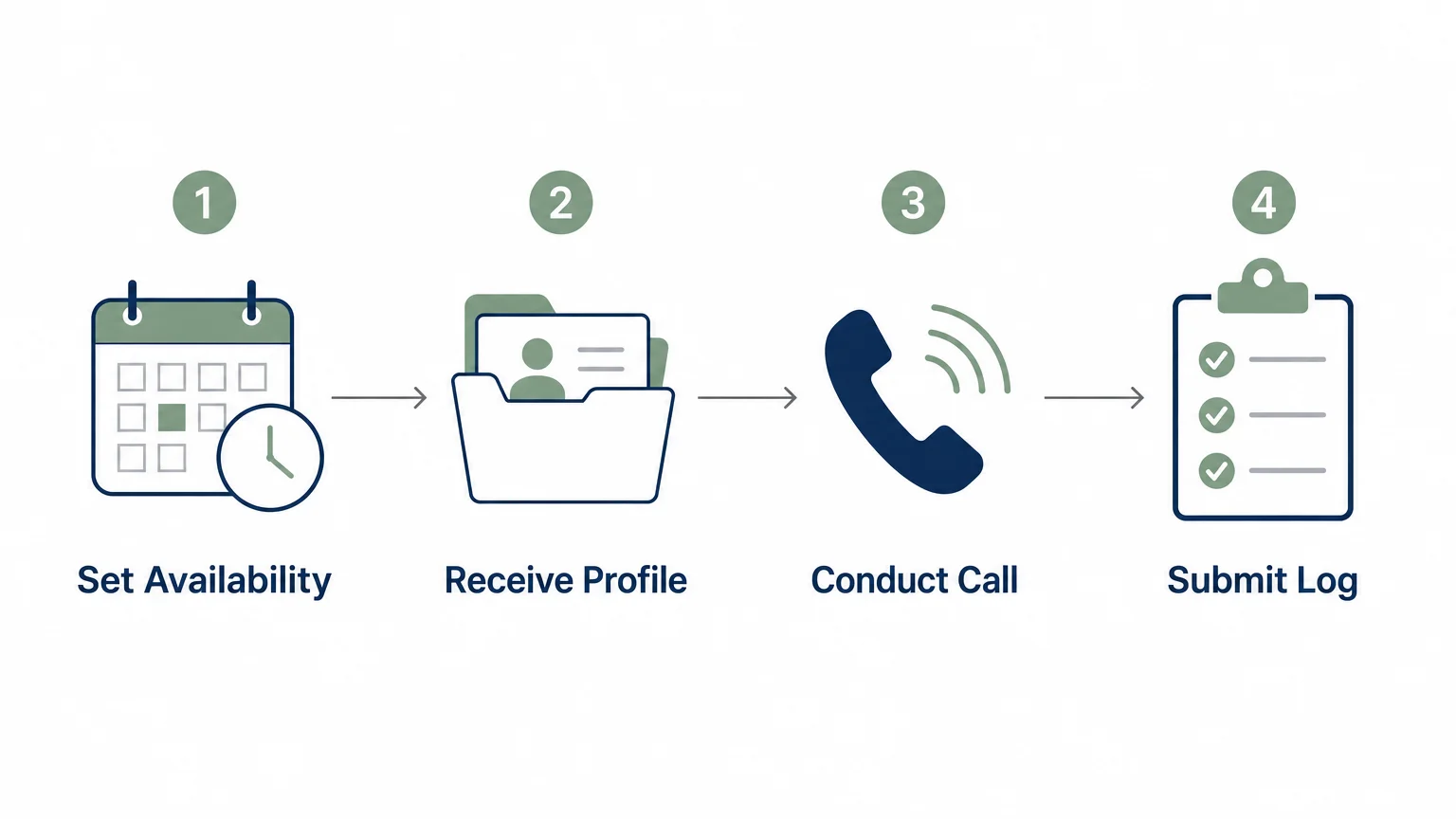
Most of these positions operate as independent contractor roles within the gig economy, though some traditional home care agencies hire part-time W-2 employees for telehealth check-ins. When you work through a modern gig platform, you typically log into a smartphone app or website, set your availability, and accept “visits” or phone shifts that fit your schedule. Families or care coordinators provide you with a brief profile of the senior, their interests, and any specific items to check on—such as reminding them to drink water or take their noon medication.
Calls generally last anywhere from fifteen minutes to an hour. A typical shift might involve calling a retired teacher to discuss the book she is reading, calling a homebound veteran to listen to his stories from his service days, and calling a senior with early-stage memory loss to ensure they have eaten lunch. Your primary directive is to provide engaging conversation and log a brief report after the call noting their general disposition.
Exploring Your Employment Options
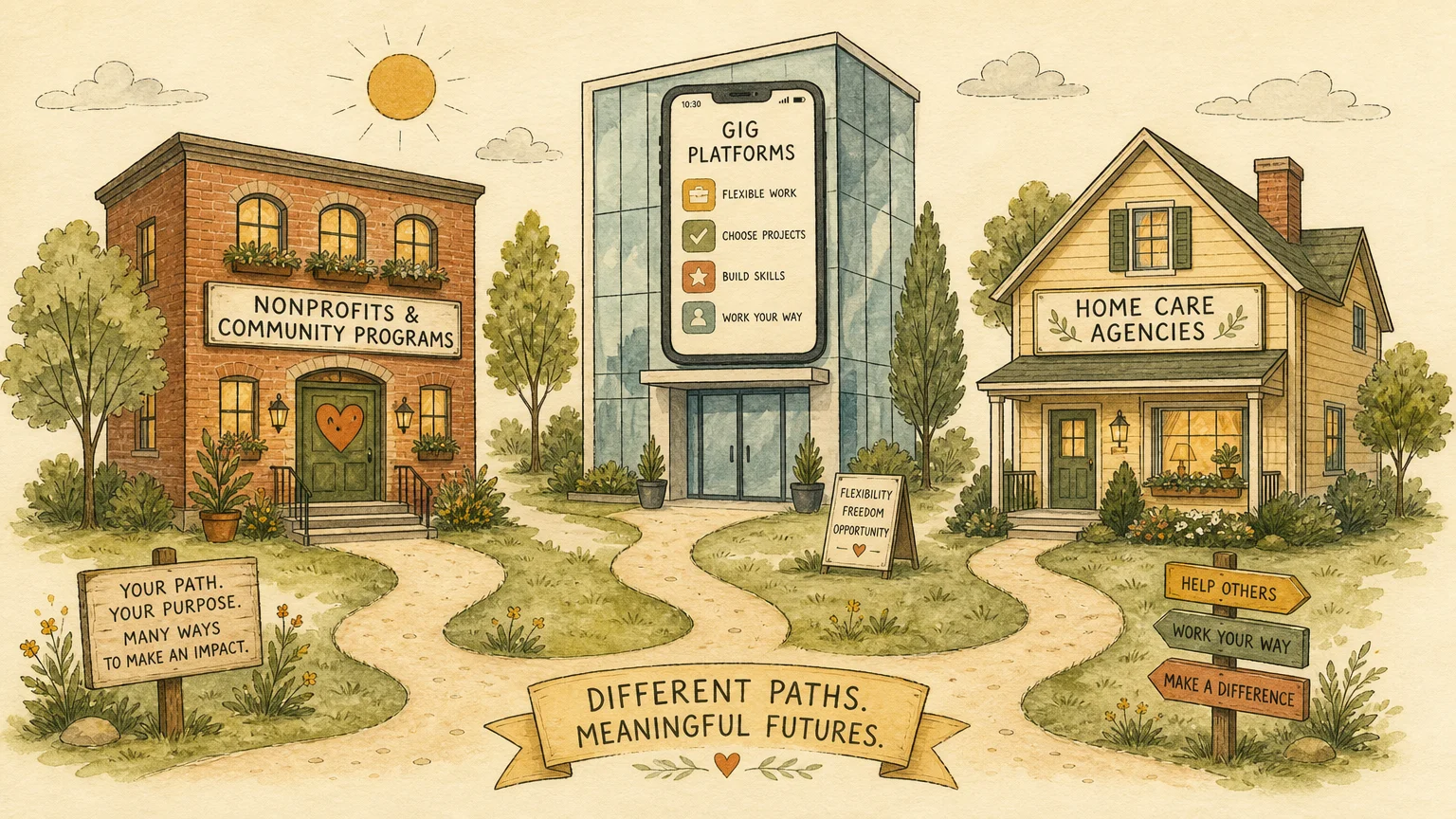
Finding legitimate work from home in this field requires knowing where to look. The market splits into three primary categories: gig economy platforms, traditional home care agencies, and federal stipend programs.
Private gig platforms like Papa (where workers are called “Papa Pals”) have popularized the concept of paid companionship. While many of their requests involve in-person visits for light housework or transportation, they also offer virtual visits focused entirely on phone or video companionship. Similarly, platforms like Care.com allow you to create an independent profile offering telephone reassurance services directly to families, letting you set your own hourly rate.
Traditional home care agencies increasingly hire remote staff to handle their telephone reassurance programs. Because agencies handle highly vulnerable populations, these roles often feature stricter schedules, mandatory training on HIPAA regulations, and formal reporting procedures. However, they also tend to offer more consistent hours compared to gig platforms.
If you are aged 55 or older, you might also consider the federal AmeriCorps Seniors program. Their Senior Companion program pairs active older adults with frail seniors. While this is technically a volunteer position, low-income participants receive a tax-free hourly stipend, mileage reimbursement, and insurance coverage while serving. You can learn more about community-based aging programs and social isolation resources through the National Council on Aging (NCOA).
Comparing Remote Companionship Paths
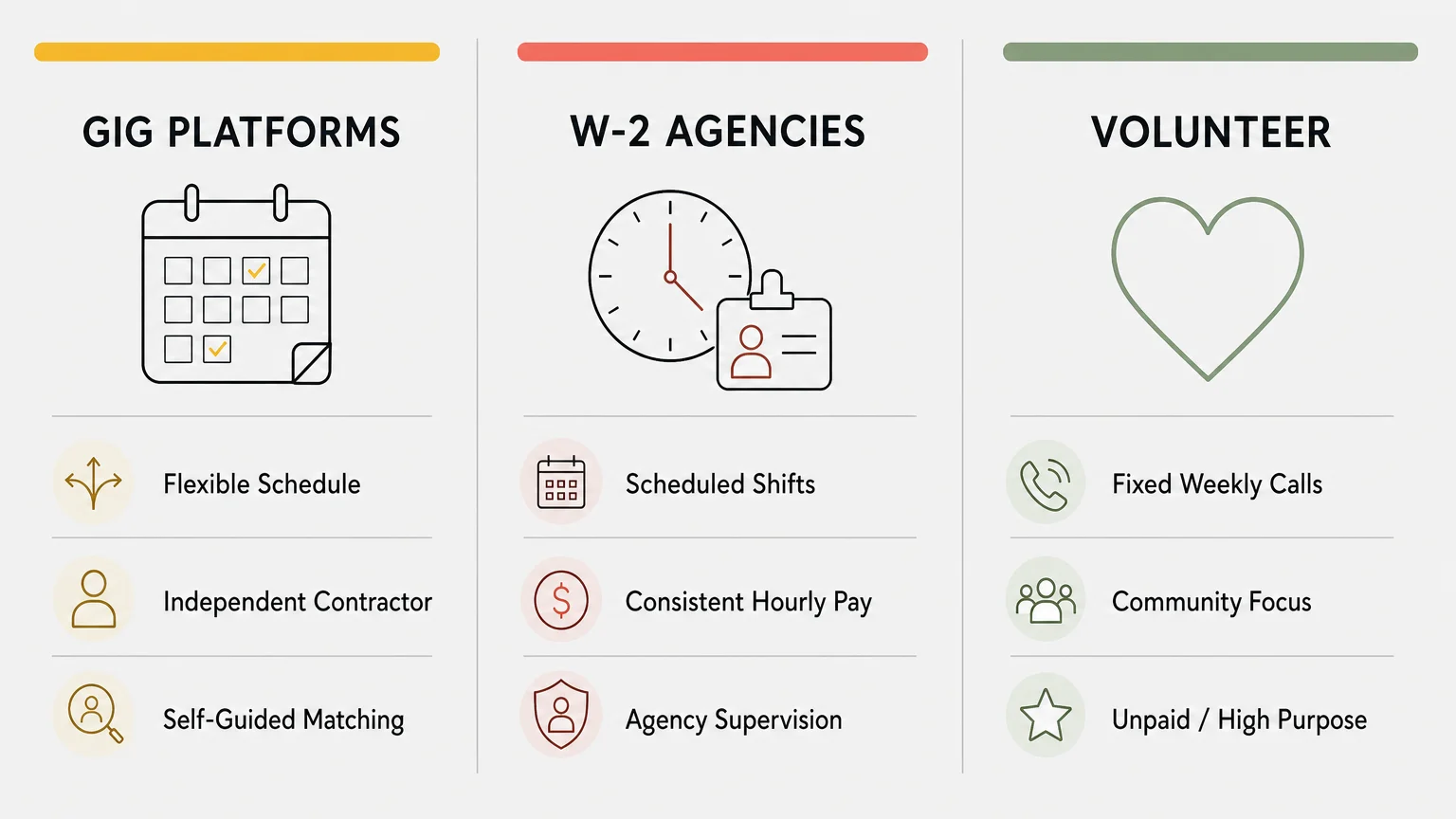
Understanding the differences between these opportunities helps you choose the path that best fits your lifestyle and financial goals. Review the following breakdown to determine which structure aligns with your needs.
| Opportunity Type | Employment Structure | Typical Compensation | Best Suited For |
|---|---|---|---|
| Gig Economy Platforms | Independent Contractor (1099) | $15 to $20 per hour | Those seeking maximum flexibility and irregular hours. |
| Private Care Directories | Self-Employed / Direct Hire | $15 to $25 per hour (You set the rate) | Self-starters willing to market their services directly to families. |
| Home Care Agencies | Part-Time Employee (W-2) | $14 to $18 per hour | Individuals who prefer structured shifts, training, and consistent paychecks. |
| AmeriCorps Seniors | Stipended Volunteer | Small tax-free hourly stipend | Retirees looking to give back while covering their basic participation costs. |

Essential Skills for Telephone Caregivers
Succeeding in senior companionship requires more than just a pleasant speaking voice. You must navigate complex emotional landscapes, adapt to cognitive changes, and maintain professional boundaries while fostering genuine connections.
- Active Listening: Seniors often repeat stories or speak slowly. You must listen with intent, asking thoughtful follow-up questions that make them feel heard and valued rather than rushed.
- Emotional Intelligence: You will encounter seniors experiencing grief, frustration over their loss of independence, or anxiety. You must remain calm, validate their feelings, and steer conversations toward positive or neutral topics when appropriate.
- Basic Tech Proficiency: Operating as a remote worker means managing your schedule through apps, submitting digital reports, and occasionally guiding a senior through using video call software like Zoom or FaceTime.
- Crisis De-escalation: If a senior falls while on the phone with you or expresses severe distress, you must know how to remain calm while following your agency’s emergency contact protocols to dispatch local help.
- Boundary Setting: Empathy makes you good at your job, but it can also lead to burnout. You must maintain professional boundaries, avoiding the temptation to give medical advice, share excessive personal details, or call clients outside of your paid hours.
Setting Up Your Work-From-Home Station
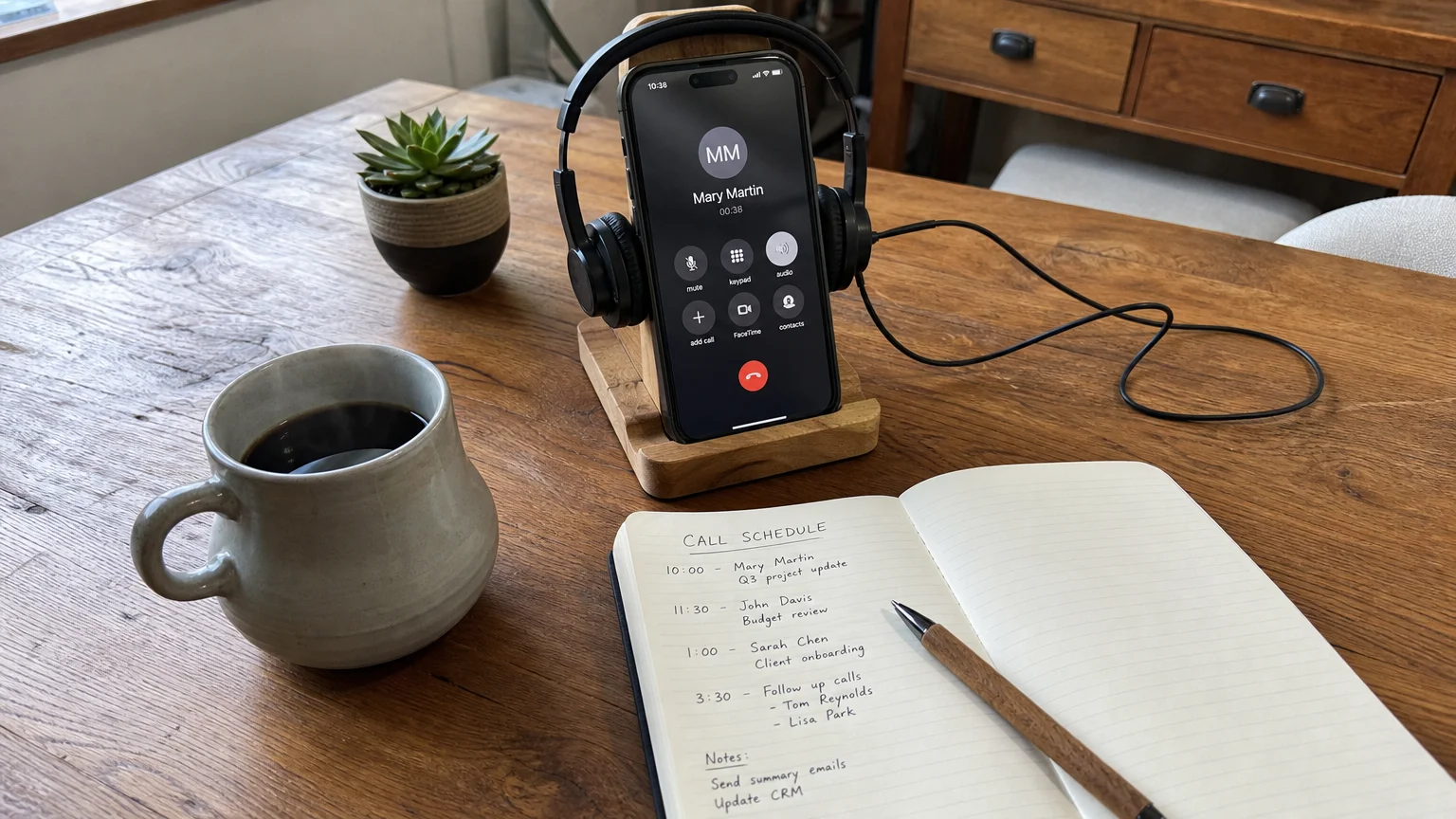
Treat this role with the same professionalism as any office job. Since your voice is your primary tool, your environment heavily dictates the quality of your work. Create a dedicated workspace that minimizes distractions and maximizes audio clarity.
First, secure a quiet room with a door you can close. Background noise—such as barking dogs, blaring televisions, or running dishwashers—distracts seniors who may already struggle with hearing loss. Invest in a high-quality, noise-canceling headset. Relying on a standard cell phone speakerphone degrades audio quality and forces you to strain your voice.
Next, ensure your internet and cellular connections remain stable. Dropped calls confuse and frustrate older adults, potentially causing them anxiety if they think they broke their phone. Keep a notebook or a digital document open during your shifts to jot down key details from your conversations. Remembering the name of a client’s grandchild or asking about a doctor’s appointment they mentioned last week proves that you genuinely care about their life.
Handling the Tax Realities of Gig Work
If you choose to offer senior companionship through gig apps or private directories, you will likely operate as an independent contractor. This classification significantly changes how you manage your finances compared to traditional employment.
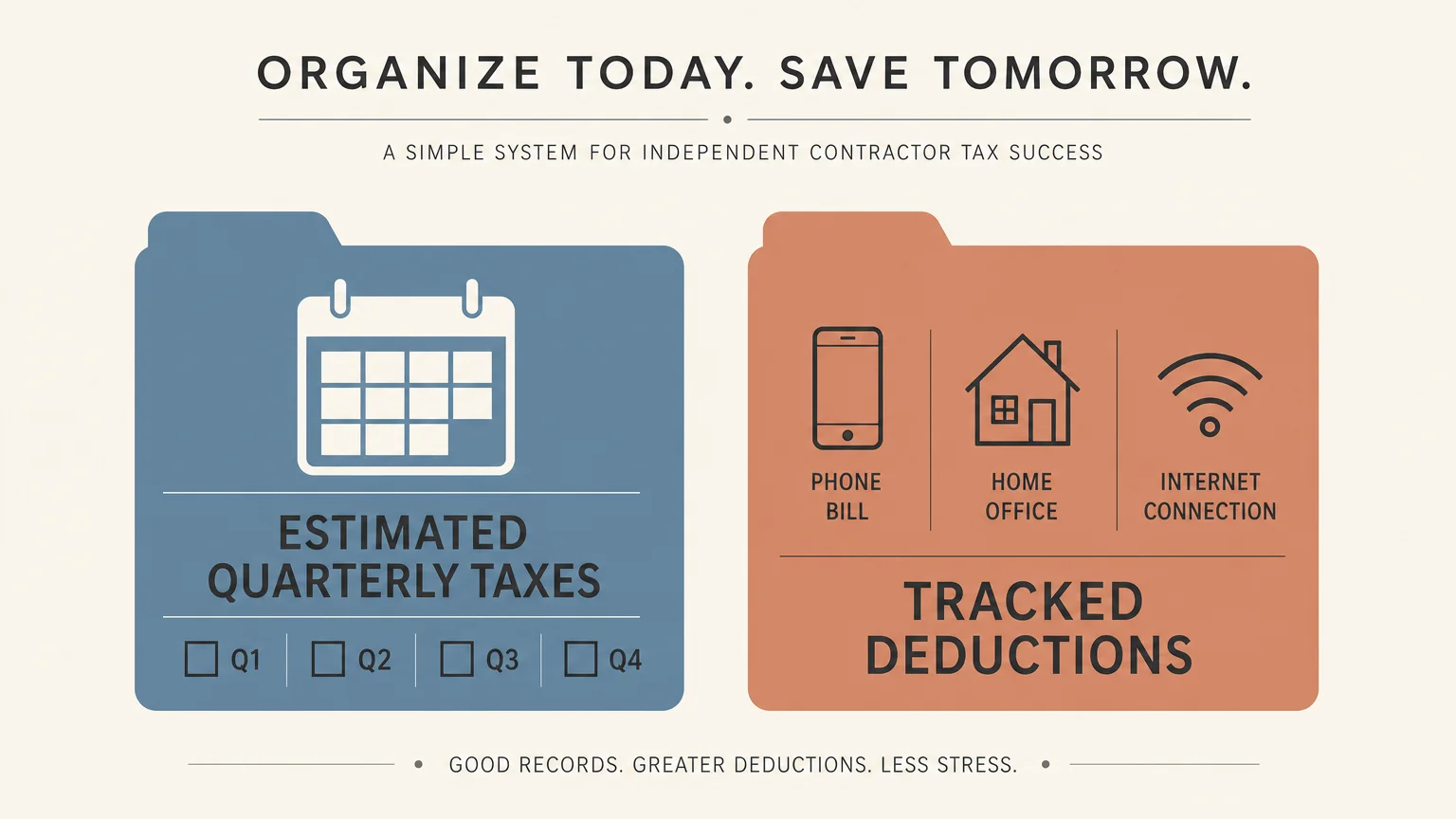
As an independent contractor, your clients or platforms will not withhold taxes from your paychecks. When tax season arrives, you will receive a 1099 form instead of a W-2. You bear the responsibility for paying both your income tax and self-employment tax, which covers your Medicare and Social Security contributions. The Internal Revenue Service (IRS) requires most independent contractors to make estimated quarterly tax payments if they expect to owe more than a certain amount at the end of the year.
To avoid a massive tax bill in April, open a separate savings account dedicated solely to taxes. A safe rule of thumb involves setting aside twenty-five to thirty percent of every payment you receive. Additionally, track any expenses related to your remote jobs. Portions of your internet bill, your headset, and your home office space may qualify as tax deductions, lowering your overall tax burden. Consult a tax professional to ensure you maximize your deductions while remaining fully compliant with IRS regulations.

Common Mistakes to Avoid
Working closely with vulnerable populations requires strict adherence to ethical and safety guidelines. Even well-intentioned telephone companions can inadvertently cause problems if they lack awareness of industry standards. Protect yourself and your clients by avoiding these common pitfalls.
Overstepping Medical Boundaries
Seniors will frequently complain about aches, pains, or new medications during your calls. You must never offer medical advice, diagnose a condition, or suggest they alter their medication schedule. Your role centers on companionship and reassurance. If a senior reports concerning symptoms, document the information in your post-call report and notify their designated family member or care coordinator immediately.
Ignoring Signs of Cognitive Decline
Because you speak to the client regularly, you often become the first person to notice subtle changes in their mental acuity. Do not brush off sudden confusion, extreme forgetfulness, or paranoia as simply “having a bad day.” If a normally articulate senior suddenly struggles to form sentences or sounds disoriented regarding the time and date, escalate the issue through your platform’s reporting channels. Early intervention prevents accidents.
Failing to Follow Unanswered Call Protocols
A core function of a telephone reassurance program involves verifying the senior’s safety. If you call at the scheduled time and receive no answer, you cannot simply log off and move to the next task. You must follow the exact protocol provided by the family or agency. This usually involves waiting five minutes, calling a second time, and if there is still no answer, calling the designated emergency contact or requesting a local wellness check. Never assume they just forgot the appointment.
Protecting Yourself From Work-From-Home Scams
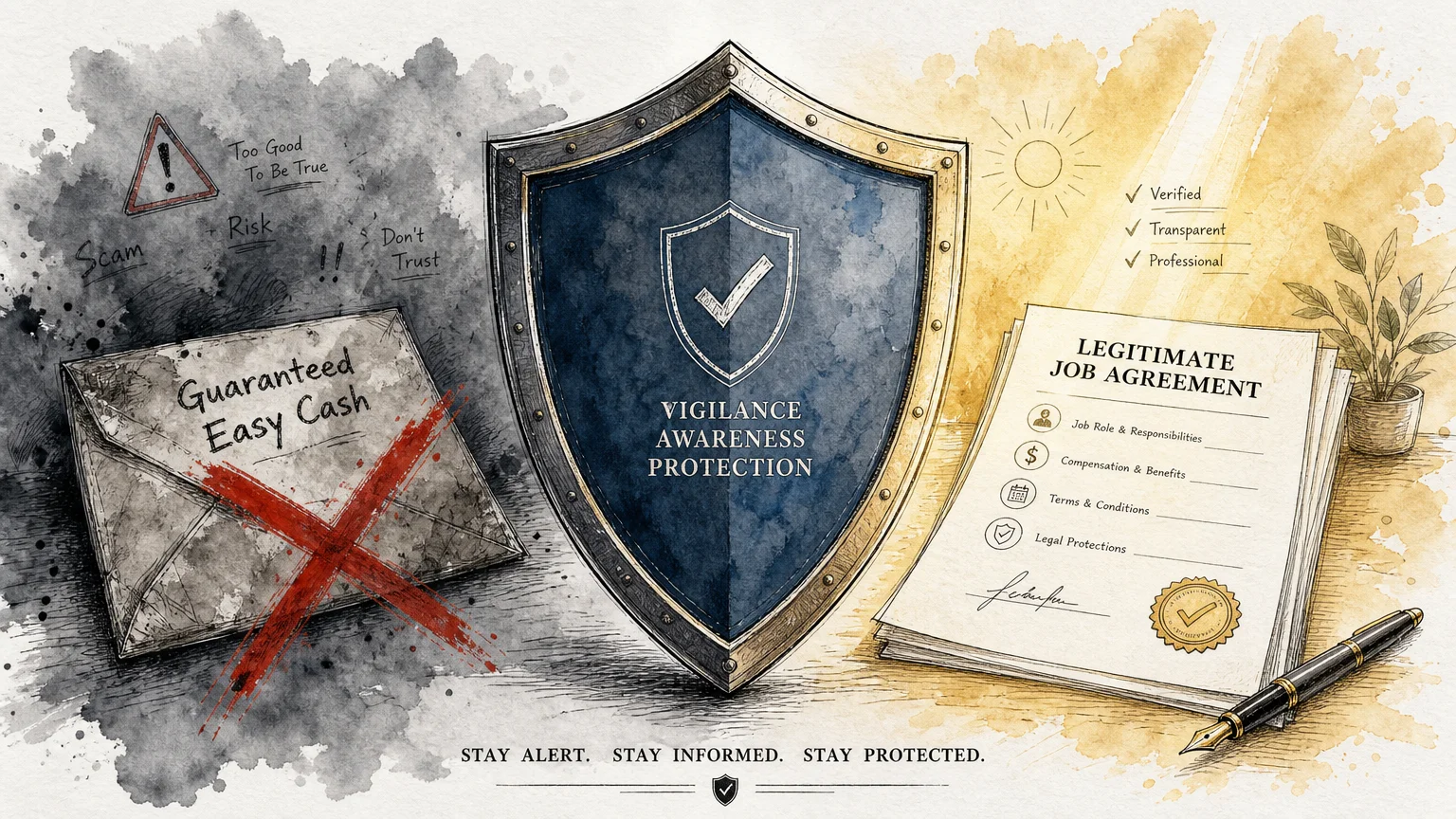
The rise in remote work has unfortunately triggered a parallel rise in employment scams. Criminals frequently target individuals searching for work-from-home opportunities, knowing that applicants desire flexibility and quick onboarding.
Legitimate companionship platforms will never ask you to pay an application fee, purchase specialized software from their “approved vendor,” or send you a large check to buy office equipment with instructions to wire the remainder back. Thoroughly research any agency before handing over your Social Security number or banking details. Look for established companies with verified reviews, clear payment terms, and responsive support channels.
You can verify the legitimacy of many aging-related organizations through resources provided by the AARP or by checking their standing with the Better Business Bureau. If an opportunity promises unusually high pay for very little effort, trust your instincts and walk away.
Frequently Asked Questions
Do I need nursing or medical credentials to become a telephone companion?
No. Telephone reassurance programs explicitly avoid providing medical care. You do not need a nursing degree, CPR certification, or medical background to perform these roles. Empathy, reliability, and excellent communication skills serve as your primary qualifications.
What happens if the senior is experiencing an emergency during my call?
Every legitimate agency or platform equips you with a specific emergency protocol. If a senior is actively distressed, injured, or unresponsive, you will typically keep the line open, use a secondary device to call emergency services to their home address, and immediately notify their primary family contact.
Can I choose who I talk to and when I work?
If you work through gig platforms or private directories, you enjoy immense flexibility. You can view client profiles, choose assignments that match your interests, and set your own hours. Traditional agency employees usually have less flexibility but enjoy more predictable schedules and consistent client rosters.
Will my own Social Security benefits be impacted if I earn money this way?
If you have reached your full retirement age, you can earn an unlimited amount of money without a reduction in your Social Security benefits. However, if you claim benefits early and work, the Social Security Administration imposes an annual earnings limit. If you exceed that limit, they temporarily withhold a portion of your benefits. Always verify current earning limits on the official SSA website to plan your work hours accordingly.
Building Meaningful Connections From Home
Working as a telephone companion offers a rare combination of flexible income and profound emotional reward. You get to utilize the wisdom, patience, and conversational skills you have built over a lifetime to directly improve the quality of a vulnerable person’s day. Whether you view this as a side hustle to fund your hobbies, a way to bridge the gap until you claim your own retirement benefits, or simply a structured method to give back to your community, telephone reassurance programs provide genuine value to everyone involved.
Take the time to evaluate the different platforms, update your resume to highlight your communication skills, and set up a quiet corner of your home for your calls. The loneliness epidemic requires a human solution, and your voice might be exactly what an isolated senior needs to hear today.
The information in this guide is meant for educational purposes. Your specific circumstances—including income, health needs, tax situation, and goals—may require different approaches. When in doubt, consult a licensed professional.
Last updated: March 2026. Retirement benefits, tax rules, and healthcare regulations change frequently—verify current details with official sources.







Leave a Reply