
Every autumn, millions of retirees eagerly anticipate the annual Social Security Cost-of-Living Adjustment. Yet within months of receiving that adjustment, the extra cash often vanishes without improving long-term financial security.
The COLA raise exists solely to protect your baseline purchasing power against persistent inflation. Treating this modest increase like surplus spending money causes common budgeting traps that silently erode your savings.
Understanding how retirees waste money after an annual raise helps you protect every dollar. Learn how to avoid seven costly COLA raise mistakes and keep your retirement budget strong.

The Essentials: The Reality of Your Annual Raise
Managing your Social Security COLA spending requires a proactive strategy. Understanding these common pitfalls will keep your household budget resilient throughout the year.

1. Treating Your COLA as Bonus Spending Money
Many retirees view the annual bump as extra disposable income for vacations or luxury purchases. However, the raise is merely an inflation offset designed to match rising grocery, energy, and utility bills.
Spending your COLA increase on nonessential items creates an immediate budget deficit. When everyday prices climb later in the year, your fixed income will struggle to keep pace.
Financial educators recommend locking your routine spending baseline before allocating a single extra dollar. Allocate the raise toward rising essentials before you consider any discretionary splurges.

2. Forgetting About the Medicare Part B Deduction Spike
When the Social Security Administration announces a cost-of-living increase, retirees celebrate the headline percentage. Unfortunately, your gross benefit increase rarely matches the actual cash deposited into your bank account.
Most retirees have their Medicare Part B premiums deducted automatically from their Social Security checks. The standard monthly premium is $185.00, which reduces your net monthly gain.
If your gross raise was $50 per month, an increase in healthcare premiums instantly claws back a significant portion. Failing to check your updated net deposit on Medicare.gov can throw off your monthly budget.
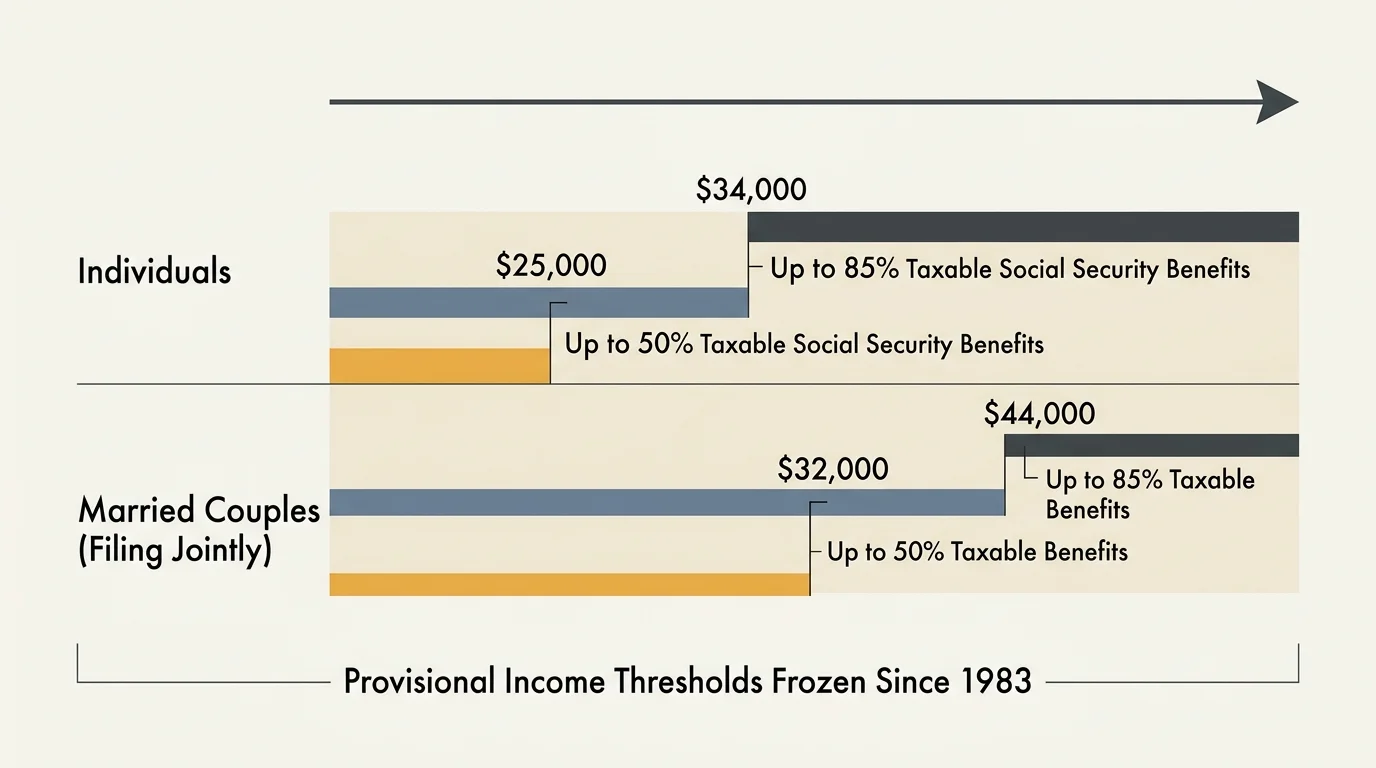
3. Stepping Straight into the Social Security Tax Torpedo
A higher monthly benefit check can trigger an unwelcome tax surprise known as the tax torpedo. The federal income thresholds for taxing Social Security benefits have remained frozen since 1983.
If your combined provisional income exceeds $25,000 as an individual or $32,000 as a married couple, up to 50% of your benefits become taxable. Cross $34,000 or $44,000, and that rate jumps to 85%.
A modest COLA boost can nudge your total income across these rigid thresholds. You may end up paying new federal taxes on benefits that were previously untaxed.
You should review guidelines with the Internal Revenue Service to determine if withholding adjustments are necessary.

4. Ignoring the Mismatch Between the CPI-W and Senior Expenses
The government calculates the COLA using the Consumer Price Index for Urban Wage Earners and Clerical Workers (CPI-W). This measurement reflects the buying habits of working-age urban employees rather than older adults.
Working households spend heavily on commuting, work attire, and technology. In contrast, retirees spend a much larger percentage of their income on prescription medications, medical care, and home upkeep.
Because healthcare and housing costs historically rise faster than general inflation, your COLA may lag behind real living expenses. Assuming the raise fully covers your personal inflation rate leads to underfunded budgets.

5. Carrying High-Interest Debt While Letting Extra Cash Disappear
Absorbing your raise into daily miscellaneous spending while carrying credit card balances is a costly mistake. High-interest revolving debt can compound faster than any cost-of-living adjustment can compensate for.
Channelling a $40 or $50 monthly raise directly toward your highest-interest credit balance yields an immediate, guaranteed return. Eliminating debt interest frees up cash flow permanently for your future years.
“You must gain control over your money or the lack of it will forever control you.” — Dave Ramsey, Personal Finance Author
Dedicating your raise to debt reduction eliminates monthly interest burdens permanently. Once the balance reaches zero, that money remains in your wallet every single month.

6. Allowing Subscriptions and Lifestyle Creep to Absorb the Gain
When a monthly deposit increases, streaming services, utility providers, and club memberships often raise their rates concurrently. Retirees frequently let these automatic rate hikes absorb their entire COLA without noticing.
Conducting an annual audit of your bank and credit card statements stops this passive financial drain. Canceling unused services ensures your cost-of-living adjustment stays under your direct control.

7. Neglecting Your Out-of-Pocket Healthcare Reserve
Medicare Part B deductibles, prescription tier shifts, and dental needs expand over time. The annual Part B deductible of $257 is just one example of unavoidable out-of-pocket costs.
Spending your COLA on routine items leaves you vulnerable when an unexpected medical bill arrives. Setting up an automatic transfer of your raise into a dedicated healthcare savings account builds an essential buffer.
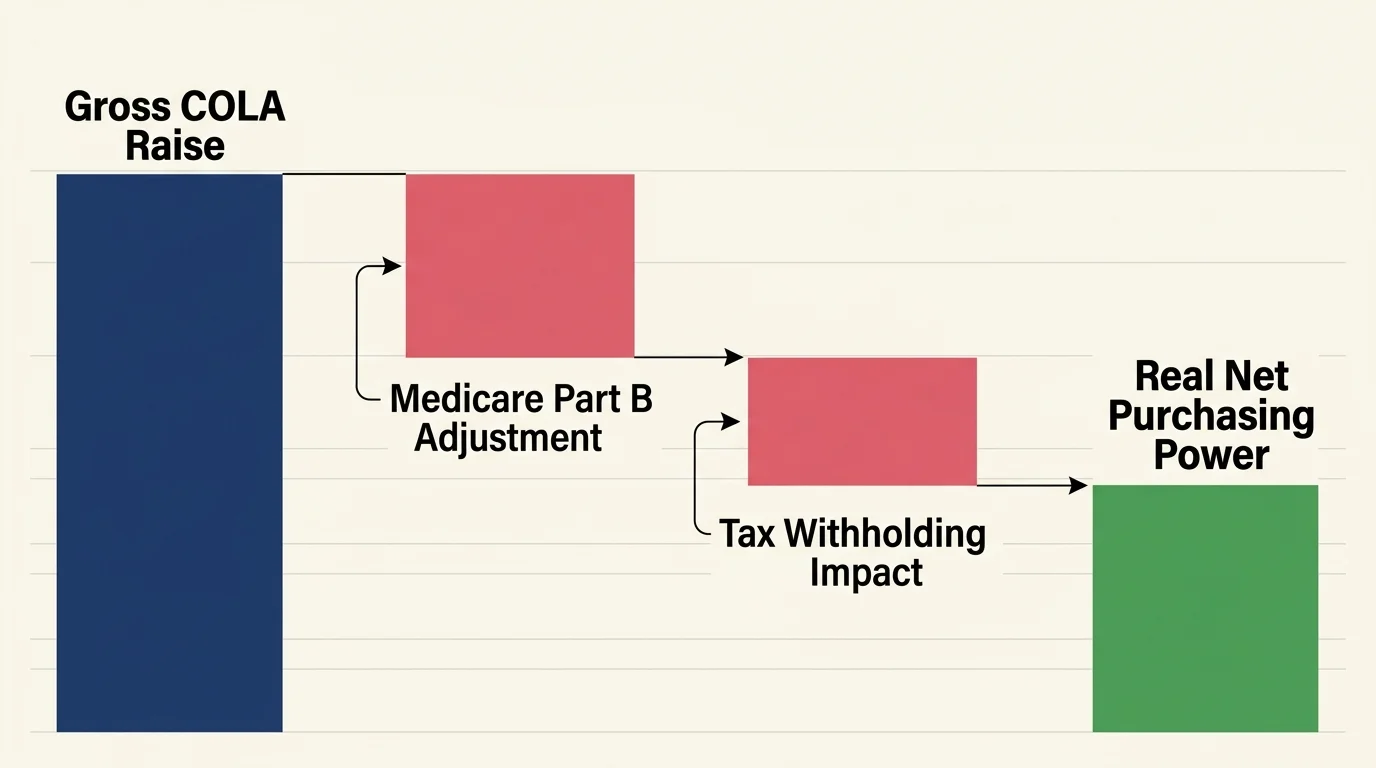
Comparison: Gross COLA Raise vs. Net Monthly Reality
Understanding the difference between headline COLA announcements and your actual take-home pay is vital. The table below illustrates how mandatory deductions and inflation alter an average monthly adjustment.
| Adjustment Factor | Gross Headline Estimate | Real Pocket Impact | Recommended Action |
|---|---|---|---|
| Standard 2.5% COLA Increase | +$50.00 / month | Gross benefit increase before deductions | Calculate true net amount in your SSA account |
| Medicare Part B Premium | -$10.30 / month | Direct deduction from monthly benefit check | Adjust baseline monthly income downward |
| Provisional Income Tax Bracket | 0% to 85% taxable | Potential federal tax bill on benefit gains | Review provisional income limits with a tax preparer |
| Senior Inflation (Medical/Housing) | Variable | Higher actual expense increases than CPI-W | Direct remaining net raise to rising utility bills |

What Can Go Wrong: The Long-Term Impact of COLA Mismanagement
Ignoring these financial leakages causes cumulative damage over a multi-decade retirement. When you let your raise disappear, several preventable financial setbacks can occur:
- Depleting emergency savings to cover predictable utility and grocery increases.
- Facing an unexpected tax bill in April due to crossing provisional income limits.
- Falling behind on credit card minimums as interest rates climb.
- Being forced to make premature, taxable withdrawals from traditional retirement accounts.
Small missteps compounded over ten or fifteen years can shorten the lifespan of your retirement portfolio. Protecting your COLA today prevents severe budget compromises down the road.

When to Consult a Professional
Navigating retirement taxes and benefit rules can become complicated quickly. You should consider meeting with a fee-only financial planner or tax professional in the following situations:
- Your combined provisional income approaches the $25,000 or $32,000 federal tax thresholds.
- You reside in one of the eight states that still tax Social Security benefits.
- You need guidance on coordinating Required Minimum Distributions with Social Security to minimize brackets.
- You struggle to balance rising Medicare out-of-pocket costs against fixed income sources.
A qualified adviser certified through the Certified Financial Planner Board can help you design a customized tax-efficient withdrawal plan.
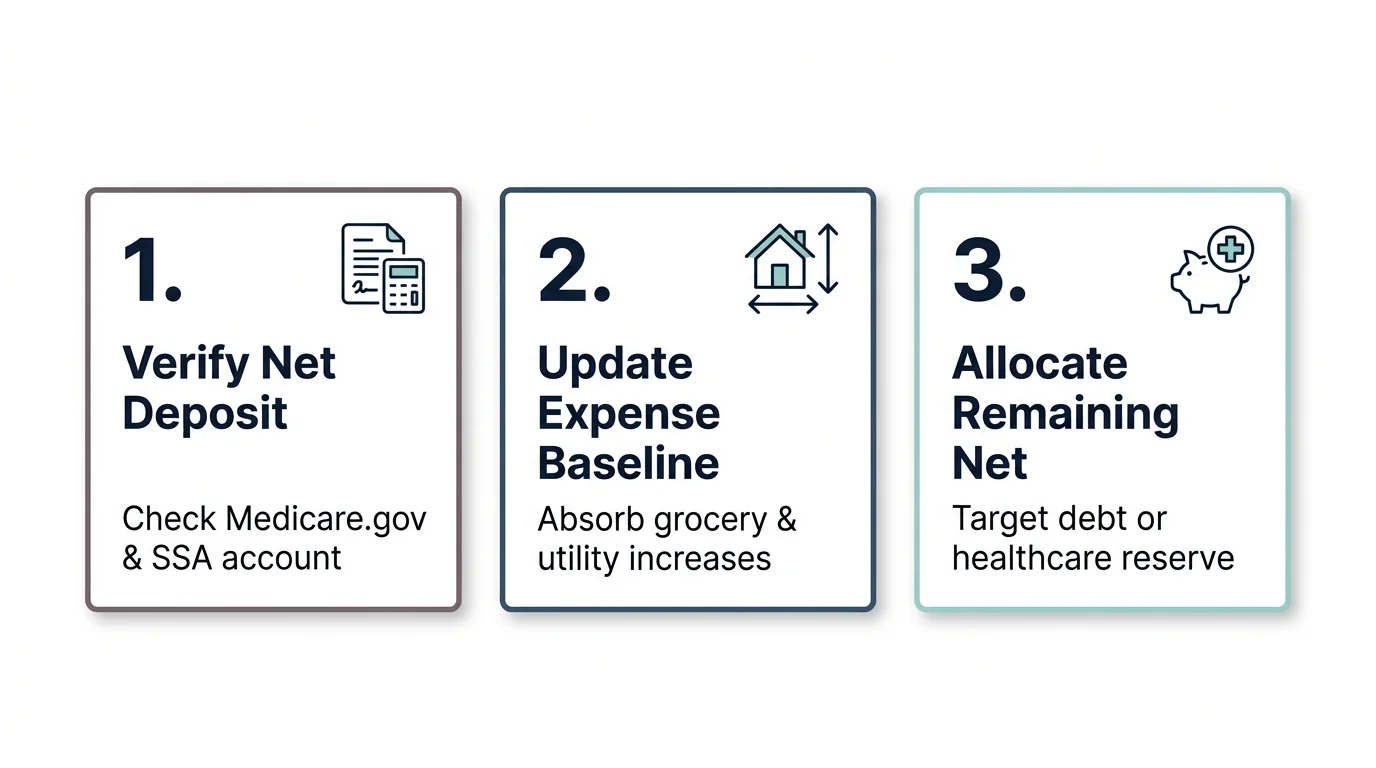
Smart Action Steps for Budgeting Social Security COLA
You can make your cost-of-living increase work harder by establishing intentional financial habits. Implement these actionable Social Security increase tips as soon as the SSA announces new rates:
- Check your net deposit amount: Log into your personal SSA account in December to verify your exact take-home pay after Medicare deductions.
- Update your monthly spending plan: Adjust your baseline categories for groceries and utilities before allocating discretionary funds.
- Automate emergency savings: Route the net increase directly into a high-yield savings account on deposit day.
- Review tax withholdings: Ask your tax preparer if you need to submit Form W-4V to avoid surprises in April.
- Perform a recurring subscription sweep: Eliminate unused memberships and streaming packages to offset vendor price increases.
Proactive planning ensures that every dollar of your raise serves a clear financial purpose. Small, deliberate actions preserve your hard-earned purchasing power.
Frequently Asked Questions About Social Security COLA
Does everyone receive the same dollar increase from the COLA?
No. The COLA is a percentage calculation based on your individual gross benefit amount. Retirees with higher baseline benefits receive a larger gross dollar adjustment than those with lower monthly benefits.
Why did my Social Security check not increase by the full COLA percentage?
Medicare Part B premiums and federal tax withholdings are deducted before your payment arrives. Increases in these expenses frequently consume a substantial portion of your gross raise.
Can a COLA increase make my Social Security benefits taxable?
Yes. Because federal provisional income thresholds remain static, a COLA raise can push your total income past the taxation thresholds. This makes up to 85% of your benefits subject to federal income tax.
Which states still tax Social Security benefits?
As of 2026, eight states tax some portion of Social Security benefits: Colorado, Connecticut, Minnesota, Montana, New Mexico, Rhode Island, Utah, and Vermont. Taxability depends on your overall adjusted gross income.
Protecting Your Financial Future
Your annual cost-of-living adjustment is a vital tool designed to preserve your lifestyle against persistent inflation. Taking intentional steps with your raise safeguards your financial independence throughout retirement.
This educational content reflects general retirement principles; individual results vary based on your personal financial situation. Always verify current benefit rules, tax laws, and eligibility requirements with official sources like SSA, Medicare.gov, or the IRS.
Last updated: March 2026. Retirement benefits, tax rules, and healthcare regulations change frequently—verify current details with official sources.









Leave a Reply