
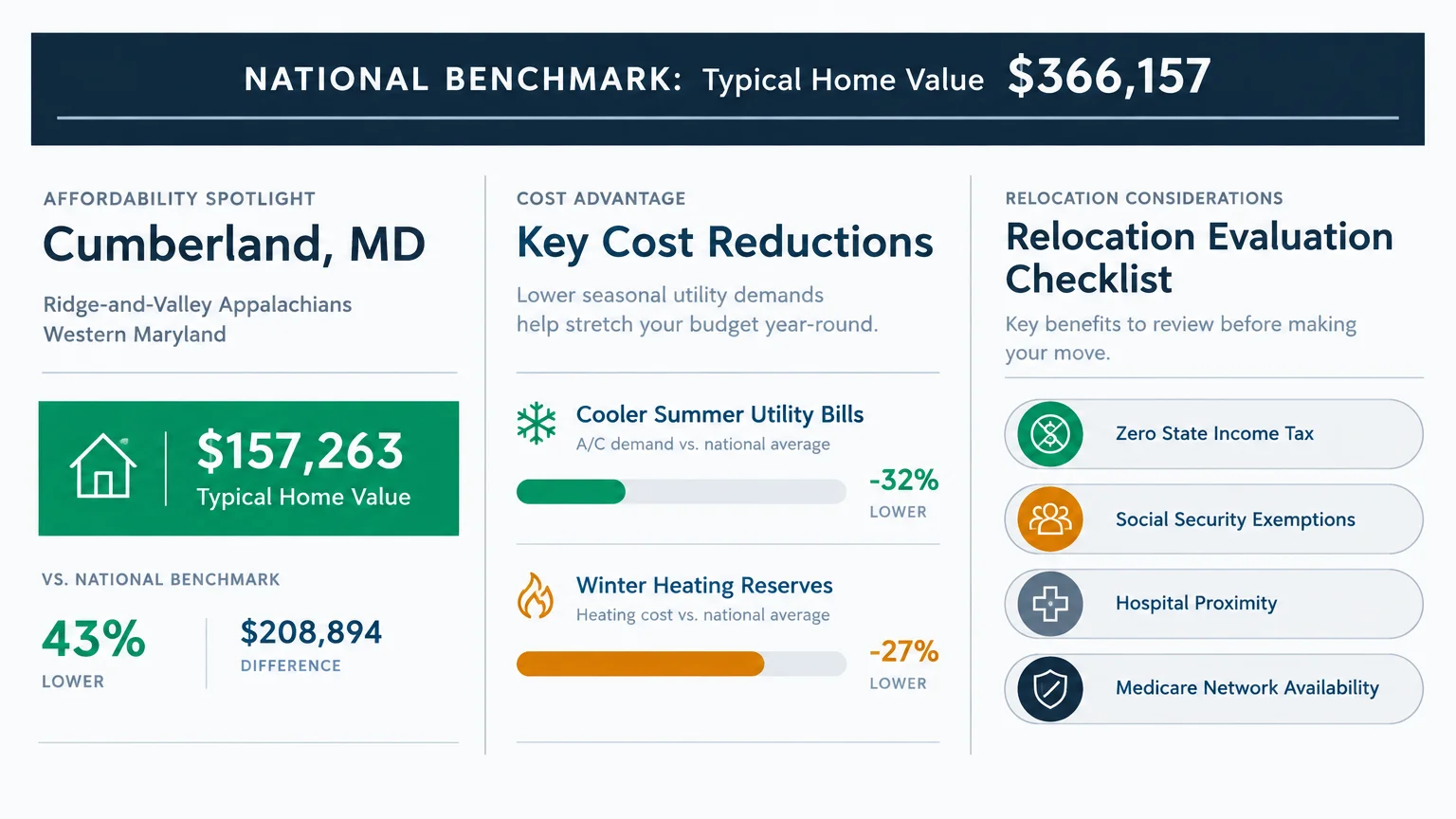
You can retire in the mountains without exhausting your nest egg on expensive resort real estate. Several scenic mountain towns offer crisp alpine air, rich outdoor recreation, and housing costs far below the national typical home value of $366,157.
Choosing the right mountain retreat involves balancing housing prices against state taxes, local healthcare access, and elevation shifts. Finding that balance allows you to protect your fixed income while enjoying sweeping ridgeline vistas every morning.
This guide highlights fifteen affordable mountain towns across America where natural beauty meets sensible living costs. Each community provides an inviting setting to stretch your retirement dollars.

Why Mountain Living Appeals to Retirees
Mountain living delivers a refreshing change of pace from congested suburban centers and humid coastal corridors. Crisp morning breezes, four distinct seasons, and quiet wooded landscapes create a restorative backdrop for your daily routine.
Active adults benefit directly from immediate access to nature. Living near mountain trails encourages regular walking, hiking, and fishing, which helps maintain mobility and cardiovascular health throughout your retirement years.
Small mountain communities also foster close-knit social connections. You will frequently find volunteer groups, community garden clubs, and local arts councils eager to welcome new residents.
Many mountain towns feature lower property tax burdens and utility bills than major metropolitan areas. Cooler summer temperatures often reduce your reliance on expensive air conditioning.
Financial Factors to Evaluate Before Moving to the Peaks
Relocating to an elevation requires looking closely at your recurring monthly expenses. Housing costs often dominate the conversation, but everyday utilities, groceries, and property maintenance also shape your real cost of living.
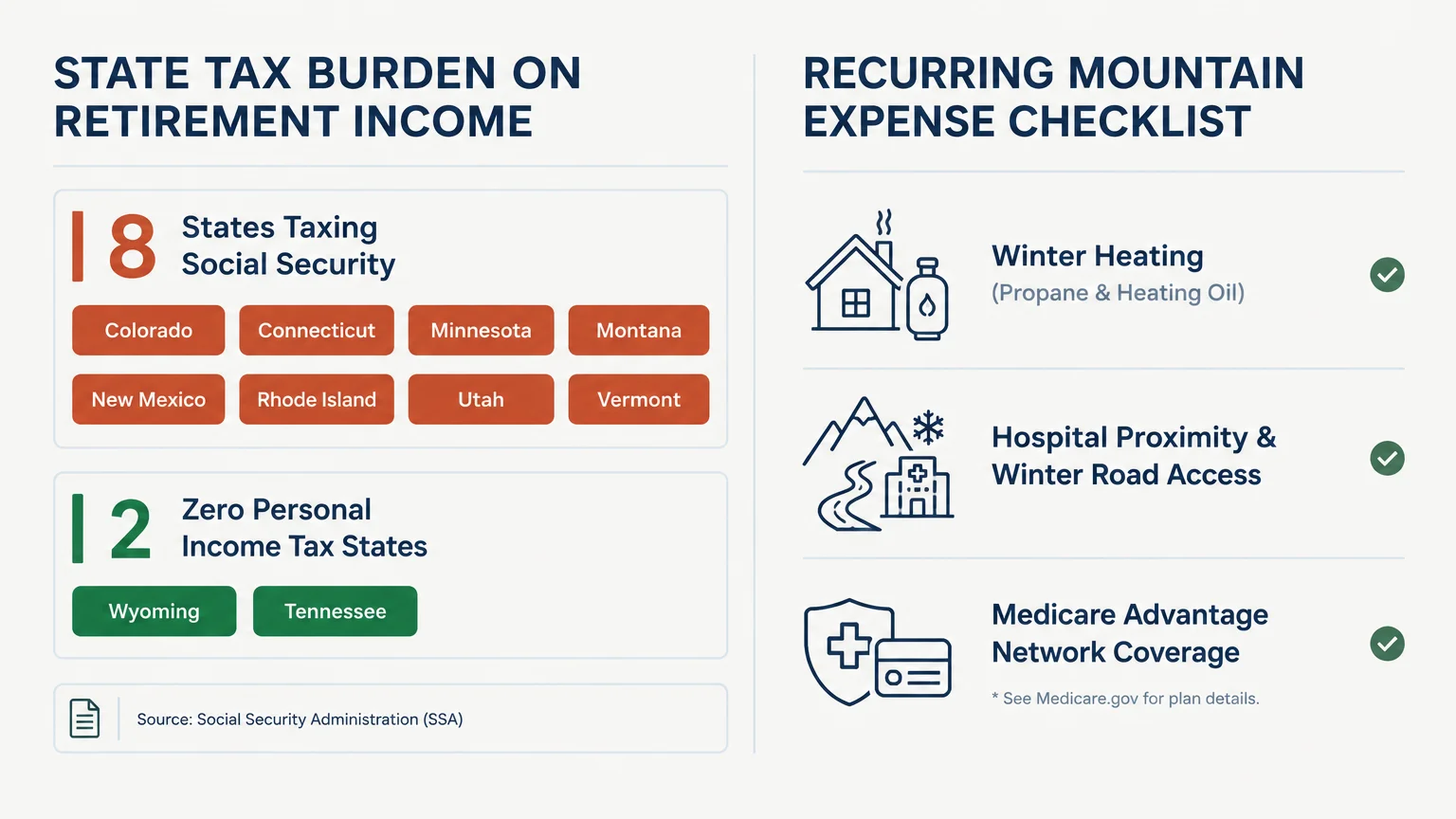
Winter heating bills can surprise newcomers from warmer climates. Propane delivery, heating oil, and seasonal snow clearing require room in your monthly budget.
State tax policies significantly affect how far your retirement income goes. Only eight states still tax Social Security benefits at the state level: Colorado, Connecticut, Minnesota, Montana, New Mexico, Rhode Island, Utah, and Vermont.
States like Wyoming and Tennessee levy zero personal income tax, shielding your pension payments and individual retirement account withdrawals. You can check current tax guidance and benefit calculators through the Social Security Administration.
Healthcare accessibility is equally essential when leaving larger metropolitan areas. Mountain roads can become treacherous during winter storms, making proximity to a full-service regional hospital critical for peace of mind.
Research Medicare plan networks before purchasing a mountain home, as rural counties often feature fewer Medicare Advantage options. You can compare local network coverage and prescription formularies directly on Medicare.gov.
“Retirement is not the end of the road; it’s the beginning of the open highway.” — Mitch Anthony, Author of The New Retirementality
15 Affordable Mountain Towns for Retirees
The following fifteen towns offer remarkable alpine scenery alongside housing values that sit comfortably below national real estate benchmarks. Each location provides unique cultural amenities, geographic appeal, and retirement-friendly financial advantages.
1. Cumberland, Maryland
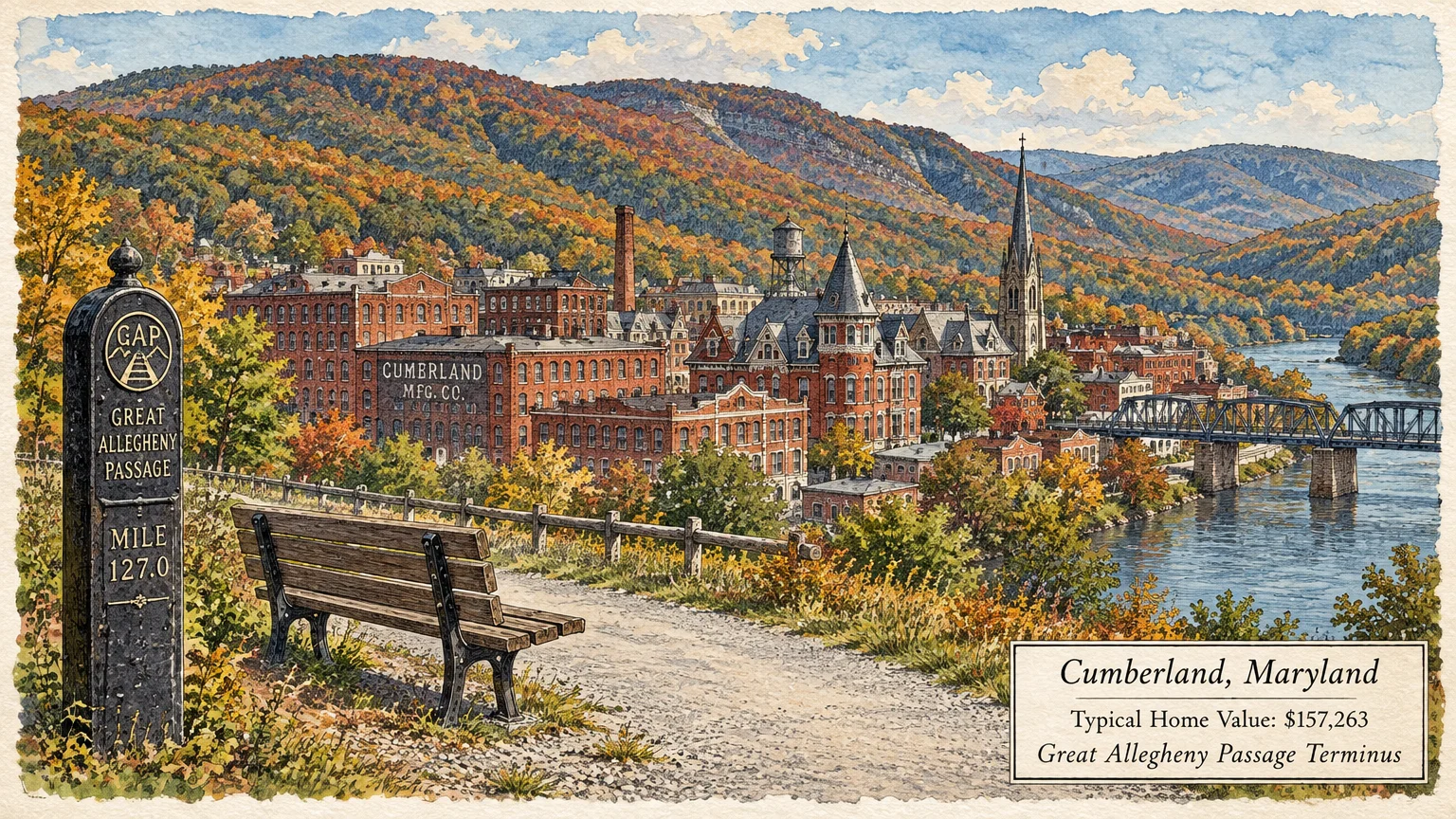
Nestled in Western Maryland along the Ridge-and-Valley Appalachians, Cumberland combines storied industrial architecture with immediate access to pristine wilderness. It serves as a terminus for the Great Allegheny Passage trail.
With a typical home value of $157,263, Cumberland ranks among the most budget-friendly mountain escapes in the eastern United States. Local home values rose a modest 3.1% over the past year.
Maryland exempts Social Security benefits from state income taxation, easing the burden on your core retirement checks. Comprehensive medical services are available locally at the UPMC Western Maryland hospital complex.
2. Elkins, West Virginia
Elkins sits inside the Allegheny Mountains, surrounded by the sprawling Monongahela National Forest. The town provides endless trout streams, forest hiking routes, and lively Appalachian music festivals.
Real estate remains exceptionally accessible, featuring a typical home value of $173,574. West Virginia’s statewide housing values consistently rank among the most affordable in the nation.
West Virginia completed the full elimination of state income taxes on Social Security benefits in 2026. Davis Medical Center operates within Elkins, providing general healthcare and emergency response.
3. Mena, Arkansas
Tucked into western Arkansas, Mena anchors the rugged Ouachita Mountain region. The town serves as the eastern gateway to the Talimena National Scenic Byway, celebrated for its autumn foliage.
The typical home value in Mena stands at $195,910, reflecting a 3.5% annual increase. You will find comfortable single-family homes and acreage at prices well below regional resort markets.
Arkansas does not tax Social Security income, allowing you to retain more of your guaranteed cash flow. Mena Regional Health System supplies routine preventative care and modern surgical facilities.
4. Fayetteville, West Virginia
Perched on the rim of the New River Gorge National Park and Preserve, Fayetteville is a dream location for outdoor enthusiasts. The community balances wilderness recreation with independent cafes and bakeries.
Typical home values sit at $203,086 following a 5.0% annual increase. This pricing offers an affordable entry point for living next to a world-class national park.
Retirees benefit from West Virginia’s complete exemption of Social Security benefits from state income tax. Regional medical centers in nearby Oak Hill and Beckley ensure accessible specialized care.
5. Alamogordo, New Mexico
Alamogordo rests in the Tularosa Basin beneath the Sacramento Mountains, just minutes from White Sands National Park. Lincoln National Forest rises immediately to the east, offering cool alpine pines.
Local real estate is remarkably affordable, with a typical home value of $220,091. Values declined 2.2% over the past year, creating favorable conditions for incoming buyers.
While New Mexico taxes Social Security income, single filers earning up to $100,000 and joint filers earning up to $150,000 remain completely exempt. Gerald Champion Regional Medical Center anchors local healthcare.
6. Hot Springs, Arkansas
Surrounded by the forested Ouachita Mountains, Hot Springs blends mountain scenery with historic bathhouses and natural thermal waters. The community features a rich art district and active botanical gardens.
The typical home value in Hot Springs is $242,674, remaining flat over the past year. Buyers seeking private amenities can look to nearby Hot Springs Village, where typical home values average $306,048.
Arkansas protects your Social Security payments by exempting them from state personal income tax. National Park Medical Center and CHI St. Vincent Hot Springs supply comprehensive regional medical care.
7. Morganton, North Carolina
Morganton sits in the foothills of the Blue Ridge Mountains along the edge of Pisgah National Forest. It provides convenient access to the dramatic hiking trails of Linville Gorge.
The typical home value is $258,145, showing steady 1.1% annual appreciation. This pricing sits significantly lower than surrounding resort markets like Asheville or Boone.
Western North Carolina continues its long-term infrastructure revitalization following Hurricane Helene, with 99% of state-maintained roads reopened. Restorations along the Blue Ridge Parkway target full project completion by late 2026.
North Carolina exempts Social Security benefits from state income taxes. UNC Health Blue Ridge provides advanced cardiology, cancer care, and surgical services right in Morganton.
8. Roanoke, Virginia
Roanoke serves as the cultural hub of Virginia’s Blue Ridge, nestled between the Blue Ridge Mountains and the Allegheny Range. The iconic Roanoke Star overlooks an active downtown with greenway walking trails.
The typical home value is $277,549, rising 2.3% year-over-year. Buyers can choose between historic brick homes in walkable neighborhoods or quiet hillside properties.
Virginia does not tax Social Security retirement benefits and offers age-based income deductions for other retirement earnings. Carilion Roanoke Memorial Hospital provides elite Level 1 trauma care and extensive specialist networks.
9. Pueblo, Colorado
Located along the Arkansas River where the southern plains meet the Rocky Mountain Front Range, Pueblo offers impressive mountain views. The Greenhorn Mountains and Wet Mountains rise clearly on the western horizon.
Pueblo offers rare value for Colorado, featuring a typical home value of $281,571. That provides an affordable alternative to Denver-area prices that often exceed $550,000.
Colorado maintains a 4.4% flat income tax rate, but residents aged 65 and older can deduct 100% of their federally taxed Social Security income. Parkview Health and St. Mary-Corwin Hospital provide extensive regional medical services.
10. Johnson City, Tennessee
Johnson City rests in the northeastern corner of Tennessee, framed by the Southern Appalachian Mountains. The town combines a lively university atmosphere with easy access to Watauga Lake and Roan Mountain.
The typical home value is $292,890, up 1.4% year-over-year. This price keeps homeownership within reach while remaining well below the national single-family home median of $434,900.
Tennessee levies zero state income tax on Social Security benefits, pension payouts, or investment accounts. Johnson City Medical Center operates a major tertiary referral hospital and Level 1 trauma center.
11. Sierra Vista, Arizona
Perched at an elevation of 4,600 feet, Sierra Vista sits against the Huachuca Mountains in southeastern Arizona. The elevation creates moderate temperatures that avoid the extreme desert heat of Phoenix.
Typical home values stand at $301,435, reflecting modest 0.5% growth over the past twelve months. The town serves as a recognized bird-watching haven and quiet desert-mountain sanctuary.
Arizona fully exempts Social Security benefits from state income taxation. Canyon Vista Medical Center delivers comprehensive inpatient care, surgical services, and dedicated physical rehabilitation facilities.
12. Lewisburg, West Virginia
Lewisburg is nestled in the rolling Greenbrier Valley, surrounded by the Allegheny Mountains. The town offers historic architecture, independent boutiques, and one of only four Carnegie Halls worldwide.
The typical home value in Lewisburg proper is $302,941, while the wider Greenbrier County typical value is just $206,887. You can easily find lower price points just outside the central historic district.
Retirees enjoy West Virginia’s complete exemption of Social Security benefits from state taxes. The Greenbrier Valley Medical Center in Ronceverte supplies essential emergency and acute medical treatments.
13. Chattanooga, Tennessee
Chattanooga straddles the Tennessee River between the Cumberland Plateau and the Appalachian Mountains. Known as the Scenic City, it offers renowned rock climbing, riverside walking paths, and Lookout Mountain views.
The typical home value is $314,999, dipping 1.3% over the prior year. This creates sensible buying opportunities in an active mid-sized city setting.
Tennessee’s lack of a personal state income tax protects your fixed retirement checks and investment withdrawals. Multiple major hospital networks, including Erlanger Health System, provide world-class clinical care.
14. Staunton, Virginia
Staunton lies in the Shenandoah Valley, framed by the Blue Ridge Mountains to the east and the Alleghenies to the west. It boasts nineteenth-century architecture and the American Shakespeare Center.
The typical home value across the Staunton area is $315,339, with Staunton City proper averaging $288,132. The market saw a 4.8% increase over the past year.
Virginia exempts Social Security benefits from state taxation and provides additional tax deductions for older adults. Augusta Health delivers comprehensive hospital services and specialty clinics in neighboring Fishersville.
15. Pocatello, Idaho
Pocatello rests in the Portneuf Valley against the foothills of the northern Rocky Mountains. The city offers outdoor recreation at Mink Creek alongside educational programs at Idaho State University.
The typical home value is $339,631, which is up 1.6% over the past year. This pricing sits significantly below Idaho’s statewide typical home value of $478,744.
Idaho exempts Social Security benefits from state personal income tax. Portneuf Medical Center serves as a regional healthcare hub, offering advanced cardiac, oncology, and robotic surgical care.
“You don’t need a fortune to retire well; you need a strategy that matches your lifestyle.” — Jean Chatzky, Financial Educator and Author
Comparing Affordable Mountain Towns at a Glance
Reviewing key metrics side-by-side helps clarify which mountain setting best matches your finances. The table below outlines typical home values, regional mountain ranges, and state tax rules for Social Security income.
| Town & State | Mountain Region | Typical Home Value | State Tax on Social Security |
|---|---|---|---|
| Cumberland, MD | Allegheny Mountains | $157,263 | No tax |
| Elkins, WV | Allegheny Mountains | $173,574 | No tax |
| Mena, AR | Ouachita Mountains | $195,910 | No tax |
| Fayetteville, WV | Appalachian Plateau | $203,086 | No tax |
| Alamogordo, NM | Sacramento Mountains | $220,091 | Exempt up to $100k/$150k |
| Hot Springs, AR | Ouachita Mountains | $242,674 | No tax |
| Morganton, NC | Blue Ridge Foothills | $258,145 | No tax |
| Roanoke, VA | Blue Ridge Mountains | $277,549 | No tax |
| Pueblo, CO | Rocky Mountain Foothills | $281,571 | 100% deduction for age 65+ |
| Johnson City, TN | Appalachian Mountains | $292,890 | No state income tax |
| Sierra Vista, AZ | Huachuca Mountains | $301,435 | No tax |
| Lewisburg, WV | Allegheny Mountains | $302,941 | No tax |
| Chattanooga, TN | Cumberland Plateau | $314,999 | No state income tax |
| Staunton, VA | Shenandoah Valley | $315,339 | No tax |
| Pocatello, ID | Northern Rockies Foothills | $339,631 | No tax |
Every location listed maintains typical home values below the national median sale price of $382,333. You can review broader economic indicators and loan figures through Bankrate.
Avoiding Common Errors When Moving to the Mountains
Relocating to an alpine setting involves logistical considerations that flatland dwellers frequently overlook. Taking time to evaluate regional infrastructure prevents costly surprises after closing on a home.
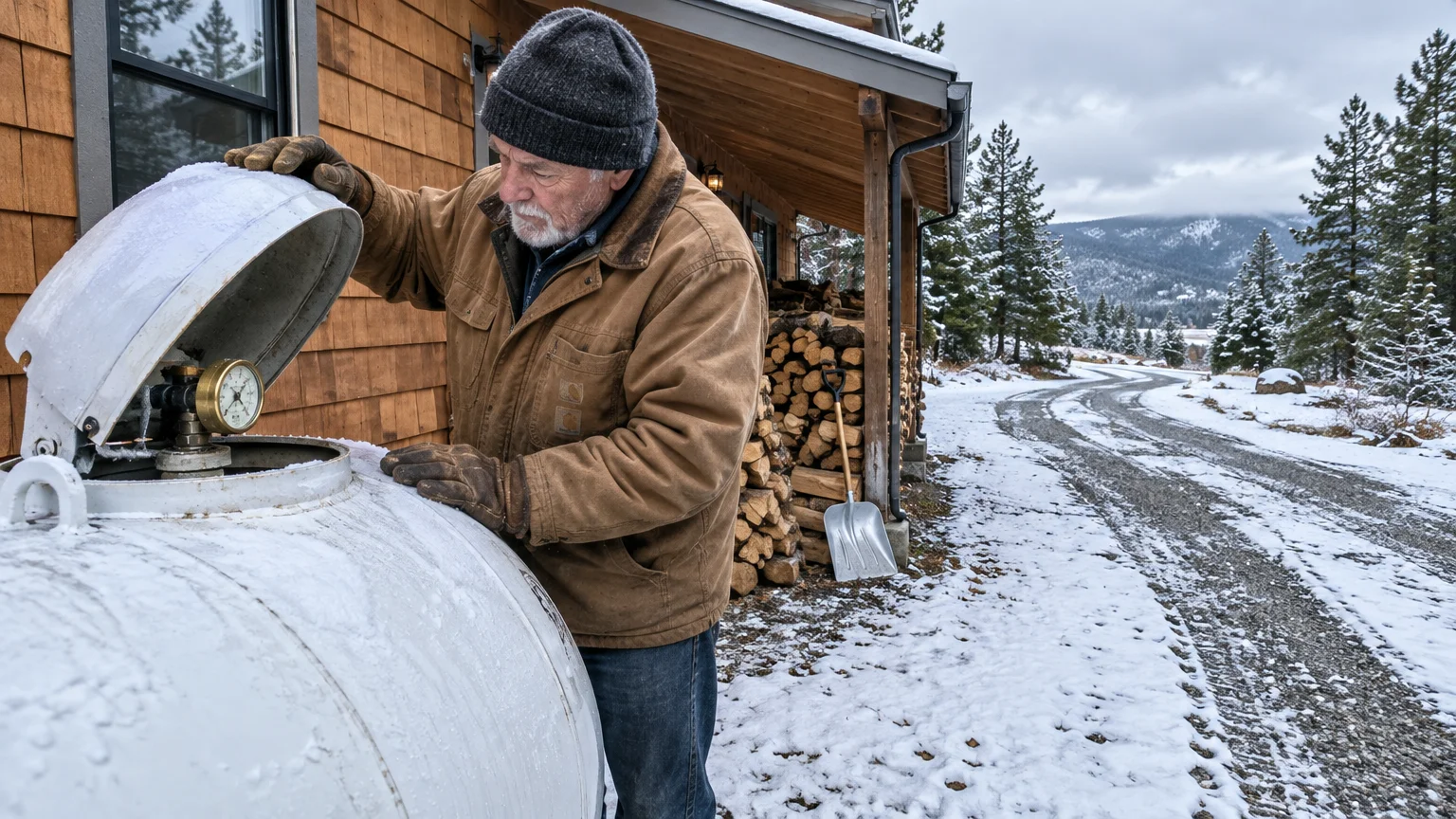
- Overlooking Road Maintenance and Steep Driveways: Gravel lanes and steep driveways often become impassable during winter storms. Confirm whether the municipality or a private homeowners association plows your access road.
- Underestimating Distance to Specialist Care: While most mountain towns possess community hospitals, complex conditions may require regional medical hubs. Calculate actual driving times to specialized cardiac or cancer centers before purchasing.
- Ignoring Property Insurance Availability: Wildfire risk has caused insurance premiums to climb in heavily wooded regions. Request quotes from insurance carriers during your inspection period rather than waiting until closing.
- Miscalculating Heating and Utility Costs: Heating a home with propane or heating oil costs significantly more than natural gas. Ask the seller for twelve months of utility receipts to calculate accurate annual costs.
- Dismissing Elevation and Health Impacts: High altitudes can strain individuals with respiratory or cardiovascular issues. Spend a few weeks renting at elevation to confirm your body adapts comfortably to the thinner air.
For more lifestyle and relocation advice tailored to older adults, consider exploring retirement resources on AARP.
Frequently Asked Questions
Which affordable mountain town has the lowest home prices?
Cumberland, Maryland offers the lowest typical home value on this list at $157,263. Elkins, West Virginia follows closely behind with a typical home value of $173,574.
Does living in a mountain town affect my Social Security check?
Your federal benefit amount does not change based on your address. However, state taxation varies, though most towns on this list sit in states that fully exempt Social Security benefits.
How do I prepare for mountain winters as a retiree?
Invest in an all-wheel-drive vehicle, arrange professional snow-clearing services in advance, and maintain a whole-house backup generator. Preparing your home in the autumn ensures safe winter living.
Are healthcare services adequate in smaller mountain towns?
Many mountain towns feature community hospitals capable of handling routine care and emergencies. However, you should confirm the distance to tertiary medical centers if you require frequent specialist visits.
Next Steps for Your Mountain Move
Begin by renting a home or cabin in your target mountain town during both the peak summer season and the dead of winter. Experiencing both seasons firsthand gives you an authentic view of road conditions, town activity, and utility demands.
This is educational content based on general retirement and financial principles. Individual results vary based on your situation. Always verify current benefit rules, tax laws, and eligibility requirements with official sources like SSA, Medicare.gov, or the IRS.
Last updated: October 2026. Retirement benefits, tax rules, and healthcare regulations change frequently—verify current details with official sources.









Leave a Reply