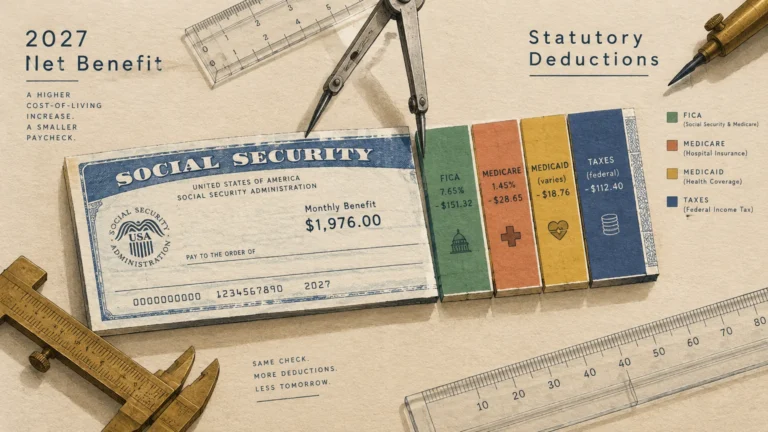

Veterans Day creates an unexpected calendar adjustment for millions of retirees who rely on their monthly Social Security checks. If your birth date falls early in the month, your November deposit arrives sooner than usual.
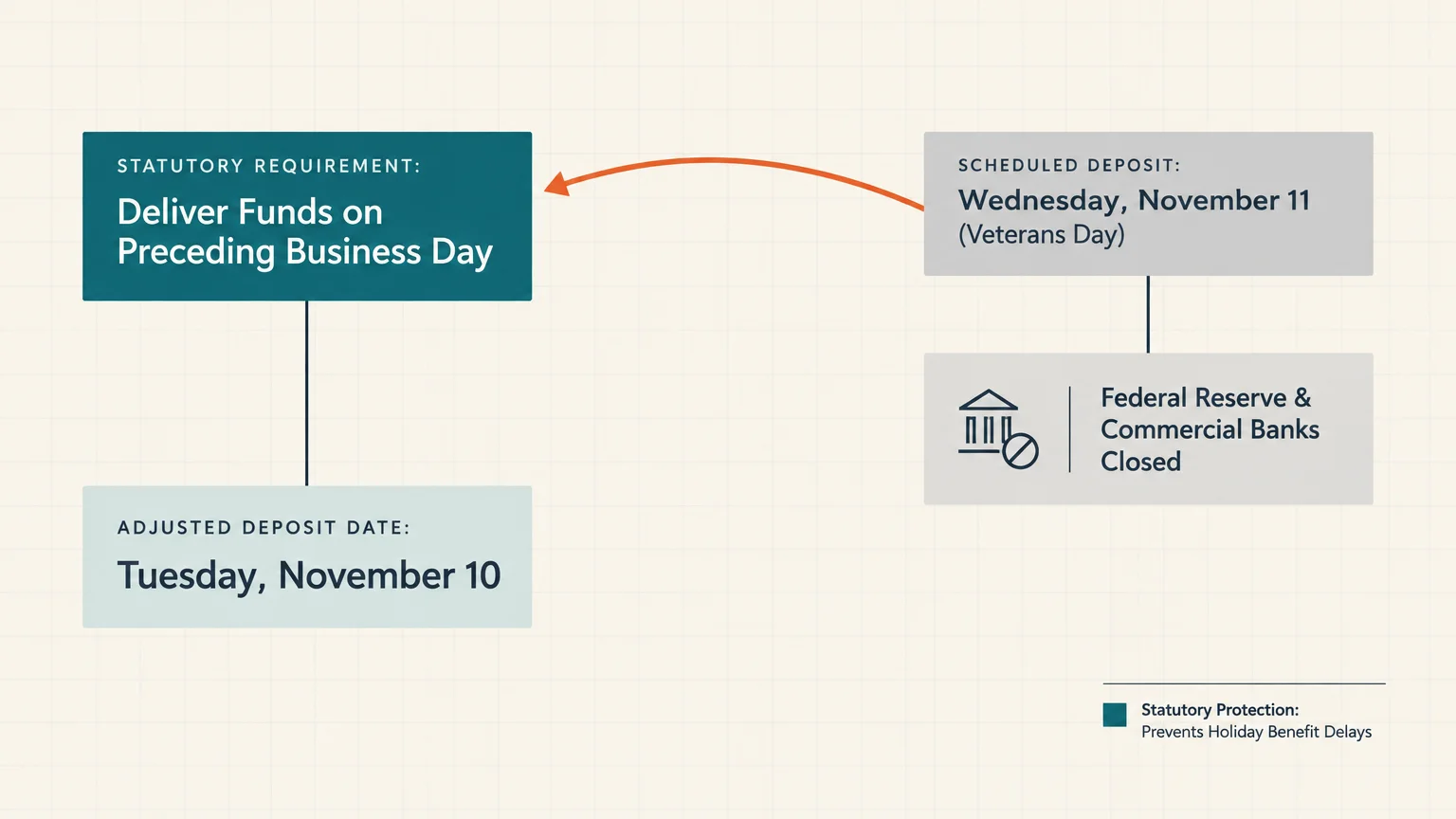
Federal offices and commercial banks close their doors on Wednesday, November 11, 2026, to honor military veterans. Consequently, the government cannot distribute standard electronic transfers or paper checks on that specific Wednesday.
Knowing your exact deposit date helps you manage monthly expenses, coordinate automatic bill payments, and avoid unexpected overdraft charges. Here is everything you need to know about navigating the altered November schedule.
Understanding the Social Security Holiday Distribution Rule
The Social Security Administration operates under strict statutory guidelines regarding calendar conflicts. Whenever an official payment date lands on a federal holiday or weekend, regulations mandate that the agency deliver funds early.
The payment arrives on the first preceding business day that is neither a weekend nor a federal holiday. This protective rule ensures you never experience a delay in accessing your essential retirement funds.
The Federal Reserve closes its payment processing centers during recognized national observances. Commercial banks also shut their branches and pause routine interbank clearing operations on these days.
Because the banking system halts financial clearing activities on holidays, transactions cannot settle on the holiday itself. The government solves this logistical barrier by sending your money forward on the business day prior.
You can verify these standard holiday operational procedures directly through the Social Security Administration website. Familiarity with this regulatory mechanism helps you anticipate future calendar shifts throughout your retirement years.
This early-payment protocol applies across all major federal programs. Whether you collect retirement benefits, disability insurance, or survivor payments, the holiday protection rule shields your income from holiday interruptions.
Complete Breakdown of the November 2026 Social Security Payment Schedule
Your exact payment date depends on your date of birth, benefit type, and the year you claimed benefits. Most retirees receive their checks on a designated Wednesday during the second, third, or fourth week of each month.
November features multiple distribution cycles that affect beneficiaries differently. While one group experiences an immediate schedule adjustment due to Veterans Day, other groups retain their standard timeline.
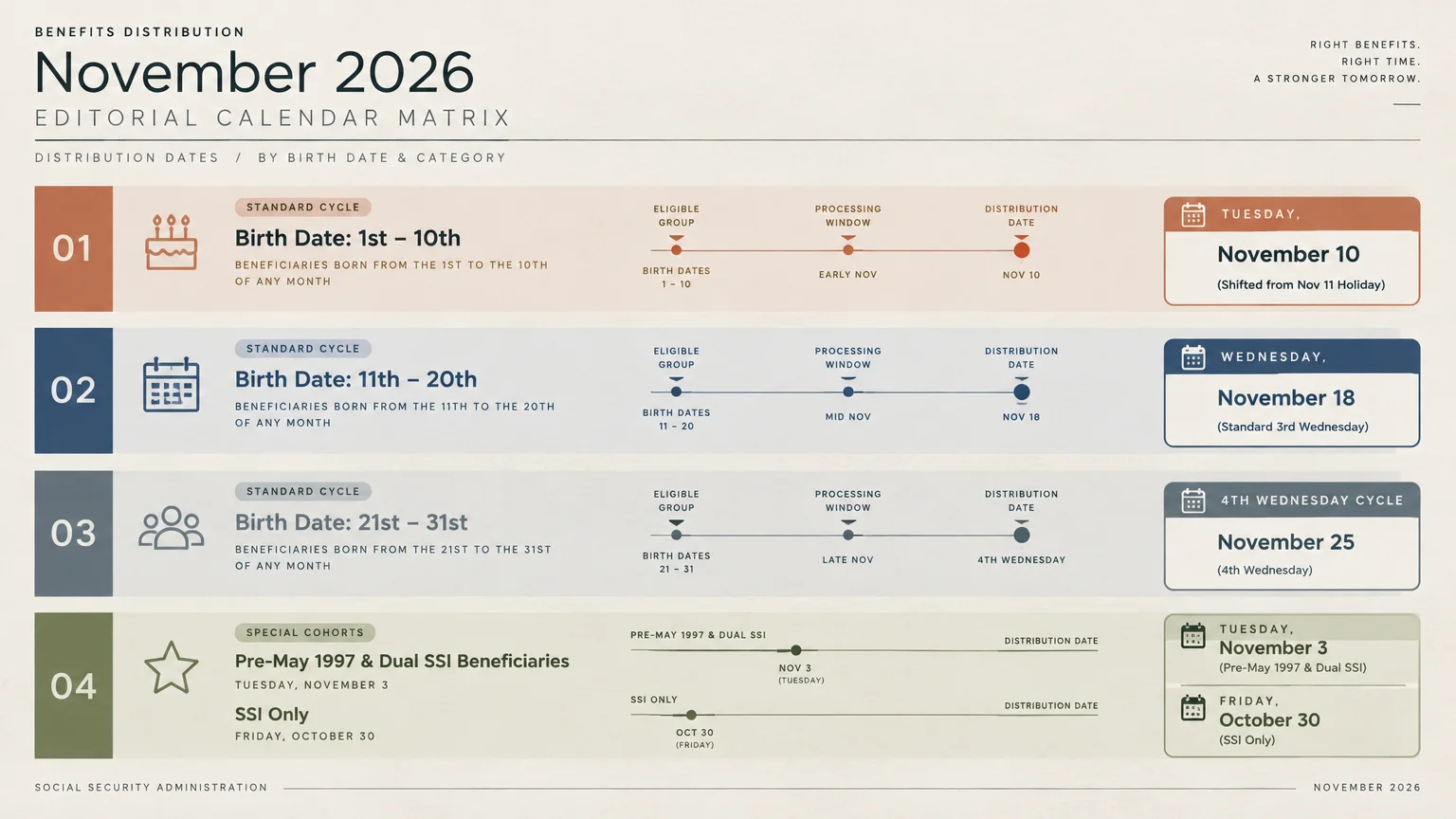
Beneficiaries receiving Supplemental Security Income (SSI) experienced their calendar shift before November even started. Because November 1, 2026, fell on a Sunday, the agency distributed November SSI benefits on Friday, October 30.
Retirees who began collecting Social Security benefits before May 1997 adhere to a different calendar cycle altogether. If you belong to this historic cohort, you receive your benefit on Tuesday, November 3, 2026.
Individuals who qualify for both Social Security and SSI simultaneously also receive their Social Security portion on November 3. Beneficiaries living abroad and those enrolled in state-administered Medicare Savings Programs follow this exact same early-month distribution.
Retirees born between the 1st and the 10th of any month see the most significant shift. While normally scheduled for the second Wednesday, you receive your check on Tuesday, November 10, 2026.
Beneficiaries born between the 11th and the 20th of the month will experience no disruptions. The agency deposits your November Social Security check on the third Wednesday, which is November 18, 2026.
Recipients born between the 21st and the 31st of any month occupy the final distribution cycle. Your payment arrives on the fourth Wednesday, November 25, 2026, which is the day before Thanksgiving.
| Beneficiary Category | Standard Target Date | Actual November 2026 Deposit Date | Schedule Adjustment Reason |
|---|---|---|---|
| Supplemental Security Income (SSI) | Sunday, November 1, 2026 | Friday, October 30, 2026 | Paid early due to Sunday calendar conflict |
| Pre-May 1997 or Dual Beneficiaries | Tuesday, November 3, 2026 | Tuesday, November 3, 2026 | Normal scheduled payment; unaffected by holidays |
| Birthdays: 1st through 10th | Wednesday, November 11, 2026 | Tuesday, November 10, 2026 | Paid one day early due to Veterans Day holiday |
| Birthdays: 11th through 20th | Wednesday, November 18, 2026 | Wednesday, November 18, 2026 | Standard third-Wednesday distribution; unaffected |
| Birthdays: 21st through 31st | Wednesday, November 25, 2026 | Wednesday, November 25, 2026 | Standard fourth-Wednesday distribution; unaffected |
The Mechanics Behind the Second Wednesday Shift
The mid-month adjustment specifically impacts individuals born during the first ten days of any given month. Under normal circumstances, the government deposits these payments on the second Wednesday of each calendar month.
In November 2026, the second Wednesday lands squarely on November 11. Because Congress established Veterans Day as a permanent federal holiday, public sector administrative offices cease normal operations on that date.
The Automated Clearing House network processes trillions of dollars in commercial and governmental wire transfers daily. When holiday closures suspend that network, federal agencies must trigger transaction settlements 24 hours in advance.
Because the government settles these accounts early, your financial institution receives the transfer file by Monday evening. The bank then credits your checking or savings balance early Tuesday morning, November 10.
Recipients who still rely on paper checks will also see the postal service respect the holiday pause. The Treasury issues those paper drafts early so carriers can deliver them before Wednesday’s mail service suspension.
Knowing how the Consumer Financial Protection Bureau regulates automated clearing timelines helps protect your consumer rights. Federal clearinghouse rules guarantee that early transfers provide accessible funds on that preceding business morning.
Supplemental Security Income: Why You Were Paid in Late October
Supplemental Security Income provides critical baseline support for aged, blind, and disabled Americans with limited financial resources. Unlike primary retirement benefits, SSI follows a strict first-of-the-month distribution calendar.
Whenever the first day of a month falls on a weekend, the agency issues the payment early. Because November 1, 2026, occurred on a Sunday, the payment arrived on Friday, October 30.
This standard rule often confuses recipients who review their bank statements and notice two deposits in October. You received your regular October payment on October 1 and your November allocation on October 30.
Receiving two payments within a single calendar month does not indicate an accidental government bonus. The second deposit serves as your complete living allowance for the upcoming month of November.
Failing to recognize this shift creates substantial budget deficits later in November. You will not receive another SSI check until Tuesday, December 1, 2026.
Monitoring these schedule nuances prevents you from spending early funds prematurely. A disciplined budget ensures that your October 30 check covers all necessary November living expenses without disruption.

Budgeting Through a Holiday Shift: Managing Cash Flow Intervals
Receiving an early benefit check feels like an unexpected windfall to many households. However, receiving money earlier in the month creates an elongated gap before your subsequent payment arrives.
If your birthday falls between the 1st and the 10th, you receive your November check on November 10. Your December retirement benefit will arrive on Wednesday, December 9, 2026.
That adjustment creates a 29-day stretch between direct deposits, requiring steady financial management. The interval extends even further for SSI recipients, who face a 32-day gap between October 30 and December 1.
“A reliable monthly income provides peace of mind, but you must remain proactive about timing your cash flow around federal holidays.” — Suze Orman, Personal Finance Expert
When money lands in your bank account early, you might feel tempted to make discretionary purchases. Resist the urge to accelerate spending on non-essential items before paying your core household bills.
Keep your housing, utility, insurance, and grocery allocations firmly parked in your checking account. This practice protects your household liquidity until the next payment arrives in December.
You can find reliable household budgeting worksheets through Bankrate to organize recurring costs. Maintaining a clear visual layout of payment dates shields your hard-earned retirement nest egg.
Create a dedicated monthly payment calendar that highlights the exact days your money lands. Visual tracking helps eliminate spending surprises caused by statutory holiday shifts.
Pitfalls to Watch For
Shifting payment dates often catch retirees off guard and trigger preventable financial headaches. You can safeguard your monthly budget by remaining alert to a few common operational traps.
- Misaligned automatic bill deductions: Many retirees configure automatic debits for the second Wednesday of the month. Because your money arrives Tuesday, your balance is safe, but moving auto-debits without planning can disrupt future months.
- Premature calls to administrative offices: Contacting government phone lines on November 11 results in frustration. Federal agency offices remain closed on Veterans Day, and representative assistance will not be available.
- Overspending holiday retail promotions: Retailers promote early November sales events aggressively around Veterans Day. Spending early benefit deposits on holiday purchases can leave you short on utility or prescription funds later.
- Misunderstanding SSI asset limitations: SSI beneficiaries face strict monthly asset ceilings. Spending early payments appropriately ensures your accumulated balance does not exceed regulatory eligibility limits on paper.
Review your bank account balance carefully on Tuesday morning, November 10. Confirming that your direct deposit arrived enables you to execute scheduled payments with absolute confidence.
Never rely on verbal assumptions regarding when private creditors process automated debits. Always verify debit processing windows directly with your mortgage company, auto lender, and municipal utility providers.
If you maintain automatic transfers from your checking account into dedicated savings accounts, check their execution dates. Ensure those transfers synchronize cleanly with your shifted November direct deposit schedule.

What to Do If Your November Payment Does Not Appear
Electronic deposits post reliably across major financial networks in the modern banking era. However, technical glitches, account updates, or banking transitions can occasionally interrupt an electronic funds transfer.
If you check your bank account on Tuesday, November 10, and see no deposit, remain calm. The Social Security Administration enforces a standard waiting protocol before launching missing-payment investigations.
First, verify your account status directly with your private bank or credit union. Ask a customer service representative whether an electronic deposit remains pending in their automated clearing queue.
Sometimes financial institutions hold incoming transfers until normal business hours begin. If your bank confirms that no incoming Treasury transfer exists, follow the official government protocol.
The agency requests that beneficiaries wait three additional mailing days before contacting regional administrative offices. Because Wednesday is an official federal holiday, counting begins on Thursday, November 12.
The three mailing days encompass Thursday, Friday, and Saturday. If your deposit still has not registered by Monday morning, November 16, contact administrative personnel immediately.
You can reach customer support representatives toll-free at 1-800-772-1213 on business weekdays. You may also access your personal profile through the national administrative portal to inspect benefit verification statements.
Individuals who receive funds via the federal Direct Express debit card should call the customer number on their card. Direct Express support operates dedicated helplines to resolve missing or delayed card deposits promptly.
Looking Ahead: Year-End Holiday Shifts on the 2026 Calendar
Veterans Day is not the only autumn observance that impacts administrative financial calendars. November and December include major federal holidays that demand close personal attention.
Thanksgiving Day occurs on Thursday, November 26, 2026. Beneficiaries born between the 21st and the 31st receive their checks on Wednesday, November 25, safely ahead of the holiday.
Christmas Day lands on Friday, December 25, 2026, closing all federal administrative offices and commercial banks. Beneficiaries assigned to standard Wednesday distributions will not face Christmas payment disruptions.
New Year’s Day falls on Friday, January 1, 2027, creating an immediate adjustment for SSI recipients. The agency will deposit January 2027 SSI payments early on Thursday, December 31, 2026.
Educational articles from consumer advocates like AARP emphasize the importance of tracking year-end holiday payment patterns. Proper planning prevents unexpected shortfalls during the expensive winter holiday season.
Take time each autumn to download the updated national payment schedule for the upcoming calendar year. Marking these dates on your home calendar keeps your household prepared for every operational shift.

Getting Expert Help
Managing benefit timing is generally straightforward, but specific personal circumstances require qualified professional guidance. Navigating complex entitlement rules alone can lead to costly administrative missteps.
Consult a certified financial planner or elder law professional if you experience persistent direct deposit delays. Ongoing banking rejections often signal deeper administrative errors inside your federal master records.
Dual-eligible individuals managing both Medicare premiums and Medicaid assistance should seek specialized counseling. State health advocates can verify that shifted SSI deposit cycles do not jeopardize local program eligibility.
Surviving spouses transitioning to survivor benefits must coordinate precise payment dates with legal counsel. Benefit conversion months often alter regular deposit dates, making professional oversight essential for cash continuity.
Retirees balancing required minimum distributions (RMDs) from retirement accounts alongside benefits benefit from CPA guidance. Coordinating investment withdrawals with shifted benefit dates avoids unnecessary tax liabilities and maintains steady liquidity.
Frequently Asked Questions
Will Veterans Day delay my Social Security payment?
No, Veterans Day will not delay your payment. The agency issues payments scheduled for Wednesday, November 11, one day early on Tuesday, November 10.
Why did my Supplemental Security Income arrive in late October?
November 1, 2026, falls on a Sunday, when banking institutions are closed. The agency pays SSI benefits on the preceding business day, which was Friday, October 30.
Does receiving my payment early mean I will get less money in December?
Your benefit payment amount remains completely unchanged. An early payment simply reflects a calendar shift, not a deduction from your normal entitlement.
Are local Social Security offices open on Veterans Day?
All local and regional administrative offices close on Wednesday, November 11, for the federal holiday. Normal in-person operations and telephone support resume on Thursday, November 12.
What should I do if my deposit is missing on November 10?
Contact your bank first to inspect pending electronic deposits. If nothing is pending, wait three full mailing days before contacting the government for assistance.
Protect Your Retirement Cash Flow
Adjusting to the modified November calendar requires only a brief review of your birth date and payment schedule. Knowing your precise deposit date ensures you can pay bills comfortably and avoid unexpected overdraft penalties.
Take an active role in managing your household budget throughout the upcoming winter months. Review your bank statements, confirm your scheduled automated transfers, and enjoy your retirement with total financial confidence.
This article provides general retirement education and information only. Every retiree’s situation is unique—what works for others may not work for you. For personalized advice, consider consulting a qualified financial professional such as a CFP or CPA.
Last updated: November 2026. Retirement benefits, tax rules, and healthcare regulations change frequently—verify current details with official sources.