
Maintaining your independence and staying active in retirement often depends on reliable transportation, but the rising costs of vehicle ownership can quickly strain a fixed income. Fortunately, public transit agencies across the United States offer substantial senior savings, with many providing drastically reduced fares or completely free rides to older adults. These programs operate at the city, county, and state levels, meaning your eligibility and application process will depend entirely on where you live. By understanding how these transit benefits work and knowing exactly where to look for them, you can secure affordable mobility, reduce your daily expenses, and keep yourself connected to your community without worrying about gas prices or car maintenance.

The Financial Case for Rethinking Transportation in Retirement
Transportation ranks as the second-largest expense for American households, trailing only housing costs. When you stop commuting to a daily job, you might assume your transportation costs will naturally plummet. However, maintaining a personal vehicle remains incredibly expensive regardless of your mileage. Auto insurance premiums, routine maintenance, unpredictable repairs, fuel, and vehicle depreciation chip away at your retirement savings every single month. For retirees living on a fixed income drawn from Social Security and modest investments, these variable costs introduce unnecessary financial stress.
Transitioning to public transit—even for just a few errands a week—creates immediate budget relief. If you live in an area with a robust public transportation network, selling a second vehicle or giving up driving entirely can return thousands of dollars to your annual budget. This freed-up cash flow provides a vital buffer for healthcare expenses, travel, or simply enjoying your retirement without financial anxiety.
“Do not save what is left after spending, but spend what is left after saving.” — Warren Buffett, Chairman and CEO of Berkshire Hathaway
By securing a free or reduced-fare transit pass, you effectively cap a major category of your living expenses. Rather than worrying about a sudden four-figure repair bill from your mechanic, you can budget a predictable, nominal amount for monthly mobility. This proactive approach to managing fixed costs aligns perfectly with sound retirement planning principles.
How Age-Based Transit Discounts Work Across the Country
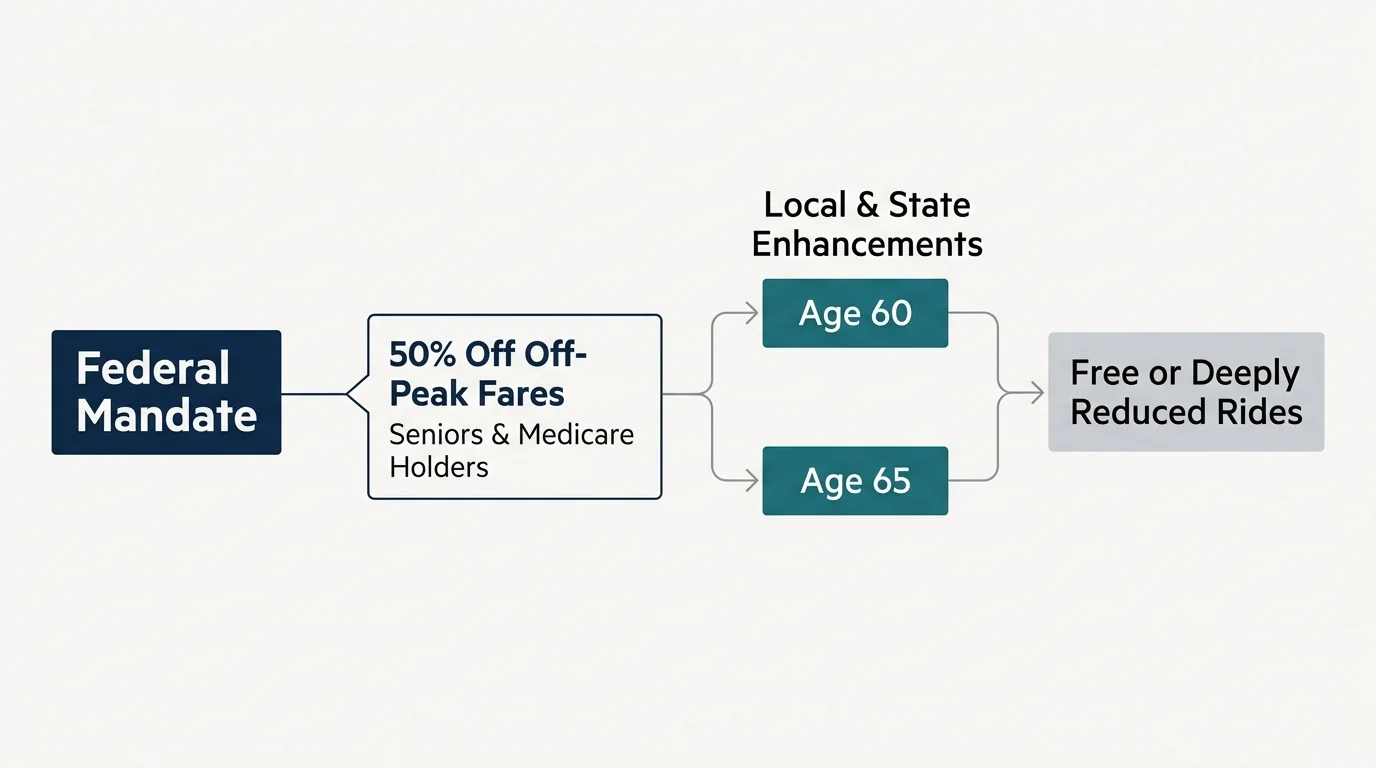
Public transportation systems in the United States operate under a mix of federal, state, and local funding. This funding structure directly influences the senior benefits they provide. Because most local transit authorities receive federal grants from the Federal Transit Administration, they must adhere to specific mandates regarding accessibility and affordability.
By federal law, transit agencies receiving certain federal funds must offer fares during off-peak hours that do not exceed half the standard base fare for seniors, individuals with disabilities, and Medicare cardholders. Consequently, virtually every major public bus, subway, and light rail system in the country provides at least a 50 percent discount to older adults.
Many cities and states go well beyond this federal minimum. Depending on your location, you might qualify for entirely free rides once you hit a specific age milestone. Generally, these age requirements trigger at either 60 or 65 years old. Securing these benefits requires you to apply directly through your local transit authority, as automatic enrollment does not exist.
Comparing Standard and Senior Transit Fares
To illustrate the potential savings, review how typical senior transit programs function across different service models. Keep in mind that exact fares fluctuate by municipality.
| Transit Type | Typical Age Requirement | Average Senior Discount | Common Usage |
|---|---|---|---|
| City Bus & Light Rail | 65+ (Some offer at 60+) | 50% to 100% (Free) | Grocery shopping, medical appointments, visiting local friends. |
| Commuter & Regional Rail | 65+ | 50% | Traveling from suburbs to city centers; regional day trips. |
| Paratransit (ADA) | No age limit; requires medical certification | Fixed nominal rate ($2 to $5 per ride) | Door-to-door service for individuals with limited mobility. |
| National Rail (Amtrak) | 65+ | 10% on most domestic routes | Cross-country travel; visiting family out of state. |

Income-Restricted Programs for Maximum Savings
While age-based programs offer broad accessibility, retirees with lower incomes often qualify for even deeper subsidies. State and county governments frequently layer income-restricted transit benefits on top of standard senior discounts. If your retirement income falls below certain thresholds—often tied to the Federal Poverty Level—you may be eligible for programs that eliminate transit fares entirely.
These means-tested programs require additional verification during the application process. You will typically need to provide previous tax returns, Social Security benefit statements, or proof of enrollment in other assistance programs like the Supplemental Nutrition Assistance Program (SNAP) or Medicaid. Taking the time to gather these documents proves worthwhile, as graduating from a half-fare pass to a free-ride pass compounds your savings over the years.
Finding these specialized programs can be challenging since they are rarely advertised on billboards or television. The best strategy involves connecting with community advocacy groups and online benefit finders. You can utilize the comprehensive tools provided by the National Council on Aging (NCOA) to screen yourself for various state and local financial assistance programs, including transportation subsidies.
Understanding Non-Emergency Medical Transportation (NEMT)
For many retirees, the most critical trips involve getting to and from healthcare providers. If physical limitations prevent you from utilizing traditional public buses or trains, you must explore specialized transit options.
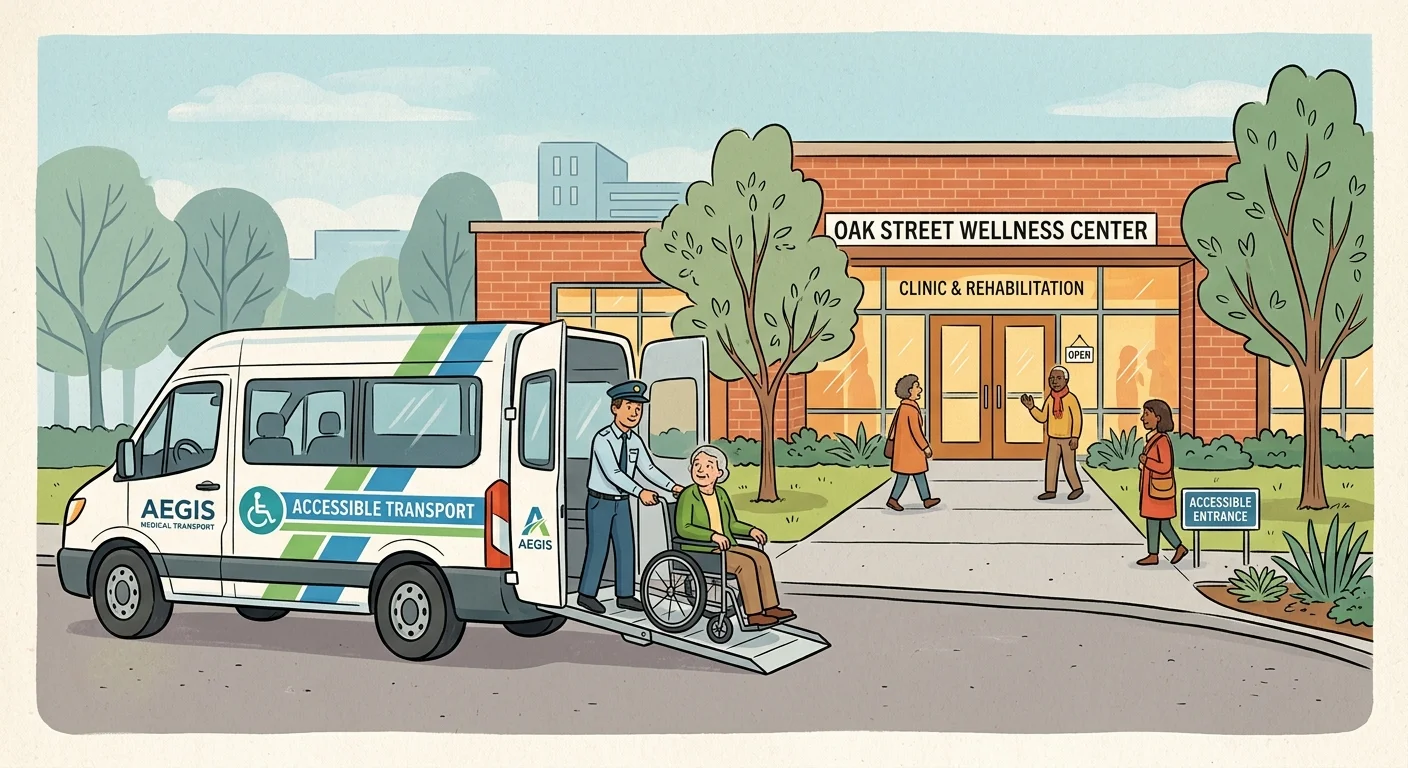
Non-Emergency Medical Transportation encompasses a variety of services designed specifically to transport patients to routine checkups, dialysis treatments, and physical therapy sessions. NEMT providers utilize specialized vehicles equipped with wheelchair lifts and provide trained drivers who assist passengers from their doors into the medical facility.
It is vital to understand how your healthcare coverage interacts with these services. Original Medicare (Part A and Part B) strictly covers emergency ambulance transportation; it does not pay for routine rides to your primary care physician. However, the landscape shifts significantly if you utilize private Medicare alternatives.
A growing number of Medicare Advantage (Part C) plans now include dedicated transportation benefits as part of their supplemental coverage. These plans often provide a fixed number of free round trips per year to approved medical locations. These rides are typically fulfilled through contracted private fleets or specialized rideshare partnerships. If you are unsure whether your current health plan includes these benefits, review your Evidence of Coverage document or visit Medicare.gov to compare the transportation allowances of different plans in your zip code during the Annual Enrollment Period.

Exploring Community and Volunteer Transportation Options
When municipal transit falls short—especially in rural or deeply suburban areas—community-based transportation programs step in to fill the void. Across the country, local non-profits, faith-based organizations, and senior centers operate dedicated shuttle services and volunteer driver networks.
These community programs operate differently than mass transit. Instead of following a rigid, fixed route with designated stops, they often employ an on-demand or dial-a-ride model. You schedule your ride a few days in advance, and a shuttle or a vetted volunteer driver picks you up from your home. Fares for these services are generally subsidized through grants and charitable donations, meaning you might only pay a suggested donation of a few dollars per trip.
Funding for many of these local initiatives flows through the Older Americans Act, which empowers regional agencies to support senior independence. To locate the specific volunteer driver networks and subsidized senior shuttles operating in your county, you should contact your local Area Agency on Aging. You can easily find their contact information through the eldercare locator tools provided by the Administration for Community Living (ACL).

Beyond Local Transit: Regional Travel and National Networks
Retirement affords you the time to travel, visit family, and explore new regions. Fortunately, transportation discounts extend beyond your local city bus. Regional transit networks and national carriers also incentivize senior ridership to fill seats during non-peak travel windows.
Commuter rail systems—such as the Long Island Rail Road in New York, Metra in Chicago, and NJ Transit—serve vast metropolitan areas and offer substantial senior discounts. These regional trains provide a comfortable, stress-free alternative to driving on congested highways when traveling into major urban centers for museum visits, theater shows, or dining.
On a national scale, Amtrak offers a standard 10 percent discount on most rail fares for travelers aged 65 and over. While this percentage might seem modest compared to local bus subsidies, it generates meaningful savings on cross-country sleeper car routes or frequent trips along the busy Northeast Corridor. When booking regional or national travel, always select the specific “Senior” passenger type during the online checkout process, as the discount requires manual selection and is never applied retroactively.
Avoiding Common Errors When Applying for a Senior Transit Pass
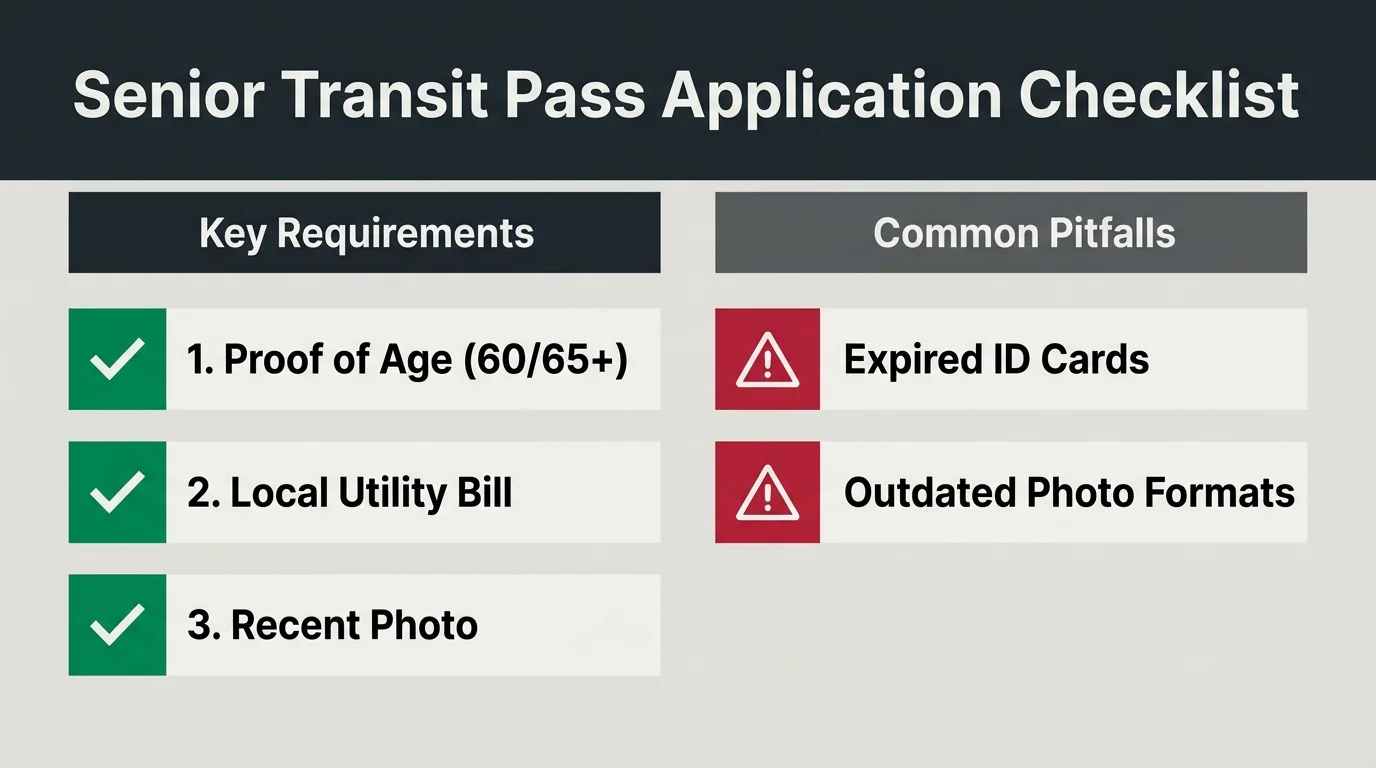
Securing your reduced fare card requires navigating municipal bureaucracy. Retirees frequently encounter frustrating delays because they misunderstand the application rules or bring the wrong documentation to the transit office. Protect your time by avoiding these frequent missteps.
Using a Medicare Card as a Direct Pass
The federal rule mandating half-fares for Medicare cardholders creates widespread confusion. Many seniors assume they can simply flash their red, white, and blue Medicare card to a bus driver to receive a discount. While a few smaller rural agencies allow this, major transit systems explicitly prohibit it. Your Medicare card serves as proof of eligibility to obtain the transit agency’s specialized senior photo ID card; it does not function as a transit pass itself. You must complete the agency’s formal application process to receive the actual scannable fare card.
Missing Off-Peak Restrictions
Transit systems balance the need to support seniors with the reality of managing rush-hour crowding. Consequently, many reduced-fare programs enforce strict time-of-day restrictions. Your pass might grant you free rides from 9:00 AM to 3:30 PM, but charge full price during the morning and evening commuter rushes. Failing to read the fine print regarding peak hours can result in unexpected fare charges and drained transit account balances.
Assuming Universal Regional Acceptance
Transit authority jurisdictions rarely overlap perfectly with geographical borders. If you live in a metropolitan area served by multiple transit agencies, your senior pass from one agency may not work on a connecting system. For example, a county bus pass might not transfer to a city-operated light rail system, even if they share transit hubs. Always verify the specific regional partnerships and transfer rules associated with your transit card.
Failing to Prepare Proper Documentation
Transit offices turn away countless applicants every day for lacking sufficient proof of age or residency. Before scheduling an appointment or mailing an application, ensure you have exactly what the agency requires. Standard requirements include a government-issued photo ID (driver’s license, passport, or state ID) and recent proof of address (utility bills or lease agreements). If you need help gathering official government documents to prove your age or identity, consult the official guidelines at USA.gov Benefits to understand how to request replacement birth certificates or updated state IDs.
Frequently Asked Questions About Senior Transportation Assistance
Navigating the various rules of public and private transportation networks can feel overwhelming. Here are straightforward answers to the most common questions retirees ask regarding their mobility benefits.
Does Original Medicare pay for my rides to the grocery store or routine doctor visits?
No. Original Medicare (Part A and Part B) only covers medically necessary emergency transportation, such as an ambulance ride to a hospital. It does not cover transportation for everyday errands or standard physician appointments. You must rely on local transit, community programs, or private Medicare Advantage plans for routine travel assistance.
At what age do most senior transit discounts actually begin?
The most common age threshold in the United States is 65. However, progressive transit systems in certain states lower this requirement to age 60 or 62. Paratransit systems and services based on disability have no age requirements at all.
Can I use my city’s senior transit pass when I travel on vacation to another state?
Generally, no. Senior transit passes are highly localized and funded by regional taxpayers. A pass issued in Boston will not scan on the subway system in San Francisco. When traveling domestically, you will need to research the temporary or visitor senior discount programs available in your destination city.
What is ADA Paratransit, and how do I qualify?
The Americans with Disabilities Act (ADA) requires transit agencies to provide comparable transportation services for individuals who cannot physically navigate fixed-route bus or train systems. Qualifying requires a formal application, often accompanied by a detailed medical professional’s verification of your physical or cognitive limitations. Once approved, you gain access to door-to-door or curb-to-curb shared ride services.
Taking the Next Step Toward Affordable Mobility
Mastering public transportation empowers you to navigate retirement on your own terms. The financial benefits of leaving the car parked—or selling it entirely—extend far beyond the price of gasoline; they insulate your fixed income against the unpredictable shocks of automotive repairs and insurance hikes.
Your next step is remarkably straightforward: locate the website for your county or city transit authority, navigate to their fares section, and review their specific requirements for older adults. Gather your state ID and utility bills, and submit your application. Taking a single afternoon to secure your specialized transit card will reward you with years of deeply discounted, stress-free travel throughout your community.
This is educational content based on general retirement and financial principles. Individual results vary based on your situation. Always verify current benefit rules, tax laws, and eligibility requirements with official sources like SSA, Medicare.gov, or the IRS.
Last updated: March 2026. Retirement benefits, tax rules, and healthcare regulations change frequently—verify current details with official sources.









Leave a Reply