
Core Eligibility Rules: Who Qualifies and Who Does Not
Qualifying for the Saver’s Match requires meeting specific statutory criteria beyond household income limits. Understanding these core standards protects you from filing errors and delayed payments.
First, you must generate eligible earned income during the matching calendar year. Earned income includes wages, salaries, professional fees, tips, and net self-employment earnings.
Investment returns, pension distributions, Social Security benefits, and annuity payouts do not count as earned income. You must perform active work to generate qualifying funds for the match.
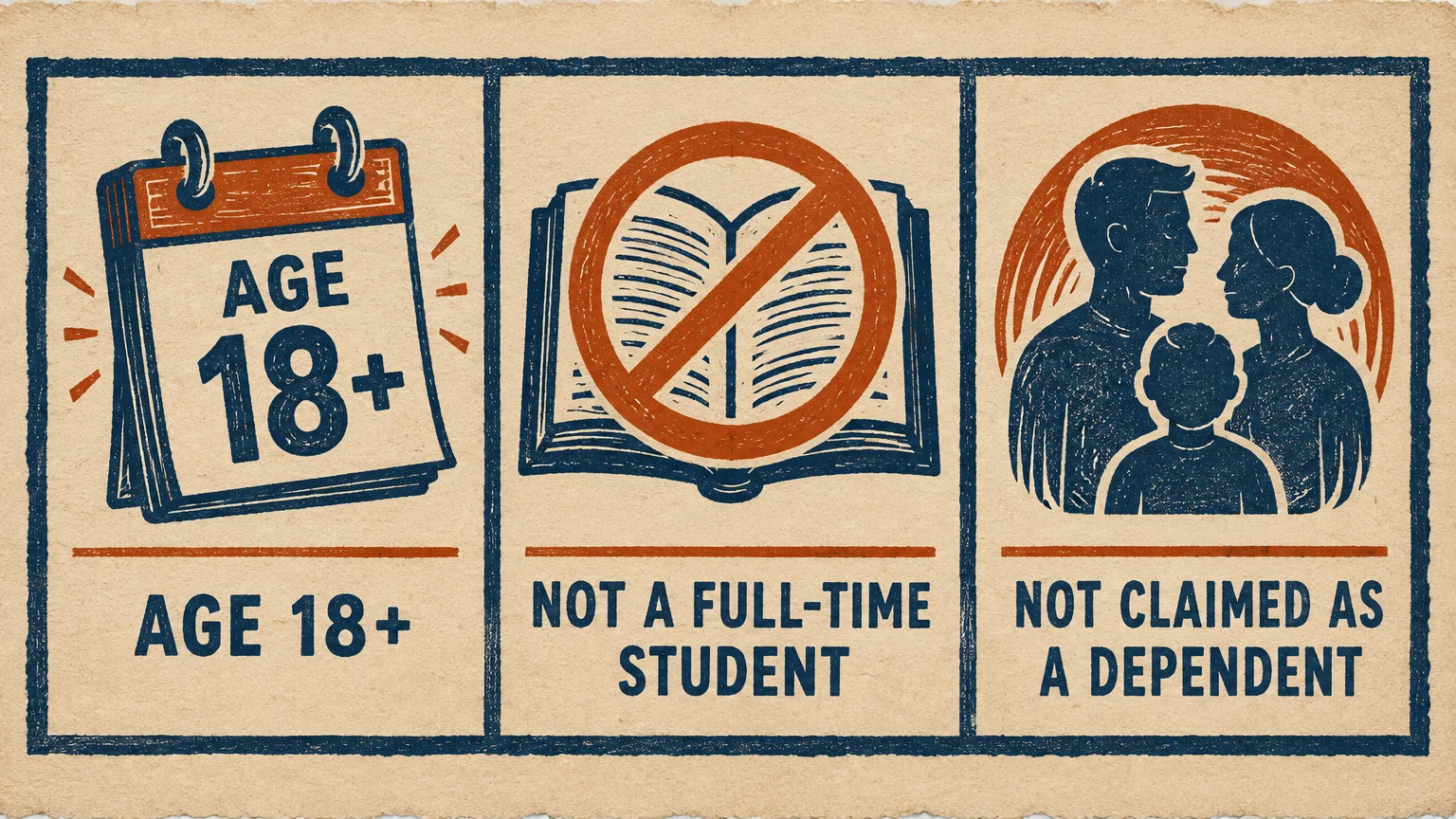
Second, you must reach at least age 18 before the closing day of the applicable tax year. Younger workers cannot claim matching contributions, even if they hold active employment.
Third, no other taxpayer can claim you as an eligible dependent on their federal tax return. Adult children living with parents and supported seniors claimed by adult children cannot participate.
Fourth, you cannot maintain full-time student status during any part of five calendar months in the tax year. The law reserves this wealth-building initiative strictly for non-student workers.
Finally, you must maintain status as a United States resident for tax purposes. Review guidance from the Consumer Financial Protection Bureau to understand how residency classifications apply to consumer financial programs.
- You must earn active taxable compensation from employment or self-employment during the year.
- You must reach age 18 by December 31 of the qualifying calendar year.
- You must file an independent tax return and not appear as a dependent elsewhere.
- You cannot attend school on a full-time academic schedule during the matching year.
- You must hold lawful U.S. residency status for federal taxation purposes.









Leave a Reply