
Missing a single Medicare deadline can trigger lifelong financial surcharges and leave you without essential medical coverage. Knowing your key enrollment dates protects both your health and your retirement budget.
Navigating Medicare requires balancing personal milestones, such as your sixty-fifth birthday, with strict annual federal cutoff dates. Misjudging these windows can lead to unexpected coverage gaps and irreversible penalties.
This comprehensive guide outlines the twelve critical dates you must track to secure timely, cost-effective coverage. Keep this medicare calendar close at hand as you build your personal transition plan.

1. Four Months Before Sixty-Five: The Automatic Enrollment Check
Your Medicare journey begins well before your sixty-fifth birthday. If you already receive Social Security or Railroad Retirement Board benefits, the federal government enrolls you automatically.
Automatic enrollment applies to both Medicare Part A and Part B. In this scenario, the Social Security Administration mails your red, white, and blue Medicare card about three months before you turn sixty-five.
If you are not yet claiming Social Security benefits, automatic enrollment will not occur. You must actively register during your initial enrollment period to establish your healthcare coverage.
Take time at this four-month mark to review your online Social Security account. Confirming your personal details early prevents processing delays when your sign-up window opens.
2. Three Months Before Your Birthday Month: The IEP Opens
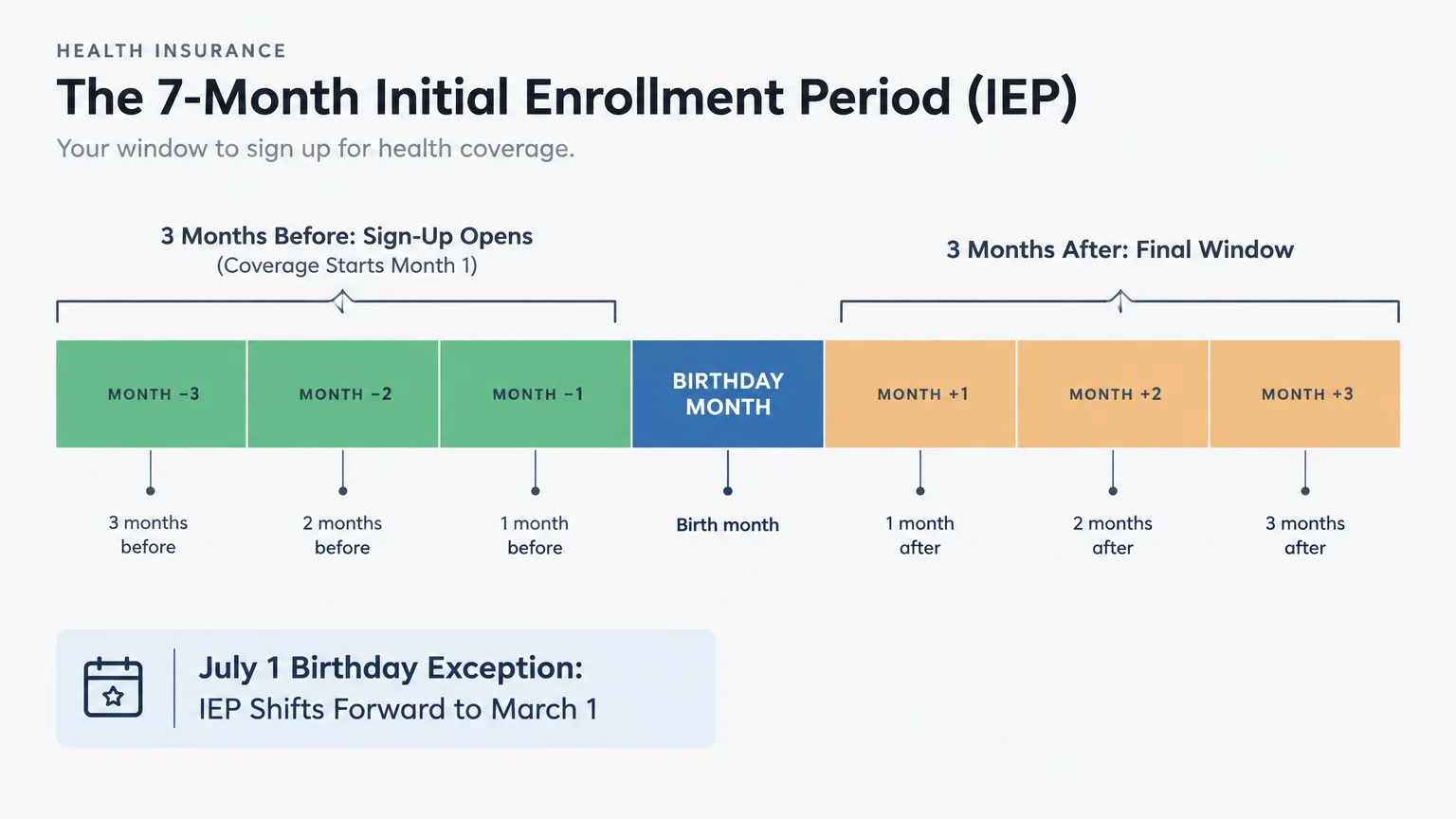
Your primary sign-up window is the Initial Enrollment Period, often abbreviated as IEP. This seven-month timeframe is the foundational pillar of every new to medicare checklist.
The IEP begins exactly three months before the month you turn sixty-five. It spans your birth month and extends for another three months afterward.
Signing up during these first three months guarantees your coverage begins on the first day of your birthday month. This early application eliminates any gap between private health insurance and Medicare.
If your birthday falls on the first day of the month, the government shifts your entire IEP forward by one full month. For example, a July 1 birthday means your enrollment window begins on March 1.

3. Six Months Before Applying: The HSA Contribution Cutoff
Working past sixty-five creates a major trap if you contribute to a Health Savings Account (HSA). Medicare Part A includes a retroactive coverage provision that directly impacts tax-advantaged accounts.
When you apply for Medicare after your sixty-fifth birthday month, Part A coverage automatically dates back up to six months. However, this retroactive coverage cannot reach prior to your sixty-fifth birthday month.
Federal tax law strictly prohibits HSA contributions once you possess any Medicare coverage. Excess contributions trigger a six percent excise tax from the Internal Revenue Service every year until corrected.
To avoid tax penalties, calculate your Medicare start date carefully. You must halt all payroll and direct contributions to your HSA at least six months before you apply for Medicare.
4. The First Day of Your Birthday Month: Coverage Takes Flight
For individuals who enroll during the early portion of their IEP, coverage starts on the first day of their birthday month. This date marks your formal transition into the federal Medicare system.
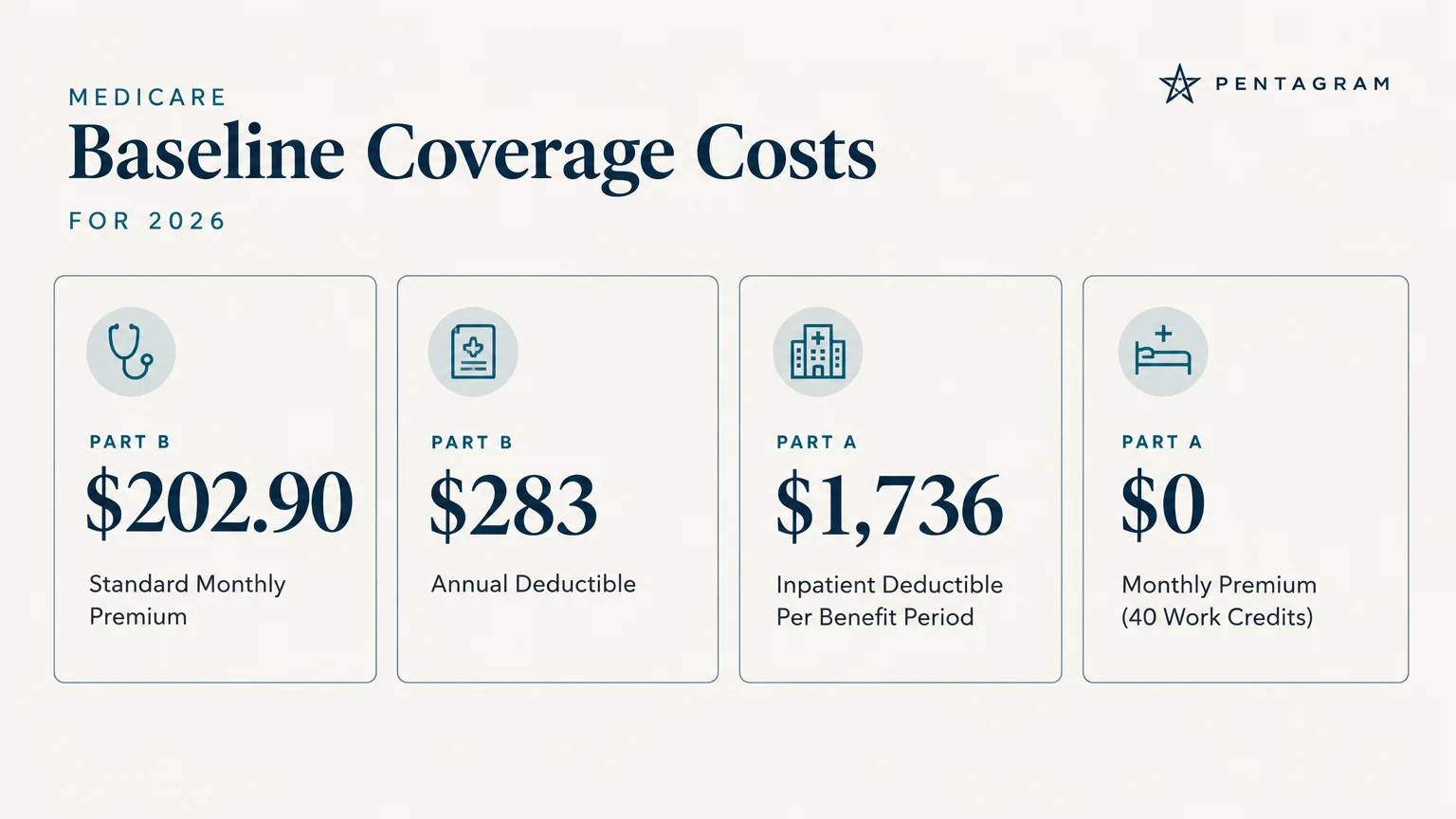
Once your coverage activates, you become responsible for standard Medicare cost-sharing requirements. In 2026, the standard monthly premium for Part B is $202.90, alongside an annual deductible of $283.
Hospital care under Part A carries an inpatient deductible of $1,736 per benefit period in 2026. Most Americans pay a $0 monthly premium for Part A by earning forty work credits.
Bring your Medicare card to all healthcare providers once this date arrives. Verify that your physicians, specialists, and local hospital systems participate in Original Medicare or your chosen Medicare Advantage network.

5. Three Months After Your Birthday Month: The IEP Closes
The final day of the third month after your birthday month represents the absolute close of your IEP. Missing this cutoff brings immediate administrative consequences if you lack other creditable coverage.
Under the federal BENES Act rules, enrolling during your birthday month or the three months following it means coverage starts the first day of the next month. You no longer face multi-month waiting delays.
However, allowing this seven-month window to lapse without enrolling locks you out of the system. You will generally have to wait until the next federal enrollment window to secure insurance.
Furthermore, late enrollment surcharges begin accumulating once this deadline passes. Treating this final month as an urgent deadline protects you from costly long-term mistakes.
“Retirement planning isn’t just about accumulating money; it’s about safeguarding that money against catastrophic health expenses.” — Jean Chatzky, Financial Journalist and Author
6. Your Six-Month Medigap Open Enrollment Period
If you choose Original Medicare, purchasing a Medicare Supplement Insurance plan—also known as Medigap—is a vital consideration. Medigap covers out-of-pocket expenses like copayments, coinsurance, and deductibles.
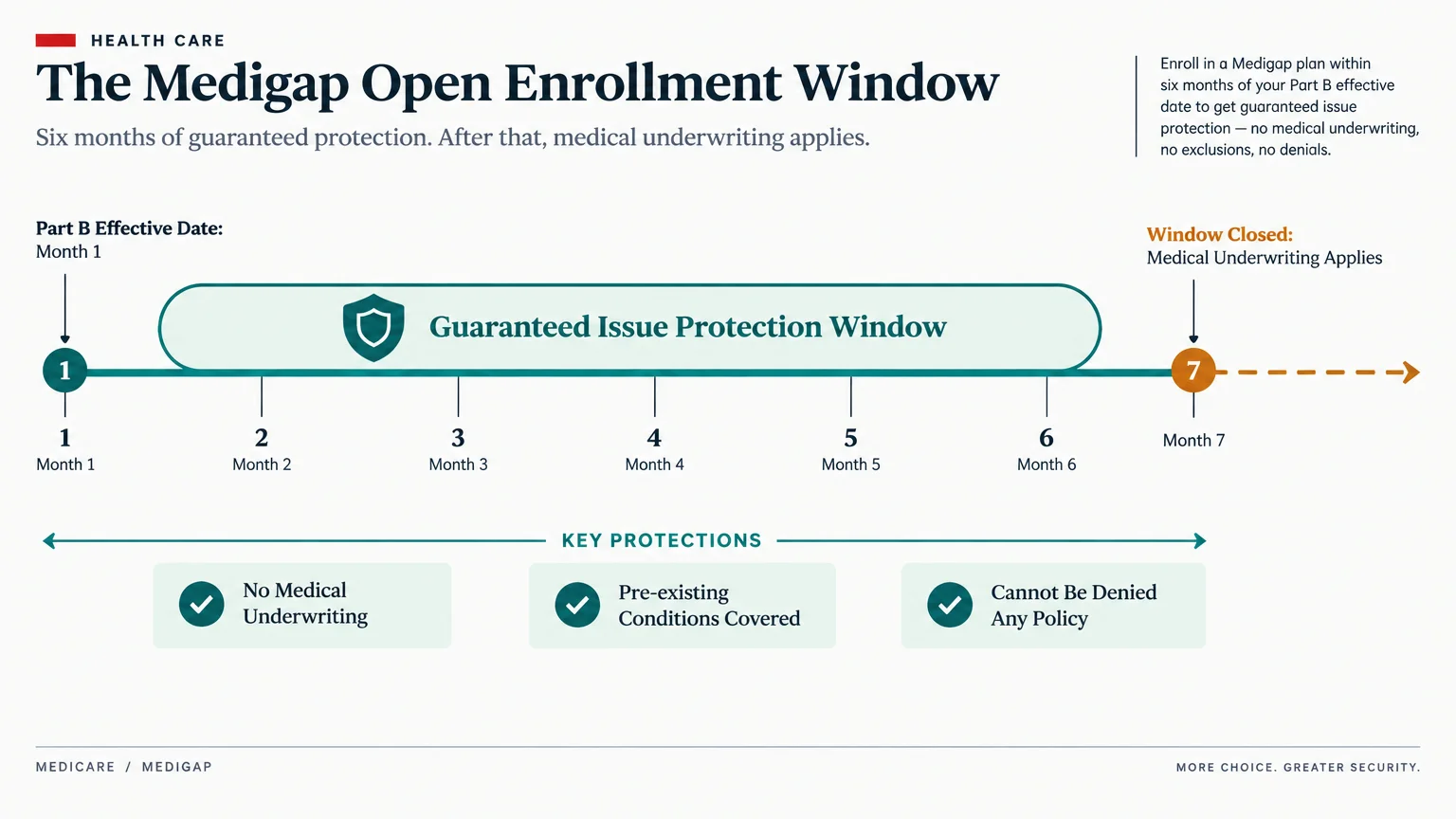
Your one-time Medigap Open Enrollment Period lasts exactly six months. It begins on the first day of the month you are both sixty-five or older and enrolled in Medicare Part B.
During this golden window, private insurance carriers must offer you any policy they sell at the standard rate. They cannot reject your application or charge higher premiums due to pre-existing medical conditions.
Once this six-month period expires, federal guaranteed-issue rights disappear in most states. Insurers can then enforce medical underwriting, hike your monthly premiums, or deny you coverage entirely.

7. Sixty-Three Days Post-Coverage: The Creditable Drug Plan Deadline
If you delay Medicare because of active employer coverage, pay close attention to prescription drug rules. Medicare Part D requires continuous creditable prescription drug coverage throughout your retirement years.
You have exactly sixty-three consecutive days after losing employer coverage to enroll in a Part D prescription plan or Medicare Advantage plan. Exceeding this sixty-three-day gap triggers a permanent Part D late enrollment penalty.
In 2026, Part D plans feature an annual out-of-pocket prescription spending cap of $2,100, protecting you from extreme medication costs. The maximum statutory deductible for drug plans is $615.
Always demand a written Notice of Creditable Coverage from your employer each autumn. This document proves to Medicare.gov that your previous employer plan met federal standards.

8. Eight Months Post-Employment: The Part B Special Enrollment Window
Leaving the workforce after age sixty-five opens a dedicated Special Enrollment Period, or SEP. This window allows older workers to transition smoothly into Medicare without late enrollment penalties.
Your Part B Special Enrollment Period lasts for eight full months. It begins the month your active employment ends or the month your group health plan terminates, whichever comes first.
Do not confuse COBRA continuation coverage or severance packages with active group health insurance. Federal regulations do not treat COBRA or retiree plans as active employment coverage for Medicare purposes.
If you rely on COBRA and delay enrolling in Part B past eight months, your SEP vanishes. You must then wait for the next General Enrollment Period and pay lifetime Part B surcharges.
9. The Twelve-Month Medicare Advantage Trial Right
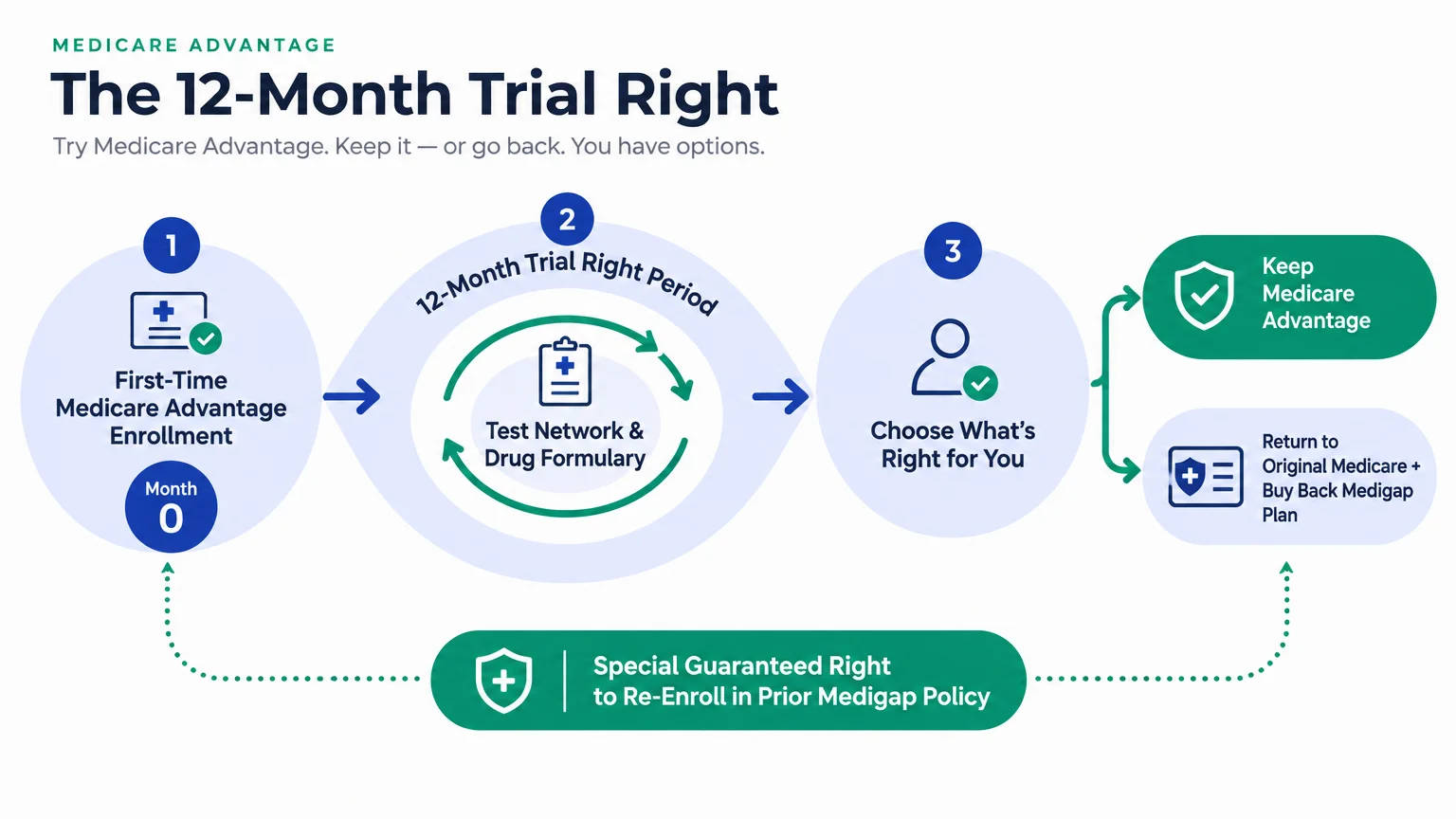
Many new beneficiaries test private Medicare Advantage plans instead of enrolling in Original Medicare with Medigap. Federal law provides a safety valve known as the Medicare Advantage “trial right.”
If you join a Medicare Advantage plan upon first turning sixty-five, you have a twelve-month evaluation period. If you find the managed care network or prior authorizations unsatisfactory, you can reverse your decision.
During these first twelve months, you can drop your Medicare Advantage plan and return to Original Medicare. You also gain guaranteed-issue rights to purchase a Medigap policy without medical underwriting.
This protection gives you peace of mind when exploring new coverage options. Marking this one-year anniversary on your personal medicare calendar ensures you evaluate your satisfaction before your rights expire.

10. September 30: The Annual Notice of Change Deadline
Medicare is never a “set it and forget it” program. Every private Medicare Advantage and Part D drug plan adjusts its benefits, premiums, and formularies annually.
Federal regulations mandate that private insurers mail you an Annual Notice of Change (ANOC) by September 30 each year. This document explicitly outlines every modification scheduled for the upcoming calendar year.
Examine this notice closely to see if your copayments are increasing or if your preferred medications have moved tiers. Reviewing the ANOC also reveals whether your primary physicians remain inside the plan’s network.
Alongside the ANOC, the Centers for Medicare & Medicaid Services releases its updated national educational handbook. Using late September to review plan changes prepares you for open enrollment.
“A delay in planning your healthcare costs is a delay in securing your financial freedom.” — Suze Orman, Personal Finance Author and Host
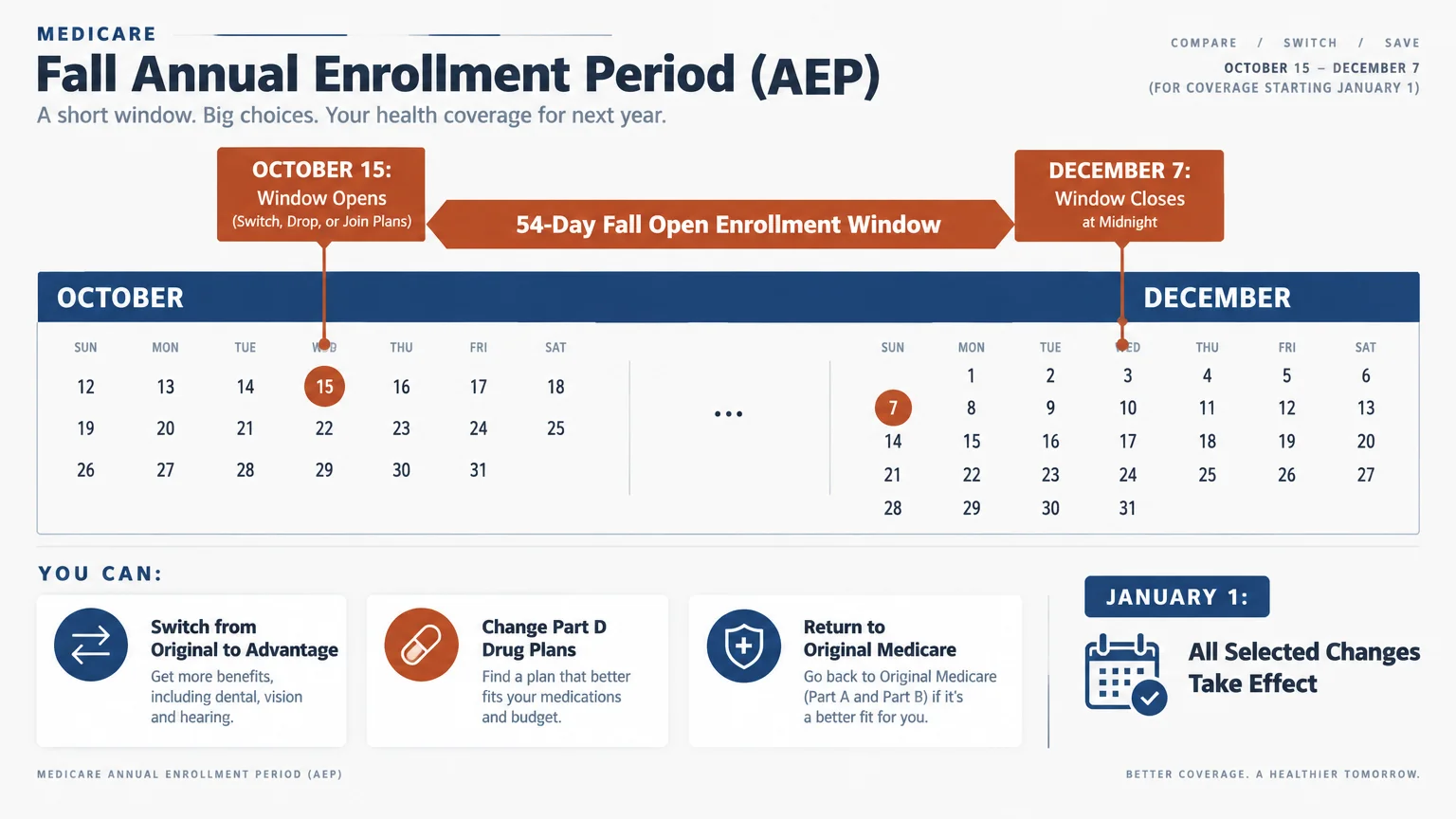
11. October 15 to December 7: Fall Annual Enrollment
The annual Fall Open Enrollment period runs from October 15 through December 7 each year. This critical window lets every Medicare beneficiary adjust their coverage to match changing healthcare needs.
During these seven weeks, you can switch from Original Medicare to a Medicare Advantage plan, or drop Advantage to return to Original Medicare. You can also switch between different Medicare Advantage or Part D plans.
All coverage choices made during this enrollment period become effective on January 1 of the following year. Failing to make necessary updates locks you into your current plan for another full twelve months.
Set a calendar reminder for mid-October every single autumn. Even if you love your current coverage, reviewing competing local plans can uncover significant premium and prescription savings.
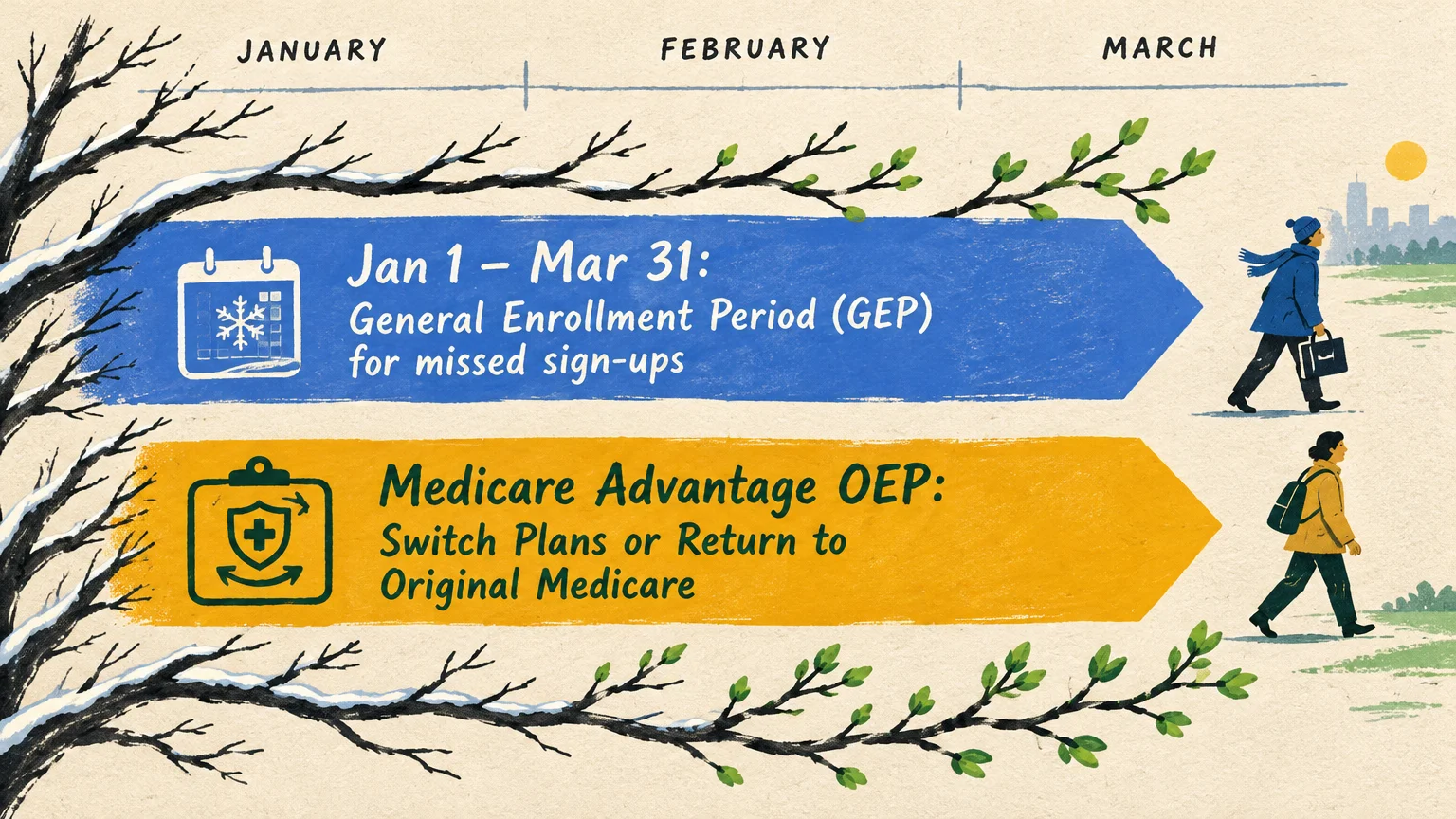
12. January 1 to March 31: General Enrollment and Advantage OEP
The first quarter of the calendar year hosts two distinct enrollment periods running simultaneously. Understanding which window applies to your individual circumstances is essential for correct filing.
First, the General Enrollment Period (GEP) allows individuals who missed their initial enrollment period to sign up for Part A and Part B. Under current rules, coverage begins the first day of the month following enrollment.
Second, the Medicare Advantage Open Enrollment Period (MA OEP) allows current Medicare Advantage members to make a one-time adjustment. You can switch to a different Advantage plan or return to Original Medicare.
The MA OEP does not permit individuals on Original Medicare to join an Advantage plan or add drug coverage. It exists exclusively as a correction window for those already enrolled in private Medicare Advantage plans.
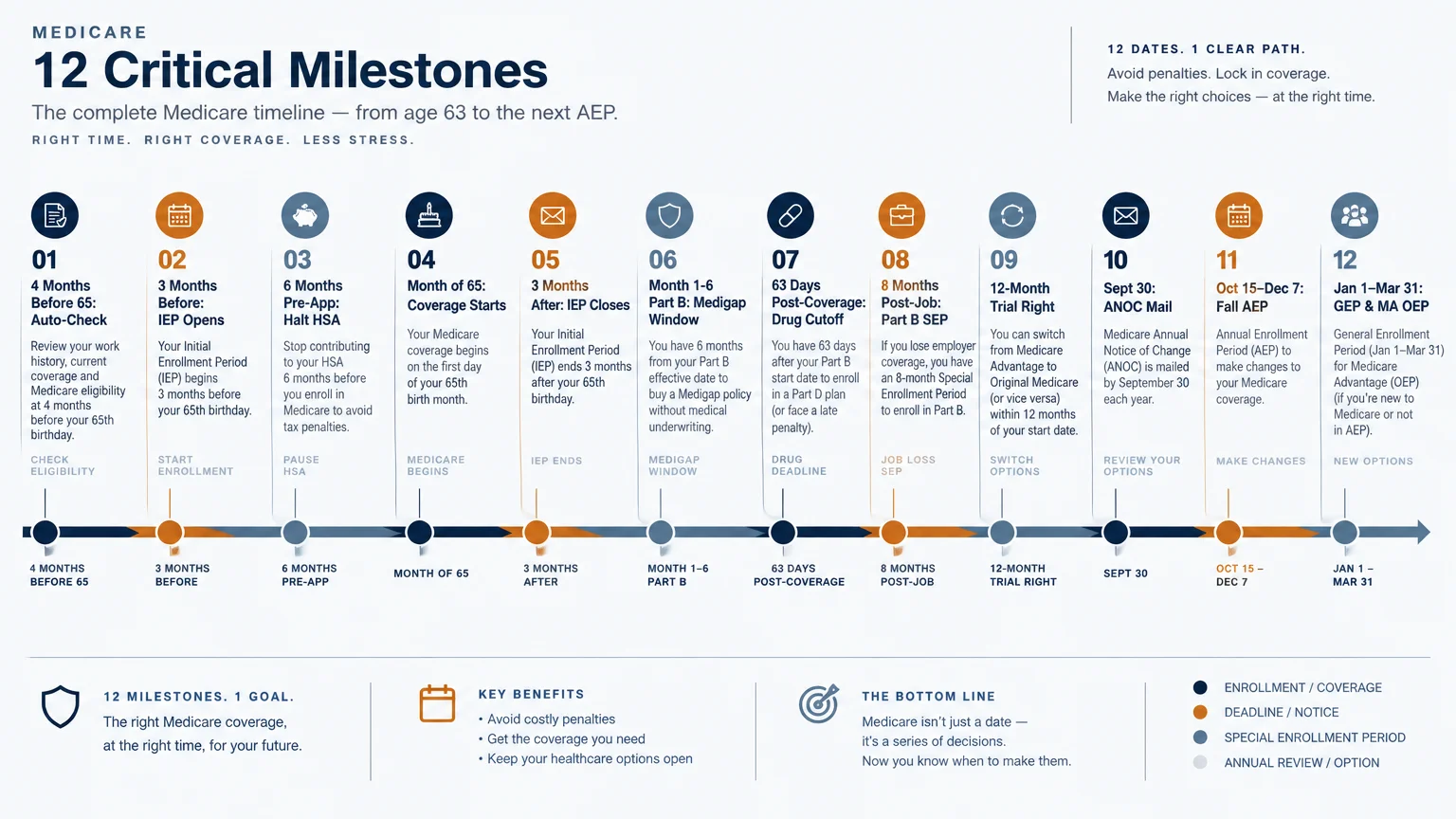
Your Master Medicare Calendar at a Glance
Keeping track of overlapping federal windows can challenge even the most organized retiree. Use this quick reference table to align your personal milestones with national deadlines.
| Enrollment Window / Date | Primary Eligibility or Trigger | Key Action Required | Penalty for Inaction |
|---|---|---|---|
| 4 Months Before 65 | Receiving early Social Security benefits | Confirm address and automatic enrollment status | Administrative delays in receiving your Medicare card |
| 3 Months Before 65 | Turning 65 without existing coverage | Submit initial Part A and Part B applications | Delayed coverage start date past your birthday month |
| 6 Months Before Medicare | Working past 65 with an active HSA | Halt all personal and employer HSA contributions | 6% IRS excise tax on retroactive excess contributions |
| Birthday Month + 3 Months | End of 7-month Initial Enrollment Period | Finalize baseline Medicare Parts A, B, and D | Lockout until General Enrollment plus late surcharges |
| First 6 Months on Part B | Age 65+ with active Part B coverage | Purchase a Medigap supplemental policy | Loss of guaranteed issue; subject to medical underwriting |
| Within 63 Days | Loss of creditable employer drug coverage | Enroll in a Part D drug plan or Advantage plan | Permanent 1% monthly Part D late enrollment penalty |
| Within 8 Months | Separation from active group employer coverage | Submit CMS forms for Part B Special Enrollment | Permanent 10% annual Part B late penalty and coverage gap |
| First 12 Months on MA | Enrolled in Medicare Advantage at age 65 | Exercise trial right to revert to Medigap if desired | Permanent loss of Medigap guaranteed-issue rights |
| By September 30 | Enrolled in private Advantage or Part D plans | Review Annual Notice of Change (ANOC) letter | Unpleasant surprises regarding network drops and price hikes |
| Oct 15 – Dec 7 | All current Medicare beneficiaries | Shop, compare, and modify coverage for next year | Locked into existing plan benefits for the next calendar year |
| Jan 1 – Mar 31 (GEP) | Beneficiaries who missed their IEP or SEP | Sign up for missed Part A or Part B coverage | Continued lack of coverage and growing lifetime penalties |
| Jan 1 – Mar 31 (MA OEP) | Current Medicare Advantage enrollees only | Switch Advantage plans or return to Original Medicare | Must keep current Advantage plan until the next fall open enrollment |

Late Enrollment Penalties: The Cost of Missing Deadlines
Missing your medicare deadlines results in harsh financial consequences that last for decades. Congress designed Medicare late enrollment penalties to encourage healthy individuals to join the risk pool promptly.
The Part B late enrollment penalty adds an extra ten percent to your standard monthly premium for every full twelve-month period you delayed enrollment. This penalty is not temporary; you pay it for the rest of your life.
For example, if you delayed Part B for two full years without creditable coverage, your monthly surcharge is twenty percent. With the 2026 standard premium at $202.90, you would pay significant extra dollars every month.
Part D drug coverage carries its own lifetime late penalty. Medicare calculates this fee by multiplying one percent of the national base beneficiary premium by the total number of uncovered months.
For those who must purchase Part A, delaying enrollment incurs a ten percent premium increase. Unlike Parts B and D, this penalty lasts for twice the number of years you delayed enrollment before terminating.
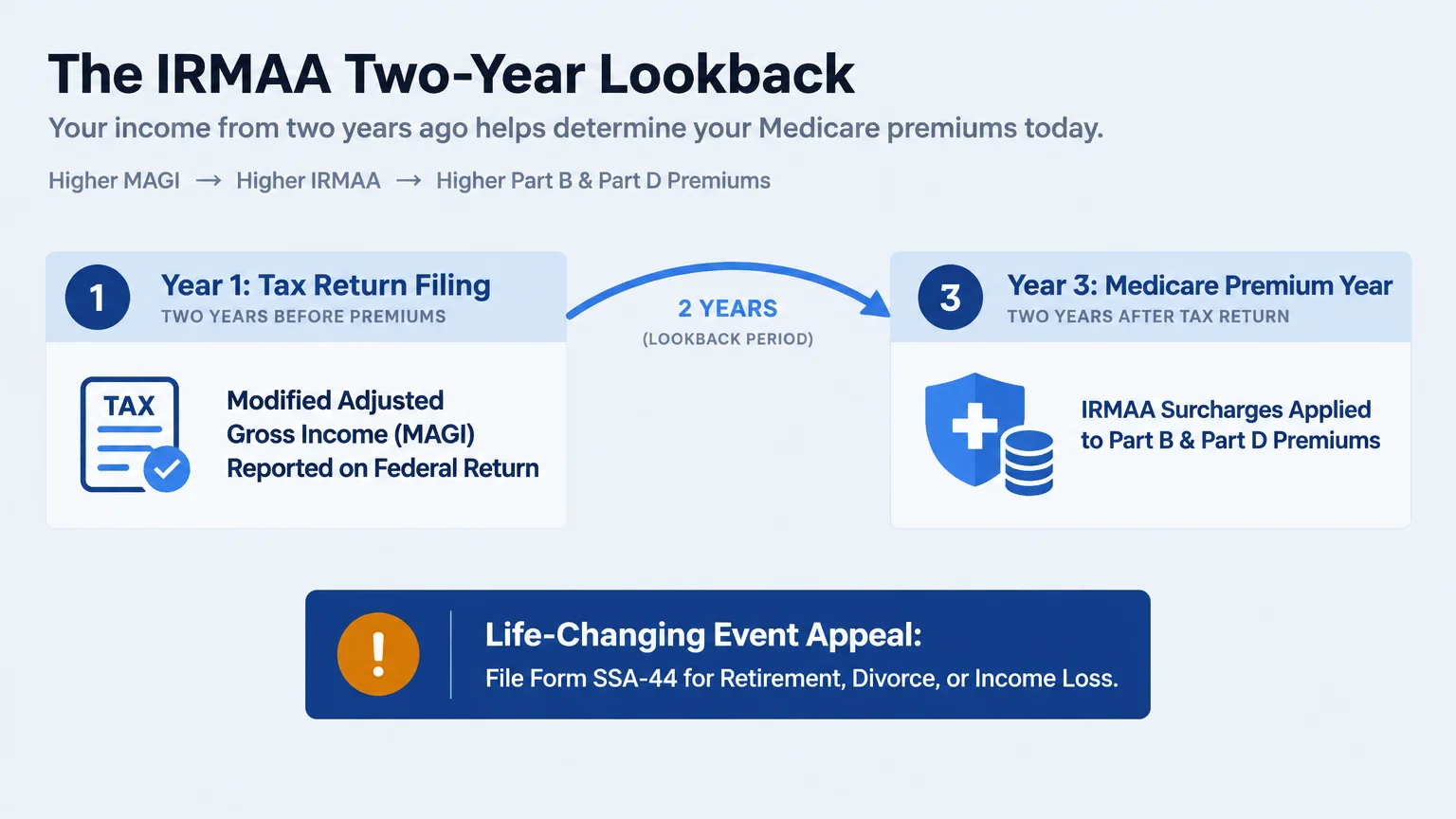
High-Income Filers: The IRMAA Calendar Consideration
Affluent retirees face another layer of financial complexity known as the Income-Related Monthly Adjustment Amount, or IRMAA. This rule charges high earners an extra surcharge on top of standard Part B and Part D premiums.
Medicare uses a two-year lookback calendar when calculating IRMAA determinations. For 2026 coverage, the government evaluates your tax return filed for the 2024 tax year.
In 2026, IRMAA surcharges apply if your 2024 Modified Adjusted Gross Income exceeded $109,000 for individual tax filers. The threshold begins at $218,000 for married couples filing joint returns.
If you experienced a life-changing event in the intervening two years, you do not have to accept the initial surcharge. Events like retirement, marriage, divorce, or loss of income allow you to appeal using federal form SSA-44.

What Can Go Wrong
Even diligent retirees fall into common traps when transitioning onto Medicare. Understanding these pitfalls keeps your coverage intact and protects your nest egg from unnecessary expenses.
- Relying on COBRA coverage past sixty-five: Many retirees believe COBRA counts as active employer insurance for Medicare purposes. It does not; relying on COBRA past your IEP causes you to miss your Special Enrollment Period.
- Overlooking the small-employer rule: If you work for a company with fewer than twenty employees, Medicare is your primary payer at age sixty-five. Delaying Part B leaves you virtually uninsured, as small-group plans can deny claims Medicare would have covered.
- Maintaining HSA contributions past age sixty-five: Forgetting to halt payroll deductions to your HSA six months prior to enrollment triggers IRS excise tax penalties. Human resources departments rarely track this deadline for you.
- Missing your Medigap open enrollment window: Assuming you can buy a supplemental policy whenever your health declines is a dangerous mistake. Missing this one-time six-month window allows insurers to deny you coverage for pre-existing conditions.
A simple scheduling error can permanently inflate your monthly healthcare expenses. Take proactive ownership of these dates well before your sixty-fifth birthday arrives.

When to Consult a Professional
While many individuals navigate Medicare independently, specific complex situations warrant guidance from a licensed insurance specialist or fee-only retirement planner. You should seek specialized assistance in the following scenarios:
- Coordinating with union or retiree benefits: Retiree health plans interact with Medicare in varied ways. A professional can review plan documents to determine whether your retiree benefits act as primary, secondary, or wrap-around coverage.
- Navigating complex business ownership transitions: If you own a small business or receive compensation through partnership draws, determining whether you have creditable group coverage requires expert legal and tax analysis.
- Appealing substantial IRMAA surcharges: Filing an IRMAA appeal after leaving a high-paying executive career requires precise documentation. A financial planner helps assemble the correct tax forms to eliminate improper surcharges.
- Managing multiple chronic medical conditions: When you take several brand-name specialty medications, choosing between Original Medicare and Medicare Advantage requires intricate formulary analysis. A specialist can model annual out-of-pocket expenses accurately.
You can also access free, unbiased guidance through your local State Health Insurance Assistance Program, commonly known as SHIP. Non-profit resources like AARP and local eldercare agencies provide trustworthy community-level counseling.
Frequently Asked Questions
What happens if my sixty-fifth birthday falls on the first day of the month?
Medicare treats your eligibility as beginning the month prior to your birth month. Your entire seven-month Initial Enrollment Period shifts forward by thirty days, meaning coverage can start on the first of the preceding month.
Can I delay Medicare Part B if I have health insurance through a spouse?
Yes, provided your spouse works for an employer with twenty or more employees and provides active group health coverage. Retiree coverage, COBRA, and marketplace plans do not qualify as active employment coverage.
How long do I have to submit an IRMAA appeal?
You should file Form SSA-44 as soon as you receive your initial determination notice from Social Security. There is no strict calendar cutoff, but filing promptly prevents improper premium deductions from your monthly benefits.
What is the difference between Fall Open Enrollment and the General Enrollment Period?
Fall Open Enrollment lets existing beneficiaries adjust their private plan selections for the upcoming year. The General Enrollment Period is strictly for individuals who missed earlier deadlines to sign up for baseline Part A or Part B.
Moving Forward with Confidence
Navigating Medicare does not have to feel overwhelming when you break the process into manageable, date-driven milestones. Mark your personal deadlines on a physical calendar and set digital alerts months ahead of time.
Take charge of your healthcare transition by verifying your coverage status, reviewing plan notices annually, and seeking assistance when unique circumstances arise. Doing so ensures you enjoy your retirement years with reliable, cost-effective healthcare coverage.
The information in this guide is meant for educational purposes. Your specific circumstances—including income, health needs, tax situation, and goals—may require different approaches. When in doubt, consult a licensed professional.
Last updated: October 2026. Retirement benefits, tax rules, and healthcare regulations change frequently—verify current details with official sources.









Leave a Reply