
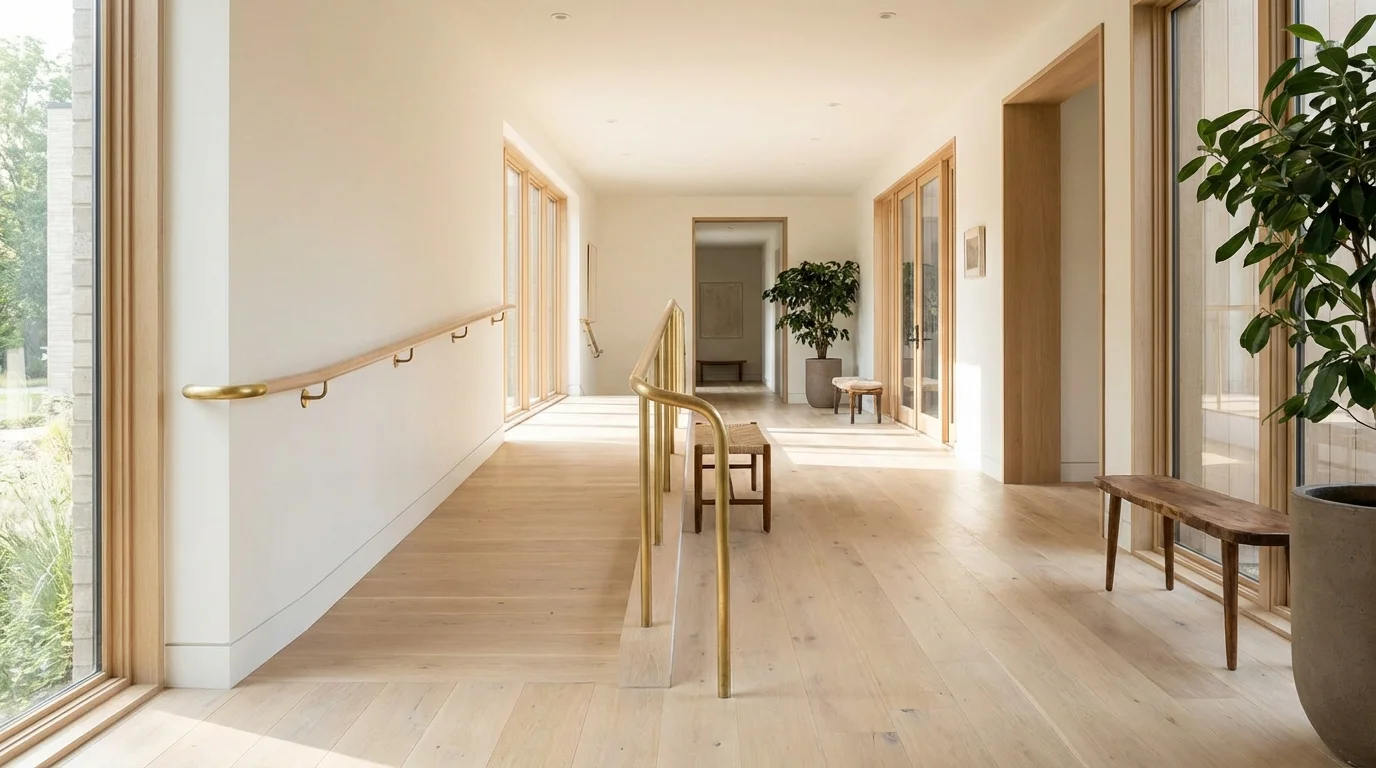
Mistake 7: Ignoring the Physical Layout for Aging in Place
You might feel incredibly spry and healthy at age 65, easily jogging up and down flights of stairs. Consequently, you might fall in love with a charming, three-story historic townhouse. Fast forward fifteen years, and those beautiful hardwood stairs might become an insurmountable daily obstacle.
Moving to a smaller home tips often ignore the physical realities of aging. If you are downsizing for retirement, you should ideally buy a home that allows you to age in place safely and comfortably. Looking strictly for square footage reductions is not enough; you must evaluate the ergonomics of the space.
According to the National Institute on Aging (NIA), falls are a leading cause of injury among older adults. Your new home should mitigate these risks. Look for properties featuring “universal design” principles:
- Single-story living: A primary bedroom, full bathroom, and laundry facilities must be accessible on the main floor, even if there is a second story for guests.
- Zero-step entry: At least one entrance to the home should have no steps, allowing easy access for walkers or wheelchairs.
- Accessible bathrooms: Seek out walk-in showers with grab bars (or walls reinforced to hold them later) rather than deep soaking tubs that require you to step over a high edge.
- Wider doorways: Hallways and doors should ideally be 32 to 36 inches wide to accommodate mobility devices.
- Hardware: Lever-style door handles and rocker light switches are much easier to operate for hands dealing with arthritis than traditional round knobs.









Leave a Reply