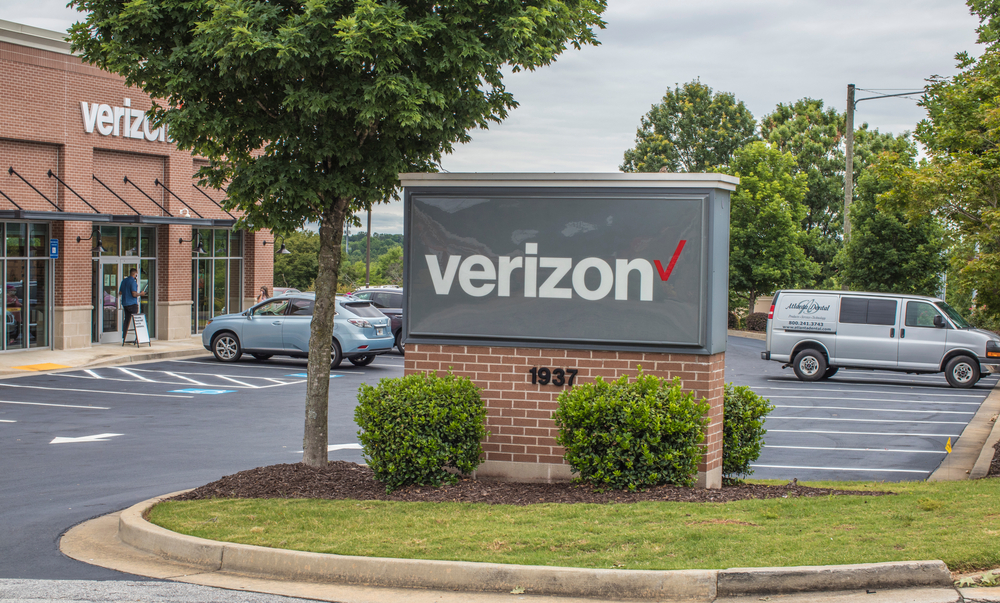
Verizon
In the communications sector, we couldn’t help but pick Verizon, valued at $239.6 billion with a dividend yield of 4.3%.
What makes Verizon better than it’s competitors? Financial experts and people in the industry would say it’s the fact that they’ve aggressively diversified their business into pay-TV and media content. That’s innovation without starting too far away from their original business model.
Despite their branching out, though, VZ has also ensured that its core wireless business has been their focus, bringing services to millions of households across the U.S. In 2018 they even restructured in order to focus on rolling out innovative 5G services.
We’ve all heard the latest controversy regarding 5G but the truth is that the vast majority of people would happily welcome 5G services in their cities. Unsurprisingly, Verizon also expects to deliver its mobile Ultra Wideband 5G services to 60 cities by the end of the year.
Thanks to their investments in network quality, it’s not surprising they’ve stayed at the top of RootMertic’s raking. When it comes to speed, reliability, and network performance, Verizon is a force to be reckoned with.
Not enough to convince you? Let’s look at the numbers.
The company has paid uninterrupted dividends for more than 30 years. Sure, their growth isn’t anything to write home about (a 2% uptick in late 2019 at most) but given that the yield is high among blue-chip dividend stocks, we definitely think you should put Verizon at the top of your list.







Networks today are probably in the very high ninety percentage range. I just left Verizon for Spectrum because I am saving
$28 dollars a month! I believe this figure is the main concern for the vast majority of our population. If all of these customers switched over like I did, while saving almost $30 dollars a month, is quite an attractive savings amount for each month to most people! Even if Verizon is able to prove their higher speeds, more reliability and better performance, it would only be very minimal and quite unrecognizable to 99.9% of the customer base. The vast majority of customers would most likely just wait until the service is restored and make any of these concerns futile. I am personally convinced that all of the networks today are for the most part, very similar and not worth paying any extra, higher premiums.