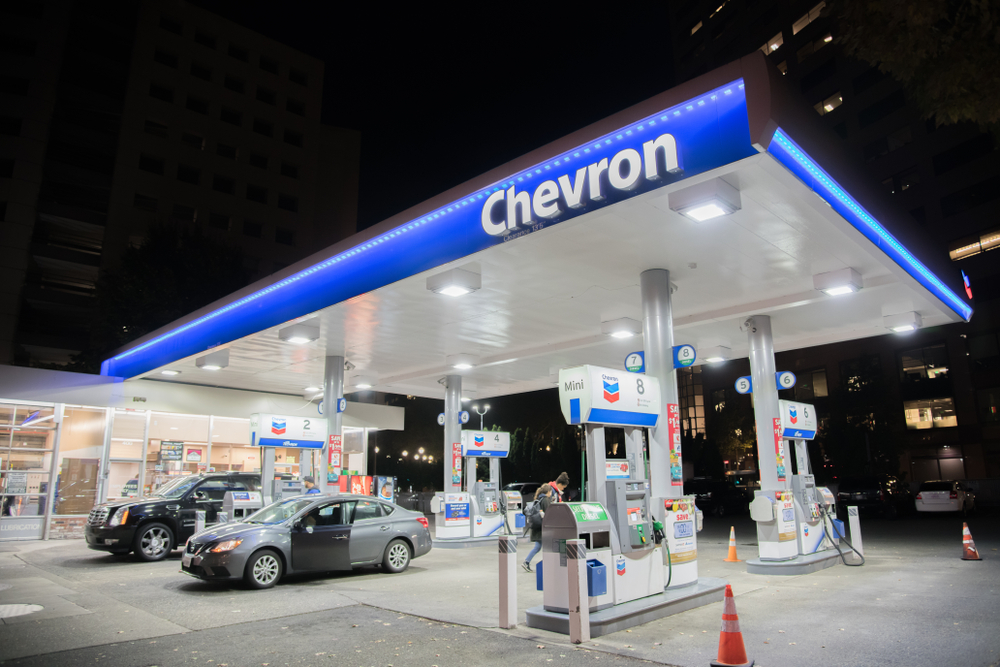
Chevron
To put it simply you can’t go wrong when you invest in the energy sector. If one thing is clear it’s the fact that come hell or high water, people will be needing energy. So if you’re going to try your luck with this market, you should put your trust in Chevron, a company valued at $161.5 billion. Their dividend yields sit at a pleasant, heartwarming 6.0%.
Their net debt to capital ratio was 13% ad the end of 2019- this measures the portion of a company’s financing that is from debt. On average, most companies will sit between 20% or 30%, so this is yet another reason to diversify with Chevron’s help.
Even if Brent oil prices average $30 per barrel in 2020-2021, Chevron’s net debt would not exceed 25%, not even if the company will be forced to borrow in order to help cover its dividend. That’s because the company can afford to wait longer for oil prices to improve while maintaining its dividends. You can’t say the same about a lot of other companies on the market…
Estimates show that only when oil prices surge to $55 per barrel will the company be forced to cover its dividend capital expenditures with operating cash flow alone.
Finally, their 33 years of consecutive dividend increases have proven time and time again that the company is committed to protect its status as what is known as a Dividend Aristocrat.
There you have it!
These are our picks of dividends that will help you sail through retirement! Remember, you don’t always have to go for the traditional saving methods in order to achieve your goals. Just remember to diversify and you’ll find yourself in a sizable and comfortable nest egg.








Networks today are probably in the very high ninety percentage range. I just left Verizon for Spectrum because I am saving
$28 dollars a month! I believe this figure is the main concern for the vast majority of our population. If all of these customers switched over like I did, while saving almost $30 dollars a month, is quite an attractive savings amount for each month to most people! Even if Verizon is able to prove their higher speeds, more reliability and better performance, it would only be very minimal and quite unrecognizable to 99.9% of the customer base. The vast majority of customers would most likely just wait until the service is restored and make any of these concerns futile. I am personally convinced that all of the networks today are for the most part, very similar and not worth paying any extra, higher premiums.