
Family and Housing Dynamics
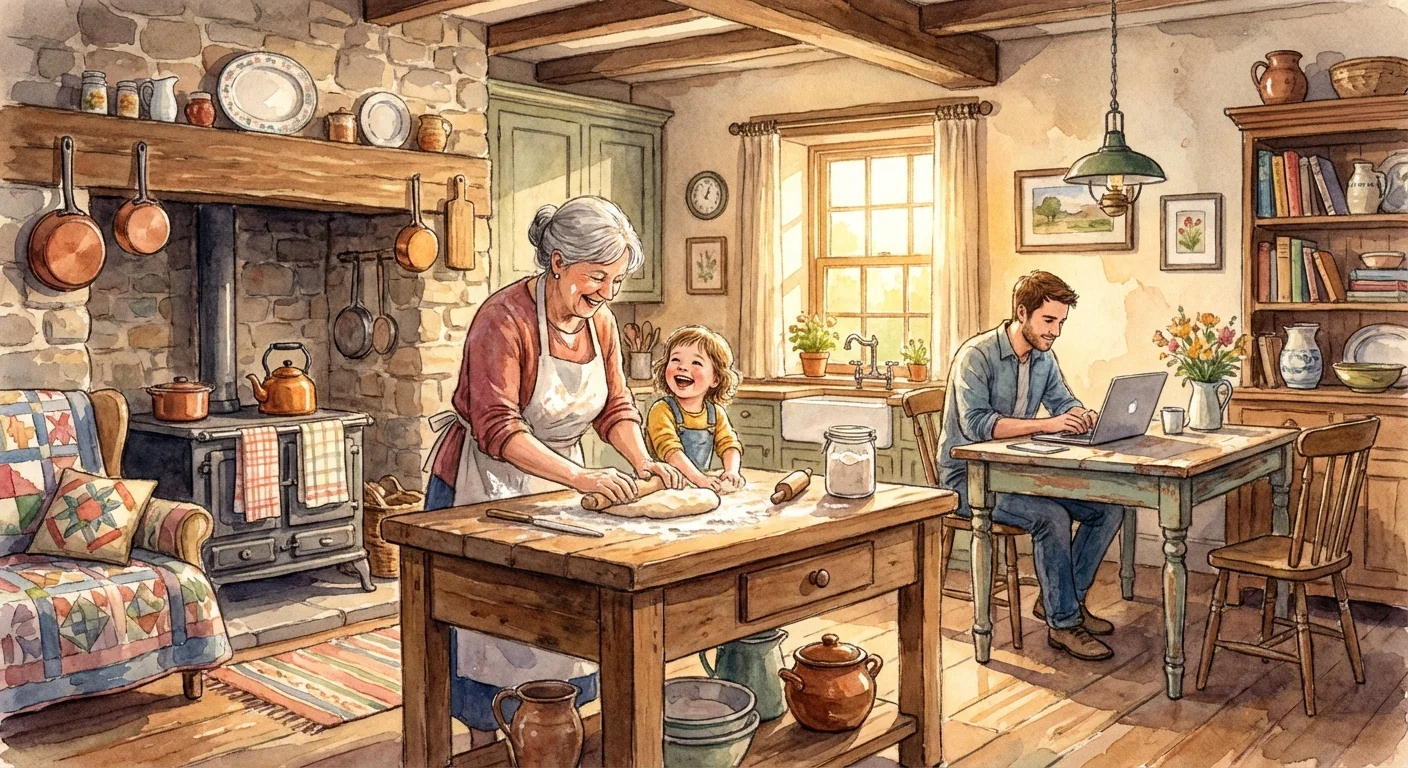
In the absence of governmental support, the family unit bore the heavy lifting of eldercare and financial support. Housing arrangements naturally adapted to keep aging relatives out of poverty.
1. Moving In With Adult Children
Multigenerational households formed the backbone of elder survival. When older adults could no longer maintain their own homes or generate income, they simply moved into the spare bedrooms of their adult offspring. This arrangement benefited both generations; aging parents provided childcare, cooking, and household management while their adult children worked the farms or factories. The cultural expectation was absolute—children were the ultimate retirement insurance policy.
2. Taking in Boarders and Lodgers
For older individuals—particularly widows who owned their homes but had no income—renting out rooms provided a crucial financial lifeline. Taking in lodgers generated steady cash flow and helped cover the cost of property taxes and maintenance. It also populated the house with younger, able-bodied adults who could assist with heavy chores or provide security. This historical retirement income strategy resembles the modern “house hacking” trend, demonstrating that leveraging real estate is a timeless survival tactic.
3. Multigenerational Farming and Homesteading
In agrarian societies, land equated to survival. Older farmers rarely “retired” in the modern sense; they gradually handed over the heavy physical labor of plowing and harvesting to their adult children while maintaining ownership of the deed. The aging parents continued to contribute by managing the farm’s finances, repairing tools, preserving food, and tending to lighter chores. The land fed the entire family, ensuring the elders were cared for in exchange for the ultimate inheritance of the property.
4. Downsizing to Cheaper Rural Areas
When city living became too expensive for aging bodies unable to secure factory wages, moving to remote, inexpensive rural areas offered an escape valve. Cost-of-living arbitrage is not a new concept. Historically, older folks sold their modest urban dwellings to move somewhere they could subsist on less cash, grow their own food, and rely on informal community bartering networks.









Leave a Reply